
People Who Stack Their Plates At Restaurants To Help The Servers Almost Always Have 11 Traits That Are Highly Rare Today
 SeventyFour | Shutterstock
 The way people treat and interact with service workers often says a lot about their internal character. For example, as psychologist Reena B. Patel explains, people with pent-up anger, stress, and avoidant tendencies often use service workers as “scapegoats” for their own struggles. From leaving a mess to tipping poorly, they try to boost their own ego by clinging to status and making other people feel “less” than them.
However, people who stack their plates at restaurants to help the servers almost always have traits that are highly rare today. They’re polar opposites from the entitled people who treat servers poorly, even if the habit of stacking plates doesn’t always have the outcome they’d hoped for.
People who stack their plates at restaurants to help the servers almost always have 11 traits that are highly rare today
1. They respect people regardless of status
 Drazen Zigic | Shutterstock
Despite living in a status-driven world where everyone’s competing to be the “most prestigious” or to have the “most powerful job,” people who stack their plates at restaurants and treat servers with respect don’t worry about how much money someone makes or how exciting their life is. They aim to connect and lead with compassion, even amid this chaotic world.
Even if it takes more effort and intention than the average person would be willing to offer, they don’t mind helping others often in small ways.
2. They’re aware of the people around them
 iJeab | Shutterstock
Socially aware, sensitive people can often sense the energy of the people around them. They’re not selfishly caught up in their own needs or stress, using the people around them as a “scapegoat” for inner turmoil, but are willing to read others and shift their energy to act with empathy.
Even if it’s simply noticing the work and effort a restaurant server is putting in at their table, they’re aware and appreciative of it. They lean into making people feel seen and appreciated, even when it’s not convenient.
3. They have great manners
 mavo | Shutterstock
People raised to follow a strong moral compass and lead with manners often do kind things for people without expecting anything in return. Treating service workers with respect and connecting with strangers who are clearly having a bad day are second-nature habits for these individuals.
Even saying “please” and “thank you” is going out of style with people today, but these people continue to live by their own manners and values.
4. They don’t need credit and validation for everything
 Dragana Gordic | Shutterstock
People who offer small acts of kindness to strangers, act with integrity when nobody is watching, and stack plates at restaurants to help service workers are the farthest from transactional a person can be. They’re not expecting anything in return for being kind or respectful. They’re just being themselves.
Compared to entitled people who tend to misguidedly craft “fairness” around their own sense of ego or “deservingness,” as a study from the European Journal of Social Psychology explains, these kinds of people do nice things and take on projects without expecting credit or validation for any of it.
5. They value little things
 PeopleImages | Shutterstock
From small acts of kindness and conversations with strangers to making space for the “little things” in their relationships that often mean more than grandiose acts of love, people who value intentionality also treat service workers with respect. They go out of their way to help people, make them feel seen, and support them, even when they don’t fully understand what’s going on. They see people’s humanity before they see an occupational title, status, or prestige.
People who stack their plates at restaurants are doing it to help others. They value the small moments of connection and appreciation in their lives, even if everyone else at their table is moving at a million miles a minute.
6. They can empathize with others
 Chokniti Studio | Shutterstock
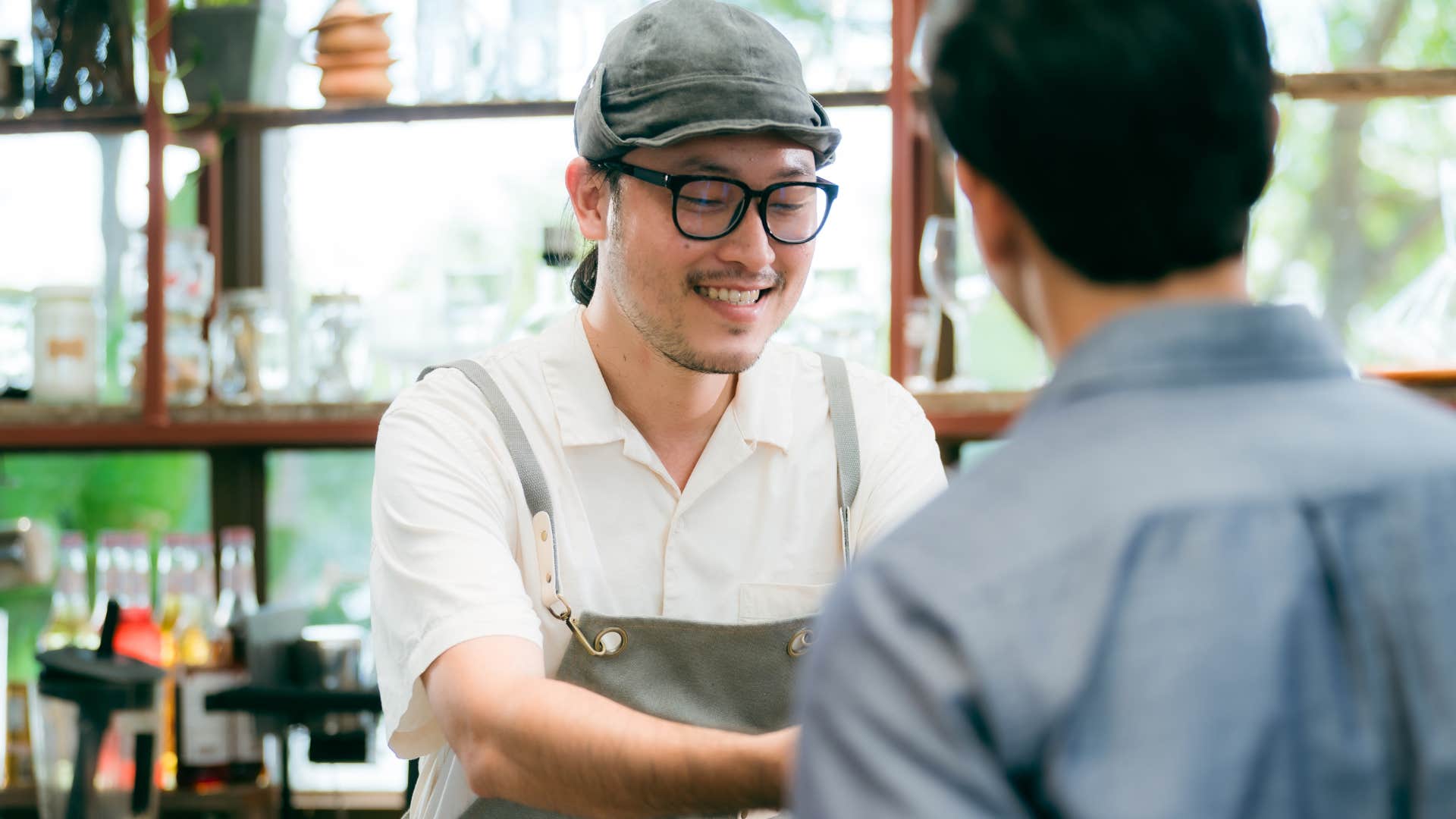
Whether they’ve worked in a service job and experienced dealing with customers before or not, someone who easily empathizes with others is more likely to stack their plates at restaurants to help out. They’re not so caught up in their own comfort and convenience that they overlook small gestures and little acts of kindness. They can put themselves in another person’s shoes, even if it means extra effort or time.
That’s part of the reason why empathetic people are often happier and more well-connected in their lives, as a study from Clinical Psychological Science explains. They do nice things for others often, without expecting anything in return, and experience more love, respect, and appreciation because of it.
7. They’re humble
 VGstockstudio | Shutterstock
While so many people in our competitive society try to be overconfident, loud, and demanding to “prove” they’re better than everyone else, humble people live more quietly, assured lives. They don’t need people to offer constant validation or praise to feel secure, because their empathetic gestures and kind offers of support positively impact their social perceptions on their own.
They know they’re worthy of love and operate from that place of self-security, which makes doing nice things for others, without expecting something in return, that much easier.
8. They’re hard-working
 PeopleImages | Shutterstock
People who don’t cut corners or try to take shortcuts for comfort are hard workers, but they also notice and appreciate that hard work in others. While their entitled counterparts may ignore hard-working service workers and lean on excuses like “it’s their job” to justify their rudeness, these hard workers offer kindness, unconditional respect, and understanding.
Even if it’s just stacking plates and cleaning up trash on the table at the end of their meal, it’s clear that hard workers are both respectful and intentional about making everyone’s lives just a little bit easier.
9. They’re efficient
 La Famiglia | Shutterstock
While efficient people often plan and prepare to make their own lives run smoothly, their internal values and rituals also often apply to others. Even if they’re at a restaurant being served by a stranger they don’t know, small habits like stacking plates and cleaning up trash are intended to make everything work more efficiently.
Just because they care about conserving their resources and protecting their time doesn’t mean they’re not willing to spend some of it helping and supporting others.
10. They’re consistent and reliable
 Milan Ilic Photographer | Shutterstock
People who are regularly consistent with empathy in their routines and reliable to the people in their lives are more likely to embrace small acts of kindness. While grandiose expressions of appreciation and love are celebrated widely, these people consistently show up in the small moments.
From stacking plates at restaurants to help service workers to checking in with friends in a random text message, nobody wonders if they’re going to show up for others.
11. They leave everything better than they found it
 Rawpixel.com | Shutterstock
Even if the mentality of “leaving things better than I found them” takes extra time, effort, and intention to follow amid the chaos of everyday life, people who stack plates at restaurants and pick up litter in public spaces are committed.
They're dedicated to small acts of kindness that ripple into positive benefits for their communities. They’re dedicated to offering respect and making people feel seen. They’re dedicated to sparking and feeding into deep conversations with strangers that everyone seems to yearn for.
Zayda Slabbekoorn is a senior editorial strategist with a bachelor’s degree in social relations & policy and gender studies who focuses on psychology, relationships, self-help, and human interest stories.
