
11 Everyday Things Only Children Were Expected To Handle All On Their Own
 PerfectWave | Shutterstock
 There are many stereotypes that only children sometimes face once people learn that they didn't grow up with any siblings. From the fact that they're either spoiled because they got all of the attention and therefore everything they wanted or that they're relaxed around adults more than people their own age because that's who they were around most of the time, what rarely ever gets talked about is the responsibility that comes with being an only child. While nothing about those responsibilities were inherently traumatic, there were certain everyday things only children were expected to handle all on their own.
Without brothers or sisters, only children had to figure things out on their own. There was no one to conspire with or absorb some of that attention from their parents. Instead, only children were just supposed to figure it out and, because of that, a lot of those habits ended up sticking even when they became adults. Meanwhile, people who grew up with siblings may not have had to learn these things at all when they were kids because their house was bustling with entertainment and company every day for years.
Here are 11 everyday things only children were expected to handle all on their own
1. Entertaining themselves for hours
 Inside Creative House | Shutterstock
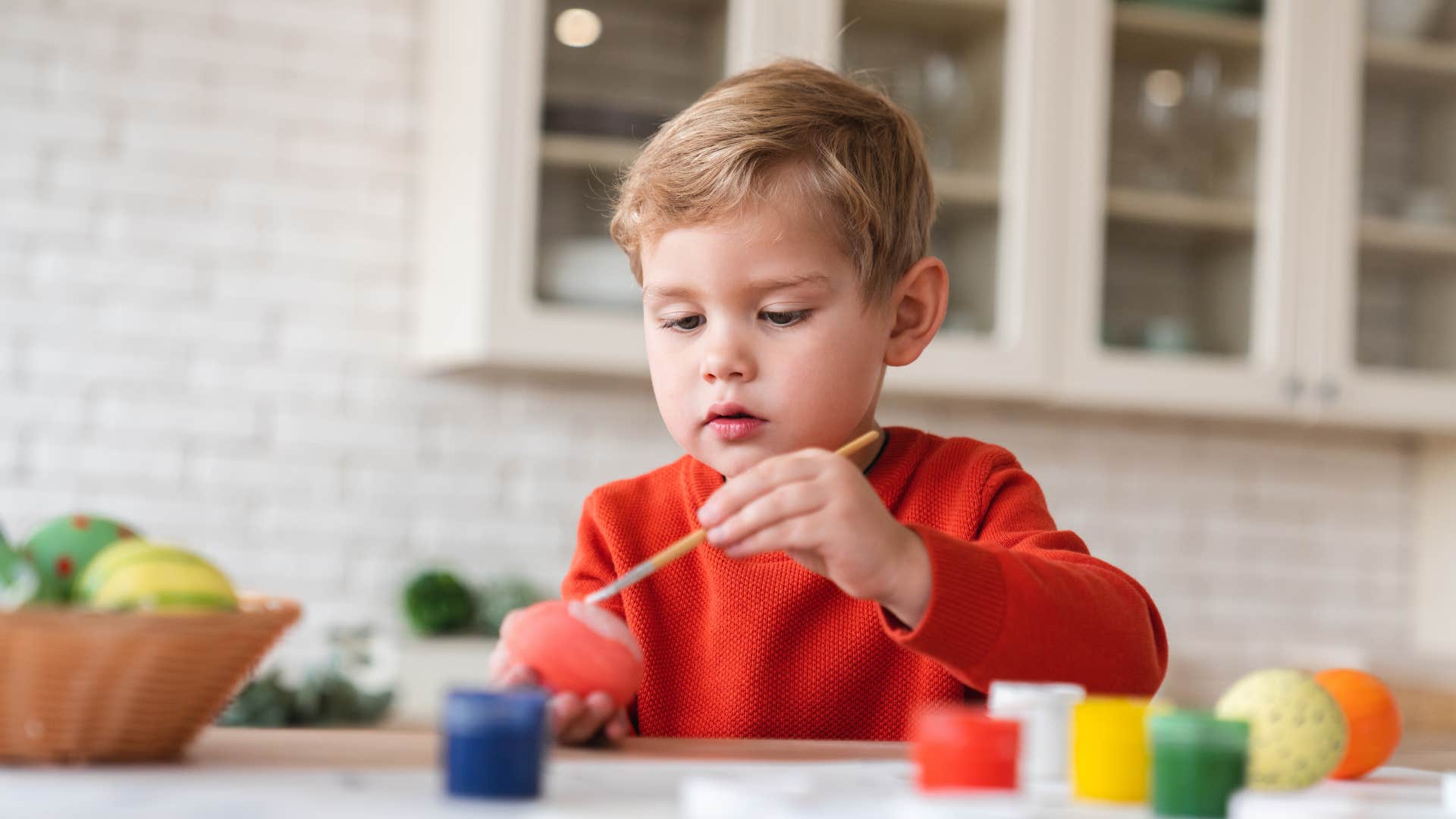
Considering only children are typically growing up in a home where they are left to their own devices, it sometimes means that they've mastered the art of being the one who entertains themselves. Their parents were usually busy with their jobs and taking care of household responsibilities that it wasn't often they would find entertainment from them.
"Only children have spent more time alone and many are quite good at using the additional time... Left to their own devices and without constant parental input, only children become good at utilizing the extra time they have," pointed out social psychologist Susan Newman.
Sure, there were moments where their parents might have played a game with them, taken them to the park, or there was a family movie night at the end of the week, but for the most part, only children were tasked with curing their own boredom. There was no siblings to nag when you had nothing to do or force to play with you when your own toys became redundant. Instead, only children had to get good with just being able to sit with themselves.
2. Being the default helper
 antoniodiaz | Shutterstock
Considering there were no other siblings around, being the default for help is one of the everyday things only children were expected to handle all on their own. Whether it was lending a helping hand to bring in the groceries that were in the trunk or having to come out and help shovel the snow on a particularly wintery morning, only children often did these things without complaining because they knew they were the only ones around to help in the first place.
There were no siblings to play "not me!" with. They learned to pitch in without throwing a fit and that expectation truly shaped how they handled responsibility throughout their adolescent years and even into their adulthood. While it was never tasks that were incredibly hard to do, only children were being taught the importance of stepping up.
3. Self-soothing after conflict
 DimaBerlin | Shutterstock
If only children were subjected to some drama that might have happened at school or maybe they got into an argument with their parents, there were no siblings to lean on to help soothe their frustrations after conflict. Instead, only children were expected to calm themselves down and make sense of their own feelings alone. They didn't have an older brother or older sister who they could go to and vent all of their issues without judgment.
"Many struggle with confrontation and handling anger. Only children often tend to internalize — hold in how they feel, tend to avoid confrontation," explained clinical therapist Bob Taibbi.
This often meant that only children would simply have to retreat to their rooms and find something that would help calm them down, whether it was listening to music and lying on their bed, or just zoning out until they could come back to themselves. Over time, the habits that would help self-soothe became the default to how they dealt with difficult emotions.
4. Solving problems independently
 VH-studio | Shutterstock
Whether it was having to fix a broken toy or something more complex, like needing to make a decision regarding their education, future career, or friendships, only children were the ones handling their problems without any help from siblings. Sure, their parents were always there to lend a ear if they needed advice or just someone to listen to.
"When you worry that your child may be bored or lonely without a sibling, consider there is a significant and useful upside of alone time. It fosters creativity, which also encourages a child's independence and ability to entertain herself," insisted Newman.
But it's different when you have siblings who are able to relate in a more personal way because they've either been through it too or they're in the same boat as you. Rarely did only children ever feel the need to ask for help from outside sources. By having to be independent from a young age, it meant they became quick-thinkers and often sat with challenges for quite some time.
5. Handling praise without sharing it
 fizkes | Shutterstock
During moments of praise after accomplishing something, whether it was getting a good report card at school or winning a game with the sports team they were on, only children were often given praise without the expectation of having to share it with anyone else. The praise landed squarely on their shoulders, and probably always felt nice to know that they were the only ones responsible for it.
Only children were most likely being raised with a good relationship to compliments in that case. Rather than running from it or the compliment being diluted due to other siblings in the house, only children were able to bask in it.
6. Managing adult conversations
 Pressmaster | Shutterstock
Considering only children spent a lot of their time with the adults in their family, especially their parents, it meant that they became privy to adult conversations and how to manage them quite early on in their lives. During family dinner, they would most likely sit there while their parents discussed the details of their day and maybe even work-related topics.
While they might not have been around for the heavy discussions that happened between their parents behind closed doors, it doesn't mean they weren't listening to them talk about other adult-like conversations that might've been boring or hard to understand.
"Only children learn early on how to get along with adults, which is a huge advantage," said counseling psychologist and parenting expert Carl Pickhardt. "When they exit adolescence, their emotional sensitivity and social skills for getting along in the adult world are typically very well developed."
7. Understanding boundaries early
 fizkes | Shutterstock
Because there weren't siblings around to bump heads with or test the limits of what they were comfortable with, learning and setting boundaries was another of the everyday things only children were expected to handle all on their own.
They quickly learned what was okay and what probably wasn't okay. They learned what they could probably push back with and when they should keep their thoughts to themselves.
It might not have been conscious, but this early awareness meant they understood the importance of boundaries. They learned to adjust their behavior accordingly based on how stressed or tired their parents might have been that day. It means they became quite sensitive to other's needs, and were able to even read the subtle cues being thrown their way.
8. Being their own emotional mirror
 New Africa | Shutterstock
Only children were often left to figure out their own emotions, almost in a similar way to how they were the ones to self-soothe after moments of conflict. Without siblings growing up in the home with them to help them feel normal about their big emotions or even to lean on in those moments, only children were forced to figure out if what they were feeling might be "too much" or just the complete opposite.
Parents are often encouraged to each their kids about emotional intelligence, whether or not they have one or more than one, as it can help them recognize where their feeling are coming from and how to deal with them, according to clinical psychologist Lisa Firestone. But being an only child probably meant that, most of the time, the emotions were being processed in their own head because of their hyper-independence.
9. Keeping themselves motivated
 Ben Gingell | Shutterstock
With the absence of siblings who could model the kind of success they might have wanted to achieve, only children were the ones who had to keep themselves motivated and handle it all on their own. There was no older brother or sister who could set the stage for the kind of student they should be in school or even the kind of interests that they might like. A lot of their own motivation simply came from trial and error.
Only children were able to figure out what worked for them by just doing things and taking up hobbies until they found the one that fit their interests. They learned how to push through, even when things might not be working in the way they want it to. Without the guidance of siblings, it was up to them to find that motivation and stick with it.
10. Being the example child
 Emvat Mosakovskis | Shutterstock
Only children were often the ones that were being talked about and looked at within their family. They were considered the standard and that kind of pressure might have made it difficult to make mistakes in the first place. Without siblings around to take the heat off of the things they may have done wrong, only children were forced to face their mishaps while in the spotlight.
"Only children may feel increased pressure to fulfill their parents' wishes and expectations because they are the only reflection of their parents," licensed marriage and family therapist Sarah Epstein said. "That only child may internalize their desires and chafe or struggle under the weight of those hopes and expectations."
There was no sibling to take the pressure or even place the blame on. Because only children were always "on display," they got used to having to present themselves to the adults in the room. However, that habit of always needing to be perfect ends up being more exhausting than anything else.
11. Handling one set of opinions
 antoniodiaz | Shutterstock
Without siblings around to hear and absorb their opinions, only children were instead subjected to hearing one set, which happened to be their parents. Just because this was their reality doesn't mean only children were just accepting things blindly. They had questions, but most of the time they were kept inside. There were no other children in the house to have debates with that might challenge what they're hearing from adults.
Instead, they just got comfortable forming their own conclusions. That can feel isolating at times though when there are not that many perspectives at home to bounce ideas around with. But having to live in this reality for some time meant they became quite self-assured and confident in their thinking.
Nia Tipton is a staff writer with a bachelor’s degree in creative writing and journalism who covers news and lifestyle topics that focus on psychology, relationships, and the human experience.
