
People With Strong Personal Boundaries Use These 11 Phrases To Put Others In Their Place
 progressman | Shutterstock
 Protecting your energy and cultivating a strong inner circle revolves around healthy boundaries. Unfortunately, not everyone quite understands the importance of demanding respect, using their energy and language to express what they won't tolerate. Being able to stand up against people who try to put you down requires recognizing patterns of bad behavior, and then re-asserting expectations.
This is usually done verbally, and people with strong personal boundaries use certain phrases to put others in their place. And once you spot fake people — who tend to be self-serving, insecure, and occasionally narcissistic, according to a study from Personality and Individual Differences — who just want to put you down, you can reinforce those important boundaries, pour into your own self-esteem, and protect yourself from their negative energy.
People with strong personal boundaries use these 11 phrases to put others in their place
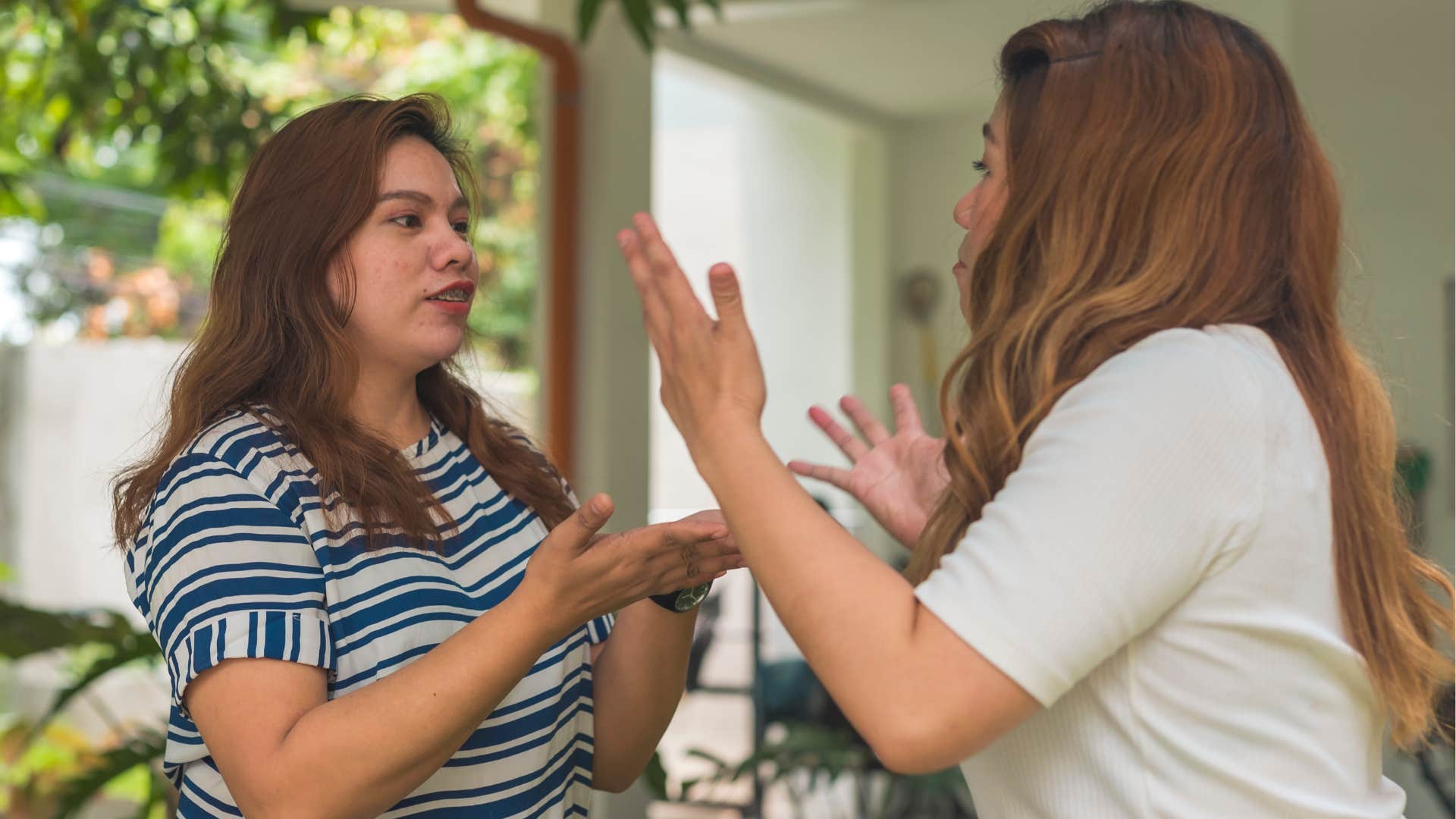
1. 'Can you repeat that?'
 MDV Edwards | Shutterstock
Operating from a place of inherent insecurity, people who violate another person's boundaries may go to great lengths to appear to have their best interests at heart. They won't respond or repeat something they know is incredibly hurtful or resentful if there's a crowd, because they're more worried about external validation and asserting their superiority by bringing others down.
By asking them to repeat their harsh comments, even if they're just passive condescension, you're not only taking away their misguided power over a conversation that's meant to be balanced and productive, you're reminding them of your humanity and your ability to stand up for yourself.
2. 'Did you mean to sound condescending?'
 Antonio Guillem | Shutterstock
When someone is being disrespectful and trying to put them down, people with strong personal boundaries use phrases like "Did you mean to sound condescending?" to put others in their place. It's a way to remind them of the respect that's deserved.
"Telling others what they said is hurtful or is not accurate is another way to deal with challenging situations caused by a thoughtless remark. This may be as simple as just acknowledging what was said, but may also involve educating the person or correcting the person, or even expressing anger. The goal is to be truthful about what has happened and to be authentic in your response," psychologist Jamie Aten revealed.
Fake, rude people will take advantage of those around them, even with something as simple as a self-preserving hurtful comment they know they won't be called out for. So, don't be the person that sits with those comments and their negative energy, dismissing your own emotions for the sake of "keeping the peace." Instead, re-assert your boundaries, give them a chance to apologize or rephrase their comment, and demand the respect you deserve.
3. 'You seem upset about something'
 SynthEx | Shutterstock
According to trauma coach Manya Wakefield, fake and rude people, especially ones with narcissistic tendencies, tend to deflect blame and victimize themselves when they're "called out" for hurtful comments and behaviors. Instead of falling into their trap of defensiveness, consider getting it out of the way first in conversations, addressing their hostility with a simple phrase like "You seem upset about something."
If there's actually something they're upset about, remind them that you have the capability of noticing their negative energy and behavior, calling it out, and humanizing yourself in the face of their condescension.
4. 'Don't speak to me that way'
 Prostock-studio | Shutterstock
When someone has strong personal boundaries, they'll use harsh but firm words to let the other person know that they're not joking around. Whether it's "don't speak to me that way" or "your tone is unnecessary," people with strong personal boundaries use these phrases to put others in their place.
Creating space and embracing loneliness as peace can be incredibly beneficial practices for people navigating toxic relationships with rude people. While some tend to rely on confrontation or direct communication to "call out" negative comments and behaviors, this one can be more passive.
You can take space, walk away, and refuse to engage with someone when they're targeting you negatively. These damaging interactions can leave intense scars on our hearts and peace, according to motivational speaker and author Liane Holliday Willey, so don't let their guilt about removing yourself stop you from carving out that intentional space just for yourself.
5. 'Can we find common ground without the insults?'
 fizkes | Shutterstock
While it might seem impossible for some, especially those currently in a toxic relationship or friendship, you have the control to craft the reality you dream of, all by setting boundaries. If your friends disappoint you or your partner relies on hurtful comments to assert their dominance, you have the power to find peace again.
It starts with self-esteem and confidence. Adopt practices that are assuring to your own identity, emotional health, and well-being so you can approach these harmful conversations with strong expectations about the behavior you tolerate.
Everyone is yearning to find shared experiences and interests with each other, so finding common ground can be beneficial. But don't forget to also consider those boundaries and expectations, never sacrificing respect for the sake of misguided connection.
6. 'No'
 Prostock-studio | Shutterstock
"No" is a complete sentence, and it's one of the essential phrases people with strong boundaries use to put others in their place, especially when they're disrespected.
As psychotherapist Rich Oswald explained, "Unhealthy boundaries often are driven by believing you can't say no. Validating for yourself that saying no is a way you can help grow your healthy boundaries. Saying yes to the activities and tasks within your boundaries is meaningful only when your no is equally valued."
When people take advantage of your kindness or empathy, "no" is a simple assertion to set a boundary. You won't tolerate disrespect, you won't be used, and you won't continue celebrating the negative energy and mood fluctuations of a fake person.
7. 'A real friend wouldn't say something that hurtful'
 DimaBerlin | Shutterstock
While setting boundaries and protecting your peace seem like grandiose practices that require a lot of thought, energy, and time, you can stop toxic behavior in the moment. Don't be afraid to call them out for their actions and refuse an apology for a hurtful public insult.
According to psychology researcher Alice Boyes, leading with self-compassion and empathy in your life can get you far, especially when it comes to protecting your emotional health amid challenges and conflict with others. Instead of appeasing other people's demands and needs, you work to achieve a level of self-assuredness that motivates you to better set your boundaries.
8. 'This is how I'm feeling'
 Motortion Films | Shutterstock
Some people prefer a clean cut with a toxic person, taking space to heal away from them and protecting their energy without the distraction or temptation of conflict. However, for those people who haven't yet formed strong enough boundaries, they may be hesitant to share their emotions in the moment.
But by expressing your emotions to hurtful behaviors or comments, instead of dismissing them or pushing them away, you're helping yourself. It may not help them to continue shifting blame and might result in defensiveness, but at the very least you were able to communicate how you felt and get it out.
As life coach Laura K. Connell suggests, toxic people can urge us to close up and shelter ourselves from open and honest communication, so don't let that energy affect you.
9. 'This doesn't feel productive to me right now'
 fizkes | Shutterstock
Whether it's "this doesn't feel productive to me right now" or "we're just going in circles at this point," people with strong personal boundaries use these phrases to put others in their place. When disrespectful people stir conflict and disagreements, it's only to victimize themselves later on.
If you feel like your kindness is being taken advantage of or you're constantly fighting someone, take a step back. Remove yourself from the situation, remind them that you're only interested in productive and honest conversations, and leave them to self-soothe on their own terms.
When you're self-assured, confident, and have high standards for yourself and your relationships, people like this have nothing to latch onto. Let them figure out how to assert their misguided superiority in another way.
10. 'You bring out the worst version of me'
 Krakenimages.com | Shutterstock
Sometimes, honesty is the best policy, even in a relationship or connection you know is headed for demise. Friends and loved ones should always bring out the best in you, at least on a day-to-day basis. However, if you feel endlessly resentful, defensive, and insecure around someone, the problem probably isn't you, but the unhealthy dynamic you've both contributed to.
"Maybe your friends have been pointing out that you aren't yourself lately. Maybe you've noticed this yourself. This happens all the time. When people are in a relationship with someone who brings out the worst in them, they start to behave in a way that reflects the state of the relationship. And that only makes things worse," life coach Mitzi Bockmann revealed.
By using this phrase, it not only helps you to clear up misunderstandings in your relationship, with the potential to start over and mediate conflicts, it sets the tone for a separation. You look after yourself first, and if that means cutting off a friendship or a relationship in the name of healing, so be it.
11. 'That was unkind'
 MAYA LAB | Shutterstock
While it's possible someone's negative energy has become second nature to them, and they're truly unaware it's hurting others, many arrogant and disrespectful people feel better when they're bringing others down. It's an intentional choice they're making in every conversation.
By pointing out their behavior and re-asserting a boundary of respect, you can break that habit — whether it's intentional or not — and remind them you demand a certain kind of behavior in your relationships. Like life coach Patricia Bonnard explained, protecting yourself from negative energy not only influences your self-esteem and relationships, but also your physical and mental health.
Zayda Slabbekoorn is a senior editorial strategist with a bachelor's degree in social relations & policy and gender studies who focuses on psychology, relationships, self-help, and human interest stories.
