
People Who Still Make Small Talk With Cashiers At Grocery Stores Usually Have These 11 Rare Personality Traits
 Zamrznuti tonovi | Shutterstock
 Some people actually stop to chit-chat with the cashier who is ringing up their groceries at the store. Rather than just standing there and scrolling on their phone or avoiding eye contact with the cashier altogether, these individuals are the complete opposite. They actually take a moment or two to connect, even on a surface-level moment. Researchers have even suggested that both deep and even shallow conversations often feel less awkward than people would think and lead to greater feelings of connectedness.
These tiny interactions with cashiers often reveal a bit of their personality as well. People who routinely make small talk don't usually overthink things. They're cool with a little bit of awkwardness. For them, it's not about having the most perfect interaction; it's just about connecting to another human. Rather than ignoring a cashier, they'll respond with a smile and some friendly comments. It might seem like something small, but it's actually a big deal and shows that these individuals care about the people around them.
People who still make small talk with cashiers at grocery stores usually have these 11 rare personality traits:
1. They value human connection over convenience
 Dragana Gordic | Shutterstock
These individuals don't treat the checkout line at the store as something to rush through. They see it as a moment to actually acknowledge the person behind the register. Even if it's the most brief exchange, it can still feel meaningful to them.
"To build our connections, we have to put aside our differences in opinion and force ourselves to think about what we have in common. We have to. We are social beings and need one another," pointed out physician Laura Gabayan, M.D.
They see moments of small interactions as opportunities to make someone's day a lot better. They can still appreciate the fact that the line should be moving efficiently, but it won't stop them from taking a moment to just stop and chat. It's because of how much they enjoy moments with other humans. It usually makes their day, and it makes a cashier's day too.
2. They have high social awareness
 PeopleImages | Shutterstock
These individuals are able to read the room and sense another person's mood before adjusting their tone accordingly. Their small talk isn't random at all. It's not that they're trying to be nosy at all. In fact, if they notice that a cashier is feeling rushed or tired, they don't try to force conversation. But they also know that having a smile on their face and passing a friendly comment or two can help ease the tension.
"Recognizing the emotions, needs, and perspectives of others doesn’t always come naturally. Learning to recognize and understand our own emotions can be helpful to be able to understand the feelings of others," said resiliency scholar Robyne Hanley-Dafoe, Ed.D.
It's a skill of knowing when to interject and when to refrain, which makes their encounters a lot smoother. It also comes with being emotionally intelligent. They understand not just what people are saying, but what they mean. They read between the lines, and it allows them to be so thoughtful and considerate in how they interact with others.
3. They're comfortable being present
 JLco Julia Amaral | Shutterstock
Rather than just scrolling on their phones while they're getting their items rung up and bagged, they actually engage with their surroundings. And part of their surroundings is talking with the cashier. It means that these individuals don't rush through life unnecessarily.
"In our haste to keep up with competing responsibilities, we miss out on daily opportunities for pleasure and connection. Though small and seemingly mundane, these opportunities are meaningful," insisted psychiatrist Dimitrios Tsatiris, M.D.
They can actually stand in line without losing their mind. Even the smallest of delays gives them more opportunity to take a breath and chat. By being able to show up emotionally in this way, they're able to create space for meaningful interactions, even if it's just small talk.
4. They have strong empathy
 Ground Picture | Shutterstock
These individuals don't just see a person scanning their groceries. Instead, they see someone who is probably in the midst of working a long shift and having to deal with a plethora of impatient customers. That awareness means they're just naturally more considerate, whether it's offering a smile or engaging in some small talk to make their day better.
"Empathic people counter the more selfish and ruthless people that are also among us. No doubt about it, we need empathic people in this sometimes cold, hard world," pointed out psychology expert Shawn Meghan Burn, Ph.D.
Empathy is the driving force behind their desire to connect. They genuinely care about other people's experiences. Empathetic people might linger a little longer in the line to ask a genuine question or just share a laugh. Even if they're in a hurry, they'll carve out time to have these interactions.
5. They're used to acknowledging others
 Branislav Nenin | Shutterstock
People who often make small talk with cashiers grew up learning that it's best to acknowledge older adults. It was ingrained to always greet people, and this habit has stuck with them into adulthood as well. Where most people would barely make eye contact with their cashier, for these individuals, acknowledging someone feels natural.
Even the most brief of interactions feel so effortless because it's part of how they move throughout the world. Because they've had practice acknowledging adults from a young age, they're not shy about simply saying hello and starting small conversations with people.
6. They believe in basic manners
 Krakenimages.com | Shutterstock
Their manners often show in every interaction, especially when they're speaking with cashiers. Making sure they're making eye contact and engaging in polite conversation shows that gestures like that are second nature to them. They aren't taking out their frustration on the line moving slowly or the prices at the grocery store being too high at the cashier.
They know that they're simply just doing their job. Instead, they make sure to keep their tone respectful, even when things might be going wrong. There is nothing performative about their manners because it's how they were raised, and it's embedded in their personality as well.
7. They're comfortable in shared spaces
 Zamrznuti tonovi | Shutterstock
Their comfort can be seen in how they're navigating the checkout lines at grocery stores. They don't act like everyone around them is an annoyance. Instead, they're able to move through the space with ease and take the time to acknowledge those who are around them, including the cashier.
While some people might tense up and find it uncomfortable to engage in small talk with people in such a crowded space, these individuals are the complete opposite. It's because they have such a calm demeanor and can also read social situations well. This awareness and behavior make conversations more enjoyable for both parties.
8. They don't fear brief rejection
 PeopleImages | Shutterstock
Part of engaging in small talk with cashiers is the possibility that they might not be as enthusiastic to talk back. But these individuals understand that not everyone will be in the mood to chat, and that's totally fine. They aren't going to retreat in embarrassment if they're met with rejection.
They're able to fully initiate conversations without worrying about being judged. That freedom allows them to engage in small talk that feels more natural rather than feeling forced. It's because they're not seeking any kind of approval; they just want to have an authentic conversation.
9. They don't treat workers like they're invisible
 PeopleImages | Shutterstock
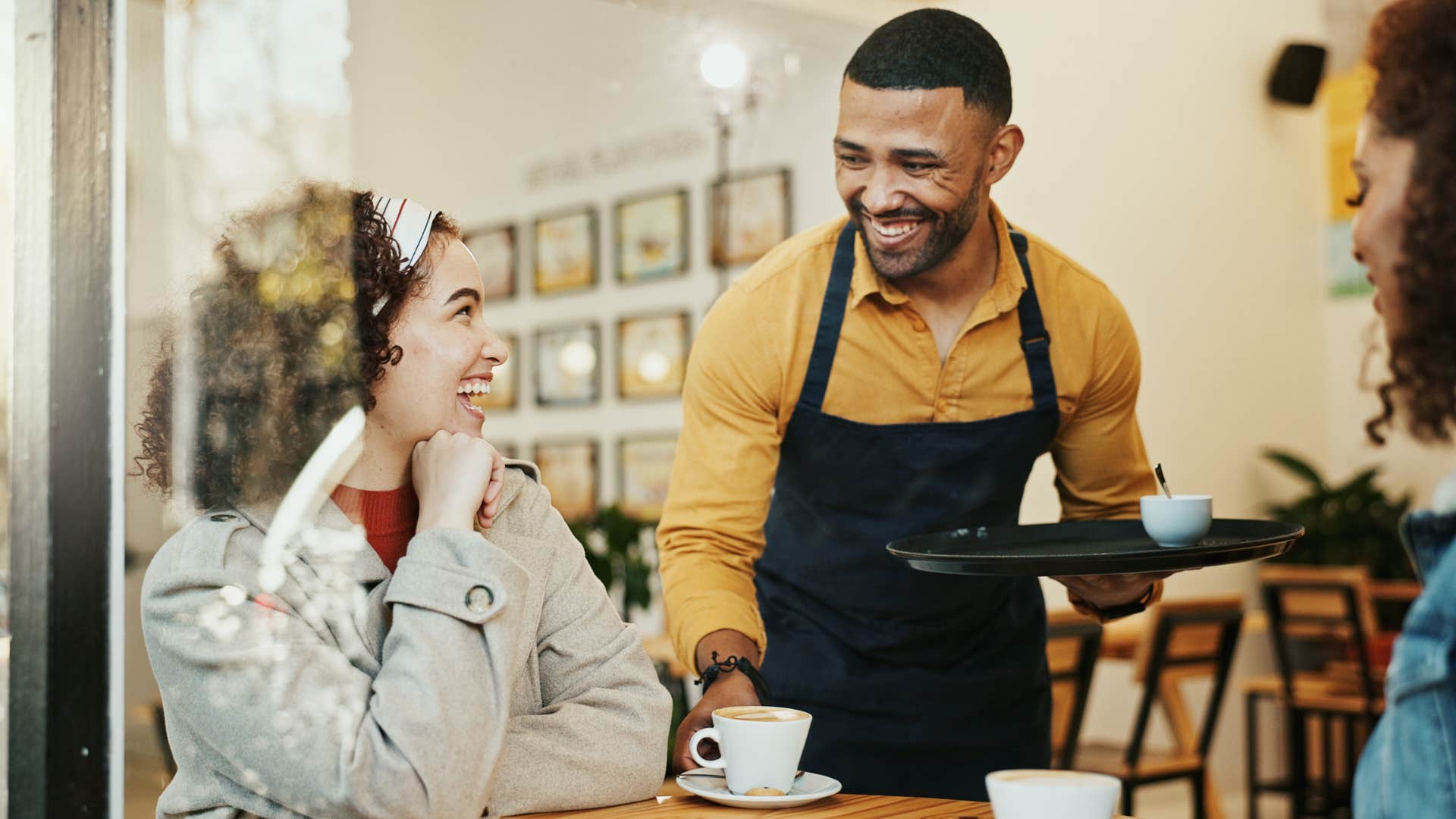
These individuals see beyond someone just working as a cashier. They treat them like they're an actual human being. For them, every interaction they have is a chance to recognize someone beyond their job. This mindset comes from how aware they are.
They understand that cashiers and other service workers deal with so much during their shifts. Ignoring them and rushing past them without any kind of acknowledgement can make them feel worse. Instead, these individuals make a conscious effort to validate the person who is scanning their groceries.
10. They believe kindness matters
 fizkes | Shutterstock
Even in the tiniest, everyday moments, these individuals value being kind no matter what. They understand that just engaging in small talk with a cashier can make their day brighter. To them, kindness isn't just about grand gestures; it's about consistent actions that come from the heart. Coming from a selfless approach, it makes their small talk feel so much more authentic.
"Being kind feels good and has powerful effects on the people we’re kind to. If we spend more time thinking about these ripple effects of our small acts of kindness, we may be more likely to choose kindness more often," said educator Clay Drinko, Ph.D.
They make sure to treat people with respect, no matter what. It's even better because we can sometimes always be in a rush and trying to get to the next thing. So for people who genuinely practice kindness, they're breaking that mold and actually taking the time to show up and make a difference, even in the smallest way.
11. They genuinely like people
 Pixel-Shot | Shutterstock
People who take the time to make small talk with cashiers do it because they just genuinely like people. It shows in the way they choose to interact with them. They're not just being polite or going through the motions; they actually enjoy connecting, even in the smallest of ways.
They're able to approach strangers without judgment. That openness is a good trait to have. People can sense when someone is actually enjoying interacting with them, and it helps improve the vibe altogether. These individuals enjoy the fact that they get to interact with a cashier and share a moment that might last for just five minutes; it sticks with them.
Nia Tipton is a staff writer with a bachelor’s degree in creative writing and journalism who covers news and lifestyle topics that focus on psychology, relationships, and the human experience.
