
People Who Sleep With 'T-Rex Arms' Usually Have 11 Highly Intelligent Personality Traits
 Liza545 | Shutterstock
 While sleeping positions seem relatively instinctual and impersonal, sleep researcher Samuel Dunkell suggests that they’re actually rooted in personality, daily habits, and internal emotional well-being. For example, people who sleep on their backs are usually more self-confident, while those who sleep in the “fetal position” are more emotional and anxious.
So, what about people who sleep with “T-rex arms” and bring their arms close to their chest when they fall asleep? Whether they’re curled to one side or on their stomach with their arms underneath them, people who sleep with “T-rex arms” usually have highly intelligent personality traits. From being social to feeling more emotionally sensitive, their sleeping position tells of how they navigate the world.
People who sleep with ‘t-rex arms’ usually have 11 highly intelligent personality traits
1. They’re sensitive
 AU USAnakul | Shutterstock
Dunkell suggests that people who sleep in a “freefall” position, usually with “T-rex” arms curled underneath their pillows or against their chests, tend to be more emotionally sensitive. They struggle with accepting feedback and criticism, take on the burden of other people’s strong feelings, and have a general aura of intuitiveness about them that can feel magnetic in social situations.
While their sensitivity can sometimes create more anxiety and strain in their lives, people with beautifully chaotic, deep-feeling minds also have the ability to connect with people on deep levels, support their loved ones, and sense when someone needs support before they have the words to verbalize it.
Of course, this innate sensitivity also feeds into their emotional intelligence, as a study from the Journal of Intelligence explains, which allows them to lead with a sense of openness and confidence that others lack in life.
2. They’re impulsive
 LightField Studios | Shutterstock
According to a study from Science of Learning, IQ is generally positively related to traits of impulsivity, another one of the traits Dunkell believes is associated with a “T-rex arm” sleeping position. From acting on emotional impulses to taking risks, it’s impulsive people who often have a strong sense of internal critical thinking skills built into their personalities and brains.
While it sometimes leads to conflict and struggle, these high IQ people occasionally follow instincts and impulses, even if they’re mostly defined by their ability to think deeply and critically.
3. They’re self-regulated
 MAYA LAB | Shutterstock
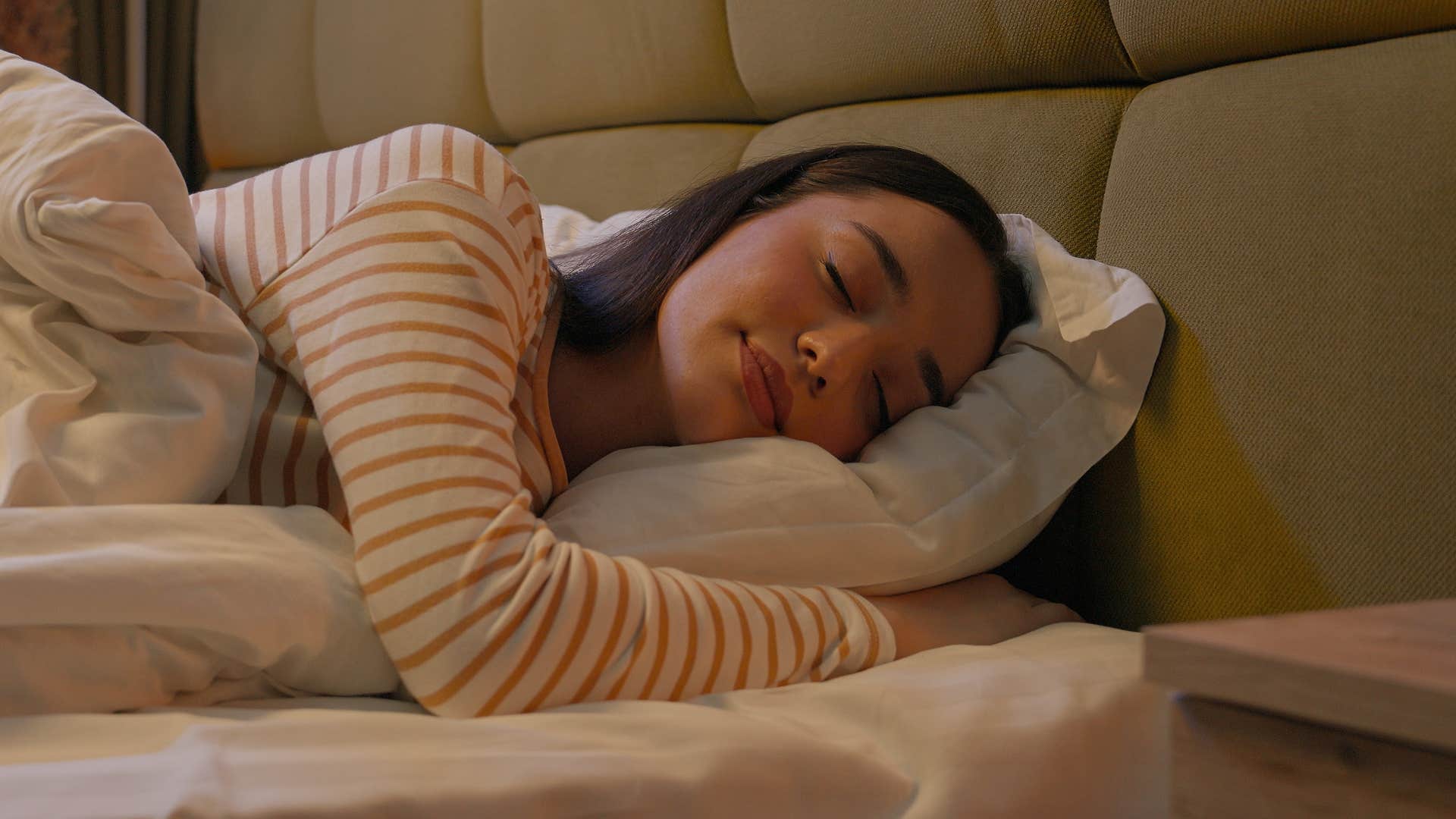
A great deal of research suggests that conscientiousness plays a role in impacting sleep quality and duration, but sleep experts also found that it’s indicative of sleeping positions. People who are intentional, self-regulated, and conscientious use their bodies to physically release and cope with their emotions, especially subconsciously, while sleeping when their minds are “turned off.”
Whether it’s anxiety and stress from the day or the desire to seek comfort when they’re unwinding at night, keeping their arms close to their chest offers a sense of groundedness that’s important for rest.
4. They prefer planning and structure
 Dragon Images | Shutterstock
People who sleep with their arms close to themselves, in a “T-rex” position, are often organized planners at their core. They thrive when their obligations and responsibilities are clearly contained and planned out.
Structured thinkers, who plan and create “mental maps” for their thinking patterns, also tend to have higher IQs. While sleeping, keeping their arms close to their chest and their bodies “contained” to a space prompts the comfort and security they need to truly rest, much like structure offers comfort when thinking critically.
5. They have rich inner worlds
 MAYA LAB | Shutterstock
People who have rich inner worlds that demand a lot of internal work, thinking, and introspection may be more likely to sleep with “T-rex arms” when they’re going to bed. In their daily lives, they often need alone time and containment in their routines to make space for their deeply analytical thinking patterns.
Similarly, when these analytical thinkers go to bed, their internal, contained sleeping position allows them the comfort to go inward. It’s just one of many examples of our innate mind-body connection at work. When we position ourselves inward, we often have more emotional space for introspection.
6. They’re independent
 PeopleImages | Shutterstock
Intelligent people are often inherently more self-reliant, despite also having the skills and attitudes necessary to embrace prosocial behavior. They have everything they need to think critically, resolve problems, and entertain themselves when they’re alone, so they rarely look for other people to feel secure and comfortable.
That same mentality is mirrored in their sleeping positions. They’re often self-contained, compact sleepers, because their subconscious mind is rooted in self-reliance before external, outward comfort.
7. They’re self-aware
 Tourialay Akbari | Shutterstock
Much like independent people are self-aware about how they’re feeling and what they need, they’re subconsciously interested in seeking a sleeping position that benefits their bodies and minds. If they’re looking for comfort and self-assured to provide it for themselves, sleeping with their arms close to their chest is a physical embodiment of their comfort in leaning on themselves.
Self-aware people are inherently more emotionally intelligent, and because of their ability to read, follow, accept, and take action on their internal needs and emotions, they’re also often more fulfilled, happy, and healthy.
8. They have a lot of depth
 Mix and Match Studio | Shutterstock
From cognitive depth and critical thinking skills to an appreciation for deep interactions, relationships, and conversations, people who sleep with “T-rex arms” embody their intelligence in more than one way. In a physical sense, sleeping with their arms closer to their bodies allows them to look inward and seek comfort. In relationships and conversations, their avoidance of superficiality embodies their intelligence.
As a study from Psychological Science explains, it’s this preference for depth and meaning in all aspects of someone’s life that improves their mood and boosts their happiness in comparison to the average person.
9. They’re open-minded
 Inside Creative House | Shutterstock
Many open-minded people seek novelty, learning opportunities, and change in their everyday lives. They regularly accept challenges and the discomfort of personal growth, even during casual conversations and unsuspecting routines. Of course, when they come home, their sleeping position will crave comfort. They need a physically supportive way to hold those emotions and process them, even when they’re not entirely conscious of it.
A study from the Journal of Clinical and Experimental Neuropsychology also found that openness is often inherently associated with a person’s intelligence, and one of the most important personality traits for predicting success and achievement in life. So, while the sleeping position that embodies this trait might feel harmless and juvenile, it’s actually representative of something much bigger and more influential than most people imagine.
10. They’re not defensive and combative
 Migma__Agency | Shutterstock
Intelligent people often engage in healthier, more productive conflict-resolution strategies, which lowers their experience of tense, emotionally charged interactions and arguments. Similarly, when they’re in bed at night, their sleeping position mirrors a secure, confident, self-assured energy.
They seek the stability of healthy conversations and productive arguments during their waking hours, and a similar sense of security when they’re falling asleep at night.
11. They’re intentional about their energy
 New Africa | Shutterstock
A person’s emotional regulation skills and self-awareness are needed to protect their energy. If they don’t know what emotions are coming up, what they need, and what drains them, they’re often stuck reacting to complex feelings and emotions, rather than predicting and protecting themselves.
This kind of emotional intelligence often takes practice, but those who master it live more meaningful, regulated lives in many ways. These are the same kinds of people who often sleep in self-contained positions at night. They’re physically creating a safe space to process their feelings and look inward, even if it’s just for a sense of comfort and relaxation before falling asleep.
Zayda Slabbekoorn is a senior editorial strategist with a bachelor’s degree in social relations & policy and gender studies who focuses on psychology, relationships, self-help, and human interest stories.
