
People Who Can't Stand Being Hugged Almost Always Have The Same 11 Personality Traits
 Pheelings media | Shutterstock
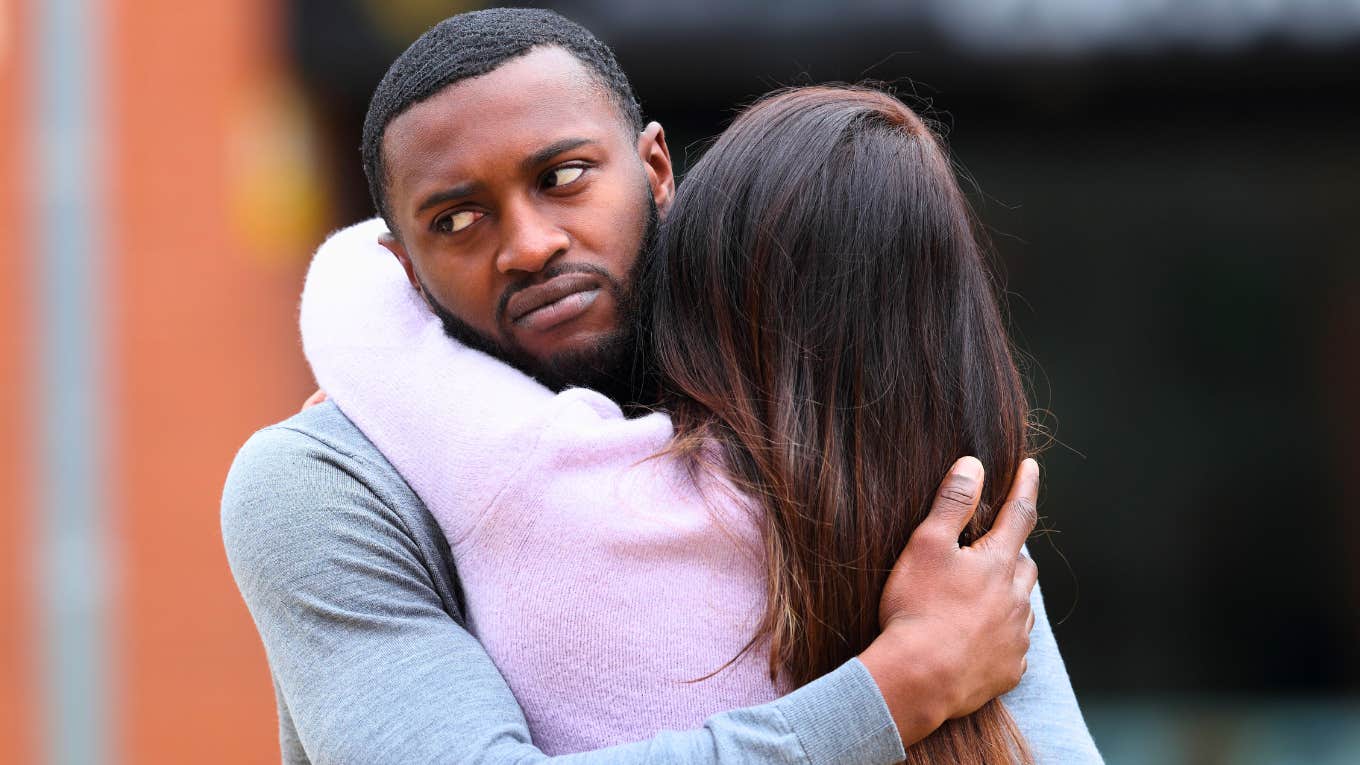
 For many people, hugs can feel quite comforting. It's the act of showing that you care and offering support without having to say anything. Research has even found that a hug is associated with better relationship functioning and even individual well-being. Despite the many benefits of receiving a hug, there are some people who find hugs to be the exact opposite. It's not that they're trying to be rude when they're turning down a hug; in fact, it's just about their personal boundaries and their relationship with physical touch as a whole.
Interestingly enough, people who can't stand being hugged almost always have the same personality traits. Being able to understand these traits can help explain why hugs may not feel good for everyone. It's not just about preference, either. These traits truly shape how someone interacts with the people around them, too. Many people who don't enjoy being hugged thrive better being alone. Physical affection can feel quite draining and even deplete their energy. Understanding that helps explain why hugs aren't exactly their love language.
People who can't stand being hugged almost always have the same 11 personality traits
1. They're highly independent
 voronaman | Shutterstock
People who can't stand being hugged thrive when they're able to make their own decisions without feeling pressured by others. They often take pride in figuring things out on their own. For them, their independence feels empowering, not lonely. And while they enjoy company, they truly value being able to have control over their own life.
"Hyper-independence often shows up as an intense reluctance to ask for help, rooted in a fear of vulnerability. These individuals equate self-sufficiency with strength, and leaning on others can feel like an admission of weakness or dependency, both of which may trigger feelings of discomfort or anxiety," explained psychologist Mark Travers.
Sometimes their attitude can make them feel distant to people who are more clingy or need constant reassurance. It's not that they don't care, it's just that they have their own way of doing things. They just enjoy being able to choose the exact scenario with how they share their personal space. A hug, even when it's friendly, can make them feel as if they're not in control of their own needs.
2. They strongly dislike being trapped
 MAYA LAB | Shutterstock
Whether it's disliking physical confinement or feeling panicked in close spaces, people who can't stand being hugged almost always have the same personality traits. They don't like feel cornered in any way. This could be anything from being a literal tight space to receiving a hug from someone. Feeling trapped can instantly trigger them to feel anxious or frustrated.
They would much rather have some kind of control over their environment. For them, personal space isn't optional at all — it's necessary. It's why they tend to avoid situations where they may feel pressured. They prefer to engage on their own terms and at their own pace.
3. They're extremely private
 PeopleImages | Shutterstock
Being private doesn't mean these individuals are trying to be secretive. They just don't feel the need to share every single thought or feeling that they're experiencing. They're the type of people who open up slowly and only to the people they truly trust. For them, privacy is about protecting their peace.
They carefully consider what information is valuable for people to know and what's irrelevant. They're not the type who are just going to trauma-dump upon first meeting someone. It takes time, but once you've earned their trust, you realize just how loyal these individuals truly are.
4. They have a strong sense of boundaries
 Pheelings media | Shutterstock
Just because someone doesn't like being hugged doesn't necessarily mean they're being unfriendly. In fact, it just shows that they know what they're comfortable with. People who can't stand being hugged are clear about where their personal space starts and ends.
"It's important for all of us to have personal boundaries. They dictate how we approach relationships with friends and acquaintances. Our boundaries help us live in-tune with our desires, needs, and feelings," counselor Marvin G. Knittel encouraged.
It usually means they're incredibly self-aware. They understand their needs and aren't afraid in the slightest to communicate them, even if it might feel awkward at first. They've learned that protecting their energy is essential for staying balanced and actually happy with their life.
5. They're emotionally reserved
 Monkey Business Images | Shutterstock
People who can't stand being hugged almost always have the same personality traits of being emotionally reserved and processing their emotions internally. They don't always feel the need to share them with everyone else, nor do they ever tend to ask for emotional support when they're going through a rough time.
For them, hugs and any other form of physical affection can make them feel quite uneasy. They usually prefer to show care in other ways. Opening up too quickly in that way can make them feel as if they're being rushed. They much prefer to just meet people at their own pace.
6. They're introverted
 AYO Production | Shutterstock
Being introverted doesn't mean that someone is shy or doesn't like people. It just means they need to recharge in a different way. For introverts, too much interaction can feel draining. Hugs, while comforting to some, can actually end up being too overwhelming for these individuals.
"Introverts feel more comfortable and energized in solitary or low-stimulus environments, often preferring one-on-one or small-group interactions," said family counselor Lynne Griffin.
Hugs aren't the way that they show or accept connection. They tend to show care in other ways. They want interactions to feel meaningful, and sometimes a hug can just feel too uncomfortable for them. They might prefer deep conversations with people or acts of service rather than physical closeness.
7. They're highly observant
 Krakenimages.com | Shutterstock
These individuals aren't just noticing small details, they're also picking up on everything else that could be happening around them. This awareness often makes receiving hugs tricky, especially if they can sense that the other person isn't being sincere at all.
They're careful about who they let get physically close. A hug, even if it's in a friendly nature, can make them feel uneasy. The mental checklist of trying to figure out if the person initiating it is safe and welcoming can just be too exhausting to do in the first place.
8. They're sensory-sensitive
 VH-studio | Shutterstock
Being sensory-sensitive often means that these individuals process sensations much more intensely than others. Everything, including touch, can feel quite amplified and sometimes exhausting because of that. A hug can be the most overstimulating thing for them, which is why they reject hugs from people.
"Sensory processing sensitivity is a real trait. Some people genuinely score higher on scales measuring a heightened depth of stimulus processing, higher awareness of subtleties in the environment, and ease of overstimulation," explained psychologist Scott Barry Kaufman.
A light touch can end up feeling heavier than intended and a squeeze can feel like a jolt throughout their body. They're not being dramatic, despite how it may come across.
9. They're control-oriented
 Xavier Lorenzo | Shutterstock
It might seem as if these individuals come off as being too demanding. But, in reality, they just enjoy feeling like they're in charge of their own life. They prefer to make decisions on their own terms, whether that decision is big or small.
This usually extends to personal space as well, including hugs. They like to choose the terms of closeness and physical touch. Any unexpected physical touch can feel uncomfortable. A hug they didn't initiate usually interrupts the sense of control that they like to have over things.
10. They dislike spontaneity
 fizkes | Shutterstock
People who can't stand being hugged almost always dislike spontaneity and feeling surprised. They like knowing what's coming and being prepared for it. "We know a good life comes with imperfections, but we can still be thrown off by ambiguity. Managing uncertainty is difficult; life happily sends surprises our way," pointed out psychology expert Lybi Ma.
Sudden hugs can throw them off because of how unplanned it is, and therefore out of their control. It doesn't mean they're boring people. They just value having stability in their daily lives, which is why impulsive gestures can sometimes feel off to them.
11. They're self-aware
 fizkes | Shutterstock
Being self-aware doesn't mean these individuals are constantly overthinking, as some like to believe. Instead, it means they understand themselves quite well, and they know that physical touch, especially hugs, makes them uncomfortable.
"When it comes to personal and professional growth, cultivating self-awareness is essential. Self-awareness is a super skill that influences how we show up for ourselves, for our work, and for the people who matter most," advised resiliency and wellness scholar Robyne Hanley-Dafoe.
They're in tune with their emotions and notice how they're feeling in every single moment. They spend time thinking about their own experiences and reflecting a lot. That usually helps them to understand why a hug might feel unnecessary.
Nia Tipton is a staff writer with a bachelor’s degree in creative writing and journalism who covers news and lifestyle topics that focus on psychology, relationships, and the human experience.
