
People Who Refuse To Take Accountability Use 11 Tired Excuses For Their Bad Behavior
 Dikushin Dmitry | Shutterstock
 We all make mistakes, but there are people who would rather blame others than take accountability for their mistakes. This does enormous harm to their relationships, often just to protect their ego.
These people are motivated by fear and anxiety, grasping at shallow and even aggressive tactics to make sure they come out on top. To spot these people, keep an eye out for these common phrases.
People who refuse to take accountability use 11 tired excuses for their bad behavior
1. 'You didn't need to get offended'
 NDAB Creativity | Shutterstock
If you know someone who refuses to take accountability, you've definitely heard this excuse before. It's a classic counter-attack with blame-shifting to avoid having to be accountable for what they said or did.
According to a student dissertation from Brigham Young University, people who feel judged in the face of a disagreement or argument may rely on phrases like this one to shift blame and deny accountability. They "counter-attack" the person expressing their needs or calling out misbehavior trying to paint themselves as the victim, arguing that they're misunderstanding or overreacting.
In a romantic relationship, this can spark resentment, where a partner may feel less inclined to bring up their concerns or seek an apology in the future. They may even suspect their partner is manipulating them.
Even in the workplace or within a friendship, phrases like this that attempt to "flip the script" diminish trust, encouraging people to turn toward defensiveness, rather than grace and empathy.
2. 'That's none of my business'
 Srdjan Randjelovic | Shutterstock
"That's none of my business" is a phrase used by people who refuse to own up to their mistakes and, instead, want to pass the responsibility onto you. They think they can just opt right out of being part of the hurt. Sorry, but no.
It's not always easy to take accountability in relationships. We come together each grappling with trauma, feeling deep-rooted shame and sometimes even secrets. It's within this discomfort that people can grow, both personally and within their relationships, but only if they're willing to take accountability.
You don't have to give the perfect apology or take all the blame for hurt in your relationship by owning up to a mistake; rather, simply acknowledging it and being open to growing is the key to building trust.
3. 'I'm not responsible for how you feel'
 Ground Picture | Shutterstock
While we really are not responsible for how other people feel, there's a certain healthy boundary everyone has to respect around other people's emotions. You shouldn't guilt yourself into overcompensating for someone else's reactions and emotions, but you should be conscious of when you actively hurt them and own up to it.
An apology can go a long way, and if you're only ever deflecting and blaming people for expressing their emotions, you're likely sabotaging the potential for a better, healthier relationship.
Phrases like "You can feel how you want to feel" or "I'm not responsible for how you feel" are tell-tale signs of an insecure, narcissistic blame-shifter. They'd prefer to blame you for the hurtful language and behaviors they've done rather than acknowledge they're in the wrong.
4. 'You just don't get it'
 Anatoliy Karlyuk | Shutterstock
Trying to blame other people for misunderstanding their words or actions is a classic tactic of people who won't take accountability, even when they've hurt someone's feelings.
Instead of grappling with their own feelings about hurting someone's feelings, they try to spark self-doubt and uncertainty in someone who they upset. This is a type of behavior that come close to gaslighting, where someone tries to tell you that you didn't just experience what you experienced. Instead of being done with the intention to make you mistrust yourself so they can control you, it's done to avoid responsibility.
Take note of the way you feel around other people, as it can tell you a lot more than their words will in many situations. If someone's phrases, tone of voice, or general demeanor is unsettling and frustrating to be around, that could be a sign that they're more emotionally manipulative than you (or even they) realize.
5. 'You're always targeting me'
 MAYA LAB | Shutterstock
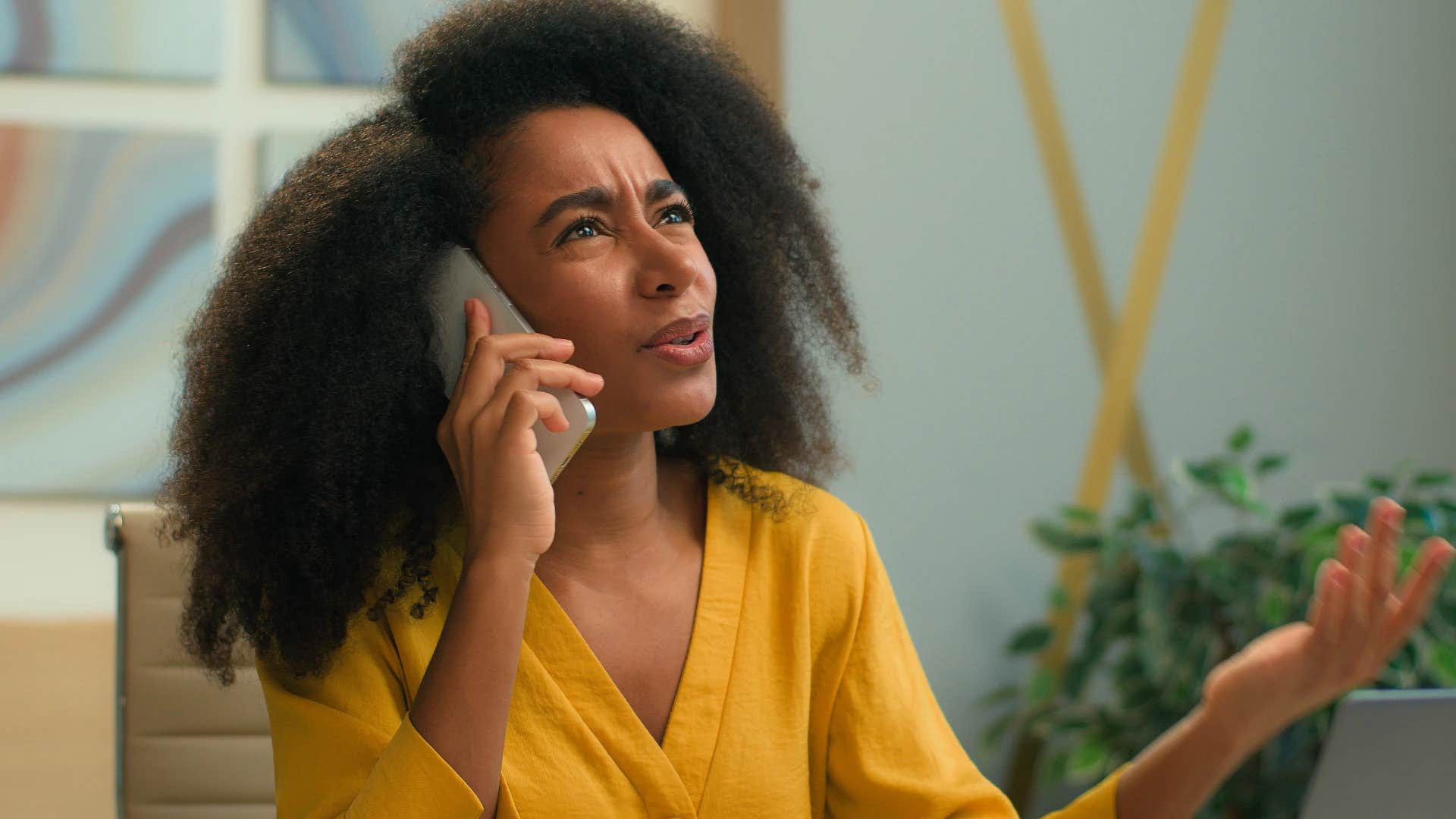
Instead of just saying, "I'm sorry," people who refuse to take accountability will turn the tables and blame the person who was hurt.
"An effective apology uses validation and curiosity to build trust and safety back into the relationship," therapist Tasha Seiter shares. People use phrases like this instead of getting vulnerable and crafting a genuine apology, sparking uncertainty in a relationship, rather than security and trust.
Many of us who have experienced childhood trauma or toxic relationships in the past struggle with not immediately getting defensive when we feel "called out." However, the truth about disagreements and calling out hurtful behavior in relationships is that it's not typically an attack, it's an opportunity to grow.
By following the discomfort and actively dismissing defensiveness in the moment, you open up the opportunity to grow with open communication and empathy. You can comfort a partner, give an apology, and support them in their hurt without demonizing yourself as a person.
6. 'That's not my problem'
 fizkes | Shutterstock
Apologizing is good for the person you've hurt, but it's also good for you, and people who won't take responsibility are missing out on that relief.
Taking responsibility for our mistakes and genuinely apologizing can actually make us a lot happier, according to psychotherapist F. Diane Barth. Yet, so many of us still get defensive or dismissive when someone brings our hurtful language or misbehavior to light. People who are chronic deniers do it again and again.
Rather than leaning into their discomfort with empathy and honesty, they use phrases like this to dismiss and invalidate another person's concerns. They prefer to deflect for the sake of their own ego, rather than get uncomfortable and give an honest and genuine apology. And they're worse off as a result.
7. 'There's nothing I can do about it'
 New Africa | Shutterstock
If you've hurt someone or made a mistake, there are always steps you can take to make a repair or help someone manage the feelings that arise as a result.
For example, if someone expresses their hurt, you can put your regret aside and make a safe space for them to speak, acknowledging their hurt and painge a better path forward. You can actively listen while they're bringing up concerns. And the list goes on.
If someone says there's "nothing they can do" about your hurt, they're not committed to building a healthy relationship with you. There's always something that can be done, even if it's just leaving that person alone for a while.
But people who refuse to be accountable just give up, thinking it will keep them from feeling sad or regretful over their mistake. And that does even more harm in the end.
8. 'I can't help it'
 Pheelings media | Shutterstock
Many of the insufferable phrases used by people who refuse to take responsibility show how they really feel about themselves. They truly feel helpless to their own behavior, as if they cannot stop themselves from making mistakes.
They make excuses for toxic behaviors with phrases like this one, arguing their rudeness is simply bluntness or their hurtful comments are simply the truth. By saying "I can't help it," they are shifting the blame to something that's beyond their control, even though they are actually the ones responsible for their own behavior.
If it weren't so damaging, it would actually be sad.
9. 'You're gaslighting me'
 Monkey Business Images | Shutterstock
People who won't accept accountability often manipulate therapy terminology in order to turn the tables and blame others.
According to mental health and psychology educator Dr. Ana Yudin, therapy speak is "a prescriptive way that primarily therapists and therapy clients have learned to communicate with other people." However, people who understand and have access to these phrases may weaponize them to emotionally manipulate other people in certain situations.
They tend to accuse other people of doing things that are clinically problematic or pathological, almost always with very little foundation. They only do it when it works to their benefit, without acknowledging and addressing their own role in hurting the other person.
While this kind of manipulation can be a shady way to avoid accountability, it's becoming more and more popular in today's world, as social media and the internet's accessibility turn these phrases into more common knowledge.
10. 'That's not fair'
 StratfordProductions | Shutterstock
People who use phrases like "that's not fair" to avoid taking responsibility for their own actions are generally fueled by a misguided victim mentality. They believe that things aren't fair because they're always being called out, rather than acknowledging that they may actually be the root cause of the problem.
People tend to fall into these habits without realizing, so these conversations with a friend, co-worker, or partner are some of the only opportunities they ahve to confront this limiting behavior of theirs. In these moments, it can be helpful for the other person to simply say, "I'm sorry it feels unfair to you, but I won't let you turn this back on me when I was the one who was hurt."
11. 'I guess I just can't do anything right'
 simona pilolla 2 | Shutterstock
Turning someone's need for an apology into a pity party is one of the most manipulative ways someone can avoid responsibility.
When called out or confronted, even very kindly, they'll say "I just can't do anything right" or "everyone's always out to get me" to spark pity and sympathy. This completely dismisses a person's hurt or emotional expression and makes themselves the center of attention rather than expressing
Of course, true emotional intelligence is found in people who have the capacity to give a genuine apology, even when they may not agree with a person's experience or re-telling of events. They can own up to hurting another person's feelings and even support them in grappling with their hurt. They don't need to turn the tables or act hurt to make the other person feel bad.
Zayda Slabbekoorn is a staff writer with a bachelor's degree in social relations & policy and gender studies who focuses on psychology, relationships, self-help, and human interest stories.
