
Emotionally Stunted Men Who Avoid Responsibility Usually Have These 11 Traits
 Gonzalo R.J | Shutterstock
 Without foundational experiences that teach them healthy coping mechanisms and empathy, in adulthood many men resort to frustration and anger when they’re expected to take accountability for their actions or express their emotions in an uncomfortable conversation. Clinical social worker Assael Romanelli explained that many men struggle with emotional maturity in adulthood due to the societal norms, pressures, and relationship expectations that made them feel detached and disconnected from their emotions earlier in life.
While it may not be obvious at first, emotionally stunted men who avoid responsibility usually have certain traits that tend to appear in their relationships with family, romantic partners, and even work colleagues. Fortunately, with the right role models, self perseverance, and vulnerability, it’s possible to grow into an emotionally intelligent person, despite the circumstances.
Emotionally stunted men who avoid responsibility usually have these 11 traits
1. They’re unreliable
 simona pilolla 2 | Shutterstock
Not only do immature, emotionally stunted men men struggle to keep promises with the people in their lives, they also struggle to keep commitments. With an aura of self-centeredness, they’re less concerned with appeasing other people — whether it’s showing up on time or canceling at the last minute — and more vigilant about their own self-interests and motivations.
According to psychologist Sabrina Romanoff, it’s not just immature men that have been negatively affected by unmet needs or childhood trauma, it’s also the partners that “choose” to remain in their lives and accept their lack of accountability and constant disrespect.
"When you do finally decide on and commit to a partner, your dependence on them exponentially increases. To reveal yourself completely and trust that your partner will not only be accepting but will also fulfill your primary needs is immensely threatening. In turn, you may make attempts to reduce that danger and dependency," Romanoff pointed out.
If you’re constantly choosing partners who embody the traits of a man who avoids responsibility, don’t waste energy trying to change him or help him grow up, focus on protecting your energy, healing your unresolved trauma, and setting productive boundaries in those relationships.
2. They shift blame to others
 Dragon Images | Shutterstock
It’s not just responsibility that many emotionally stunted men avoid in adulthood — it’s also accountability. They struggle with the uncomfortable emotions attached to being called out or owning up to being wrong, so they get defensive to protect themselves from embarrassment, envy, and shame.
Unfortunately, that inability to cope with big emotions tends to harm the relationships in their lives, especially as the high stakes of connections grow into adulthood. This is often a sign of emotional dysregulation, which can stem from trauma, mental health conditions, and even personality disorders.
So, if your partner can’t have an open conversation about their emotions with you, how can you expect them to support you during more tumultuous times riddled with loss, grief, betrayal, or sickness? It’s not just immaturity, it’s a constant decision many adult men make: self-preservation over vulnerability.
3. They struggle with commitment
 Geber86 | Shutterstock
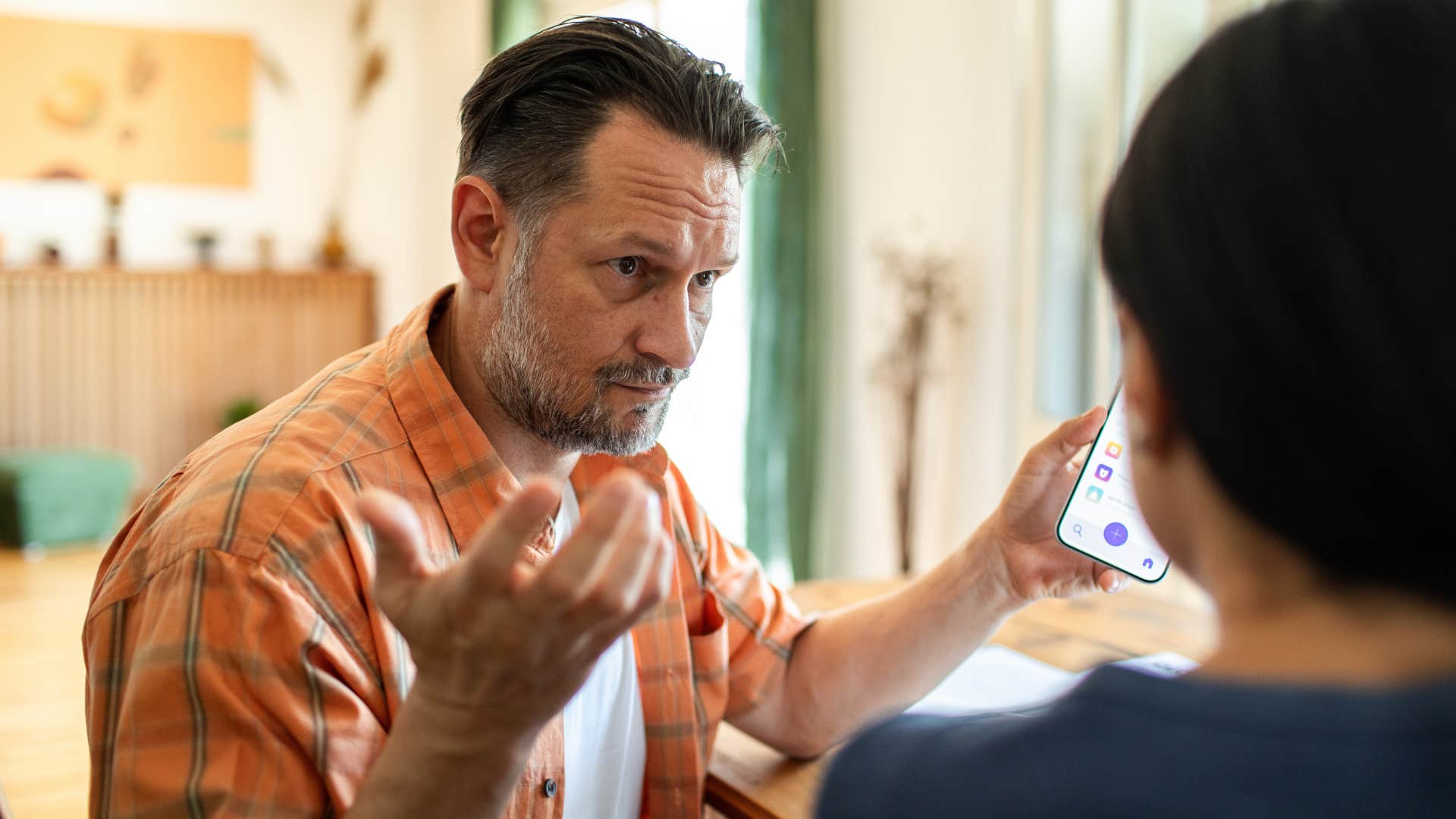
Emotionally stunted men who avoid responsibility usually struggle with commitment, whether it's something big like relationships or small like taking care of small tasks. From getting groceries to settling down with a long-term partner, these men have a hard time making decisions and having the kind of self-assuredness that keeps them committed.
They operate from a place of insecurity — afraid of being wrong and fearful of getting hurt and looking weak in their vulnerability. This is what keeps them from taking on responsibilities in adulthood and truly evolving — they’re afraid of everything that’s not innately comfortable.
Experts from the Newport Institute even suggests that adult men who struggle to maintain healthy romantic and platonic relationships lean on their parents for much longer, living at home well into their adulthood. And while there's nothing wrong with having to live in a parent's home, it's the inability to move forward that can stunt a man's emotional growth.
4. They avoid talking about the future
 LightField Studios | Shutterstock
While many emotionally immature and stunted people tend to rely on attention-seeking behaviors and external validation to misguidedly build their self-esteem, most will avoid talking about personal achievements and future plans. It's not just because they don’t have many, but because they’re not looking to open up debate that would spark more responsibility in their lives.
If they can shift the blame to their parents or their circumstances to avoid taking on additional responsibilities, they’ll do it. If they feel like making other people feel guilty or embarrassed to help them look better, they’re going to adopt that narcissistic tendency. Anything they can do to feel more comfortable and secure in their own identity, they’re willing to sacrifice for that feeling.
5. They lack empathy
 Rebel Red Runner | Shutterstock
Emotionally stunted men who avoid responsibility usually lack empathy, which is unfortunately, because emotional maturity can be boiled down to empathy and compassion. According to a study published in Acta Biomedica, successful empathetic people are not only in touch with and cognizant of other people’s emotions, but also their own.
As one of the most influential traits of an emotionally stunted man who avoids responsibility, not having empathy impacts every part of a person’s life — from relationships to work life to personal development. If you can’t pinpoint, explain, and validate your own emotions, you’re never going to be able to maintain a healthy relationship founded on communication, trust, honesty, and balance.
The effects that a lack of empathy can have on a person's relationships and life are detrimental, to say the least. When a person lacks compassion, it leads to more arguments and poor communication, which can damage connections.
6. They’re impulsive
 garetsworkshop | Shutterstock
According to psychology professor Dr. Thomas Plante, narcissism has become a more common personality trait in recent years, encouraging many people to mistakenly victimize themselves, avoid responsibility, and shift blame to other people in their lives. By avoiding their own responsibilities and the possibility of any new ones — from work to relationships to financial burdens — they can comfortably push away their anxieties about adulthood.
This manifests itself as impulsivity and irresponsible behavior in many adult men’s lives, from spending erratically to isolating themselves over a new all-encompassing hobby, or running away from problems by booking a trip or investing time into a new fling.
7. They procrastinate
 LightField Studios | Shutterstock
Fueled by anxiety and inner turmoil, many emotionally stunted men who avoid responsibility prefer to push responsibilities they do have to the background of their lives rather than addressing and completing them directly. This tendency towards avoidance not only builds resentment in relationships, but it also tends to keep the procrastinator comfortable with not taking action, according to clinical psychologist Jacqueline Sperling.
Held to such extreme standards and expectations growing up, many emotionally immature adult men are still intrinsically driven by perfectionist protector attitudes, keeping them from trying anything new or doing anything they’re worried they’ll fail at. Unfortunately, as one study published in Frontiers in Psychiatry found, procrastination is linked to stress, depression, and anxiety.
8. They’re emotionally detached
 Pheelings media | Shutterstock
According to clinical psychologist Matt Boland, emotional detachment isn’t only a problem for an individual's psychological well-being, it’s also ingrained into our social experiences, physical well-being, and personal development. Many emotionally stunted men never learned how to get in touch with their own emotions, isolating themselves before they have a chance to connect with others over shared experiences or vulnerabilities.
Whether it’s rooted in misguided societal expectations or unresolved childhood trauma, this emotional detachment and disconnect from other people and experiences in their life fuels inner turmoil, oftentimes without knowing exactly why. Not only that, but it further isolates them from forming deep, long-lasting connections with others as they move through life.
9. They’re always in a defense mode
 fizkes | Shutterstock
People who struggle with emotional regulation may view vulnerability and uncomfortable emotions as a sign of weakness. They’d prefer to maintain a rigid persona rooted in misguided superiority than seem “weak.” Often, this stems from young boys being told to suppress their emotions or that showing them means they aren't "manly" enough.
Outside of playing defense against their internal emotions, many men who avoid responsibility will shift blame and victimize themselves in their relationships to avoid taking accountability for their actions and mistakes. These men aren't solution-oriented or supportive — not because they don’t care about their partners, but because they’re more concerned with their own image than anyone else’s.
10. They struggle to learn from their mistakes
 WBMUL | Shutterstock
Emotionally stunted men who avoid responsibility usually struggle to learn from their mistakes. On the other hand, emotionally mature men are open to suggestions, growth, and personal development, even in a committed relationship.
Even in situations where they don’t agree with advice or the experience of someone in their life, they’re willing to listen, take feedback, and empathize with their emotions before getting defensive. This is a far cry from an emotionally immature man, who tends to repeat actions that end poorly, never quite understanding where they went wrong or how to rectify their choices.
Anyone who fails to take responsibility for their actions, grow from their mistakes, and take genuine advice from people in their lives isn’t capable of maintaining a healthy relationship. We’re all changing, evolving, and deserving of grace, so we should be striving to be better and grow, even if it’s uncomfortable.
11. They never admit when they’re wrong
 MDV Edwards | Shutterstock
Nobody wants to admit they were wrong, whether it's in a heated discussion, important conversation in a relationship, or a debate based on facts. But emotional maturity means being able to own up to mistakes, intentional or not, and learn from them. Unfortunately, emotionally stunted men can never admit when they're wrong, effectively pushing away people.
"Some people don’t take responsibility or admit they are wrong because they believe they are always in fact 'right.' The inability to 'mentalize,' which involves being able to self-reflect and relate to a perspective or mindset other than one’s own, can be an obstacle to empathy, connection, and repair," licensed psychologist Dr. Lynn Margolies explained.
Until emotionally stunted men do the work to express themselves in a healthy way and handle themselves in a respectable manner, they can count on a lack of essential relationships in their lives. Because nobody wants to be around a person who can't take accountability for anything they do.
Zayda Slabbekoorn is a senior editorial strategist with a bachelor’s degree in social relations & policy and gender studies who focuses on psychology, relationships, self-help, and human interest stories.
