
10 Old-Fashioned Rules 60s & 70s Kids Followed That Are Basically Obsolete With Younger Generations
 Joseph Sohm | Shutterstock
 Parenting styles have changed over the years and have gotten better. At least, that’s what young parents seem to think. In reality, there’s no “right” or “wrong” way to parent kids.
There might be habits and safety concerns that are toxic, but for most parents, there are pros and cons to the parenting styles of the last few generations. For example, so many old-fashioned rules made 60s and 70s kids more resilient, despite being pretty much obsolete with younger generations today.
Kids raised in the 60s and 70s followed rules that are now obsolete with younger generations
1. Teachers and parents are authority figures
 Pressmaster | Shutterstock
While Gen X parents today ironically compensate for their own self-reliant childhoods by being overprotective, somewhat authoritarian parents with their own kids, they were expected to respect parents as authority figures.
When they were told to do something, they did it without pushing back. They knew how to grapple with discipline, even at school, because they were meant to be obedient first.
Compared to the more gentle parenting styles millennial and Gen Z parents try to craft, parents and teachers in the 60s and 70s were meant to be authority figures to follow.
2. Household labor is an obligation
 Maria Sbytova | Shutterstock
Without an allowance and without extra compensation or praise, chores and household labor were an obligation for kids growing up in the 60s and 70s. They had no choice but to play a role in the household, not only as a means of building responsibility but to support their families and parents.
Especially since most Gen Xers spent the majority of their time alone, they had to play a foundational role at home. They cooked and cleaned and babysat their siblings to help make up for the lack of presence their parents had.
3. Respect your elders
 PeopleImages | Shutterstock
Kids and young adults today are pushing back on a lot of old-fashioned manners and expectations, including that you should always respect your elders simply because of their age. Even in the face of disrespect or misbehavior, their parents and grandparents were taught to respect them, usually at their own expense.
It was simply a rule and an obligation they didn’t have space to push back on. Compared to the more open, challenging mentality of Gen Zers today, the 60s and 70s were far more stigmatized when it came to self-advocacy in the face of traditional norms and manners.
4. Gender roles apply to everyone
 Odua Images | Shutterstock
Many eldest daughters served as third parents and caretakers at home because of the expectation that gender roles applied to everyone during this era. They did a lot more housework and childcare than their male siblings, even if they weren’t technically the eldest child, usually at the expense of their health and well-being.
The same often went for men. They were held to a range of unique gender norms and expectations, forced to give up their own needs and interests. While some people might still carry on these traditional roles and rules in their own families, for others it’s a part of their identity that they’ve had to challenge and unwind on their own.
5. Children should be seen and not heard
 MAYA LAB | Shutterstock
Considering they spent most of their time alone, most kids from the 60s and 70s learned to meet their own needs and solve their own problems. They filled their own time without constantly looking to a parent for guidance.
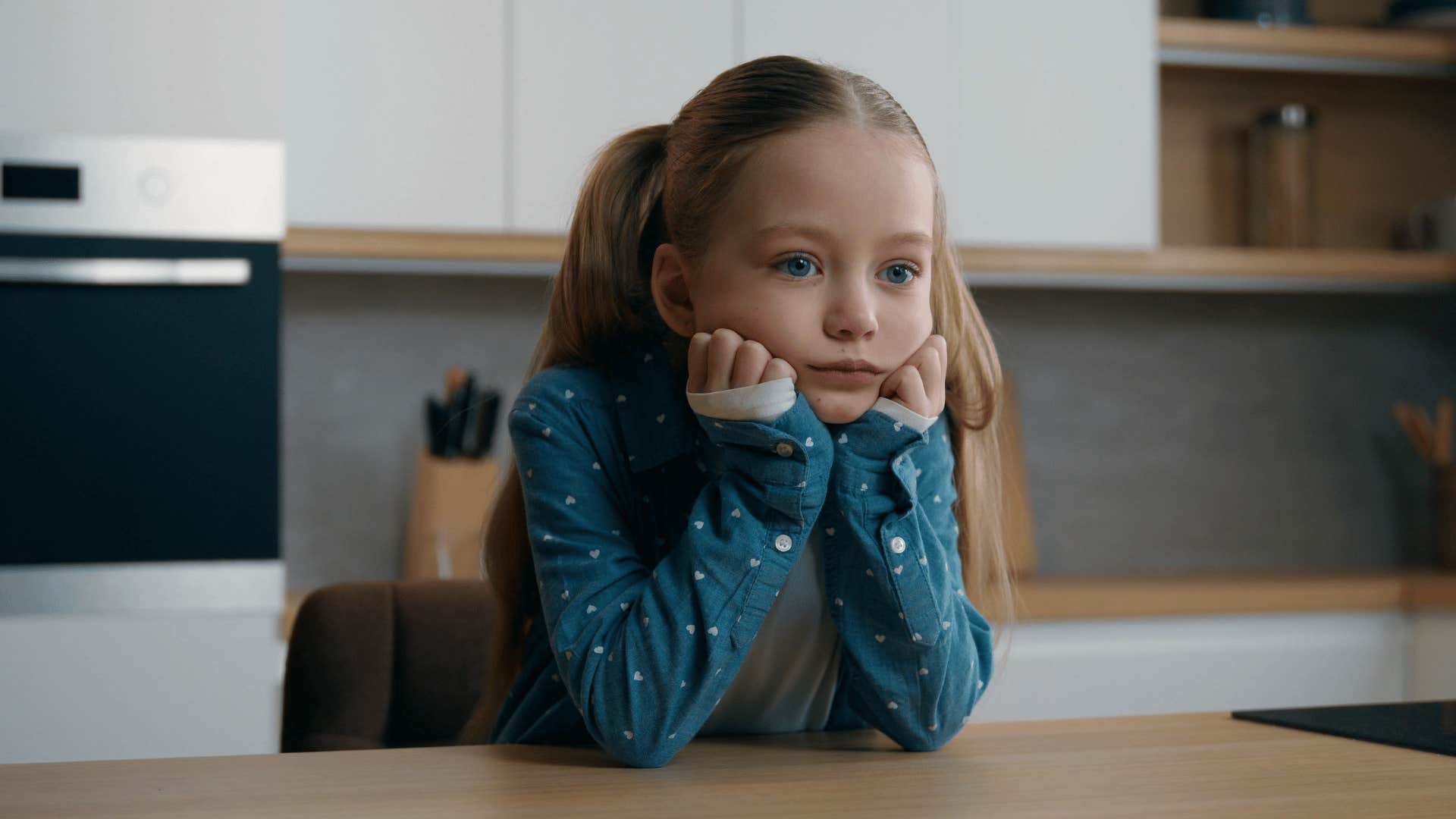
But they were also taught that asking for things and expressing their emotions were bad things and should be suppressed, both by mental health stigma and phrases like “children should be seen and not heard.” They didn’t have a safe space to ask for help or express themselves, and with new parenting styles and digital forums today, that rule couldn’t be any less relevant.
6. You have to clean your plate at dinner
 Koldunov | Shutterstock
On top of having family dinners together, which most families don’t have the time and space for today, many kids were forced to adhere to all kinds of old-fashioned eating habits and manners. From setting the table every night to fixing their posture and even cleaning their entire plate, their eating habits were informed by parenting rules.
While it’s somewhat obvious today that making kids to eat all of their food sabotages their eating habits by forcing them to overlook their own body’s natural hunger cues, just a few decades ago it was an old-fashioned manner that prevented food waste and taught kids discipline at home.
7. Streetlights are your curfew
 PeopleImages | Shutterstock
Despite having the freedom to do essentially whatever they wanted on their own after getting household responsibilities done, children from the 60s and 70s often had a strict curfew. When the streetlights came on, they were expected to be home.
While they didn’t have cell phones to check the time, most kids learned to be home at that exact time, no matter what, to avoid being disciplined or punished for being late. It’s this kind of reliability and consistency that kids lack today, largely because they’re not practicing independence.
They’re not forced to figure things out on their own or be accountable for themselves, especially in comparison to the Gen Xers and boomers of this age.
8. You should represent your family well
 Odua Images | Shutterstock
Even though many kids spent most of their time away from parents and out on their own, they were still a representation of the household. At least in this era, when it seemed like everyone knew everyone and kids were comfortable going out to run errands without supervision, they were taught to be respectful.
Whether it was keeping certain taboo topics, like family issues or money, private outside the home or simply treating elders with respect without a parent looking over their shoulder, young kids of this generation were always intentional out of fear that misbehavior would get filtered back to their parents.
9. Good clothes are only worn inside
 Jacob Lund | Shutterstock
In the 60s and 70s, parents often told their kids to never wear their "good clothes" outside. They knew that kids would get dirty and sweaty, and they likely couldn't afford replacement outfits, as parents only replaced clothes once or twice a year, sometimes less.
So, kids would play in old or worn clothing, feeling free to make a mess in the process. Their "good clothes" were meant to be worn to family gatherings or church, and the thought of having to tell their parents that they got grass stains or dirt on their shirt or pants made them fearful enough.
10. Discomfort isn’t a sign to run
 MAYA LAB | Shutterstock
Kids learned to care for themselves and solve problems on their own by being thrust into the deep end. The “sink or swim” mentality of their parents seriously influenced their childhood experiences.
Although they were rarely easy or comfortable, they had a chance to grow into self-sufficient people by leaning into discomfort. It was somewhat of an obligation for a generation of kids who had to figure most things out on their own.
Zayda Slabbekoorn is a senior editorial strategist with a bachelor’s degree in social relations & policy and gender studies who focuses on psychology, relationships, self-help, and human interest stories.
