
Women Born Between 1979 & 1996 Are Often Called 'Angry Daughters' For 11 Distinct Reasons
 VH-studio | Shutterstock
 While women have made strides over the decades in gender equality and education, there's still a long way to go, especially when it comes to the stereotypes people still hold. While often people perceive angry men as credible, they see angry women as emotional and aggressive. And for modern women who stand up for themselves, this label is all too common.
For women born between 1979 and 1996, they are often called "angry daughters" for distinct reasons, most of which have to do with their assertive nature in demanding what they deserve. Society may have tried to condition themselves to stay quiet and remain small, but these women are done with being controlled.
Women born between 1979 and 1996 are often called 'angry daughters' for 11 distinct reasons
1. They speak up after years of staying quiet
 Arthur Bargan | Shutterstock
Women are often silenced from expressing how they truly feel. They may feel ashamed and guilty for not measuring up to impossible standards, but for women born between 1979 and 1996, when they grew up, they refused to sacrifice who they are.
Daughters said to be angry are given this label due to their ability to speak up after years of silence. No longer letting people walk over them, they won't let people get away with disrespectful behavior. They understand the importance of emotions and defending themselves.
As therapist Jason N. Linder explained, "When we take the time to feel and understand our emotions, it can often lead to a more insightful outlook on life, better relationships, and improved physical health. Working through them and expressing them enables us to improve our mental and emotional health."
2. They set boundaries
 Media_Photos | Shutterstock
Sometimes, women spend years trying to please others, but eventually, they learn to take their power back. From life experience to long therapy sessions, daughters learn how to set firm boundaries while finding their voice. Unfortunately, not everyone thinks women should be so straightforward.
But everyone has the right to say no without being viewed as angry. While life doesn't work out the way we want it to, women who demand what they deserve are changing these outdated rules and setting boundaries of their own.
3. They're highly emotionally expressive
 Miljan Zivkovic | Shutterstock
Women weren't always taught how to express their emotions. Feared being labeled as hysterical or overly sensitive, many women learned from a young age to hide how they felt. And even if they eventually grew out of this and now express how they feel, people often call them angry.
Negative emotions don't mean someone is a negative person. As philosophy professor Bence Nanay said, "Even for the most ethical and virtuous ones of us, accepting ourselves implies accepting all the vanities, pettiness, procrastination, anger, jealousy in our past (and present). Focusing on these leads to a healthier and more sustainable self-image. This is why we are better off with negative psychology."
4. Their assertiveness is mistaken for aggression
 Krakenimages.com | Shutterstock
Just because someone speaks their mind, it doesn't mean they're an angry person. It's intimidating to hear someone's unfiltered thoughts, but honesty can truly be the best policy. Cutting through the fluff, women who are assertive are often called aggressive, despite just being direct.
So long as there is a layer of respect, assertiveness doesn't have to be a bad thing. Unfortunately, some people don't view it that way, choosing instead to call assertive women angry. Unable to accept the fact that these women are evolved, they just assume women like this are rude.
5. They don't engage in people-pleasing tendencies
 DexonDee | Shutterstock
Far too many people cling to their people-pleasing ways. Terrified of being viewed as difficult, it's a good thing some women don't engage in these harmful behaviors as they grow older. Having spent the better part of their childhood giving too much, once a woman refuses to put her happiness aside for others' comfort, that's when she's labeled as the angry daughter.
While she may lose when it comes to how she's perceived by others, she wins in other ways. Living in her authentic truth, these women experience greater well-being and happiness. She's no longer being held back by the opinions of others and is free to live her life the way she wants.
6. They're self-reliant and can't be controlled
 EF Stock | Shutterstock
Every child goes through the phase of being entirely too clingy with their parents. Unable to live their own life without their parents' guidance, when they eventually break free and become self-reliant, many people can't handle it. She's independent but is called angry because she can no longer be controlled.
She isn't about to bend over backwards for anyone. She's been through it all before, and is now focused on her own well-being. People call her angry because she refuses to take unrealistic expectations seriously.
7. They challenge outdated dynamics
 simona pilolla 2 | Shutterstock
When women are called angry, it's because they won't take disrespect from anyone, not even their family. While they might have been meek in the past, they've changed drastically as they've grown up. They've become a better, more evolved version of themselves, and challenge outdated dynamics.
As licensed clinical psychologist Jennifer Kromberg explained, "The roles we played in our families greatly influence how we see ourselves in relation to other people. And continuing to repeat our early family roles allows us to stay in the familiar relational territory... The difficulty is when the roles you repeat aren’t the roles you want."
8. They have low tolerance for disrespectful behavior
 Drazen Zigic | Shutterstock
Women born between 1979 and 1996 are often called angry daughters because they refuse to tolerate disrespect. Maybe they were children who were constantly yelled at and belittled, but now that they're grown, they demand respect and stick up for themselves.
She isn't going to compromise or play nice with someone who insults her or uses her as a punching bag. Instead, because she's older and wiser, she refuses to play games and just take it on the chin.
9. They don't minimize themselves
 Rido | Shutterstock
Growing up, some women were too scared to express how they truly felt, diminishing their own light to make those around them shine brighter. As an adult, things have changed. They've stepped into their authentic selves and no longer minimize themselves to put the spotlight on someone else.
There's something about a woman with confidence that makes some people upset, particularly parents. Psychotherapist Imi Lo explained, "For parents who did not receive the love and care they needed as children, watching their kids thrive in ways they never could can be particularly triggering. Seeing their children receive affection, opportunities, or recognition they longed for may unconsciously remind them of what they lacked all their lives. These feelings of envy, though unspoken, can influence how they interact with their children."
10. They're highly opinionated
 Anatoliy Karlyuk | Shutterstock
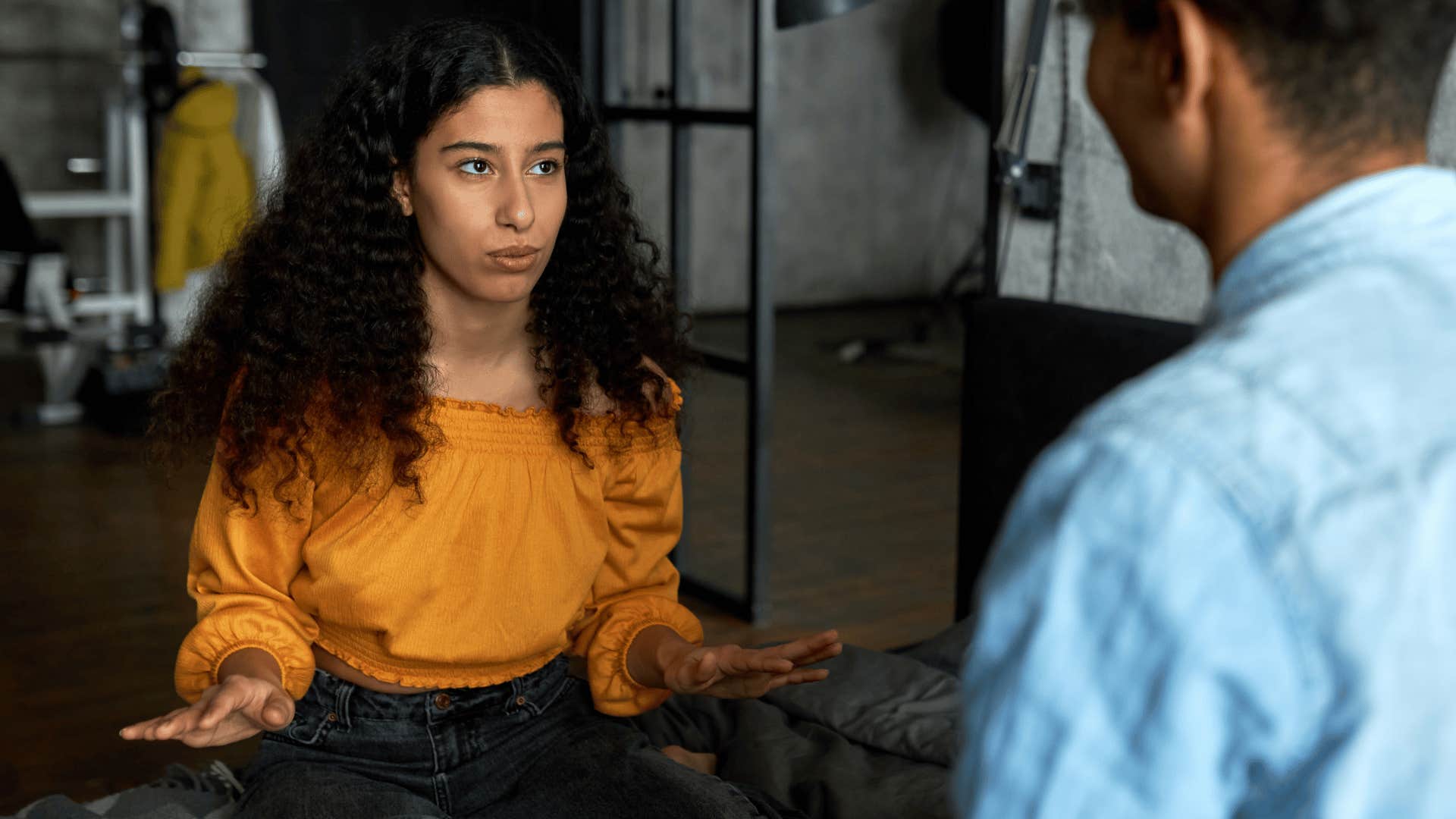
There's nothing wrong with a woman being opinionated. From being viewed as highly intelligent to inspiring those around her, a sharp mind should be encouraged. Unfortunately, it rarely is, especially for women who are called overly emotional or sensitive for expressing their feelings.
She likely blindly obeyed her parents and others growing up, and now they can't stand that she's evolved past her childhood. They don't know how to control her anymore or put her in her place. Seeing her become her own person, they can do nothing but condemn her for thriving.
11. They reject being the peacemaker
 carballo | Shutterstock
As a child, these women lifted the spirits of others. Perhaps they were parentified from an early age and were taught they must always keep the peace in the family. But over the years, these "angry daughters" have become their own person and won't accept that responsibility anymore.
This can take a toll on people as they grow up. Being the peacemaker often means you prioritize harmony over your own feelings. So, because she absorbed the feelings of those around her, she felt constantly on edge. Now that she's grown, she's no longer in survival mode, prioritizing her needs over everyone else.
Marielisa Reyes is a writer with a bachelor's degree in psychology who covers self-help, relationships, career, family, and astrology topics.
