
11 Tell-Tale Signs You Were Parentified As A Child
 ArkHawt | Shutterstock
 It's important for kids to develop independence, but being given too many responsibilities at a young age can cause them to grow up too fast. If this sounds like your childhood, you might find yourself stuck in a cycle of perfectionism, care-taking or being told you're too independent for your own good. These are all signs you were parentified as a child.
According to a review of research published in a public health journal, "Parentification occurs when youth are forced to assume developmentally inappropriate parent- or adult-like roles and responsibilities." There are two main ways this happens, instrumental (task-based responsibilities) and emotional parentification. Experts insist that both can be equally disruptive and continue affecting parentified children into adulthood in a number of ways.
Here are 11 signs you were overly parentified as a kid and given way too many responsibilities
1. You constantly take on a caregiver role
 Josep Suria | Shutterstock
According to a guide for counselors written by Lisa M. Hopper, being parentified creates an environment where a child's caretaking behavior maintains the family balance. If you were overly parentified as a kid, it may be hard to grow past that role in adulthood.
As a result, you may constantly act as a caregiver or "fixer" in all your adult relationships, even when there's no explicit expectation for you to do so.
Often, parentified children are expected to be emotionally available for their parents, but their parents don't provide a sense of emotional availability in return. This can result in these children recreating that dynamic in their relationships as adults, too.
As counter-intuitive as this may seem, if your identity is so tied to taking care of other people it makes sense taht you continue to do so even after you've left home. Unfortunately, this can lead to burnout, resentment and other unhealthy relationship dynamics.
2. You have trouble identifying your own needs
 Indypendenz | Shutterstock
If you were parentified as a child, your emotional and practical needs were likely put on the back burner while you tended to everyone else. As a result, you might not fully understand what you want or who you are outside of that role.
While your lack of self-awareness isn't your fault, it is up to you, as an adult, to figure learn more about yourself and become more self-aware. Don't worry if this feels daunting. According to psychologist Nick Wignall, self-awareness isn't a trait anyone is born with; rather, it's something you build up with practice.
He shares that paying attention to your own thought patterns and learning how to accept feedback are essential parts of becoming more self-aware. He advises people who are working on this skill to try not to themselves for how they feel; instead, acknowledge that you can't control your emotions, only your responses.
"If you're constantly judging your emotions you won't have any energy left to understand them," he advises. While this advice can be helpful for anyone, it's important work for people who were parentified as children.
3. You're attracted to dependent partners
 Chay_Tee | Shutterstock
If you were overly parentified as a child, it's likely that your current romantic relationships echo the relationship you had with the parent or parents who expected you to act like an adult. Since you're accustomed to being depended on, you may tend to choose partners who "need" you to take care of them.
Emotional parentification is often internalized and repeated as those kids enter adulthood, which is one reason why this type of relationship is a tell-tale sign you were parentified as a child.
In addition, being overly parentified often correlates with insecure attachment patterns between children and their parents. Fortunately, the data indicates that this doesn't happen with all parentified children, as other relationships can help children create secure bonds, and adults can overcome an insecure attachment style, too.
4. You feel responsible for other people's well-being
 Dima Berlin | Shutterstock
Feeling responsible for other people's well-being is a sign you were overly parentified as a kid. This happens because you likely never learned that adults are responsible for their own emotions; in fact, you were taught the exact opposite. You were probably made responsible for making sure your parents were okay, and that deep-seated pattern of thinking followed you into adulthood.
Licensed clinical social worker Terry Gaspard explains that before someone can move past their people-pleasing tendencies, they have to look back at their childhood. Many people who are people-pleasers find themselves held captive by patterns that no longer serve them, because they equate being loved with being responsible for the people they care about.
According to Gapard, "Fear of rejection often lies at the root of a person's tendency to bend over backward to please others, sometimes at the expense of their happiness." This can be especially true if you were overly parentified as a kid, because your parents' approval or love depended on what you could give them.
5. You struggle to ask for help
 wavebreakmedia | Shutterstock
Asking for help can be really hard if you were overly parentified growing up. You were taught from a young age that you had to be the helper, which often meant you didn't get the support you needed. You learned that your survival depended on being self-sufficient, and as an adult, you feel a deep sense of shame when you need help.
You might still think that asking for help is a sign of weakness, or that it's not worth asking for, because you won't get it. Asking for help is an act of vulnerability. It means you have to drop your emotional armor and let other people in and risk being rejected by people who are supposed to love you, and not just because you were given too many responsibilities.
Asking for help gets easier with practice, even for people who were parentified children. Being vulnerable is a muscle that gets stronger the more you use it. You can build up to asking for help with small, easily-met requests, then move onto bigger tasks when you feel ready. You might never actually feel ready, and that's okay. Ask anyway.
6. You have a hard time setting boundaries
 PeopleImages | Shutterstock
Boundaries are the key to having healthy relationships, but if were overly parentified as a child and given too many responsibilities, you probably weren't taught how to set boundaries as a kid. Afterall, your family's boundaries were probably sketchy or even non-existent.
Psychotherapist Merle Yoste shares exactly how hard it is to break from our family of origin's patterns and messy boundaries.
"We believe our family's patterns are 'just how it is,'" Yoste explains. "I call this experience with our families 'the dance of intimacy.' This dance sets up most of the interactions in our lives. The dance of intimacy that we learn from our family, we take into the world and believe that is just how the world works."
Someone who was overly parentified often holds onto the belief that they have to put other people before themselves. They think they can't say "no," and if they do, they won't be loved. Yoste notes that a toxic family paradigm often "leaves people boundary-less and vulnerable to being controlled and manipulated."
Fortunately, this doesn't have to last forever. "Becoming aware of the pattern and how it affects your relational choices is helpful in solidifying your boundaries," says Yoste.
7. You feel guilty focusing on yourself
 Simona Pilolla 2 | Shutterstock
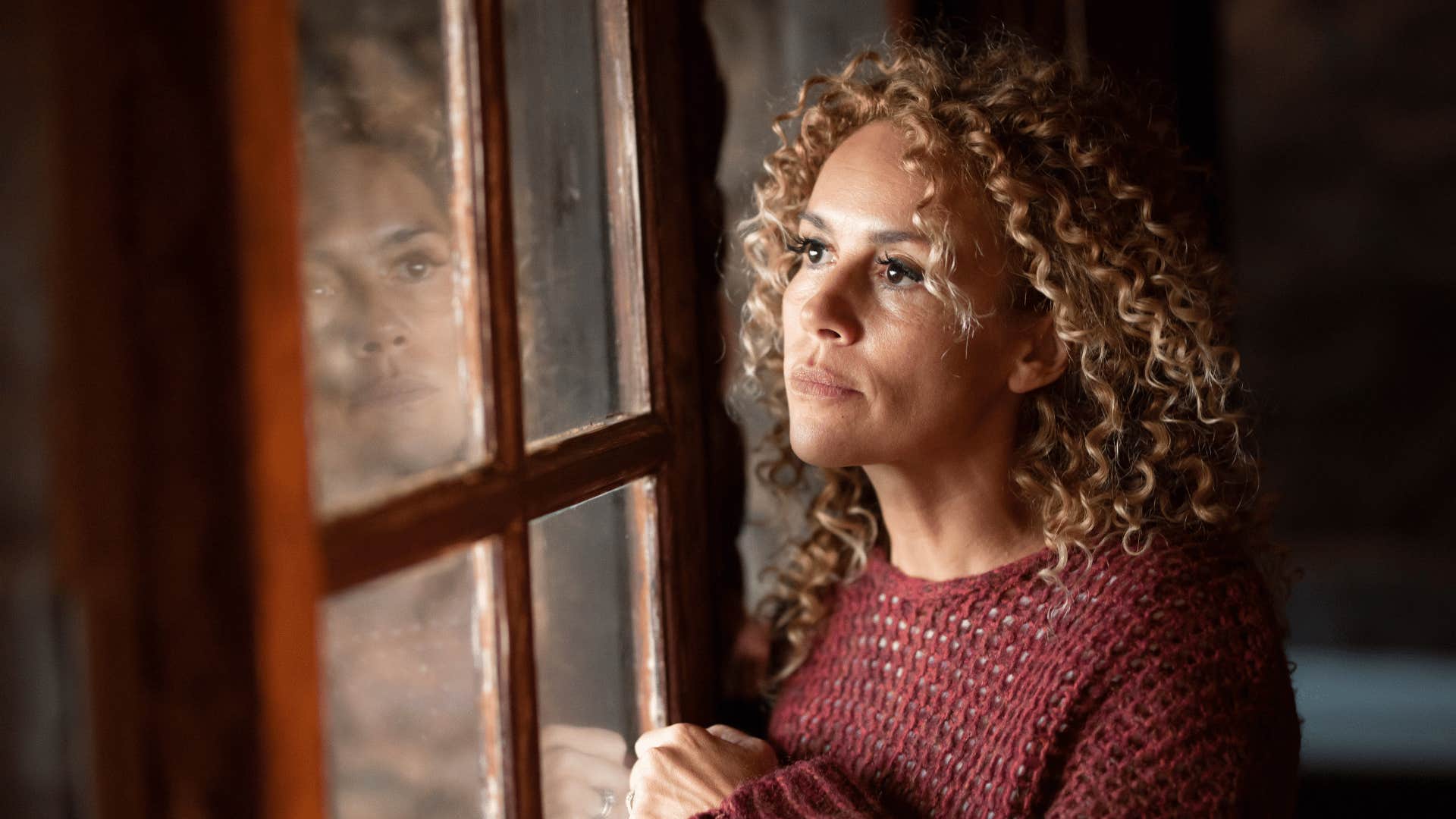
Feeling guilty for any sort of normal self-care is a tell-tale sign you were parentified as a child and given too much responsibility. For example, if you were expected to work after school to help your family financially or get dinner on the table every night for younger siblings, you may find that putting yourself first can triggers feelings of anxiety, guilt, or even shame.
According to Dr. David M. Allen, in families where parents are neglectful, "childcare duties fall on the oldest of the siblings, who is pressed into service to take care of the younger ones. This situation is a setup for highly disturbed sibling relationships later on in their lives, after all of the siblings have grown into adulthood."
Centering your own needs is crucial to truly taking care of yourself. Learning to release that guilt might take time, but the more you focus on you, the better you'll feel. As coach Ronnie Ann Ryan shares, "All self-care options lead to honoring the unique being you are, your right to exist, take care of yourself, and make yourself happy."
It can help to remember that you were too young for this level of responsibility, and that it meant you were likely neglected, too. I
8. You have a fear of abandonment
 MAYA LAB | Shutterstock
Even if it's subconscious, worrying that your loved ones will abandon you is a sign you were overly parentified as a child. This fear can cause anxiety and even perfectionism, as you experience a constant, low-level fear that you'll do something that makes people stop loving or even liking you.
Your fear of abandonment is likely rooted in your fear that if you're not always providing for other people, they won't need you, and they'll leave. You learned to equate your sense of self-worth with what you gave to your family, and there's always a tiny voice in your head whispering that you are not enough, on your own, as you are.
Even though the roots of your fear run deep, you don't have to stay stuck there. Psychotherapist Diane Poole Heller shares that you don't have to be ashamed of your parentified childhood, or any childhood challenges.
"It's best to honor the experiences you've had in your life and realize that even if they've been difficult, there are practices that can help you heal as much as possible," she explains. "We all deserve to live a well-loved life and to learn to love well."
9. You have control issues
 Cast Of Thousands | Shutterstock
It's not surprising that having a need for control is a sign of being patrentified as a child. After all, this behavior often stems from anxiety. You likely feel like you will have too much anxiety if you don't control every possible aspect of your life. This isn't just anecdotal, researchers have determined that parent-focused parentification (PFP) was strongly linked to OCD symptoms.
If you were overly parentified as a kid, your parents probably didn't offer you the protection you should have received. In order to make yourself feel secure in an unstable environment, you probably started the pattern of obsessive control as a child.
It isn't easy to release the idea that you can control everything. Letting go of control is scary, no matter who you are, but it can also be liberating. You're allowed to not have the answer to everything. You're allowed to exist on this earth without serving other people's needs. You're allowed to just be you, and find fulfillment there.
10. Needy adults repel or scare you
 Krakenimages | Shutterstock
While some formerly parentified children crave relationships where they are needed as caretakers, others want nothing to do with care-taking. That's why shutting down or walking away when someone is being needy is a sign you were parentified as a child, just as being a caretaker is.
People respond differently to childhood emotional neglect. Some may subconsciously want to recreate or "perfect" that broken system while others may find themselves triggered even when a good partner in a healthy relationship has a natural need.
Neither of these are necessarily healthy, however. The ideal interdependent adult relationship features people to care for one another while maintaining healthy boundaries. This allows partners and friends to show support without scaring the other away.
11. You don't like talking about your feelings
 ShotPrime Studio | Shutterstock
Not everyone craves deep, emotional conversations, but some people absolutely hate them. Adults who were parentified as children often fit into the latter category, shutting down when someone asks a question any deeper than, "How's it going?"
This is likely due to the fact, as children, they were not allowed to have emotional needs. They were expected to behave the way a parent would, leaving them with nobody to help them sort out confusing emotions or teach them how to process and manage their feelings.
For adults who were parentified as children, talking about your feelings probably feels like one of the riskiest things you could do. Your nervous system reacts like you're in danger because the emotional rejection you likely experienced as a kid likely felt like total abandonment.
Fortunately, you can make peace with your emotions and even learn to talk to the people you trust about your feelings. Try starting with a trusted friend or even a therapist. After all, healthy relationships are built around emotional connection, and you deserve that.
Alexandra Blogier is a writer on YourTango's news and entertainment team. She covers social issues, pop culture analysis and all things to do with the entertainment industry.
