
10 Things Parents Do That Turn Their Kids Into Liars As Adults, According To Research
 MAYA LAB | Shutterstock
 Most parents don't want their kids to turn into dishonest adults, but a lot of the habits they exhibit toward their children during their formative years can end up damaging how honest they become as adults. Research led by the University of Bristol found that around one-quarter of children start to understand deception by 10 months, rising to half at 17 months. By the age of three, children usually become more proficient, creative, and frequent liars. This can usually be more heightened when honesty is usually complicated when they're growing up.
If they're punished or made to feel like they can't trust their parents enough to open up, they start learning to hold back when speaking. If telling the truth leads to any kind of stress as a child, they quickly learn that honesty is always going to bring them those feelings. Unfortunately, these things parents do that turn their kids into liars as adults make their children so comfortable with filtering the truth. And eventually, they become adults who have gotten good at fabricating the truth. It's usually just a coping strategy from childhood and there isn't any nefarious intent behind the lie. It's simply adults trying to protect themselves from habits that have been engrained in them since the moment they could walk.
Here are 10 things parents do that turn their kids into liars as adults, according to research
1. Lying to their kids to control behavior
 Studio Romantic | Shutterstock
When parents regularly lie to their kids as a way to try and punish them or control their behavior in any way, children then learn that dishonesty is just an acceptable way of being able to get what you want. They learn from their parents that lying will help them avoid any kind of conflict and even gain control over others.
Research has even found that children exposed to parental lying usually ended up with poorer psychosocial outcomes, such as externalizing problems, internalizing problems, psychopathy, lying behavior, and socializing issues. Kids start to realize that sometimes people just say things to get what they want in the moment, especially their parents. And if they see their parents doing it, they think it's perfectly fine.
2. Talking over their child
 Drazen Zigic | Shutterstock
When a child feels like they can't comfortably explain themselves, they just stop trying to tell the full truth altogether. They start leaving things out or lying completely because they've learned that no one is really listening anyway. They don't feel completely safe being able to express what really happened, so they get better at censoring rather than being honest.
If a child just expects they won't be heard all the way through, they stop trusting the fact that being honest will get them that attention in the first place. They feel like there's just no point in explaining everything if no one cares or seem like they don't care. Instead, they start giving surface-level answers or avoiding the conversation, and when they start avoiding conversations it leads right into avoiding the truth.
3. Jumping to conclusions too fast
 pikselstock | Shutterstock
Sometimes, kids don't even feel like they're being given a fair shot at explaining themselves. The kind of reaction where they already know the outcome is decided in their parent's mind before they've even finished talking makes it so they never want to open up to them. They learn to just anticipate what the reaction will be and adjust their answers so they don't get it.
That habit can quickly become automatic and the truth sometimes gets withheld without them even really thinking about it. When children notice that their parents assume the worst before they even begin to speak, they know they're not being heard and question if honesty even really matters.
4. Punishing honesty too harshly
 PeopleImages | Shutterstock
When parents are encouraging their kids to be honest only to turn around and have either really emotional responses or punish them for not lying, kids start to learn there is usually something bad associated with telling the truth. It's during moments when they may admit to breaking something or taking an item without permission. Rather than being on the receiving end of a calm conversation, they're met with yelling and an immediate punishment that might be too over-the-top of the thing they've just confessed to.
A study from researchers at the University of Cambridge and University College Dublin found that children exposed to "hostile" parenting at age three were 1.5 times likelier than their peers to have mental health symptoms. When kids start feeling like they're being punished for doing the right thing, they start to prioritize protecting themselves because they know they'll get in trouble either way.
5. Minimizing their feelings
 Prostock-studio | Shutterstock
If kids are made to feel like they're always overreacting or that things aren't a big deal at all, even when their feelings are clearly hurt, they end up feeling dismissed and invisible. They start to believe their emotions aren't worthy of attention. It teaches them to simply hide what they're really feeling rather than sharing it openly. That's when they start to filter how they're expressing themselves.
It may start with their feelings but then it quickly carries over to stories and situations. They may leave out details and downplay what really happened because they've learned that the reaction is usually judgment of some kind. That habit turns into hiding the truth for everything so they can avoid feeling shame.
As therapist Tracy Hutchinson pointed out, "Kids need to know that it's healthy to express and talk about their emotions. When parents tell their kids things such as 'don't be so sad about it' or 'it's not a big deal,' they're sending the message that feelings don't matter and that it's better to suppress them."
6. Changing the rules depending on their mood
 PeopleImages | Shutterstock
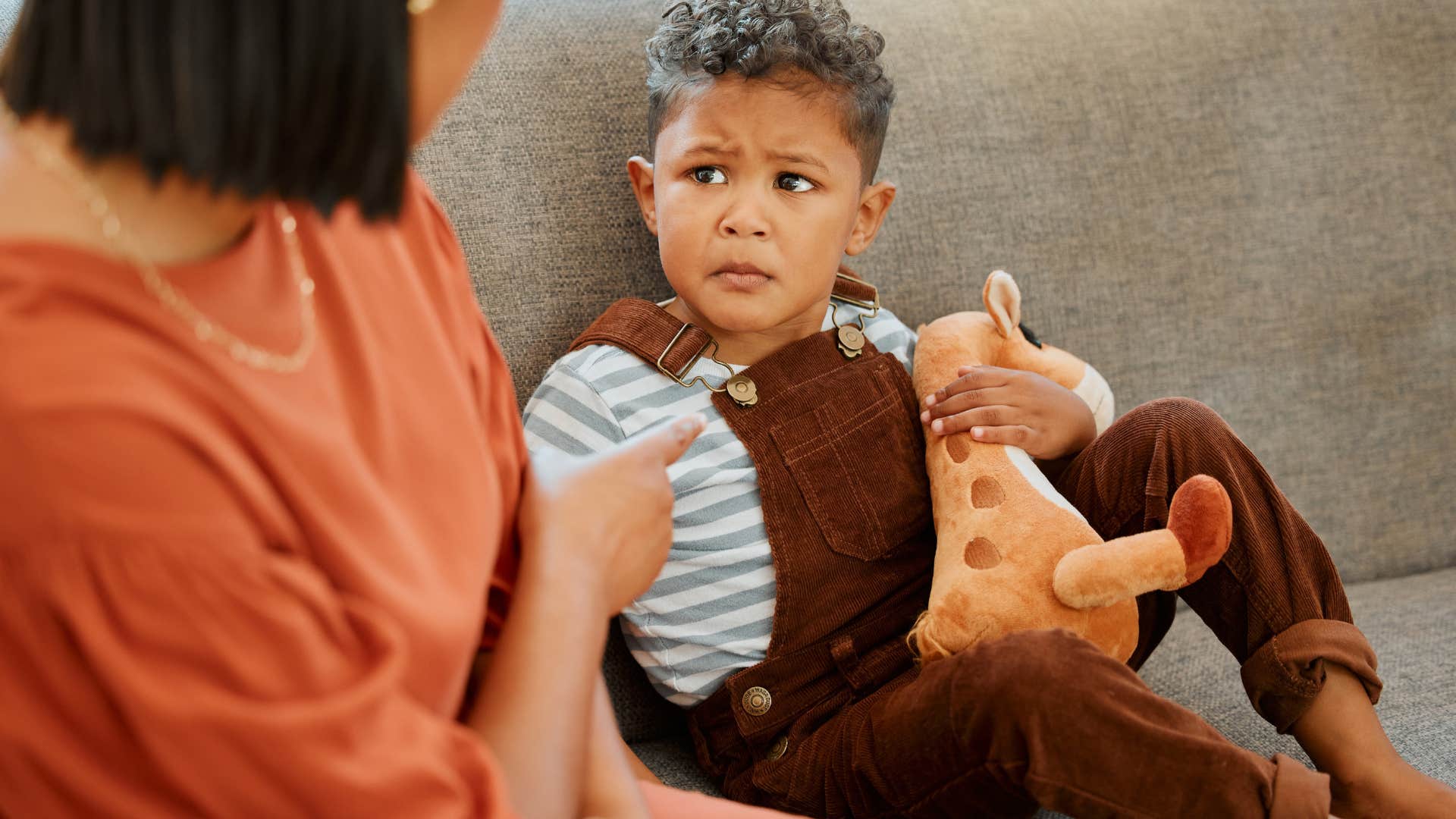
What might be allowed one day might end up being grounds for a harsh punishment the very next day. That kind of unpredictable behavior from their parents can make kids feel confused because they don't know how to act or what they should be expecting.
When rules feel so up-in-the-air, honesty can start to feel discouraged. Kids start to think why they would even want to tell the truth in the first place if the consequences are always changing.
The habit of withholding the truth starts to become not only something they learned when at home, but it becomes the norm for any situation where they feel the reactions are unpredictable. The doubt of their parents' intentions make it hard to believe that being truthful will ever lead to something good.
7. Being overly strict
 NDAB Creativity | Shutterstock
When parents depend on a highly restrictive style of raising their kids, they can often feel like there's zero room to be imperfect. So, they resort to lying to try and avoid all of the constant criticism they're getting from their parents.
Research from the University of Georgia found that for parents with children who become agitated and stressed during confrontations, being strict may actually backfire, making the child more likely to act out in the future. Kids start to feel like they're constantly being evaluated and when that pressure becomes too much, honesty can feel risky instead of natural.
Them looking for a semblance of independence doesn't always look like the classic rebellious acts either. It shows up as them keeping secrets from their parents and hiding things because it's easier to live that way than showing their parents who they really are.
8. Creating a home where mistakes aren't safe
 fast-stock | Shutterstock
If children feel like they can't mess up without being judged or punished, they simply start to hide their mistakes altogether. Rather than being provided with an environment where they can learn from their mistakes, they avoid them at all costs.
Research published in the Journal of Experimental Psychology found that kids who intentionally make mistakes and then are corrected for those mistakes had better learning results as it plays a key role in them being able to explore, develop better critical thinking skills, and problem-solve.
A lot of that truly does come down to how mistakes are handled in the moment. If every single time they mess up, they're met with disappointment or a long lecture, they start to become uncomfortable with messing up. Over time, they find that it's better to just get good at leaving out details and deflecting so they don't get the reaction they always expect.
9. Not allowing them to change their mind
 PeopleImages | Shutterstock
Even the smallest of choices that kids have, from what outfit they want to wear to how they want to spend their free time, can start to feel like a trap when they know they don't have any room to change their mind later. Kids start to associate being upfront with having zero control over the outcome.
If telling the truth is now out of their hands, they believe it's safer to just start keeping things to themselves. Kids may stop expressing themselves freely because they also don't feel confident in their own judgment and also to avoid conflict. Honesty becomes something they only do in rooms where it feels safe rather than honesty being something that comes natural to them.
10. Using guilt as a parenting tool
 AstroStar | Shutterstock
When parents start trying to hold the things they've done for their kids over their heads or always being disappointed in them even when they haven't done anything terrible, kids start to struggle with their sense of self. Research from the Academy of Finland reported that the use of guilt-inducing parenting causes distress and anger.
Kids quickly start to believe that their mistakes or even speaking honestly about their feelings will never be something their parents are proud of. Because of that, they associate telling the truth with guilt and shame. They start lying because they think it will prevent them from being on the receiving end of those feelings. They may question if being truthful is even worth it at all, especially if it just makes the other person sad or frustrated.
Nia Tipton is a staff writer with a bachelor’s degree in creative writing and journalism who covers news and lifestyle topics that focus on psychology, relationships, and the human experience.
