
If Someone Stops Doing These 11 Things In Their Home, They're Low-Key Struggling
 Inside Creative House | Shutterstock
 The state of our homes, the habits we make time for inside of it, and our general mental state are all inherently linked. The amount of clutter and messes inside our living space can negatively affect our stress levels and mental health, but at the same time, our mental health affects how motivated we are to do chores and take care of personal hygiene. So, if someone stops doing these things in their home, they're low-key struggling and may need support to cultivate a new routine.
While it might seem like a small thing for a friend or family member to come over and help clean or provide a listening ear, to a person struggling, this kind of social support is powerful, at least according to a study from Frontiers in Psychology. So, look out for these red flags and be intentional about supporting your loved ones — you never know how deep they really are in a cycle of strain and stress.
If someone stops doing these 11 things in their home, they're low-key struggling
1. Washing the dishes right away
 Prostock-studio | Shutterstock
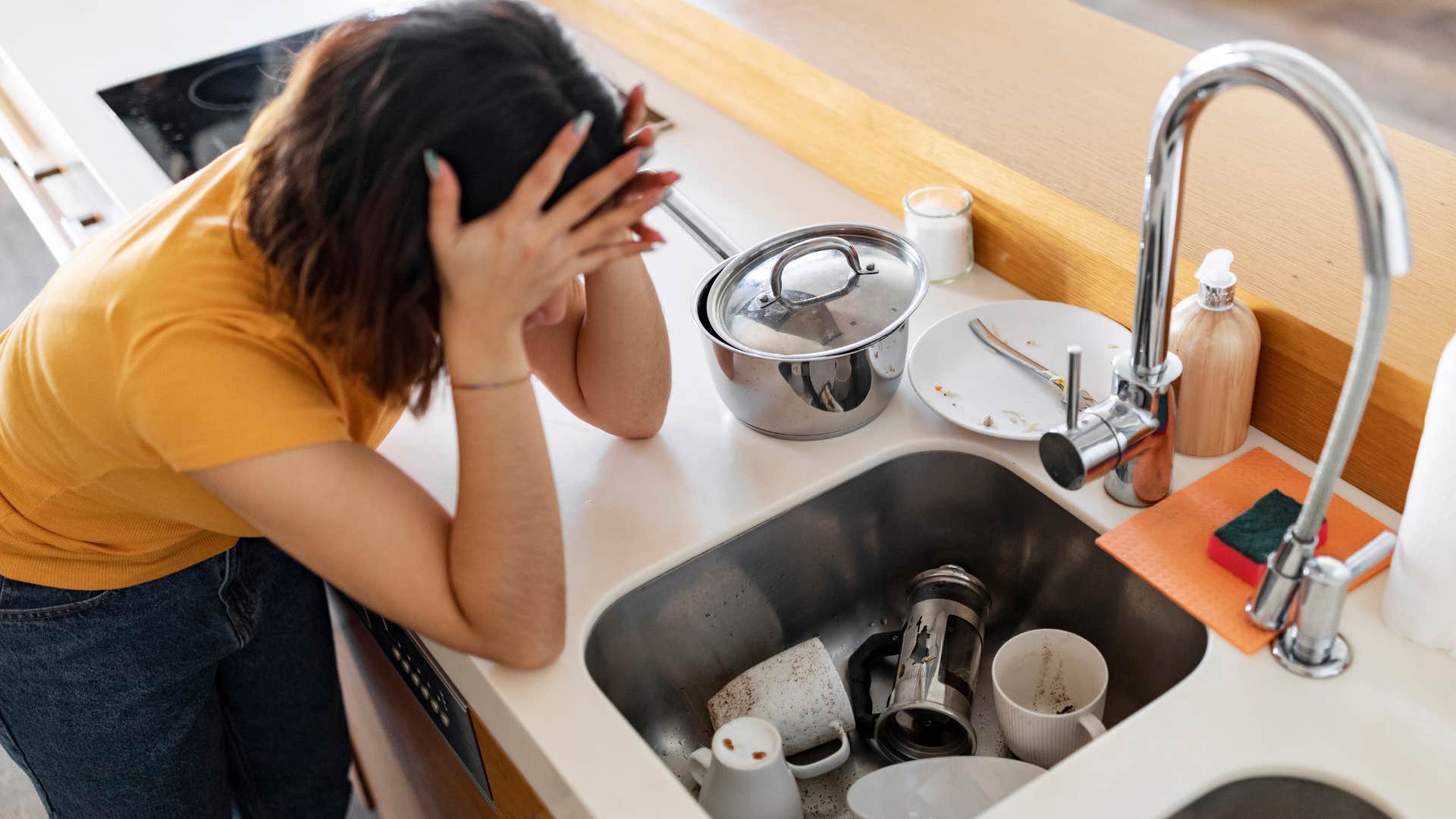
Even if most of us skip doing dishes after a meal during the week or let our dishes sit in the sink during a chaotic week for a questionable amount of time, if someone is consistently not doing their dishes, they may be low-key struggling. Especially for people dealing with symptoms of depression, struggles with executive function — often needed for basic household chores — can make dishes a challenge.
On an emotional level, if someone's brain is too caught up in meditating chaotic thoughts and a person's body is stuck in fight-or-flight mode, these basic tasks can feel entirely impossible.
2. Watering their plants
 Okrasiuk | Shutterstock
While having plants and greenery inside, especially during the winter and darker months, can improve mental health for most people, if they're not nurturing and watering them, it can have an opposite effect.
It's bad feng shui on a spiritual and energetic level to have plants that are clearly being neglected in a space. On a more tangible level, if an already-struggling person comes home to their dying plants every day, it's another reminder of their struggle to add to their overflowing emotional pile.
3. Opening their mail
 i_am_zews | Shutterstock
Many people who struggle with opening their mail are dealing with mental health issues, trauma, or chronic stress at home. They feel debilitatingly exhausted and mentally fatigued from the second they wake up to the moment they go to bed, so dealing with small tasks like this feels impossible.
Of course, if someone's not opening their mail, for whatever reason, there's also a good chance that they're missing important deadlines, messages, and bills. So, even if they do pull themselves out of a mental health spiral, the damage of avoidance — for finances, relationships, or a number of other things — could quickly add more strain to their lives.
4. Changing their sheets
 Media Lens King | Shutterstock
While experts from the Cleveland Clinic suggest people change their sheets every one or two weeks, most of us aren't making time for that on a consistent basis. If we change them once a month, that's a win. However, if someone is consistently not doing these things in their home, they're low-key struggling.
Especially if you also notice they're not taking care of their personal hygiene or acting like themselves on an emotional level, these small household rituals can be more telling than they seem on the surface.
5. Paying their bills on time
 Grusho Anna | Shutterstock
Financial strain, pressure, and obligations can often strain emotional and mental health, especially for people already dealing with anxiety, depression, or chronic stress. So, to cope with their seemingly debilitating struggles internally, a person may avoid the financial things causing them added stress, even if it sets them up for more struggle down the road.
So, if someone stops paying their bills on time, especially as a form of avoidance for mental health struggles, they're probably struggling more than you realize.
6. Taking care of pets
 Sjale | Shutterstock
When we don't have the capacity, energy, or emotional gumption to take care of ourselves, our relationships with everything else in our lives also suffer — from friendships to work, and sometimes, even our pets. A person struggling to brush their hair or get out of bed may not walk their dog as much, brush through their fur, or make time to play with their cat at the end of the day.
Of course, to a certain extent, if someone stops doing these things in their home, it's not necessarily a cause for alarm. But if it becomes a chronic struggle, where their pets are being overlooked all the time, it could be a sign that they need intervention from their families or friends.
7. Running errands
 Drazen Zigic | Shutterstock
If someone stops running errands and lets them pile up on their mental to do list, they're probably struggling. It's not surprising either, considering that people who work long hours and don't have a lot of free time to run errands are at a higher risk for depression, according to a PLOS One study.
So, if someone's actively overworked and struggling with their mental health, things like grocery shopping and running quick errands become impossible.
8. Replacing burned-out light bulbs
 KinoMasterskaya | Shutterstock
Even small, simple things that may be harmless for a mentally stable person, like a burned-out light bulb, can be a bigger sign of struggle for someone dealing with chronic stress or depression. It's these small tasks that start to build up over time and become a much larger burden in someone's life if they continue to be pushed off.
However, this avoidance often provides a person struggling with emotional chaos with a kind of misguided control over their lives. They feel like avoiding something that may only take a few moments offers them comfort, even if it strains their well-being in the future.
9. Cooking food for themselves
 DC Studio | Shutterstock
The routine and intentionality behind cooking food for yourself at home are more powerful for boosting mental health than they seem. Not only does it boost self-esteem, but it also encourages people to follow a routine that protects them from things like depression and anxiety.
If someone stops doing these things in their home and instead relies on fast food and convenient options lacking nutrition to fill the gap, they're low-key struggling in more ways than one.
10. Calling their loved ones
 DimaBerlin | Shutterstock
For people struggling with their mental health or with loneliness, calling people on their phone to stay connected can actually be more helpful than it seems. Especially for aging adults, who are often disconnected from their families and social circles, empathetic phone calls can be powerful tools, according to a study published in JAMA Psychiatry.
However, if someone stops doing these things in their home, and is also overlooking social situations and connections in person, they may be struggling more than they realize.
11. Making their bed
 wavebreakmedia | Shutterstock
Even if it seems like a harmless practice, for someone who's struggling with basic tasks and emotional chaos, making their bed is a great place to start. Even if everything else goes wrong during the day, at least they're coming home to a comfortable, made bed to sleep in.
But if someone stops doing this ritual in the morning at home, alongside a million other little household chores, chances are they're low-key struggling in a million different ways.
Zayda Slabbekoorn is a senior editorial strategist with a bachelor's degree in social relations & policy and gender studies who focuses on psychology, relationships, self-help, and human interest stories.
