
People With Zero Empathy Almost Always Use These 11 Phrases When They Talk To You
 Cloudi | Shutterstock
 Having empathy for others is a key component to developing strong relationships. According to psychiatrist Helen Riess, empathy involves a person's ability to recognize their own feelings while understanding the emotions of others. Cultivating empathy requires us to imagine why someone feels the way they do and have concern for their well-being.
Empathy directly translates into our ability to care for others — not just through our actions, but our words as well. Unfortunately, people with zero empathy almost always use these certain phrases when they talk to you, making it crystal clear how little they care for your welfare. So, beware of someone who sees the world in such a negative light.
People with zero empathy almost always use these 11 phrases when they talk to you
1. 'I'm sorry you feel that way'
 fizkes | Shutterstock
A genuine, heartfelt apology can heal someone's pain, but a person with no empathy will struggle to understand why someone is hurt, especially when it pertains to the impact of their own behavior. In order to repair damage, an apology has to be meaningful, while focusing on how the offending person will change in the future.
Saying "I'm sorry you feel that way" isn't a true apology, however. Instead of taking responsibility, this phrase pushes the blame back onto the hurt person, framing the situation as though they're the one who caused the damage in the first place.
2. 'You're overreacting'
 Lordn | Shutterstock
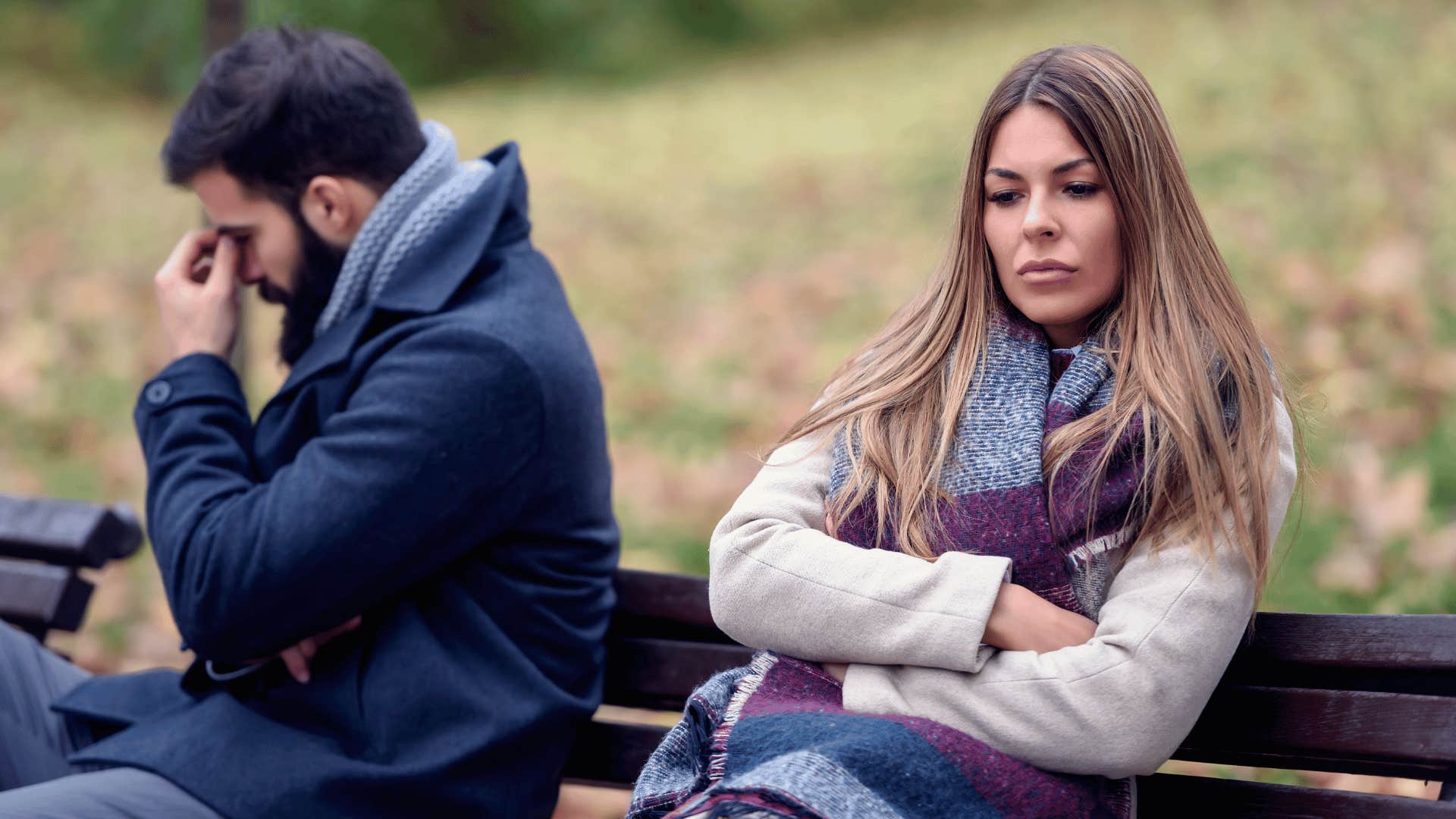
Telling a person they're overreacting is tantamount to telling them they're too sensitive. It devalues someone's emotions, framing their response to a situation as being "too much." People with zero empathy almost always use this phrase when they talk to you because it functions as a way to cut a person down, which can make them feel like they don't deserve to take up space.
According to professor and social psychology researcher Sara Konrath, there are different components of empathy. Emotional empathy is feeling what someone else is feeling, also known as empathic concern. Cognitive empathy is perspective taking, which Konrath described as the ability to "think about what the world is like from someone else's perspective, and really from their point of view."
In order to have cognitive empathy, Konrath added, "We can listen carefully. We can pay attention to body language, voice, facial expressions of emotion and other things like that... The research shows that people who are good at cognitive empathy tend to be also compassionate [and] show more compassion for others."
3. 'That's not my problem'
 fizkes | Shutterstock
When confronted with a conflict or an emotional issue, people with zero empathy almost always use the phrase "that's not my problem" as a response. Empathy is connected to compassion, which involves putting ourselves in someone else's shoes and offering support to people in need. Yet a person without empathy is more self-centered and is unlikely to extend themselves for anyone else.
Konrath's 2023 social psychology study established that having a strong sense of empathy is linked to various pro-social outcomes, such as volunteering in one's community and helping others. Her prior research showed a significant decline in empathic concern among American college students between 1979 and 2009, meaning that altruistic attitudes were way less common.
In times of distress, people need a helping hand to guide them through. Someone without empathy is more concerned with their own well-being than that of others, and probably won't offer their support.
4. 'Just get over it'
 fizkes | Shutterstock
This phrase is an example of a dismissive statement that cuts people down. In order to move on from being hurt or whatever hardships that we're faced with, we need time to process our emotions. But when a person who lacks empathy is faced with a partner or loved one experiencing difficulties, they may tell them to "just get over it."
They don't understand the weight of that person's struggle, nor do they really want to. Treating others with kindness and respecting their emotional needs is an indication of being an empathetic person, while gaslighting someone into believing their feelings are invalid is not. When someone is unable to hold space for another person's pain, it signifies that they don't have empathy.
5. 'You get what you deserve'
 fizkes | Shutterstock
This phrase is meant to brush someone off whenever they're going through a bad experience. Of course, we all have our fair share of hard times. An empathic person is able to acknowledge what someone is going through, even if they've never felt what that individual is feeling. But, in contrast, a person who has zero empathy believes someone's misfortune is due to their own deficiencies, and they wind up blaming them for how they feel.
"Expressing irritation, especially when it is not face-to-face with a person you are actually communicating with, does not discharge your feelings, but instead increases frustration or irritation. Blaming others creates more hatred and blame, not less. And that kind of hatred and blame follows us around as we string it along," psychologist Polly Young-Eisendrath revealed.
6. 'You wouldn't understand'
 fizkes | Shutterstock
Just as a person lacking empathy won't recognize anyone else's hardships, they also believe that their struggles are worse than other people's. If someone reaches out and tries to support an empathetic person, they will tell the helpful individual that they could never understand what they're going through.
Life and relationship coach Mitzi Bockman described people who lack empathy as self-absorbed, to the point where they "think of themselves, their issues, and their place in the world first." She explained, "They put their needs above the needs of all others," which is why they think no one has experienced what they have.
7. 'It's not my fault'
 fizkes | Shutterstock
Someone with no empathy doesn't have much patience or tolerance for other people's mistakes, and they don't hold themselves accountable for their own mistakes either. Because they struggle to see different perspectives apart from their own, they go through life believing that nothing is ever their fault. In some ways, this sets them up to have a victimhood mentality, where everyone else is against them.
Whether it's "it's not my fault" or "I'm not responsible for that," not only does someone who never takes accountability say this, but people with zero empathy almost always use these phrases when they talk to you. In fact, a person with no empathy probably has a pattern of behavior where they don't take ownership for how their actions affect others, making it hard for them to remain close to people.
8. 'It's not that bad'
 Mangostar | Shutterstock
Oftentimes, when we vent about our troubles, we don't want solutions, so much as we want the feeling of being heard and understood. We naturally seek nurturing and reassurance from our loved ones, but a person lacking empathy is generally unable to extend that emotional comfort, even to people they care about.
For example, if you're having one of those days where everything goes wrong and you just feel like crawling back into bed, a person without empathy will diminish how you feel and tell you that what you're going through isn't that bad. They might even match your complaints with their own complaints, as though they were saying, "You think that's bad? My problems are so much worse."
9. 'I'd never do that'
 Nicoleta Ionescu | Shutterstock
A study published in Psychological Science found that empathy has three distinct components: perspective taking, emotion sharing, and compassion. Researchers determined that 75% of people who engage in empathy experience all three components at the same time, showcasing how empathy is a complex emotional reaction.
The study also found that people tend to empathize with positive emotions more than negative emotions, and that they empathize more easily with someone they're close to, as opposed to a stranger.
When someone says "I'd never do that," it's merely a phrase that people with zero empathy almost always use to distance themselves from anything they deem unlikeable. Because a person without empathy sets themselves apart, which means they don't recognize other people's sorrows or joys. Someone with no empathy is more likely to separate themselves from others than find common ground.
Because they hold themselves at a distance, they're unlikely to notice any parallel experiences or similarities they have with anyone else. If someone is at a low point in life, a person with zero empathy holds tightly to the belief that they'd never wind up in the same situation, because they can't remove themselves from their own rigid perspective.
10. 'That's just who I am'
 fizkes | Shutterstock
A person who lacks empathy won't apologize for who they are, but they're also blind to their own growth points and are unwilling to work toward change. If you approach them and share how you've experienced or interpreted their behavior, they will tell you that's just who they are, and there's no changing them. Their singular focus on their own perspective means they're unable to see when they've hurt someone, and they won't own up to it even if it's brought to their attention.
According to health journalist Kimberly Drake, "Often, low empathy may result in a person not realizing that their actions can affect others. Other times, they may understand that their behavior impacts other people, but they may not feel remorseful about it. This means that someone may act in selfish or vindictive ways without realizing or caring if that hurts you."
The reality is that we all have flaws and aspects of ourselves that require some emotional labor. If we're not willing to do the work, we'll end up isolated from the people around us. But by working on our empathy, we can guarantee that we'll stay close to the people who we care about.
11. 'Calm down'
 DimaBerlin | Shutterstock
Telling someone to "calm down" is not only incredibly infuriating, but makes it evident that they don't quite care or understand how a person is feeling. While emotional regulation can help a person get their point across, being told to calm down is invalidating and hurtful. People who lack empathy tend to use this phrase as a way to be condescending, letting them know that the way they feel isn't acceptable.
As licensed clinical psychologist Andrea Bonior explained, "The problem with the phrase is that it often puts people on the defensive — insinuating that their reactions are the problem. Even if this has some objective truth to it, and indeed their reactions seem out of proportion to the situation, getting them back to emotional equilibrium will likely not be helped by accusing them of having an 'inappropriate' reaction. Moreover, it feels inherently invalidating to have someone tell you that your feelings are too big in proportion to what happened to you."
Alexandra Blogier, MFA, is a writer who covers psychology, social issues, relationships, self-help topics, and human interest stories.
