
People Who Don't Know How To Be Fake Usually Say These 11 Phrases When They Talk To You
 Amelia Fox / Shutterstock
 While most people intrinsically understand the difference between a truly authentic person and someone faking it in conversations and interactions, according to experts from UC Berkeley, it’s still relatively elusive and difficult to explain. From language to personal style and someone’s general social aura, it tends to look different for everyone in practice.
However, people who don’t know how to be fake usually say certain phrases when they talk to you that reveal just how authentic they really are. They’re not shifting their personality depending on who’s around or trying to justify their decisions. They’re simply being who they are, with no filter or edit.
People who don’t know how to be fake usually say these 11 phrases when they talk to you
1. ‘That doesn’t make sense to me’
 RZ Images | Shutterstock.com
Truly authentic people aren’t afraid to admit that they don’t know something or ask for help from others. They’re open about their knowledge, and generally skew from the overconfident, loud behaviors of someone who’s trying to seem smarter than they actually are.
Especially when asking for help and using a phrase like “that doesn’t make sense to me” offers an opportunity to learn, grow, and connect on a deeper level with another person, it’s worth leaning into the discomfort of “not knowing” something.
2. ‘I don’t agree, but I respect your opinion’
 Krakenimages.com | Shutterstock.com
While some people who are operating from a place of insecurity need to change people’s minds and “prove” how correct they are in conversations, truly authentic, secure people can have disagreements and conversations with people they don’t agree with without disrespecting them. They do the challenging work of offering respect and grace to everyone, whether or not they share the same lifestyle and beliefs.
Especially considering experts argue that an authentic self is often a "morally good” one, it’s not surprising that people who don’t know how to be fake are also empathetic and respectful to everyone they come into contact with.
3. ‘Can I offer some advice?’
 Krakenimages.com | Shutterstock.com
Authentic people often have a strong sense of integrity and a secure moral compass, but that doesn’t mean that they’re intrusively offering advice wherever they go. Especially in relationships with people they truly love, they refuse to fall into the common pattern of offering unsolicited advice before checking in and offering emotional support.
Instead, they ask questions like “Can I offer some advice?” or “Would you like support or advice?” to give people a sense of validation and power to ask for what they need. Even if an insecure person tries to prove their intellect or superiority in these moments, secure people often seek quietness and intention.
4. ‘I’m going to stay home tonight’
 PeopleImages | Shutterstock.com
While people who are still finding their place in the world and yearning for belonging with others may overstretch themselves with social plans to please others, truly authentic people are comfortable being alone and setting social boundaries.
Especially if they’re an introvert and feeling socially drained after a long day, they’re not afraid to say “no” or “I’m going to stay home tonight” when they’re invited out. Not only do they trust that the people meant to be in their life will respect their decisions, but they are self-aware enough to know what’s worth prioritizing.
5. ‘Thank you for telling me’
 PeopleImages | Shutterstock.com
When someone expresses a concern or an emotion that’s hard to hear, a fake person might run. They might get defensive, shift blame, or try to avoid accountability for hurting someone, whether intentionally or not.
However, a truly authentic, secure person leans into the health of conflict resolution. They’re not afraid to apologize, because they understand it’s a superpower and a tool for better relationships, rather than a weakness or an admission of some fundamental flaw.
6. ‘I need some time to think’
 Miljan Zivkovic | Shutterstock.com
Authentic people are often inherently self-aware. They know what they want, reflect often on their patterns and lives, and move through the world with a sense of assurance that they can protect and advocate for themselves. However, that also means they often resort to alone time and silence when they need to unpack something.
In hard conversations and emotional situations, they use phrases like “I need some time to think” to protect this space. They don’t suppress their emotions or try to fake being “fine” to protect the peace in a conversation, but advocate for what they need.
7. ‘You’re right, I’m sorry’
 PeopleImages | Shutterstock.com
While apologies don’t always fix everything or completely take away someone’s hurt, truly authentic people still say “I’m sorry” and “you’re right” often. They know that these small phrases and the intentions of asking for forgiveness will at least offer some dignity to a person who feels embarrassed or hurt by their actions, whether they were intentional or not.
They’re not so caught up in curating a fake self-image or social perception that they run from accountability when they make a mistake. They’re not afraid of admitting faults and weaknesses, because they’re not trying to hide them in the first place. Their humanity lives on their sleeves, including all the discomfort that comes from being honest when they make a mistake.
8. ‘I’m not comfortable with that’
 Fit Ztudio | Shutterstock.com
Whether it’s a conversation centered around gossip or someone urging them to do something they wouldn’t typically do, people who don’t know how to be fake usually say things like “I’m not comfortable with that” immediately. They’re not easily pressured into trends or misbehavior by others because they’re not desperately yearning for belonging.
Even if they don’t have a strong network of close friends, they’re still internally secure and self-assured. They don’t need someone else’s validation or assurance to make the right choices and put themselves first, even if it’s a struggle to resist peer pressures for the average person.
9. ‘Let’s talk about it’
 Chay_Tee | Shutterstock.com
Leaning into hard conversations and staying in one place when confronted with emotional concerns and struggles isn’t easy, especially for people who weren’t offered the chance to practice regulating their emotions as kids. Taking accountability, listening to someone, and offering emotional support, even when you don’t agree, is a superpower, but hardly ever easy or convenient.
While some people can run and avoid, pretending that they’re not resentful or putting on a brave face to protect the peace, authentic people simply can’t. They can’t pretend they’re okay when they’re not or ignore issues that continue to arise in their relationships. That’s why “let’s talk about it” is a common phrase in their language arsenal.
10. ‘I thought about it this way’
 PeopleImages | Shutterstock.com
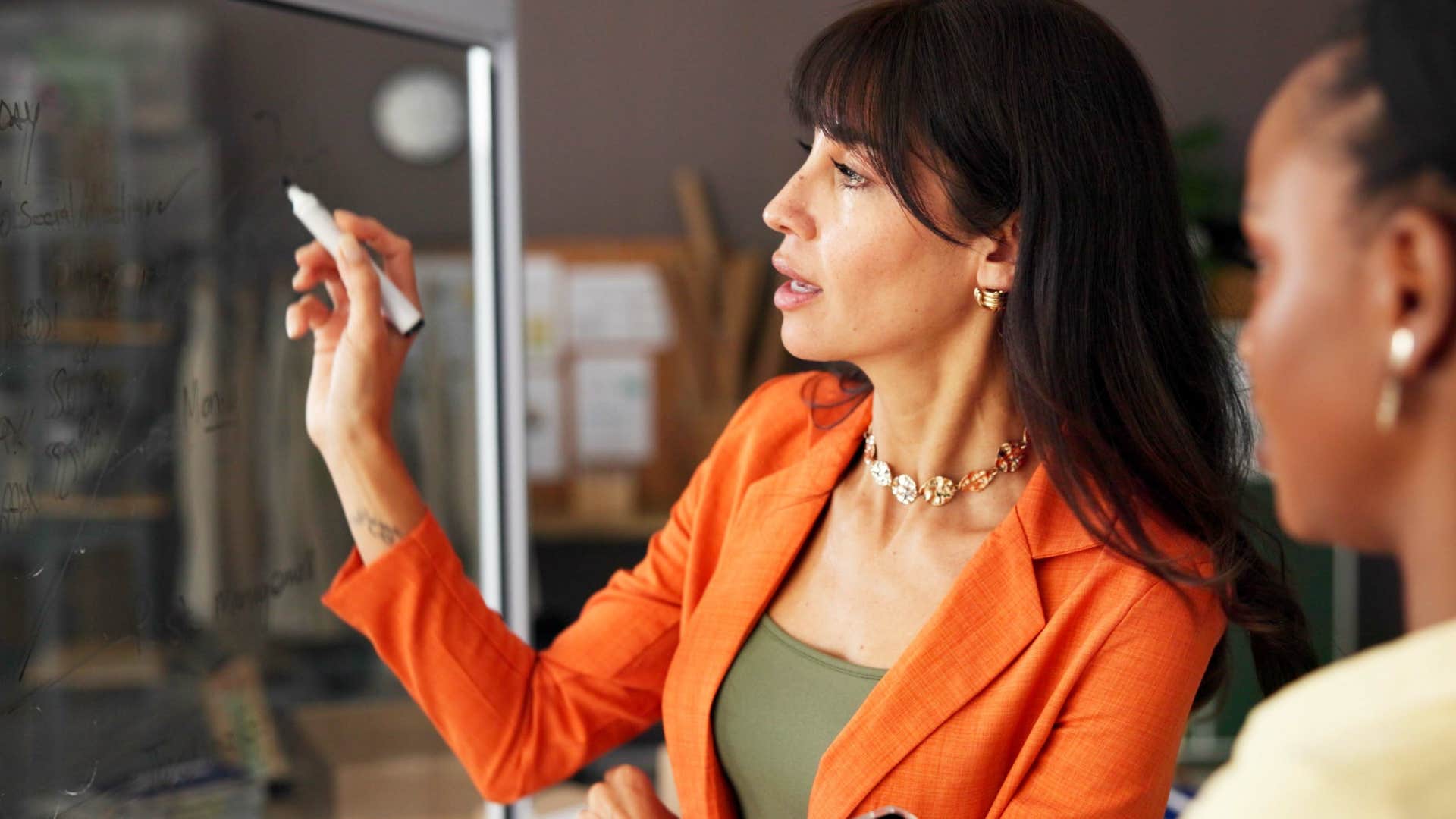
According to psychology professor Stephen Joseph, self-aware, secure, authentic people tend to have a stronger grasp on reality than the average person. They’re not filtering perceptions through the lens of insecurity or self-preservation, but instead see people, interactions, and issues through a clear perspective without many biases.
“I thought about it this way” is simply a phrase that shares their perspective with others. They don’t tell people they’re wrong or come after their opinions directly. Rather, they thoughtfully offer their opinions in a collaborative, intentional way.
11. ‘How can I be better’
 PeopleImages | Shutterstock.com
A common trait of authentic people is their curiosity about how to grow and become better. They’re open to learning from mistakes and to acting on others' feedback, even if that average person tends to run from and get defensive in these social situations.
They’re not only self-assured and confident in their actions, but they’re also secure enough to embrace feedback and opportunities to grow from other people in their lives.
Zayda Slabbekoorn is a senior editorial strategist with a bachelor’s degree in social relations & policy and gender studies who focuses on psychology, relationships, self-help, and human interest stories.
