
People Who Can't Sleep When They're Alone At Home Have These 11 Distinct Personality Traits
 tool2530 | Shutterstock
 Whether it’s missing a partner they normally sleep next to or battling a hyperactive mind, people who can’t sleep when they’re alone at home usually have certain distinct personality traits and habits. Quietness and darkness can bring up a lot of feelings, especially for people who have a tendency to suppress or run from complex emotions.
While everyone copes with these feelings differently, it’s essential, at the very least, that they find some way to manage them. Not only is sleep essential for energy and physical health, as experts from Harvard Medical School suggest, but it also influences every aspect of life, from relationships to mental health, career success, and family dynamics.
People who can’t sleep when they’re alone at home have these 11 distinct personality traits
1. They’re naturally vigilant
 Kleber Cordeiro | Shutterstock
Many people who are naturally hypervigilant, whether that’s tied to anxious mindsets or unresolved trauma, tend to be constantly on guard. Their nervous system is stuck in a state of “fight or flight” mode that never truly unwinds, but is rather is distracted and dismissed by the person living in it.
When they’re alone at night, battling the quietness of an empty house and darkness, all of the worries and “what ifs” they’ve been distracting themselves from thinking about come to the surface. They’re hyper-aware of their environment and the noises they’re hearing in their house, even if that means they’re never going to be able to let their guard down and truly relax.
2. They’re imaginative
 Andrey_Popov | Shutterstock
While imagination is sometimes leveraged as a means of coping with anxiety, it can quickly take over someone’s hyperactive mind and encourage them to overthink potential situations. From lying in bed imagining the worst-case scenario to overthinking random sounds from downstairs, people who can’t sleep when they’re alone at home usually have these distinct personality traits.
Their innovative minds and imaginative thoughts aren’t always fun or exciting, but uncertain and scary. They connect dots that don’t always need to be thought of and sabotage their rest by imagining scary and typically uncommon situations.
3. They’re extroverted
 Cat Box | Shutterstock
According to a study from Personality and Individual Differences, extroverted people tend to have a high preference for social interaction over alone time, because being around others actually boosts their energy levels and feeds their social battery. While not every extrovert is prone to using social interaction as a distraction for their thoughts, some may fall into a pattern of running from complex emotions and feelings by crafting a busy social calendar.
So, it’s not surprising that these individuals may struggle to sleep when they’re alone at home. They don’t have the loudness or busyness of social interaction to distract them from the feelings that come bubbling up in their minds when they’re alone in bed at night.
4. They’re sensitive
 MAYA LAB | Shutterstock
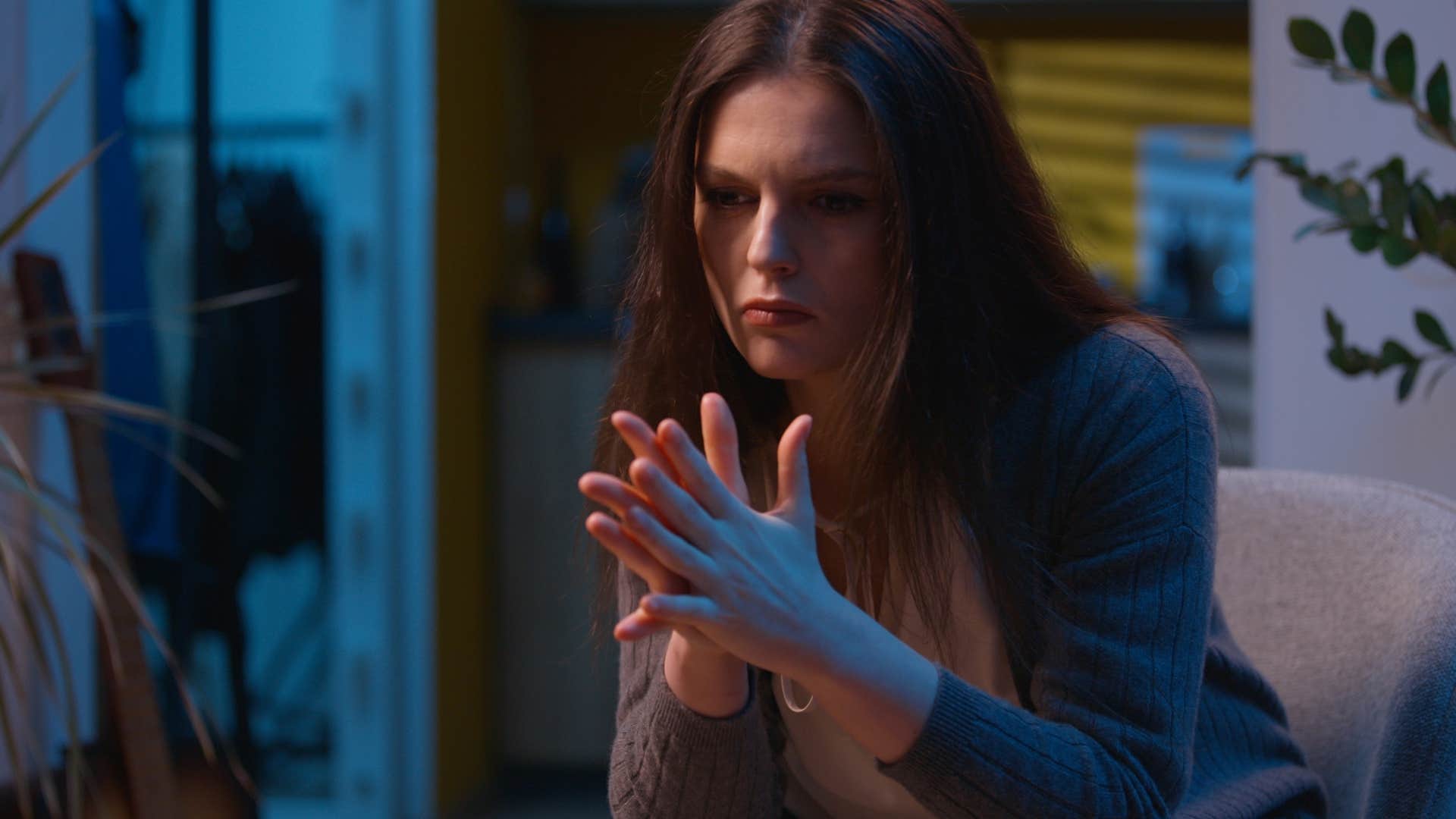
Many people with highly sensitive personalities are more likely to have a lower threshold for sensory stimulation, according to a study from Personality and Individual Differences, on top of being more vulnerable in the face of socio-emotional experiences like ostracism and exclusion.
When they’re not distracted by a conversation or the presence of someone else in the bed with them, sensory inputs like random noises and sounds can be more influential on their hyperactive minds.
People who can’t sleep when they’re alone at home may have these distinct personality traits. They don’t have the skill of being able to ignore or tune out worries that come from noises and random sounds, especially when they’re alone, and so they often take a toll on rest, sleep, and relaxation.
5. They prefer to be in control
 DC Studio | Shutterstock
Even though a need for control can be nuanced in practice, sometimes even leading to hyper-independence and introverted behaviors, people who can’t sleep when they’re alone may grasp security by having another person in the home. They like the safety and control they feel over their own emotions and feelings when someone else is there, but when they’re alone, that sense of security goes away.
According to social psychologist Bella DePaulo, the sense of control that these people are looking for might not even have anything to do with dealing with quietness and an upheaval of emotion, but with not being able to control their environment. They can’t control another person, so if they make the decision to leave, they can’t force them to stay.
Sometimes, it’s this external lack of control that makes thier alone time feel uncertain and frustrating, rather than the emotions they have to face.
6. They’re overthinkers
 New Africa | Shutterstock
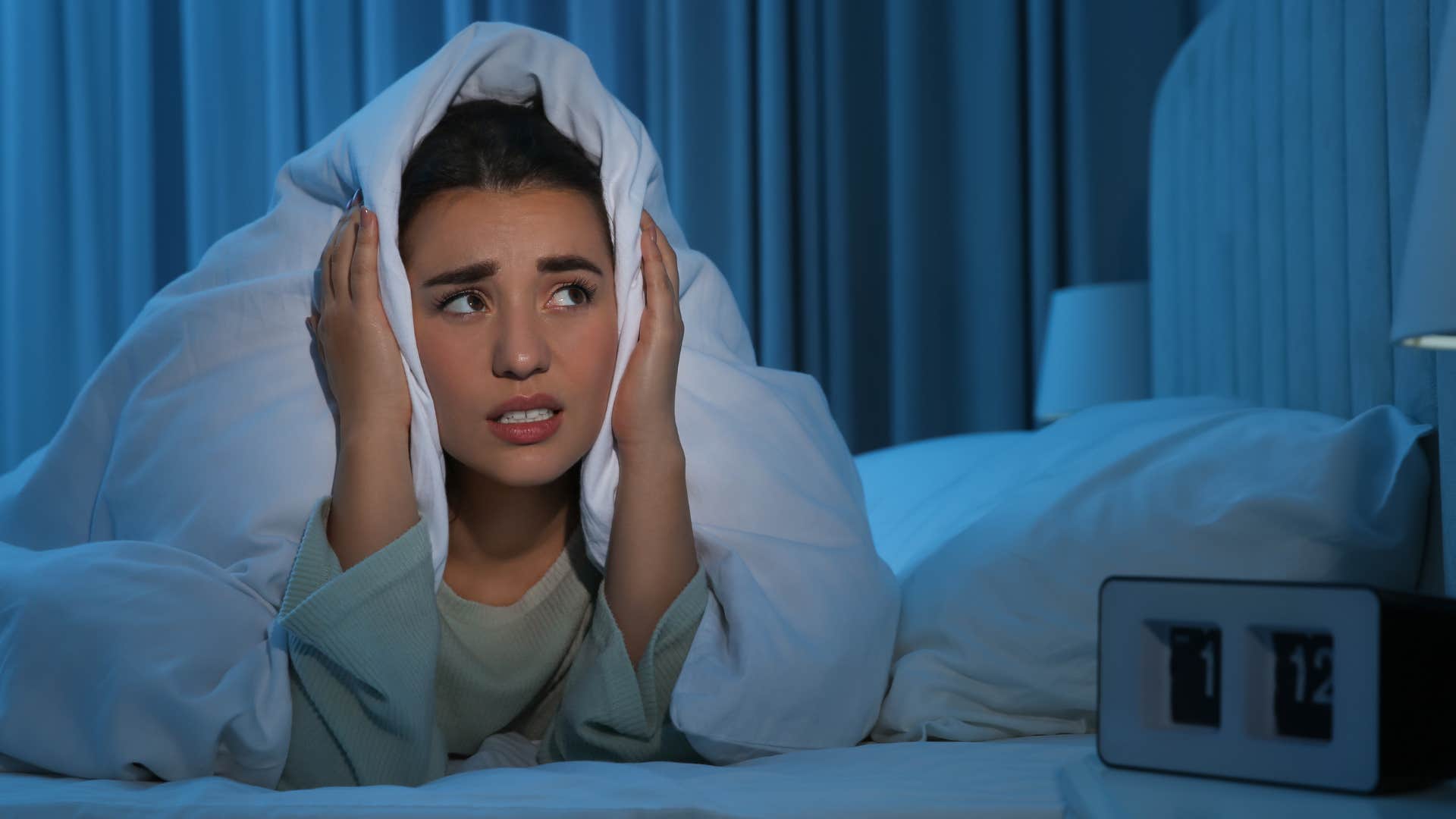
Especially for anxious minds and people prone to overthinking, quietness can often put the nervous system in a state of hyper-alertness, where every sound and noise sparks a million uncertain thoughts.
They’re prone to ruminating in their everyday lives, but especially when they have no distractions, like when they’re lying in bed alone in their quiet homes. If they don’t have the coping skills to manage their anxiety in these periods of quiet or to regulate emotions when they’re sleeping in solitude, they can take over.
7. They’re ‘relationship’ people
 Antonio Guillem | Shutterstock
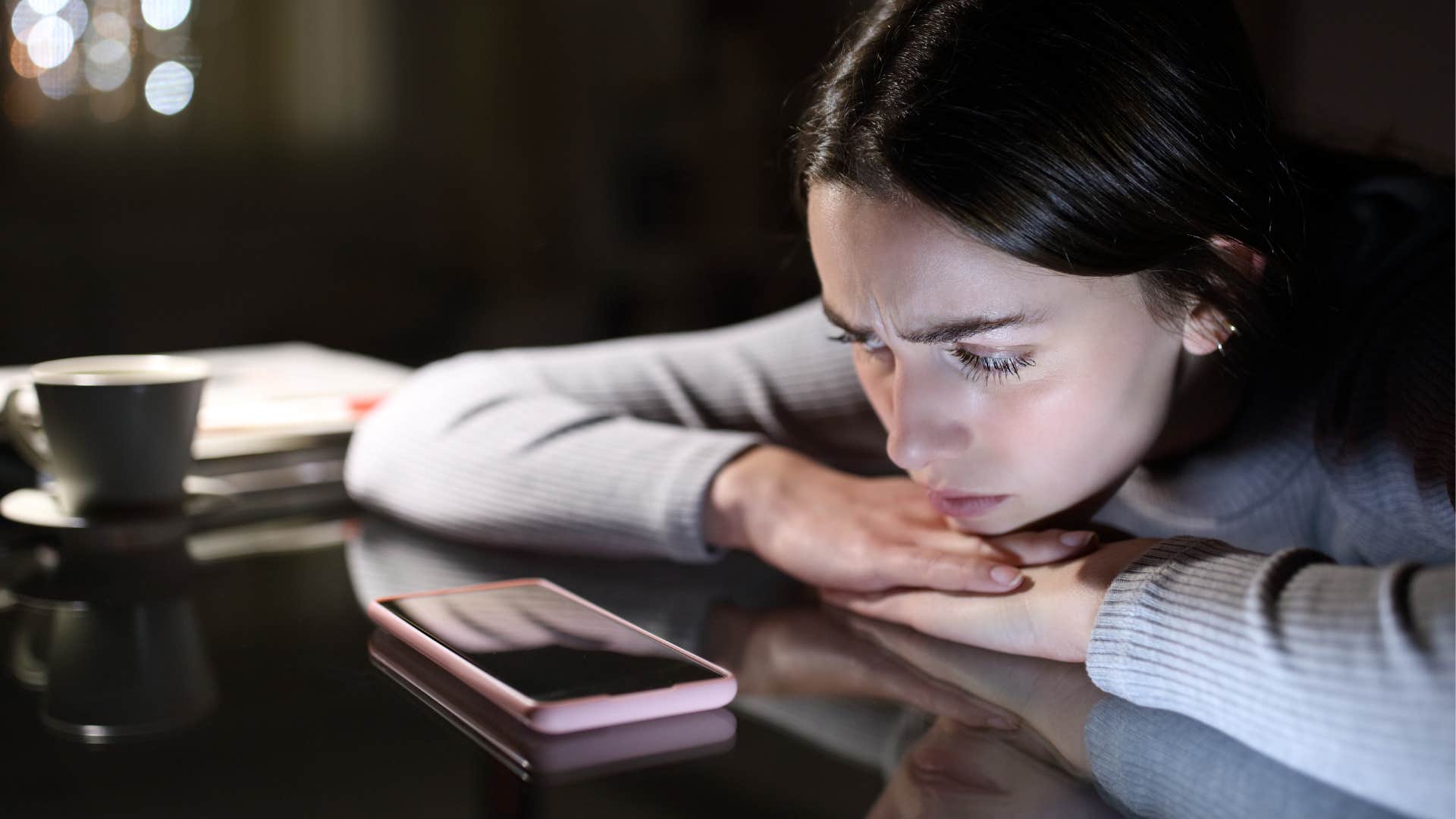
Whether it’s the bonding experience of going to bed at the same time as a partner or the co-regulation that comes from managing complex feelings in the presence of a loved one, people who are naturally “relationship” people may get better sleep when they have someone around to spend time and rest with.
However, when they’re alone, they may struggle to quiet their minds and truly relax, without the protection, safety, and distraction of another person lying next to them or watching TV in another room of the house. Of course, whether you’re in a relationship or not, this is why getting comfortable with solitude and spending time in your own company is so important.
If you aren’t comfortable managing your own emotions, filling your own time, or resting without another person around, you’re only adding more stress, codependence, and strain to the relationships in your life. You should have a personal life and identity outside of your partner.
8. They’re holding onto grief
 New Africa | Shutterstock
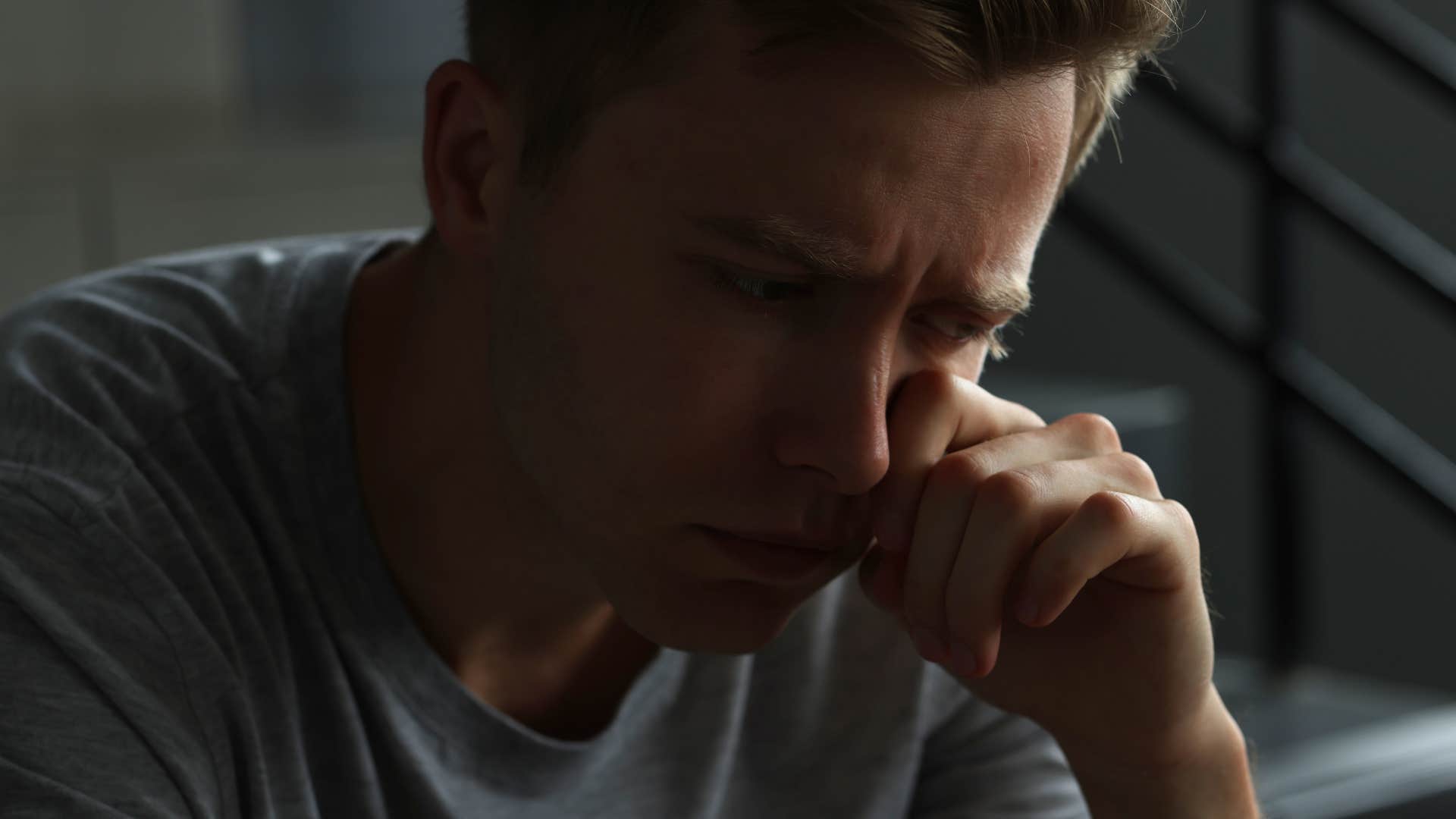
Holding onto grief and loss can sometimes make it harder to operate through your everyday life, especially when it comes to the quiet, dark moments you spend in your bed every single night. “There can be a disruption in hormones that results in specific symptoms, such as disturbed sleep, loss of appetite, fatigue, and anxiety,” neuropsychologist Dr. Jannel Phillips says about grief.
Whether it’s coping with sleeping alone after the loss of a partner, or even coping with the loss of a pet that would normally sleep beside you in bed, the increase of hormones and emotions associated with loss can make alone time and sleep harder.
9. They’re afraid of the dark
 New Africa | Shutterstock
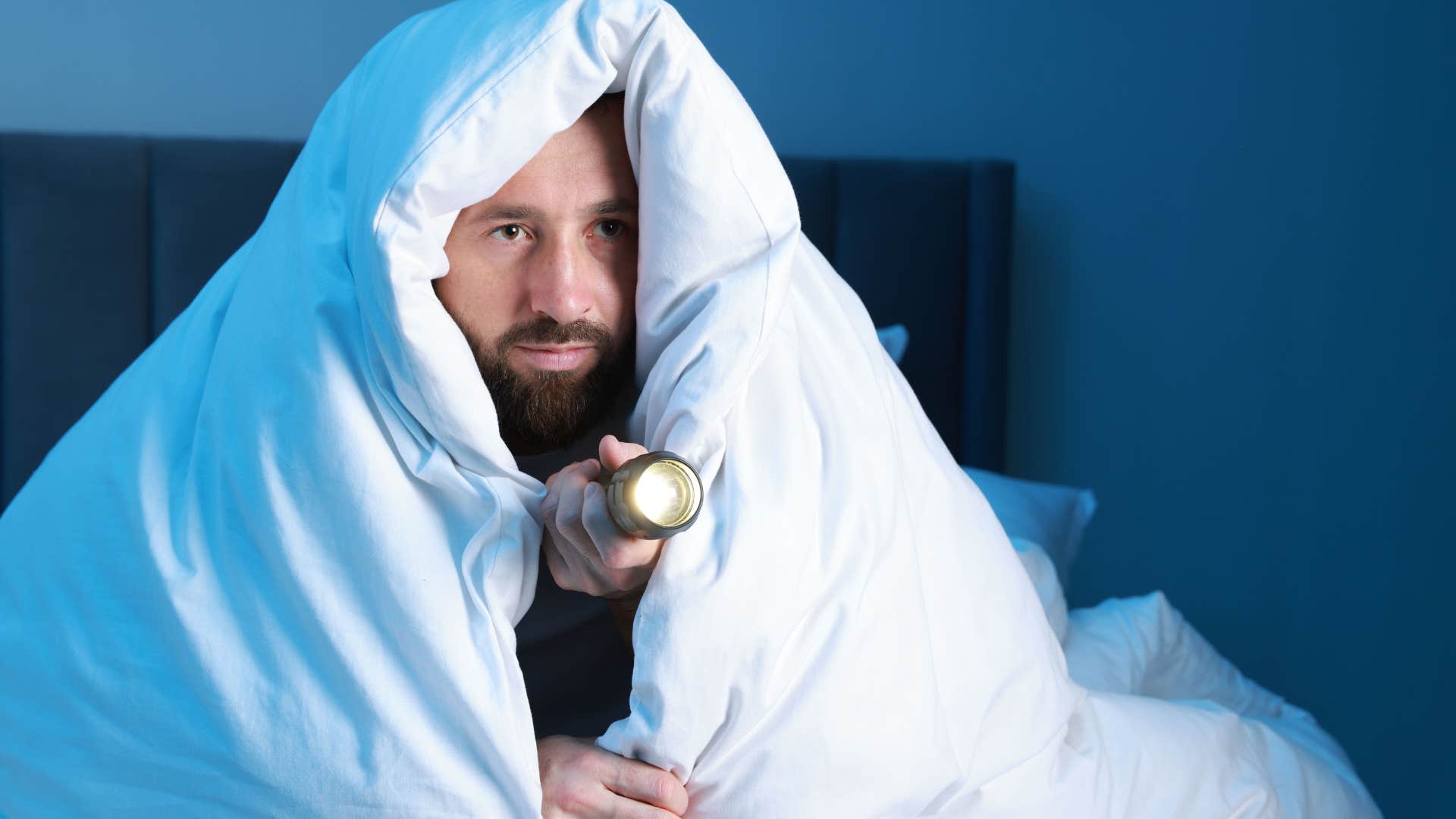
According to psychiatrist Dr. Raghu K, unresolved trauma from past experiences, an overactive mind, or even fears of medical emergencies at night can often sabotage a person’s ability to truly unwind and rest in bed at the end of the day. Even if it’s simply a fear of the dark, that makes it harder to unwind when nobody else is around, it can hold a lot of power over your ability to rest.
While many people hold onto guilt and shame about these fears in their adult lives, the truth is that they’re powerful and can bring up a lot of complex emotions. People who can’t sleep when they’re alone at home often have these distinct personality traits, on top of internalized shame, that make nighttime routines and rest that much more difficult.
10. They’re isolated
 BaLL LunLa | Shutterstock
According to studies shared by the American Psychological Association, social isolation can often lead to issues with sleep and rest. Even if these isolated individuals have misguided coping mechanisms for dealing with their loneliness during the day, like distraction, when they’re home alone facing quietness, it can bring up all their intense, suppressed emotions.
That’s part of the reason why people who suppress their emotions deal with a number of health problems. Of course, they can’t run from suppressed emotions forever. At some point, they’ll bubble up, and for isolated people, that usually comes at the expense of their rest at night.
11. They have low self-esteem
 Kleber Cordeiro | Shutterstock
Even if it seems like a stretch, self-esteem is largely related to sleep, according to a study from the International Journal of Behavioral Medicine. People who experience more insomnia at night and sleep-related issues tend to score lower on self-esteem and optimism scales.
Whether it’s the quietness that brings up their insecure thoughts and anxieties or a tendency to look on the pessimistic side of things while decoding random noises and sounds before bed, people who can’t sleep when they’re alone at home tend to have these distinct personality traits.
Zayda Slabbekoorn is a senior editorial strategist with a bachelor’s degree in social relations & policy and gender studies who focuses on psychology, relationships, self-help, and human interest stories.
