
People Who Walk In Circles When Talking On The Phone Usually Have These 11 Subconscious Reasons
 Maria Markevich | Shutterstock
 Walking, whether it’s outside or pacing around your office, often boosts cognition and brain health, according to a study from Age & Ageing. So, if you’re talking on the phone, trying to naturally make connections, process information, and digest someone’s communication without clear visual cues, chances are walking is a behavior that assists you in having better conversations.
People who walk in circles when talking on the phone usually have these subconscious reasons. Even if they’re not aware of it, their body and brain are inherently interconnected and often rely on each other in equally beneficial ways. Whether it’s helping them to process what someone is saying or boosting their creativity, walking in circles isn’t just keeping them entertained.
People who walk in circles when talking on the phone usually have these 11 subconscious reasons
1. They’re processing stress or anxiety
 Krakenimages.com | Shutterstock
Simply moving your body and getting out of your sedentary lifestyle can reduce anxiety, stress, and other mental health concerns. So, if someone is dealing with a lot of emotional turmoil or anxiety, having a hard conversation or conflict over the phone, chances are their body's subconscious desire to walk around is simply a way to process all those intense feelings.
Even if they’re not aware of it, walking around quiets their brain, allowing them to think clearly and resolve conflicts without being overwhelmed by their emotions.
2. They’re boosting their creativity
 Monkey Business Images | Shutterstock
According to a Stanford study, walking tends to boost our creativity — assisting divergent thinking and prompting our brains to look for new information and connections that aren’t available when we’re sedentary. While these experts argue that doesn’t mean you should do all your tasks while walking around, any conversation that requires a fresh perspective or innovative thinking may benefit from walking around, regardless of the environment.
So, if someone’s walking around in circles when talking on the phone, their brain may subconsciously be boosting creativity — trying to find a solution to a complex problem or make connections between vague topics.
3. It helps them stay focused
 Miljan Zivkovic | Shutterstock
Whether it’s in the classroom, talking on the phone, or solving a problem at work, movement has been shown to improve brain function around concentration and focus, according to a study shared by the University of Michigan. People who walk in circles when talking on the phone usually have these subconscious behaviors — they simply focus better when they’re moving around.
Movement is underrated in these ways. We often overlook exercises or “going to the gym” in our routines, even though we know it’s good for us, but the truth is that the benefits of movement can be found in smaller exercises. From stretching before bed to walking in circles, it’s these small movements that get us out of our sedentary habits that often mean the most.
4. They’re coping with awkward silences
 MAYA LAB | Shutterstock
Even if it’s uncomfortable or awkward in the moment, being comfortable with silence is a superpower. It creates space for our emotions and often calms our nervous system on a deep level, which is why it’s important to cultivate and accept, even in conversations with other people.
Of course, if someone’s working through their discomfort, but still making space for silence on a phone call, chances are they’re walking around in circles to distract themselves from their awkwardness. At least, if they’re moving around, they can make better use of that anxious energy, rather than trying to fill the space with unnecessary small talk or oversharing thoughts.
5. They’re dealing with restlessness
 Julia Zavalishina | Shutterstock
Considering that people dealing with anxiety and restlessness may subconsiously resist relaxation to avoid these complex, uncomfortable emotions, it often takes quirky, subconscious habits to craft a safe space for them to feel. Especially if they’re on a stressful work call or having an argument with a friend over the phone, walking around can help them to make sense of all that pent-up anxiety.
As a study from the Journal of Behavioral Medicine suggests, even just a small walk around the house or the office can prompt feelings of calmness in someone grappling with restlessness or anxiety. It gets us out of our heads and back into our bodies, making things like emotional regulation and communication easier to engage in.
6. They’re trying to be more engaged
 Krakenimages.com | Shutterstock
Most people have engineered movement out of their lives, working too hard or staying in comfortable, sedentary positions that harm their health. However, small movement rituals, even if it is taking phone calls while walking around or stepping outside for a quick stretch, are powerful.
If someone’s struggling to be engaged with someone on their phone and is constantly noticing their attention shifting to other distractions, moving around, and walking in circles, maybe their subconscious is trying to stay more focused. Instead of battling a million distractions on the couch or at their desk, they get up, giving their body and mind something to focus on while they digest another person's voice.
7. They’re regulating their adrenaline
 Krakenimages.com | Shutterstock
According to psychotherapist Victoria Strohmeyer, every time our phone buzzes or a phone call comes in, they activate our sympathetic nervous system, which is always on the lookout for things to pay attention to. “It gives you a little shot of adrenaline for every interaction,” she explained. “It will take five to 30 minutes for your body to get back to baseline after every one of these alarms.”
So, if someone is walking in circles after answering the phone, it may be their subconscious way of coping with the anxiety and adrenaline that was sparked from answering the phone in the first place. They’re helping their nervous system come back down to a healthy baseline, so they can focus and regulate without pressure.
8. They’re imagining the person speaking
 Ground Picture | Shutterstock
According to a study from the Journal of Experimental Psychology, walking can boost creative ideation, both during the movement and for a short while afterward. So, if someone’s talking on the phone and walking around, it’s not only prompting more creative thought processes, it’s also helping them to imagine the person they’re speaking to — including all the body language and visual cues they’re missing online.
By imaging the person they’re speaking to, there’s a higher level of connection and engagement, compared to typical conversations online that lack a sense of personhood and attention.
9. It’s preventing them from boredom
 Miljan Zivkovic | Shutterstock
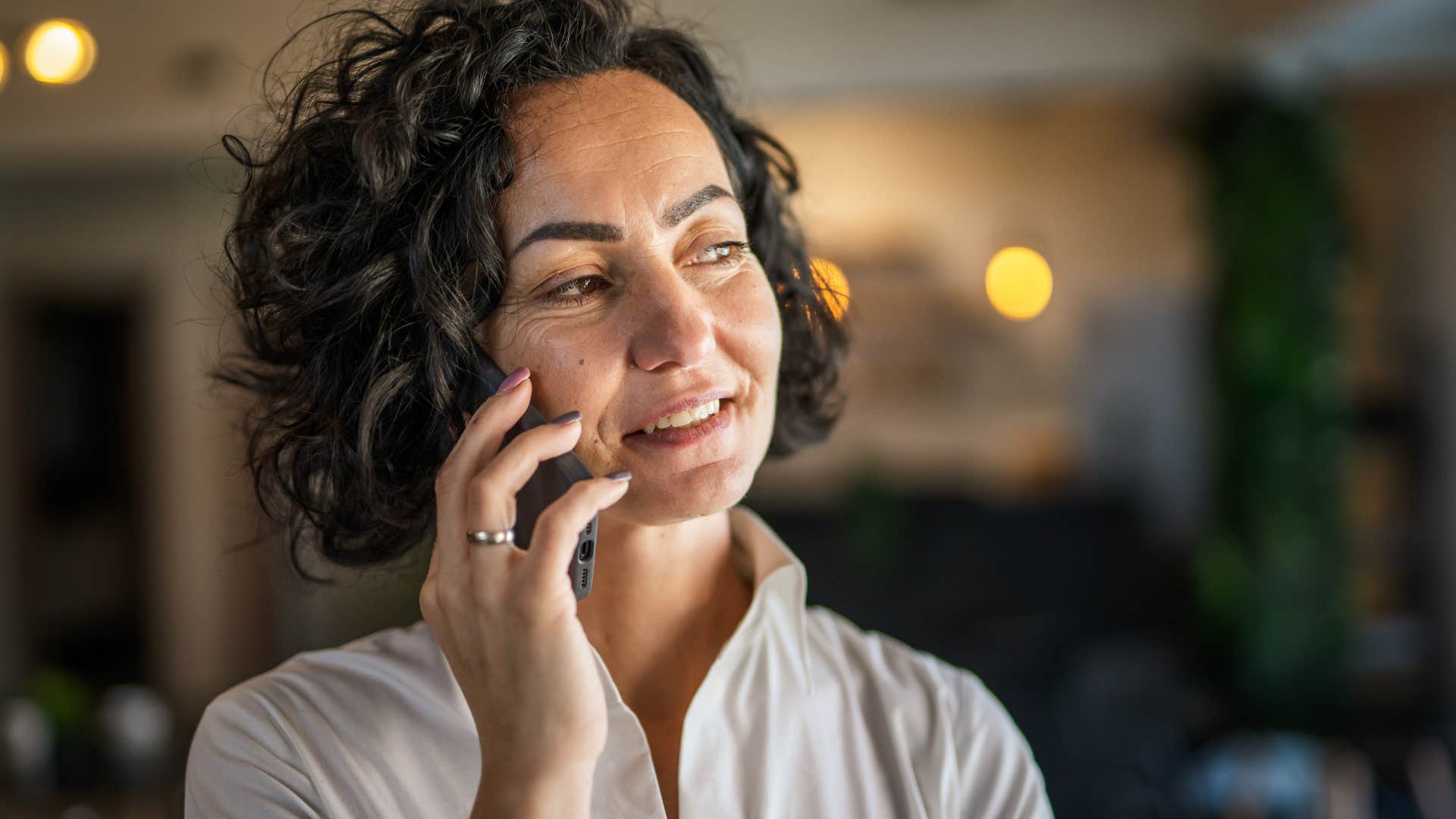
Without the body language, visual cues, and eye contact of a face-to-face conversation, someone who’s walking in circles on the phone may leverage this movement to stay focused. Without all the extra things to hold their attention, they’re at risk for disengagement and growing bored in the conversation.
Especially for people with attention-deficit disorders, not having all these extra entertaining behaviors to hold their attention can put them at a higher risk for growing inattentive and bored. Movement keeps their brain attentive and engaged, even if they don’t realize it in the moment.
10. They’re trying to form better sentences
 Daisy Daisy | Shutterstock
Movement tends to assist cognitive performance — not just to improve memory and keep people engaged, but also to assist in their verbal communication skills. So, if someone is struggling to express their emotions or form together sentences while talking on the phone, pacing around and walking in circles may aid them in better verbal communication.
Even if they don’t realize it, with every step they’re bettering their brain health and clearing their mind, making actions like speaking or considering what to say next much easier.
11. They’re coping with discomfort
 Krakenimages.com | Shutterstock
Whether it’s the discomfort of a hard conversation or a general dislike for unprompted phone calls — a common concern in many younger generations of people today — walking around while talking might be a means to cope with discomfort around this type of conversation.
Walking around and finding space for that restless energy calms their nervous system and slows their heart rate, bringing them back to the conversation with a sense of peace and mindfulness, rather than “fight or flight” urges.
Zayda Slabbekoorn is a senior editorial strategist with a bachelor’s degree in social relations & policy and gender studies who focuses on psychology, relationships, self-help, and human interest stories.
