
People Who Wave 'Thank You' To Cars When Crossing The Street Usually Have These 11 Specific Personality Traits
 we.bond.creations | Shutterstock
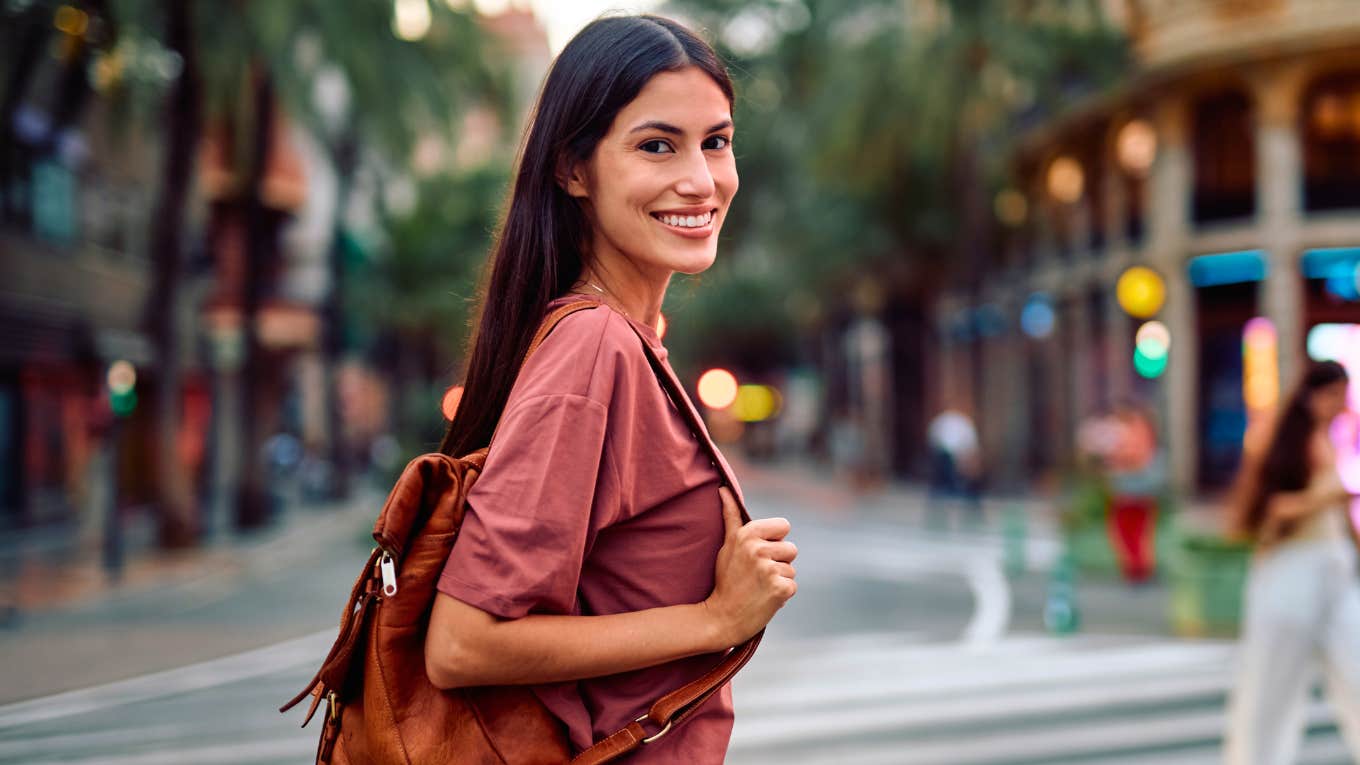
 For some people, crossing the street without offering a quick wave as a “thank you” to the cars that let them pass is absolutely unthinkable. Others can’t be bothered to throw up a hand in recognition, but the people who do want to be nice. They understand that those cars didn’t have to stop for them, and they’re showing their appreciation. But aside from being polite, people who wave thank you to cars when crossing the street usually have specific personality traits, whether it's gratitude, humility, or strong social intelligence.
Although waving thank you seems like such a small act, it can be a powerful one. Psychologist Jill Suttie explained, “Researchers studying gratitude have found that being thankful and expressing it to others is good for our health and happiness. Not only does it feel good, it also helps us build trust and closer bonds with the people around us.” So, people who take the time to show this common courtesy really do care, and they share some of the same qualities.
People who wave 'thank you' to cars when crossing the street usually have these 11 specific personality traits
1. Polite
 Dmytrenko Vlad | Shutterstock
Perhaps the most obvious trait that people who wave “thank you” when crossing the street share is politeness. They care about other people and their feelings, and they want to make sure that they do everything they can to show others that their emotions are safe with them. They would never do anything to intentionally hurt someone else.
Philosophy professor Aaron Ben-Zeév said, “Politeness is behavior intended to lubricate social interactions, which can sometimes be uncomfortable, in order to make them more pleasant and cooperative.”
When you’re interacting with strangers, you don’t always know what to expect because you simply don’t know them. By treating strangers with politeness, you’re showing them kindness and signaling that they can trust you even though they don’t know you either. A “thank you” wave shows that a person possesses this polite sensibility.
2. Empathetic
 PeopleImages | Shutterstock
Another trait people who wave “thank you” share is being empathetic. They have a keen awareness and understanding of other people. The wavers know that the people driving those cars did not have to stop for them, but they still did so out of their own kindness. They want to acknowledge that and show that it matters to them.
Social psychology professor Karina Schumann stated, “In general, empathy is a powerful predictor of things we consider to be positive behaviors that benefit society, individuals, and relationships. Scholars have shown across domains that empathy motivates many types of prosocial behaviors, such as forgiveness, volunteering, and helping, and that it’s negatively associated with things like aggression and bullying.”
If you show empathy, it means you understand what other people are going through. Everyone has difficult days, and you never know what’s going on inside someone’s head. By extending the simple kindness of a wave, a person is showing that they would like to return the kindness that someone else showed to them, and they might just make someone’s day better in the process.
3. Seeing the best in others
 fizkes | Shutterstock
People who wave their thanks also have a tendency to see the best in others. There’s a pretty decent chance that the people who braked to let them cross the street just did so because they’re used to it and they think they’re supposed to. They may not even be expecting a wave. But the person crossing the street still sees the selflessness of their actions, and they want to thank them.
Psychologist Rick Hanson explained that because of the negativity bias in our brains, we’re actually more likely to see the bad in people. “Seeing the good in others is, thus, a simple but very powerful way to feel happier and more confident, and become more loving and more productive in the world,” he said.
This means that seeing the good isn’t our default. It takes work to do so. Anyone who’s willing to put that work in and see the best in people instead of what their negativity bias shows them must hold other people in pretty high esteem. They show how true this is when they express their thanks.
4. Friendly
 Dean Drobot | Shutterstock
People who wave to cars that let them cross the street are usually pretty friendly. It only makes sense — someone who wasn’t naturally friendly wouldn’t think of lifting their hand in acknowledgement of the drivers who stopped for them. This doesn’t necessarily mean that they’re outgoing or extroverted, but they do see the value in treating others with respect and warmth.
In another article, Hanson wrote, “Being friendly feels confident and happy, with a positive take on other people, moving toward the world instead of backing away from it. And it encourages others to be less guarded or reactive with you...”
Waving at someone to say “thank you” is truly such a small action, but it speaks volumes. Doing so proves that someone is a safe person who has an optimistic outlook on the world. They don’t keep to themselves because they know everybody is worth engaging with. As cliché as it may sound, these people truly want to make the world a better place.
5. Grateful
 yourphotopie | Shutterstock
Of course, if someone is so quick to express their thanks, it means they’re a very grateful person. They recognize the good things in life and know how lucky they are to have experienced them. These people don’t just easily brush off random acts of kindness, but treasure them.
Psychologists Dr. Robert A. Emmons and Dr. Michael E. McCollough conducted a study in which they had some participants record things they were grateful for, and others record things that irritated them. The group who focused on gratitude not only felt better psychologically, but also exercised more frequently and required fewer visits to the doctor.
Gratitude is a powerful force, and it has many benefits. Studies like this one show that it has a positive impact on the person expressing it, but gratitude also means a lot to the person receiving it. Waving a “thank you” may be the smallest thing a person does during their day, but it can stick with that other person for quite a while.
6. Comfortable expressing emotion
 Dejan Dundjerski | Shutterstock
If someone waves “thank you” to cars when crossing the street, it means they are comfortable expressing their emotions. Of course, showing gratitude for someone stopping their car is not the deepest, most vulnerable emotion a person can feel, but a willingness to acknowledge this act still suggests that they aren’t afraid to let people know how they’re feeling.
“When we take the time to feel and understand our emotions, it can often lead to a more insightful outlook on life, better relationships, and improved physical health. Working through them and expressing them enables us to improve our mental and emotional health,” therapist Jason N. Linder explained.
Expressing your emotions is rarely the most enjoyable thing to do, and would be much easier to avoid in many situations. But if someone takes baby steps and starts by expressing their gratitude by waving to a driver who stopped for them to cross the street, they may find that they’re quickly able to express their emotions in deeper, more complex situations.
7. Humility
 fizkes | Shutterstock
Another trait that people who wave “thank you” to cars when crossing the street share is humility. Someone who was more egotistical might just cross the street without taking a second thought for the cars that stopped. They might even cross the street without even looking to make sure the cars were stopping at all because they just assumed they would for them. People who wave know they’re not the center of the universe.
Health writer and researcher Tiara Blain explained, “Humility can help you develop a more profound and evolved outlook of the world and what is going on in it. This trait allows you to consciously be aware that you bring worth to this world but, at the same time, there are many others in the world who also have a purpose.”
Being humble doesn’t mean you let people walk all over you or have no sense of self-worth at all. It does mean you understand that you’re just one person in a very big world full of wonderful people. A humble person would never just expect cars to stop for them because they deserve it. Instead, they know that being treated with kindness is a privilege.
8. Harmonious
 fizkes | Shutterstock
Someone who waves “thank you” to cars probably has a proclivity for harmony and peace. They’re not interested in starting any kind of conflict by recklessly walking in front of moving vehicles or ignoring acts of kindness. They know they share the road with those who are driving, and they give them the respect they deserve.
Dr. Timothy Lomas, a psychology research scientist at Harvard’s Human Flourishing Program, explained the difference between balance and harmony. “While both are invariably a desirable good, balance is more neutral and detached, while harmony is often ‘warmer’ and even more positively valenced, with a more definite sense of flourishing,” he said.
Balance is good, and something to strive for, but harmony takes the idea a step further. Based on this description, it’s easy to associate harmony with other traits like friendliness and empathy. People who are harmonious aren’t attempting to prove how amazing they are or prove that they have a right to do something, like cross the street. Instead, they just want everyone to get along.
9. Strong social intelligence
 Aloha Hawaii | Shutterstock
Strong social intelligence is another trait you can usually find in people who wave “thank you” to cars when crossing the street. Obviously, if someone possesses other traits like politeness and humility, it means there’s a pretty good chance that they have strong social intelligence. But even more than that, having strong social intelligence means you can read people and social interactions easily.
Psychology professor Ronald E. Riggio noted, “Social intelligence (SI)... is mostly learned. SI develops from experience with people and learning from success and failures in social settings. It is more commonly referred to as ‘tact,’ ‘common sense,’ or ‘street smarts.’”
Someone who waves when they cross the street is demonstrating that they understand how society works and the general social contract we all live under. They’re reading the room and understanding that they need to express their thanks for another person stopping so they could pass. It is, really, just common sense.
10. Conscientiousness
 Cast Of Thousands | Shutterstock
Life coach Sherri Gordon explained that conscientiousness is considered one of the “Big Five” personality traits which create “five basic categories” for all other traits to be sorted into. Conscientious people are known for being responsible and sticking to their plans so they can live successfully.
Gordon added, “Conscientiousness is a core personality trait that involves being diligent, responsible, and careful. When someone is conscientious, they are able to exercise self-discipline and self-control in order to pursue and ultimately achieve their goals.”
It makes sense that people who wave “thank you” to cars would be conscientious. These people are careful rule-followers who believe doing the right thing will encourage others to do the same. They would never think of ignoring someone who stopped their car for them. Their strong sense of responsibility means they have to acknowledge them.
11. Following social norms
 STEKLO | Shutterstock
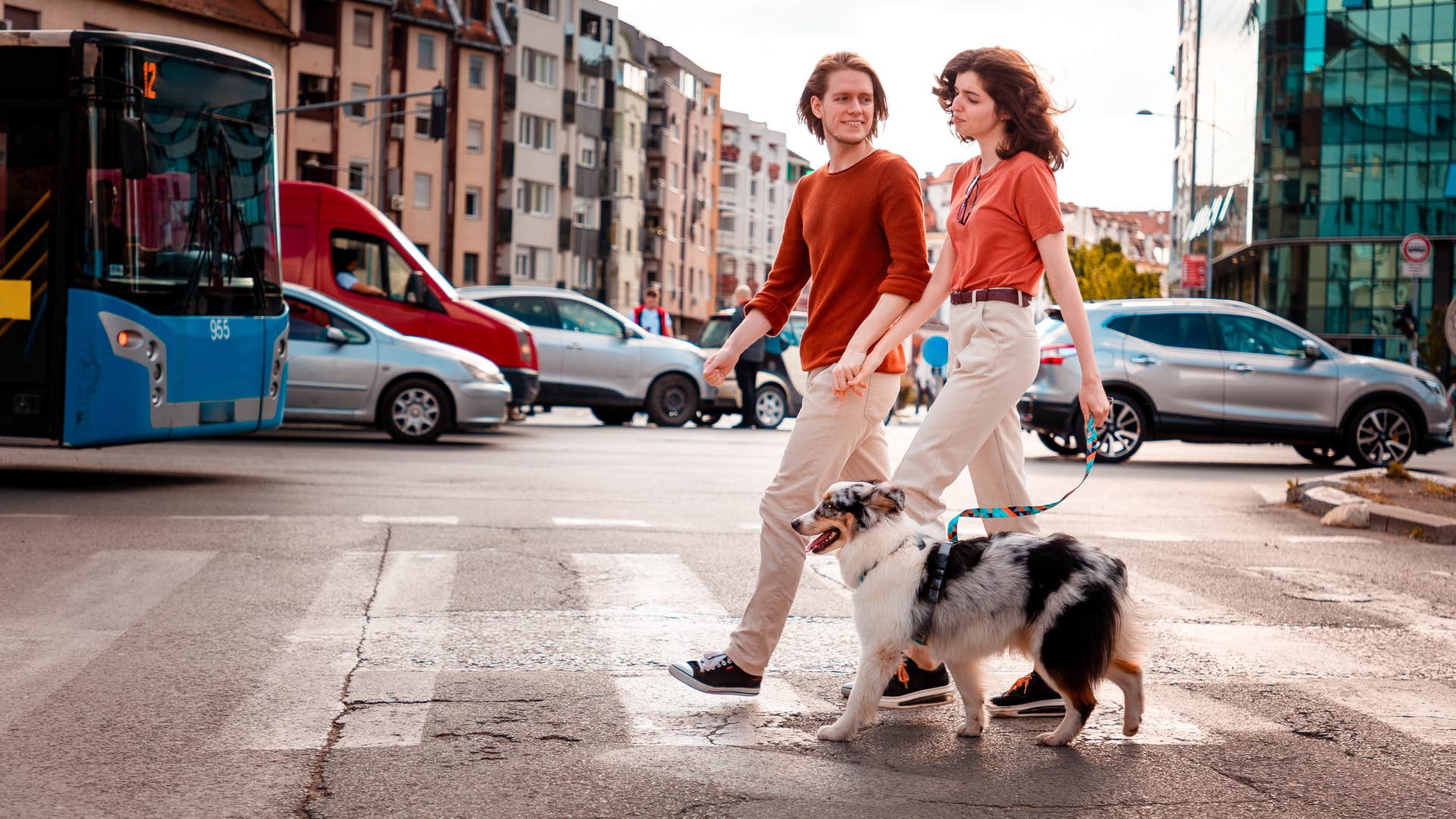
Many people who wave their thanks would say they do so because it’s what they’re supposed to do. They grew up watching their parents do it, the people around them do it, and they know that by doing so themselves they are fulfilling some kind of social contract. This means these people place great significance on following social norms.
Ben-Zeév added, “One is judged to have good manners if they follow commonly accepted fixed rules in their interactions with others. These skills are useful in that we can prevent offending strangers. Acting in accordance with accepted normative rules minimizes the risk of a stranger misinterpreting what we say and do.”
For some people, following social norms may not be a top priority, but doing so fulfills a sort of obligation you have in society. There’s no law that says everyone has to be nice, but those who are are often more readily accepted. Waving a “thank you” shows that someone understands social norms and conventions and follows them.
Mary-Faith Martinez is a writer with a bachelor’s degree in English and Journalism who covers news, psychology, lifestyle, and human interest topics.
