
Kids Who Grew Up With Only TV Characters As Parental Role Models Often Carry 7 Habits Into Adulthood
 Edualonso | Shutterstock
For some kids, TV characters were their most trustworthy friends. While their parents worked overtime or were struggling with their own problems, they leaned heavily on fictional characters for emotional support.
Even as adults, they subconsciously pull behaviors from TV shows and lean on habits they developed to adapt to their childhood reality. Therapist Annie Wright calls these childhood adaptations their superpowers and their kryptonite.
Here are 7 habits kids who grew up with TV characters for parental role models often carry into adulthood:
1. They talk through problems out loud
 fizkes | Shutterstock
People talk through problems a specific reason. As clinical psychologist Chloe Carmichael, Ph.D. explained, "Our inner worlds can feel like a swirl of half-formed ideas. Putting them into words forces us to choose, prioritize, and clarify. This helps the brain shift from chaos to coherence."
As kids without adequate parental role models, they had to talk themselves through challenges and that's probably why they carried this habit into adulthood. Being able to verbalize their thoughts makes problem-solving ten times easier, especially when you didn't have anyone to bounce ideas off of when TV parents were your best option.
2. They use humor to cope with difficult situations
 PerfectWave | Shutterstock
Life won't always treat you kindly, and kids who didn't have great parental role models know this better than most. Just when you think everything is working out, life will hit you with a one-two combo.
But instead of moping, kids who grew up watching TV used humor to cope, just like their TV parents did. They might've had absent parents, but at least Danny Tanner and Claire Huxtable never abandoned them.
Those awkward pauses and lighthearted jokes? They really did help. And the older they got, the more they clung to them. Even the Mayo Clinic agrees, when people are stressed or anxious, they feel more at ease after a good joke.
3. They treat their friends like family
 Josep Suria | Shutterstock
If The Golden Girls taught us anything, it's that chosen family really hits different. That's probably why kids who grew up with TV characters as parental role models treat their friends like family. From their own experience, they've learned just how awful family can be and what a blessing it is to have a true friend.
Real friends respect you. They would never leave you hanging. That's why adult children cling to this habit. Unlike their parents, their friends chose them and have always been there for them.
4. They escape into fiction when life gets difficult
 GaudiLab | Shutterstock
TV shows might've come in clutch when they were kids, giving them comfort and a sense of what a healthy family can look like, but that doesn't mean kids never picked up bad habits. These TV families might've curbed the loneliness, but they've also taught them to lean too much on fiction. Now, as adults, a habit they can't seem to let go of is escaping into fiction when life gets difficult.
It's tempting to shut their brain off and pretend the real world doesn't exist. However, living too much in fantasy can be detrimental. As a 2025 study explained, "The more compulsive the activity becomes, the more it may interfere with real life." That's why they need to shut this habit off. Otherwise, it may consume their life.
5. They disappear into imaginary scenarios
 Antonio Guillem | Shutterstock
If a child grew up really alone, they didn't just depend on TV shows. They might've been the start, but as they got older, they created imaginary scenarios to feel less alone. At first, they didn't see anything wrong with it. It's just daydreaming, right? But just like anything in life, too much is a bad thing.
As the Cleveland Clinic advises, its possible to go too far with your daydreaming. "People who have maladaptive daydreaming often choose to daydream rather than spend time with others."
That's why they need to put a lid on it. With professional help, they can find ways to daydream while still keeping their social life intact.
6. They eat meals in front of the TV
 KinoMasterskaya | Shutterstock
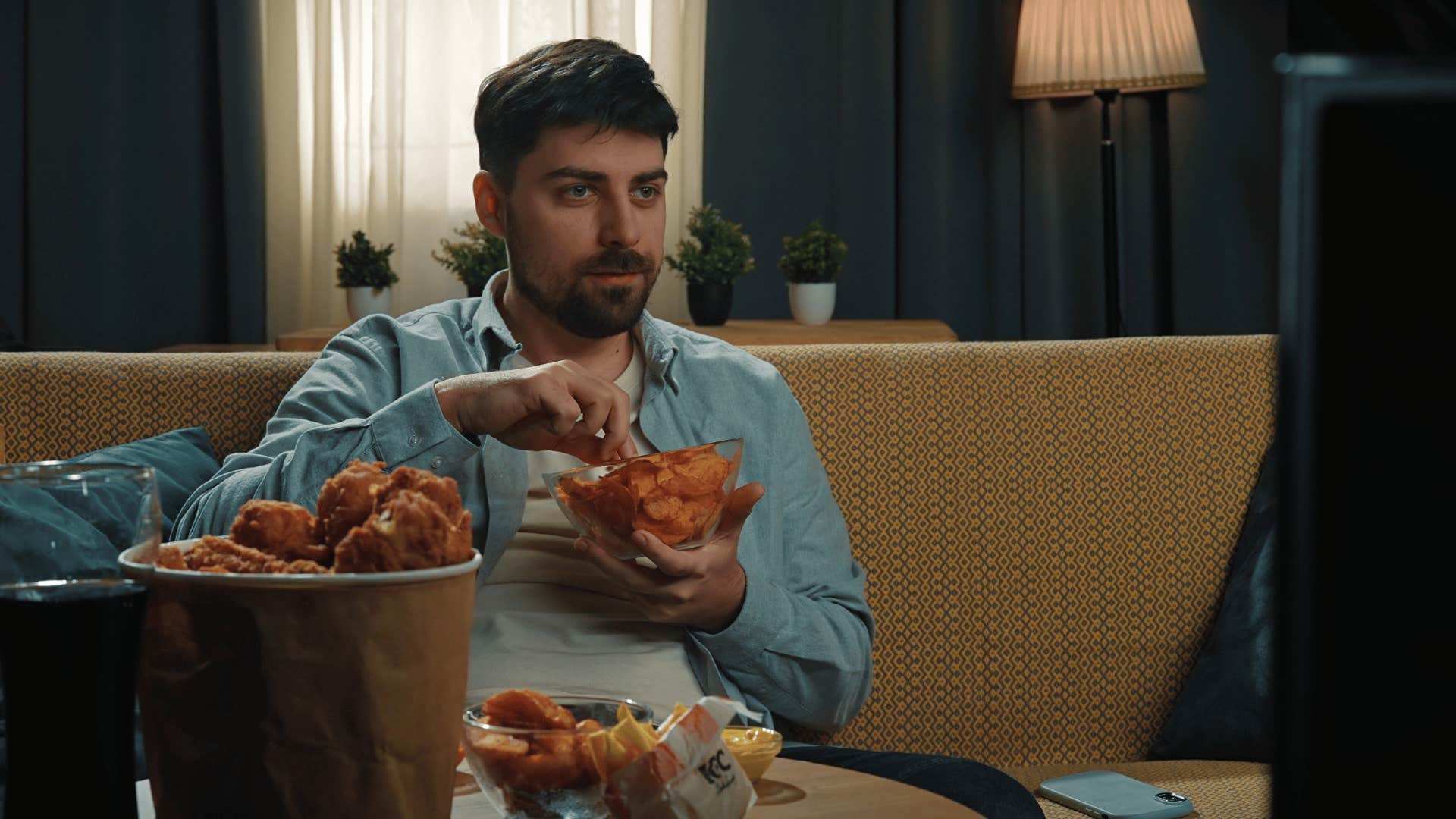
Kids who grew up with only TV characters for real comfort often find themselves eating in front of the TV, instead of at the table. This continues often well into adulthood, even when they have families and would benefit greatly from having nightly meals together without screens.
Human beings crave familiarity, it doesn't matter if it's good for us or not. Our brains seek out patterns and are most comfortable when something fulfills them. The good news is, humans can break habits.
That's why you don't need to keep eating meals in front of the TV, even if it's what you're used to.
7. They keep background noise on at all times
 Stokkete | Shutterstock
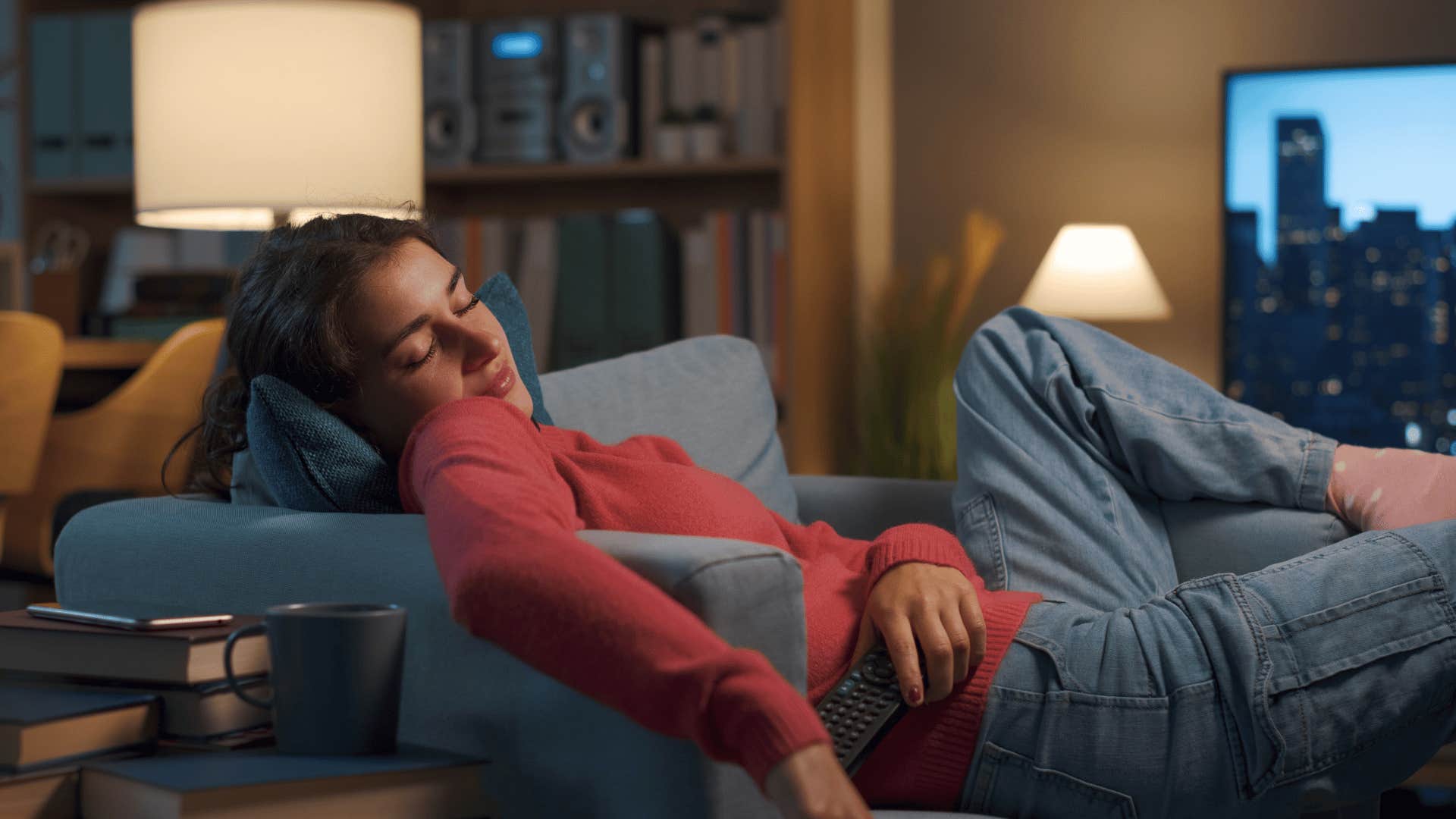
Kids who grew up with only TV characters to keep them company often find it very uncomfortable to be in a quiet house, even once they're adults. Even when they slept, they were uncomfortable without the TV blaring in the background. But this habit didn't just stop at childhood.
Even in adulthood, they still keep background noise on. Does it drive their partner bonkers sometimes? Absolutely, but they can't help it. They probably listen to audiobooks and podcasts while they sleep, too.
Luckily, these habits can be broken when they become problematic, especially if you recognize their history. You're not lazy and you're not chaotic. You probably just adapted to the childhood you were given in the best way you could. And there's no shame in that.
Marielisa Reyes is a writer with a bachelor's degree in psychology who covers self-help, relationships, career, family, and astrology topics.
