
11 Behaviors Parents Should Avoid If They Want Their Kids To Like Them As Adults
 BearFotos | Shutterstock
 As people grow up and figure out who they are on their own terms, they sometimes distance themselves from their parents. While mistreatment often leads to parental estrangement, the reasons behind an adult kid's decision to cut off a parent aren't always so clear-cut. There are certain behaviors parents should avoid if they want their kids to like them as adults, as some of their actions impede that connection to each other.
Estrangement is often framed as a one-sided decision, yet becoming estranged is a process that happens over time. According to a study published in the Journal of Marriage and Family, 6% of respondents reported being estranged from their mothers, and 26% reported being estranged from their fathers. While reconciling with one's parents isn't always possible, the first step to re-establishing contact requires the parents to commit to changing their behavior.
Here are 11 behaviors parents should avoid if they want their kids to like them as adults
1. Emotional manipulation
 fizkes | Shutterstock
When adult kids avoid their parents, it's usually due to a long-established pattern of behavior that causes harm. Parents who are emotionally manipulative might not realize they're weaponizing their emotions to get what they want, but their behavior can lead their adult kids to distance themselves.
According to licensed marriage and family therapist Sarah Epstein, "Parents who use guilt to increase contact with adult children... may fear the distance created by their children building their own lives and spending time and energy with others. They may fear becoming less relevant or central in the child's life... When a parent does not know how to discuss these feelings openly and take responsibility for them, they may use guilt to coerce their children into closer contact to assuage their own discomfort."
While parents who rely on guilt-tripping their kids to garner attention might not think they're doing anything wrong, their behavior makes their children feel bad, which means it's not a healthy form of communication.
2. Being dismissive of their decisions
 BearFotos | Shutterstock
It's fairly common for parents to project their hopes and dreams onto their children, but being dismissive of their kids' choices once they've entered adulthood is one of the unfortunate behaviors parents should avoid if they want their kids to like them as adults. Because when they voice their opinions of how they choose to live their lives, it's often a cause for going low-contact or no-contact.
While a parent might not like their kids' choices, telling them they're wrong for moving across the country or raising their own children in a certain way creates a rift. Being dismissive of their adult kids' lives usually conveys an air of disapproval and disappointment, which can make their adult kids avoid them.
"Invalidating experiences, on the other hand, such as when parents are dismissive or critical, can exacerbate emotional distress in struggling adult children. Validation, however, helps reduce an adult child's distress by providing emotional support and understanding of their struggles, leaving them feeling less alone," psychologist Jeffrey Bernstein explained.
3. Disrespecting their adult kids' partners
 Motortion Films | Shutterstock
When parents show disrespect to their adult kids' partners, they're also disrespecting their own children. By being critical of their children's choice of life partner, they send off negative vibes that make their kids dislike them and want to avoid them.
It can be difficult for parents to recognize their adult children's independence, but accepting their partners for who they are is a crucial part of that process. When they dismiss their adult children's partners, they show their disapproval in subtle ways, like excluding them from the family group text or cooking food they can't eat for Sunday dinner.
4. Refusing to apologize
 wavebreakmedia | Shutterstock
A true apology means acknowledging past behavior and committing to changing that behavior in the future. But if a parent refuses to own up to their own behavior, it's highly likely their adult kids won't like them very much.
Psychologist Samantha Rodman Whiten noted that the decision to become estranged often occurs due to an "empathic rupture," which is a moment in time that exemplifies a family member's inability or unwillingness to modify their behavior. "It's a representative sort of action that makes you think they're never going to change," she explained.
A parent who won't recognize that their children feel hurt might refuse to apologize because they don't think they've done anything wrong. Their rigid mentality can make it hard for their adult kids to heal their childhood wounds, which can lead them to emotionally or physically avoid their parents.
5. Giving unsolicited advice
 fizkes | Shutterstock
It can be hard for parents to step back and realize that their adult children are responsible for their own lives. It's one thing for someone to actively request help or seek guidance from their parents, but when parents give advice their adult kids didn't outright ask for, it can play out in a way that leads to estrangement.
According to a study published in the Journals of Gerontology, parental advice can help young adults feel better when the relationship is positive and the advice feels supportive. However, that advice can backfire and hurt their mood when it feels intrusive or unwanted.
When parents give unsolicited advice for their own benefit, it comes off as criticism. The adult child might feel as though their parent is disappointed in them, which can make them put up walls and distance themselves.
6. Invading their personal lives
 Motortion Films | Shutterstock
When parents overstep their boundaries and invade their adult kids' personal lives, it can create tension. As one of the behaviors parents should avoid if they want their kids to like them as adults, this one can feel suffocating, even if their intentions are good.
A parent who invades their adult kids' personal life might text excessively or call during times when they know their child is busy. It isn't easy for parents to loosen the ties that bind them to their children, but disrespecting their adult kids' independence is a path to estrangement.
7. Not acknowledging their adult kids' identities
 NTshutterth | Shutterstock
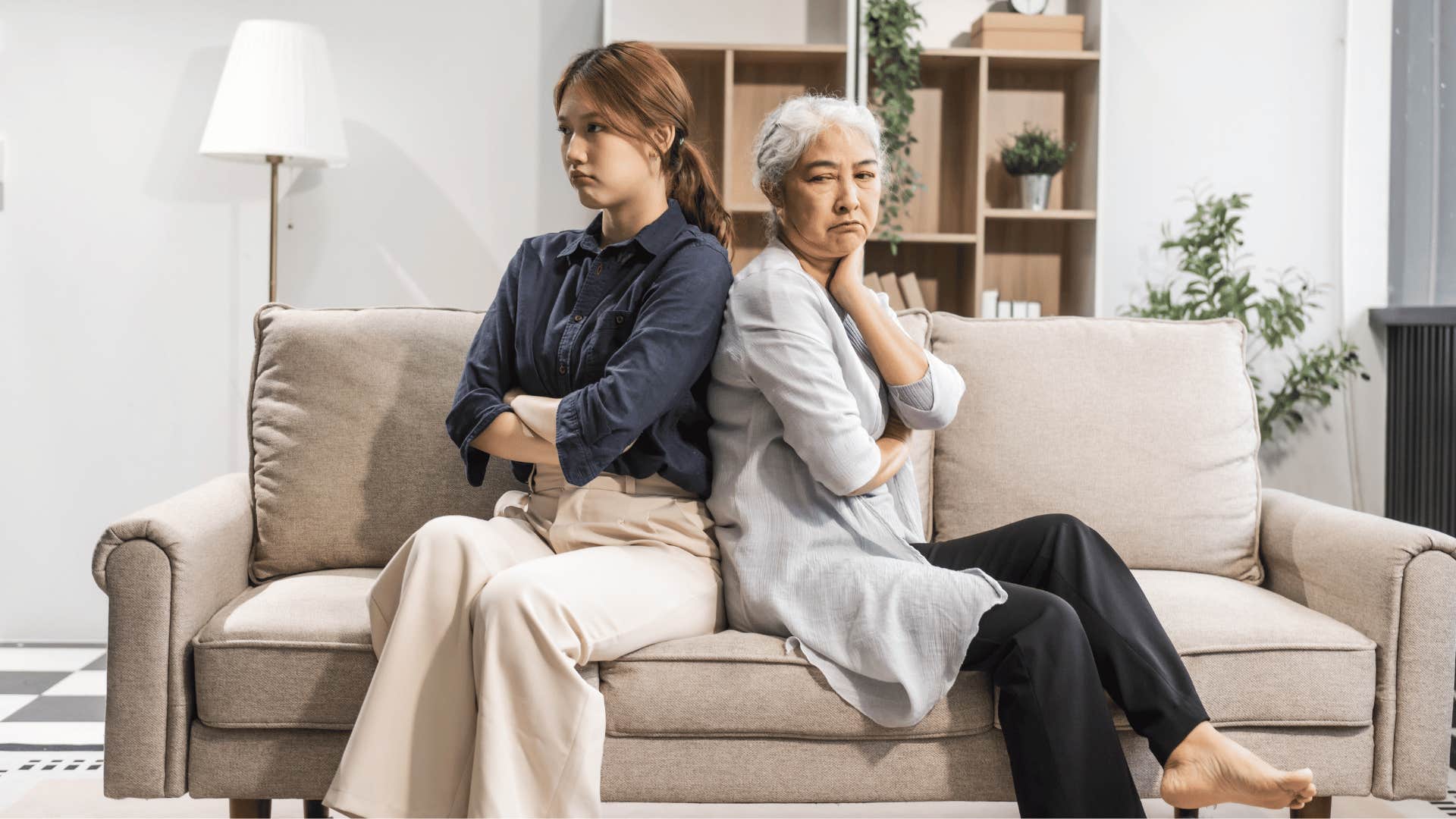
Ignoring the fact that their adult kids have developed their own identities, with their own unique interests, can cause separation. As kids grow into adults, they're in charge of figuring out who they are, what they like, and where they want to go in life.
Clinical psychologist Stacey R. Pinatelli explained that when parents offer emotional support, it solidifies the parent-child relationship. "One aspect of my parenting style that I'm confident in is consistently offering encouragement, empathy, and understanding, as I believe it plays a crucial role in fostering my adult children’s sense of security and well-being," she shared.
When parents don't let them come to their own conclusions about how they want to live, it's grounds for pulling away. Even if parents don't agree with decisions like these, they should allow their adult kids to establish who they are according to their own terms.
8. Having unrealistic expectations
 fizkes | Shutterstock
Whether it's comparing them to their siblings' success or holding them to impossible standards, these are behaviors parents should avoid if they want their kids to like them as adults. By holding their adult kids up to standards that are impossible for them to reach, parents create a relationship based on resentment and disappointment, which can lead to avoidance.
As kids grow up and figure out what they like and don't like, parents often struggle to see their kids in a new light. They might expect their adult children to come home for every holiday, even though they have kids of their own and want to establish new traditions. They might expect their adult kids to call them every day, which disregards the fact that they have their own busy lives.
9. Keeping a judgmental attitude
 ViDI Studio | Shutterstock
By constantly judging their adult children and instilling the feeling of being criticized, parents make their kids feel alienated from them. Therapist Dr. Gloria Brame explained that "overly critical parents can push away their grown-up children." She added that overcritical interference from parents can make adult kids feel "anxious or unsure about themselves," so "their children might distance themselves from the negativity."
"Some parents don't seem to remember that their kids are grown-ups and deserve to be treated with the same respect the parents give to other adults," Brame concluded. Adult children who avoid their parents often do so as a self-protective measure, because they don't want to be put down any longer, especially by the people who raised them.
10. Bringing up old arguments
 doucefleur | Shutterstock
When parents hold grudges and refuse to let the past go, they create a tense environment in which their adult kids pull away and decide to avoid them altogether. Bringing up arguments that happened years earlier can make adult kids feel as though they'll never be forgiven for mistakes they made when they were young.
Parents who are unable to see their adult kids as being capable of change establish a negative-feedback loop, where their kids feel like they can't do anything to please their parents. As a result, their adult kids might choose to avoid them, rather than be bombarded with everything they've done wrong.
11. Using money as leverage
 Goksi | Shutterstock
While there's nothing wrong with parents helping their children out financially, especially as the world grows more expensive, parents who use money as a means of control are making their adult children distance themselves. Whether it's giving money with strings attached or reminding them of every cent they've spent on them as justification for their behavior, it's incredibly damaging. Not only will adult children feel disrespected, but it makes the entire relationship transactional.
As marriage and family therapist Kathy McCoy revealed, "Some parents are quick to offer financial help, but with an agenda — and this rarely has a positive outcome. The strings attached may be that the parent wants to feel closer, to maintain power in the relationship or to have a say in an adult child’s lifestyle and buying decisions."
Alexandra Blogier, MFA, is a writer who covers psychology, social issues, relationships, self-help topics, and human interest stories.
