
People Who Start Staying Up Later As They Get Older Usually Fear These 11 Things Most
 SB Arts Media | Shutterstock
 As we get older, our sleep cycles become lighter, making distractions, early wake-up calls, and shorter durations more common, according to a study from UF Health. While this often leads to earlier bedtimes and mornings for the average person, some aging adults find their bedtimes getting later and later as they get older. Like anyone, regardless of age, the quiet time before bed can be a space for overthinking — a space where our minds become jumbled by a million passing thoughts and fears.
That’s why people who start staying up later as they get older usually fear certain things most that come to the surface. Drifting off to sleep early feels impossible, because they’re coping with and overthinking a million things, including changes to their sleep quality that could leave them feeling unrested.
People who start staying up later as they get older usually fear these 11 things most
1. The silence of bedtime
 AU USAnakul | Shutterstock
Many people dealing with a lot of life changes and stress in their lives fear the silence of bedtime, causing them to stay up later and cope with distractions that make falling asleep even more of a challenge.
Especially considering our bodies naturally produce less melatonin as we age, according to a study from Experimental Gerontology, it’s not surprising that added screen time and stress around bedtime make it a stressful, restless experience. Alongside loneliness, this quiet time can also amplify emotional turmoil, encouraging people to push off bedtime as long as possible.
2. The responsibilities of the next day
 Kinga | Shutterstock
If someone is worried about everything they have to do the next day and is stressed about their responsibilities, going to bed could be the last thing on their mind. The sooner they go to sleep, the sooner they have to wake up and attack all these to-dos.
Unfortunately, staying up later might offer a brief sense of comfort and control, but in the end, waking up tired only amplifies these feelings of stress and lowers a person’s motivation to actually complete them. They stay up late and adopt a “night owl” mindset, even if it’s not serving them.
In fact, according to a Stanford Medicine study, this kind of “night owl” behavior, especially when driven by stress and anxiety, can often worsen personal and sleep health.
3. Not having any other time to decompress
 tigercat_lpg | Shutterstock
As people get older, building their families and taking on more burdens in their daily lives, it’s not surprising that they push bedtime off to make the most of their alone time. It’s the only time of day that’s truly just for them, so staying up later is a way to cherish it for all it’s worth.
Of course, if they’re getting enough sleep every night and making the most of this time with healthy habits and rituals, it’s not always a bad thing that aging people push off their bedtime. But if they’re still waking up early and not resting their bodies as much as they need to thrive, it could turn into a toxic habit that leaves them feeling more stressed, anxious, and unmotivated the next day.
4. Missing out
 Andrii Nekrasov | Shutterstock
Especially alongside anxious attachments and shifts in relationships later in life, the fear of missing out (“FOMO”) can often affect aging individuals to a higher degree, according to a study from the Journal of Intelligence. They start saying “yes” to things late at night because they fear missing out, even at the expense of their sleep schedule.
They fill their social calendar completely full, miss out on restful evenings, and start to use this socialization as a distraction for their alone time and overthinking habits at home. While it may be sustainable for a bit, the longer they ignore self-care and rest, the more at risk they are for experiencing the isolation of burnout and emotional exhaustion.
5. The inevitability of aging
 Kyrylo Ryzhov | Shutterstock
According to the National Institute on Aging, aging people need the same amount of sleep as any adult, but do tend to naturally go to bed earlier than most people. As their age and life shifts, so do their sleeping cycles and circadian rhythms. However, if someone is actively pushing back against the inevitability of aging, they may force themselves to stay up later to cope with their discomfort.
They fear aging and the natural changes that come with it, so they do everything in their power to avoid it. Whether that means leaning into looking “youthful” at the expense of self-esteem or sabotaging rest by trying to stay up later, they’re entirely uncomfortable with this natural shift in life.
6. Messiness
 TheVisualsYouNeed | Shutterstock
While it’s true that people living in cluttered homes and spaces are more likely to develop insomnia, people who start staying up later as they get older may be sabotaging their sleep, already trying to clean everything at home before resting. They stay up late to clean up the clutter of the day, trying to unwind and rest with control, but only end up sabotaging their natural sleep schedule in the process.
They fear losing track of their cleaning habits and not having the time to do all of their household labor, so they push it into their restful time — the time that should be only for them to decompress and relax.
7. Wasting time
 Ground Picture | Shutterstock
As time gets more precious with age, people who start staying up later may fear wasting it. They try to soak up every last hour and minute of every day, even if they’re not necessarily doing anything but sabotaging the rest they need to wake up refreshed and energized.
Of course, aging people don’t need less sleep. So, staying up later, trying to stick to the same schedule as their younger self, and making the most of their time only ever results in sleep deprivation that ruins their other waking hours with stress and exhaustion.
8. Getting ready in the morning
 Dragana Gordic | Shutterstock
If they’re afraid of what they see in the mirror and are constantly trying to push back on the external changes that come with aging, people may stay up later to avoid getting ready in the morning. They want to avoid it as much as possible, even if it’s their sense of rest and relaxation that’s at stake.
Even if they don’t realize it, the lack of sleep that comes from a routine like this could actually be harming their self-esteem even more. As a study from the International Journal of Behavioral Medicine suggests, people with insomnia tend to score lower on self-esteem scales than well-rested counterparts.
9. Feeling restless in bed
 PeopleImages | Shutterstock
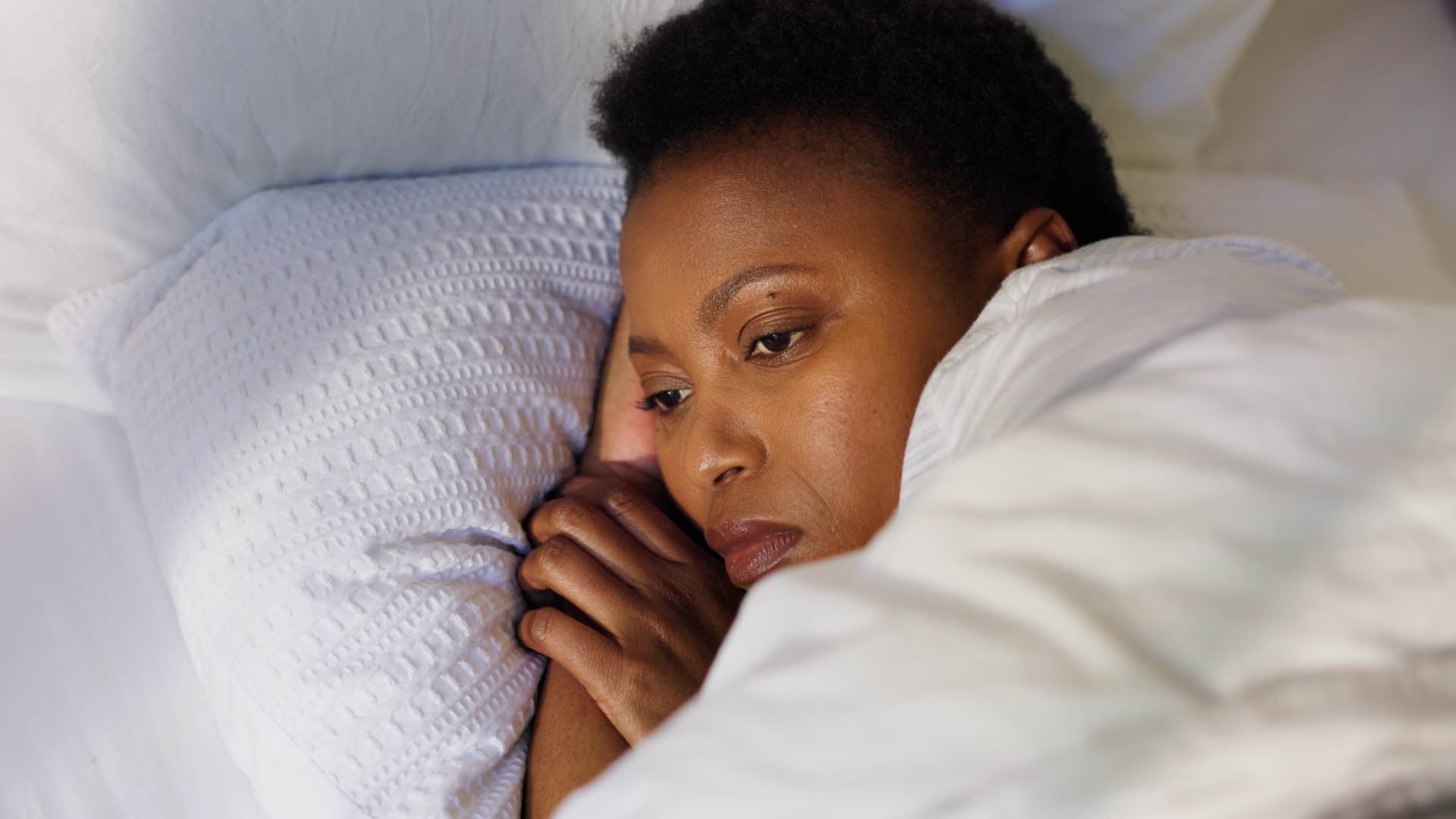
Many people who stay up later as they get older fear the restlessness of being unable to sleep at night. They wait until they’re absolutely exhausted to finally crawl into bed, so they don’t have to deal with anxiety that comes from insomnia and restlessness earlier in the night.
However, usually their inability to fall asleep isn’t a natural phenomenon, but a symptom of the habits and routines they follow during the day. If they’re not moving their bodies enough, disconnecting from technology before going to bed, or making space for healthy habits, of course trying to wind down at night will be a challenge.
10. Morning aches and pains
 220 Selfmade studio | Shutterstock
If they’re struggling to accept the natural shifts that aging brings, a person who stays up later as they get older may be dreading the aches and pains that come in the morning. The later they stay up, the longer they can push off the inevitable.
For many people, these aches and pains can feel like they manifest overnight, but there are plenty of rituals and habits that can ease them, including going to bed early. If you get enough rest every single night and make time for a bedtime routine that’s not your phone, you’re set up for a better morning.
11. Being available
 Ray Geiger | Shutterstock
If nighttime is the only time an adult has to not feel like they’re obligated to show up for anyone or navigate responsibilities, chances are they’re holding onto this time for as long as they can. They stay up late for a sense of control — one that tends to immediately shy away the second they open their eyes the next day.
They feel like they’re responsible for a million things and feel a constant pressure to be available 24/7, even if it’s in their power to set boundaries.
Zayda Slabbekoorn is a senior editorial strategist with a bachelor’s degree in social relations & policy and gender studies who focuses on psychology, relationships, self-help, and human interest stories.
