
People Who Baby Talk Their Dogs Usually Have These 11 Specific Personality Traits
 Lopolo | Shutterstock
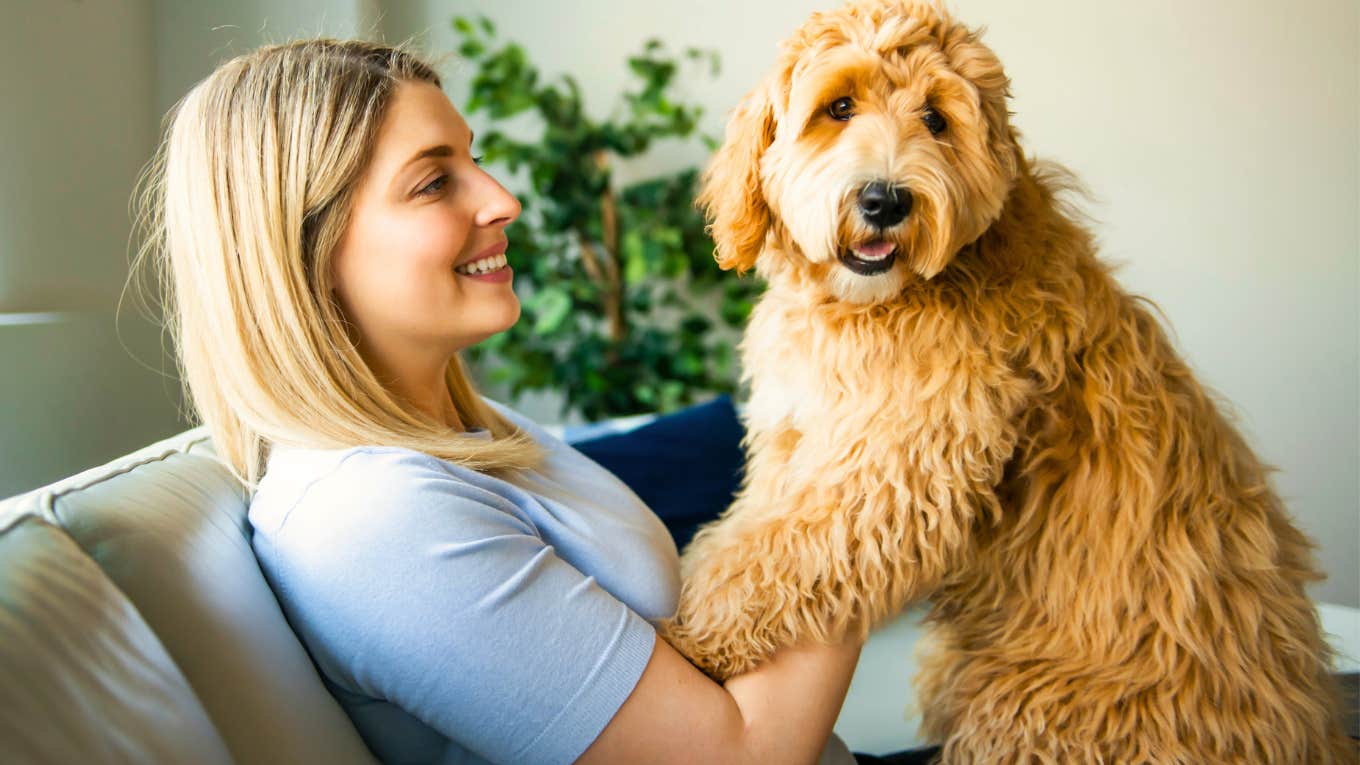
 Do you change your voice when you talk to your pets? Are you pitching up your tone and resorting to "baby talk" when you're trying to get your dog's attention? While it might seem silly, a study from Animal Cognition argues that dogs do actually positively respond to "baby talk" from their owners, largely because it's tied to attention or positive experiences.
So, while there's research to suggest "baby talk" is influential toward dogs, people who "baby talk" their dogs usually have specific personality traits. Whether it's a nurturing attitude or a playful communication style in their lives, these kinds of people are more likely to shift their communication toward their pet and craft a more loving, warm, and attentive relationship with them.
People who baby talk their dogs usually have these 11 specific personality traits
1. They're caregivers at heart
 Shchus | Shutterstock
People who are caregivers at heart and gain a lot of value from taking care of others may have stronger relationships with their pets. They're not annoyed or resentful of pets who need them; in fact, it makes them feel better and more secure when they're needed in this caring, thoughtful way.
These types of pet owners also commonly have strong personal relationships and may even take care of other living things like houseplants. So, while pets do generally protect their owners' well-being on a large scale, for natural caregivers, they also provide moments for an intimate kind of connection.
They use baby talk because they're comfortable and caring. It's a thoughtful way of expressing their sense of care or parenthood, even if it seems silly to everyone else.
2. They're playful communicators
Whether it's baby talk or "dog speak," both of which are powerful for bonding between pet owners and their dogs, people who are naturally flexible and playful with their language may be more likely to baby-talk their dogs. They're playful at heart and open communicators, no matter who they're talking to.
They aren't always assertive and direct — sometimes, their conversations with pets lead with grace, forgiveness, and warmth.
3. They're sensitive
According to an Open Science Open Society study, pet owners are often more sensitive, especially to their pet's negative emotions and communication patterns. They're more tuned into how their pets are feeling at home, often leading to vulnerability and emotional communication — even if that's baby talk.
People who regularly use baby talk with their dogs have these specific personality traits. They're not afraid to let their guard down and be more emotionally open around their pets, even if they're more rigid and closed off in traditional social settings.
4. They have a strong instinct to soothe
While too much of this innate desire to "soothe" can often lead to people-pleasing behaviors and avoidant tendencies in the face of conflict, people who use baby talk with their dogs usually have this innate instinct. They want other people and living things to feel comfortable around them, so they're used to shifting their tone and changing their behavior to cultivate a safe space.
Much like the instinct to care and support that we experience as children and infants, according to psychology expert Peter Gray, these adults hold onto their soothing demeanor and care for others into adulthood.
5. They're introverted
 Cameron Prins | Shutterstock
It's not uncommon for dog owners to consider their relationships with dogs at home as "stronger" and more nourishing than their closest social connections with friends or family, at least according to a study from Scientific Reports. However, for introverted people, who are not only careful with their meaningful social relationships but also more likely to spend time at home than out in the world, their relationships are inevitably stronger with pets than with people.
They craft depth in the ways introverted people often seek out relationships, and have more quality time at home than most introverts spend with others. They may be more prone to baby talk with their animals because they're not worried about crafting their tone in a certain way. They're at home, in their safe space, with a pet that they cherish most in the world — of course, that sentimental, emotional language is coming out.
6. They're secure
According to a study from iScience, dog owners with neuroticism and mental health concerns tend to breed more anxiously attached dogs. However, owners who are both secure in themselves and stable in dealing with their stress and mental health concerns tend to have more stable relationships with their pets.
So, it's not surprising that people who use baby talk with their dogs usually have these specific personality traits. They're crafting secure, stable relationships with their dogs, and aren't afraid to lead with empathetic, emotional language over assertive, anxious, and direct discipline.
7. They're highly empathetic
According to a Frontiers in Psychology study, pet owners often display higher levels of empathy than their counterparts without animals at home. They're used to putting themselves in other people's shoes to better support and understand them, even if it's with their dogs, whom they can't openly communicate with like other humans.
People who use baby talk with their dogs usually have these specific personality traits. They're not afraid to shift their daily language and change their routines to benefit their pets, because they're not only thinking about themselves and their needs anymore.
8. They're affectionate
Considering pet owners are more likely to be prosocial and spend more time outside, it's not surprising that there's a link between pet ownership and general happiness. Pet owners are even more likely to have a partner than their non-pet owning counterparts.
With a space to express love to pets at home and follow routines that work best in both of their favor, it's not surprising that pet owners are often more affectionate. They have this specific personality trait that not only informs communication and connections with their pets, but positively influences every other aspect of their lives.
9. They're intuitive
 Gorodenkoff | Shutterstock
Whether it's in traditional social situations — reading other people's emotions and noticing energetic shifts in conversations — or with their pets at home, people who use baby talk with their dogs usually have an intuitive personality.
They can sense when their pets need attention or when they're feeling low, and baby talk is the perfect way to boost their mood and create attentive interactions. Much like we talk to actual human infants and babies, this kind of speech and tone often garners attention in puppies and dogs — they're attuned and socialized to appreciate it.
10. They're confident and self-assured
People who are more confident and self-assured in their own identities and behaviors are less concerned with how other people perceive them. They don't change their behaviors or routines out of a fear of judgment, because they're more focused on how they can add value to their own lives.
Even if it comes to using baby talk around their dogs at home, they're not afraid of how guests or visitors will perceive them, because their connection with their pet means more.
11. They're social
If someone's naturally social, chances are their pets are gaining a lot of experience and attention from a person's life at home. Whether they're parenting their own infants, watching their owner tune up their pitch when they're excited, or noticing energy shifts in their owners' conversations with guests, they're almost always "eavesdropping" on what's going on around them.
People who use baby talk usually have these specific personality traits. Their dogs appreciate attention and often respond well to high-pitched language that aligns with the excitement they witness around other people, so it's not surprising that it sticks.
Zayda Slabbekoorn is a senior editorial strategist with a bachelor's degree in social relations & policy and gender studies who focuses on psychology, relationships, self-help, and human interest stories.
