
People Who Let Dirty Dishes Sit For Days Usually Feel These 11 Heavy Things Inside
 Erhan Inga | Shutterstock
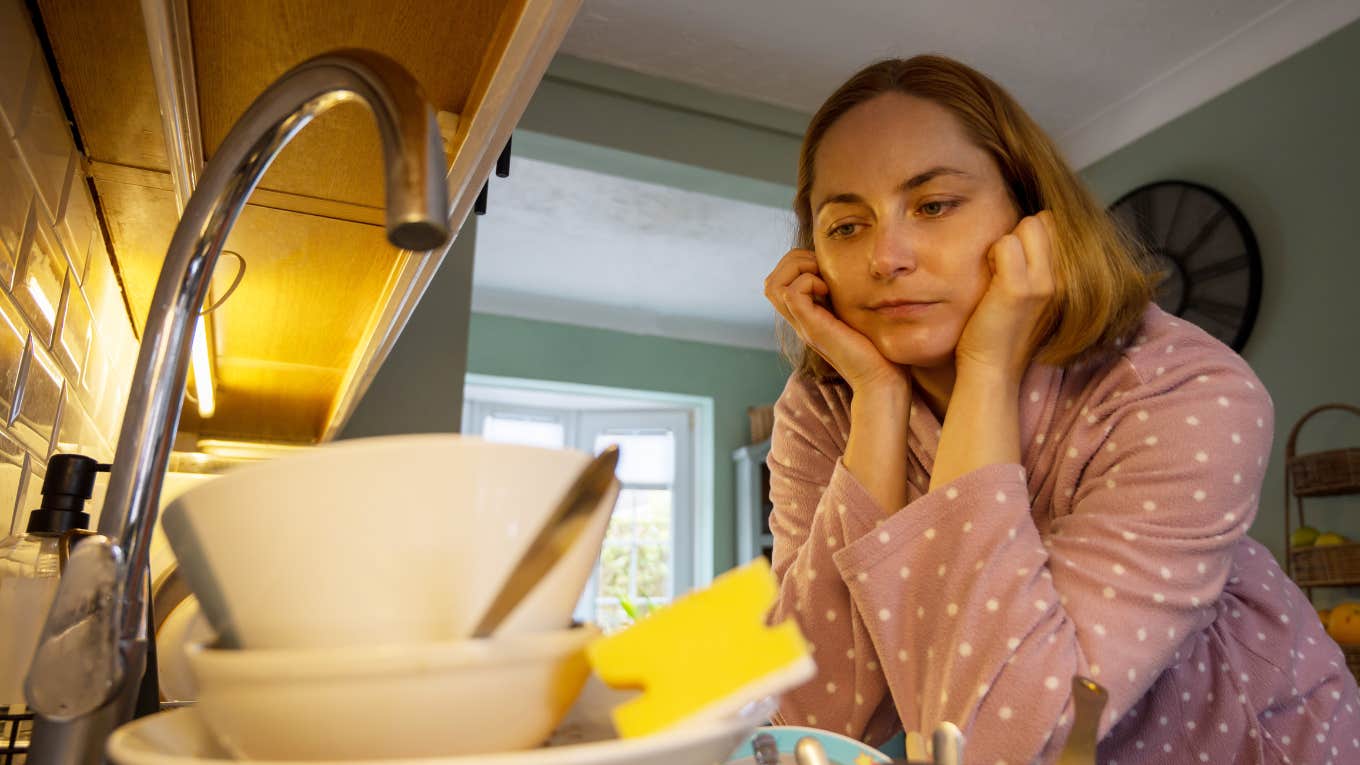
 Despite being relatively controversial and unresearched, an indifference to everyday chores, household tasks, and hygiene practices is often a symptom of mental health struggles. From struggling to do their dishes weekly to letting piles of laundry grow around their living spaces, it’s people dealing with strong, emotional turmoil who often struggle to work up the energy or motivation to do the bare minimum.
Even getting out of bed can be hard, depending on the invisible struggle they’re dealing with internally. They’re not lazy or unmotivated, but rather emotionally exhausted, trying to make space for their brains to catch up. People who let dirty dishes sit for days usually feel these heavy things inside — whether it’s depression or grief.
People who let dirty dishes sit for days usually feel these 11 heavy things inside
1. Grief
 imtmphoto | Shutterstock
While routines and consistent rituals are often helpful for people struggling with grief to find balance, the truth is that it’s far more difficult than it sounds. While everyone else seems to “move on,” they’re stuck dealing with internal grief, anger, sadness, and loneliness. People who let dirty dishes sit for days usually feel these heavy things inside.
They know that doing chores will be good for them and that they have to complete their household labor, yet their internal suffering and struggle keep them isolated from everything. They’re trying to actively distract themselves or cope with the emotional turmoil inside, often at the expense of the routine and rituals they need to heal.
2. Loneliness
 Stock Unit | Shutterstock
The true impact of loneliness and social isolation on our bodies and brains is more consequential than we might believe. Not only does it throw off our nervous system and bodily functions, it also fogs our brain and creates a sense of constant anxiety that’s hard to cope with.
That’s why so many chronically lonely people often isolate themselves. They fear being a burden to others, but they also need space to distract or cope with the fear inside. While they might not have the executive functioning or motivation to do the dishes, they’re still spending most of their time at home, stuck in a cycle of struggle and loneliness.
3. Chronic stress
 voronaman | Shutterstock
According to a study from Brain Sciences, chronic stress often leads to burnout for people who don’t have the coping skills or habits to address it. They constantly overwork themselves, suppress emotions, and hold onto hurt that spirals out of control — into sheer emotional exhaustion.
For people who let dirty dishes sit for days, this emotional exhaustion leads to a spiral of avoidance. They hardly have the energy to get up in the morning or brush their teeth, so it’s no surprise that chronic stress keeps people from doing basic household labor.
4. A fear of missing out
 Josep Suria | Shutterstock
People who constantly struggle with a “fear of missing out” say “yes” to plans, even at the expense of their household chores, routine, and emotional well-being. They’re afraid of being forgotten by friends and loved ones, so they struggle to set boundaries and protect their own well-being when there’s a social event or gathering going on.
People who let dirty dishes sit for days usually feel these heavy things inside. Of course, a balance of social connection and alone time is a necessity, but when people are spending too much of their time doing one or the other to misguidedly cope with internal fears, it only cultivates more struggle.
5. Emotional chaos and anxiety
 DimaBerlin | Shutterstock
If someone is constantly living in “fight or flight” mode, they’re not living, they’re just surviving. Their brain is constantly dealing with emotional chaos and anxiety, so much so that basic tasks like doing the dishes feel completely impossible.
Even if they’re labeled as “lazy” by external people in their lives, the truth is that they’re simply exhausted. They need real, true rest to cure their burnout and emotional regulation strategies to deal with their suppressed emotions. What they definitely don’t need is pressure to push and overwork themselves at the expense of their mental health.
6. Pressure to overachieve
 PeopleImages | Shutterstock
People who feel a pressure to overachieve in their lives, whether it’s at work or at home with their families, often put their own needs on the back burner. They may even be living in a constant state of productivity that sabotages the mindfulness they need to notice issues, emotional chaos, and mental health concerns before they spiral completely.
People who let dirty dishes sit for days either don’t have the time to address them, because they’re only sleeping and working when they’re home, or they’re too emotionally exhausted from burnout to do them.
7. A fear of being misunderstood
 PeopleImages | Shutterstock
According to a study from the Journal of Social and Personal Relationships, feeling misunderstood or being afraid of being misunderstood by others often sparks higher levels of stress and lowered self-esteem, motivation, and social support. So, if someone is more worried about what everyone else thinks of them than looking out for their own well-being, chances are stress is following them around constantly.
These people, dealing with chronic stress and strain, are also the same ones who let dirty dishes sit in their sink for days. They’re dealing with the heavy weight of isolation and fear.
8. Decision fatigue
 PeopleImages | Shutterstock
When we struggle with making a choice because there are too many or we’re too stressed to consider them all, that’s “decision fatigue.” While this is often framed in the context of relationships, dating, and personal life structures, it can also be applied to random, passing routines in our daily lives.
For example, if someone has a million things to get done at work, a full list of chores, and lots of other unexpected parental responsibilities, chances are their decision fatigue will sabotage their productivity. They don’t know where to start, so they procrastinate and avoid until it all becomes too much.
9. Exhaustion
 Daniel Hoz | Shutterstock
If someone isn’t getting enough sleep, feels guilty resting at work, and never takes a break when they’re feeling overwhelmed, chances are they’re just barely surviving exhaustion. Even for the most stressed and overwhelmed people, sleep is powerful — helping to reduce internal struggles and give our bodies the energy they need to thrive.
When someone is actively sabotaging their sleep or indulging in distractions, like doomscrolling online, that harm their quality of life, they’re likely too tired and fatigued to consider chores like doing the dishes. They’re doing the bare minimum because it’s all they have the energy to do.
10. Hopelessness
 Bricolage | Shutterstock
If someone's dealing with grief, mental health struggles, emotional exhaustion, or even loneliness, chances are the feeling of “hopelessness” is an inevitable companion. Not only are they coping with the present emotional stressors inside, but they’re struggling to motivate themselves to do the work, grasp the new routine, and make positive changes.
They lack a kind of purpose and meaning in their lives, so taking care of themselves through hygienic behaviors and doing the dishes are the last of their concerns.
11. Unresolved trauma
 MAYA LAB | Shutterstock
There are a million and one ways that lingering unresolved trauma affects our lives as adults. From changing the way we seek out relationships to affecting our mental health and even altering our physiological processes, these experiences are nuanced, complicated, and more intertwined than we even realize.
So, if someone struggles with cleaning up after themselves, taking care of their space, and doing household chores, it could be a sign of childhood trauma that’s been left unresolved to fester. They’ve never had their needs met or felt empowered to build self-esteem, so now their routines are plagued by the trauma they thought they’d suppressed.
Zayda Slabbekoorn is a senior editorial strategist with a bachelor’s degree in social relations & policy and gender studies who focuses on psychology, relationships, self-help, and human interest stories.
