
Millennials Shared These 11 School Experiences Most Kids Today Miss Out On
 Peopleimages | Canva
 Millennials who were born in the 80s and 90s are largely characterized as “Generation Me,” (a term coined in 2009 for their reportedly higher rates of narcissistic traits, assertiveness, and self-liking compared to older generations) were raised in a very different educational and social culture than any generation before. They likely had internet access at home, cell phones in their pockets, and even social media while they were in college. Today's kids have experienced even more changes, and are likely missing out on a number of canonical school experiences.
From standardization to new technologies, and modern day educational institution shifts across the board, it’s not just students who are evolving, there are also several things that have disappeared from the classroom since millennials were in school that have contributed to this changing school culture. In most ways, these changes are helpful and efficient. In other ways, some of the school experiences millennials and Gen Z enjoy held a lot of innate value that kids today miss out on.
Millennials shared these 11 school experiences most kids today miss out on
1. Playground parachutes
 Oksana Shufrych | Shutterstock
Remember the parachutes that Generation X and Millennials played during recess? While studies like one from the Colorado School of Public Health argue that “parachute play" helps children to develop fine motor skills, important social development, and even sensory input abilities, the majority of schools today have stopped the practice altogether.
This exercise encourages children to move their large muscle groups, which helps release pent-up energy and can help kids focus in the classroom afterward. But Gen Z and Gen Alpha students aren’t just missing out on the joys of rainbow parachutes and fine motor skill development, they’re largely missing out on recess time altogether. Despite research that urges school districts to recognize the benefits of unrestricted play on playgrounds, the kind of recess that millennials enjoyed, many schools are cutting back.
2. Classroom pets
 Lithiumphoto | Shutterstock.com
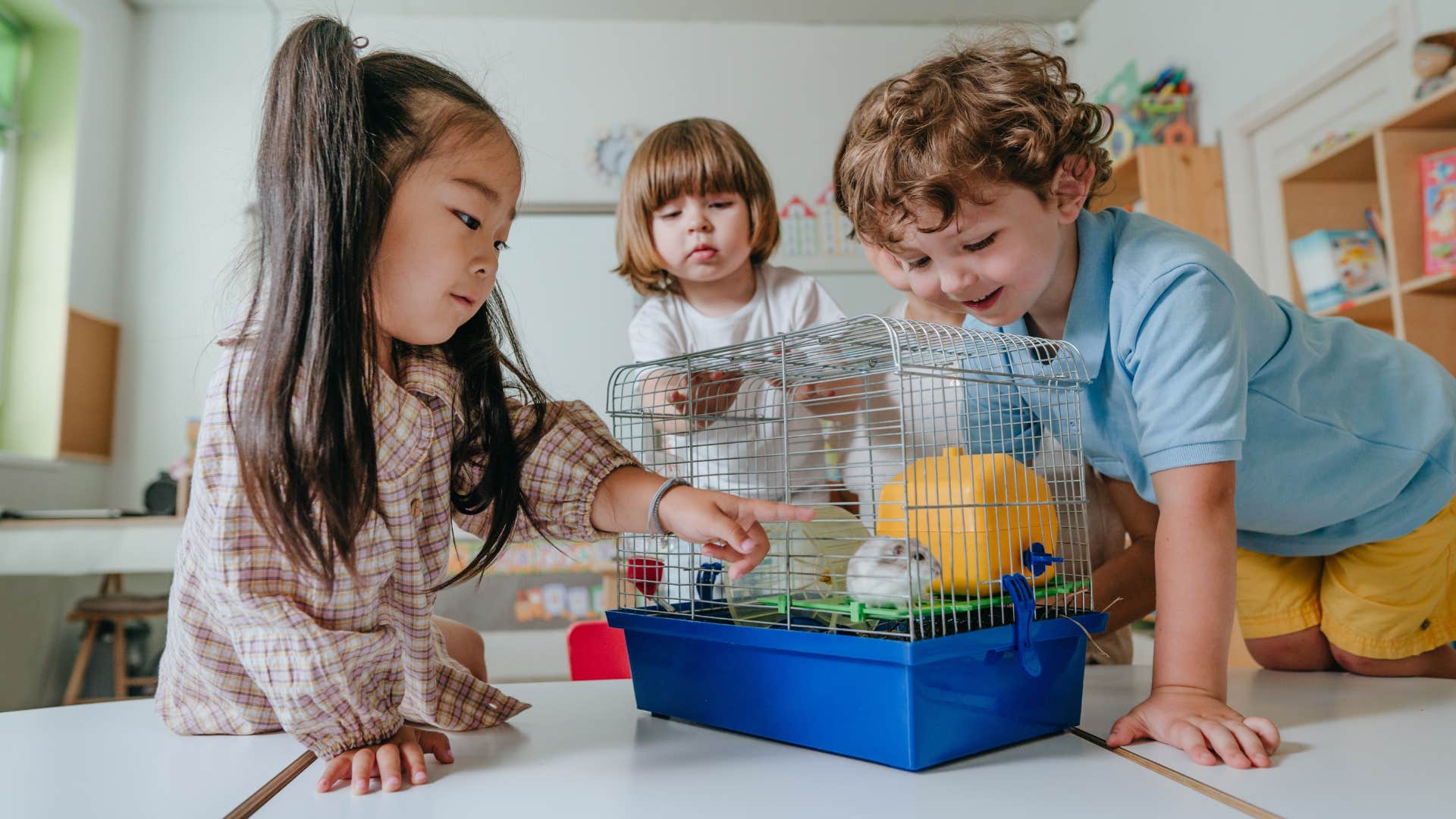
While many millennial adults still have a special place in their hearts for their elementary or middle school classroom pets, modern students very rarely get to experience these lessons in pet care. From fish to guinea pigs, and even dogs and cats, the educational shifts many districts are experiencing today are making it difficult to maintain the practice of keeping a classroom pet.
It’s not just a lack of staff in schools that’s contributing to the change it’s also large-scale educational shifts, a focus on standardized testing, and student behavioral concerns that have caused the practice to become controversial. The big-picture lessons of caring for a pet, including life cycle education, empathy and responsibility are simply less important in today's teach-to-the-test environment.
3. Learning cursive
 Daniel Hoz | Shutterstock
While the practice was fading for younger millennials in their day-to-day lives, many were still forced to learn cursive in their classrooms in elementary and middle school. However, after this handwriting instruction was cut from Common Core curriculums across the country in 2010, it was no longer a required practice in classrooms for any student.
A dreaded lesson for many millennials has now become a relatively “lost” skill in younger generations of Gen Z and Gen Alpha students — who truly don’t recognize it as an innately important skill, amongst new technologies and online signature capabilities.
Especially with standardization efforts in many districts already burdening teachers with heavy workloads and lessons in preparation for standardized testing, many administrators also don’t feel cursive is necessary to continue teaching modern day students. Fortunately, a few districts have resurrected cursive, but they remain in the minority compared to when older generations were in school.
4. Chalkboards and chalk
 Krakenimages | Shutterstock
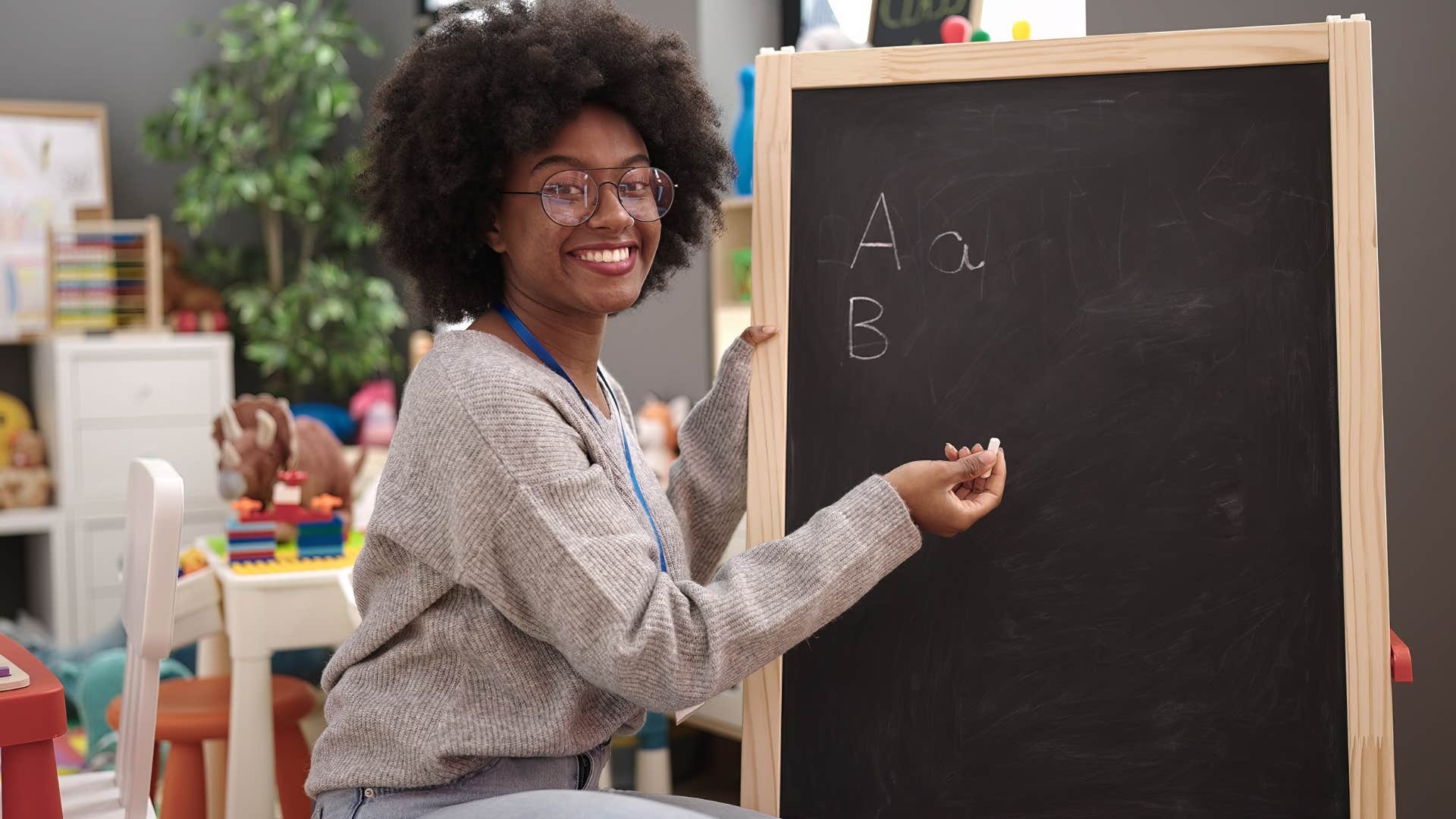
While younger millennials were some of the first to be characterized as “digital natives," a term which is now under contention for Gen Alpha, with the addition of laptops, tablets, and other technological devices in the classroom, the majority of them still grew up with chalkboards. They know the scent of the chalk, the grating squeak, the dust rising from the erasers, and technology came second to the basics like pencil and paper.
Chalkboard slates were replaced with white boards and eventually with tablets, projection devices, and personal laptops in many classrooms. This may take away the mess (and the screeching) many millennial students loathed, but it somehow feels less like school without it.
5. Physical textbooks
 Lysenko Andrii | Shutterstock
Despite the fact that professors and teachers consistently argue for print textbooks over online versions for student efficiency and understanding, many schools are switching over to a more accessible and digital version of learning in their classrooms. There are pros and cons for the kids today, including not having to lug around 50 pounds of books and the fact you can't forget your book in your locker.
As many districts continue to lack funding and start pushing for more modernization to meet the demands of standardization, modern students are much more likely to download an e-book than go out and purchase their own set of textbooks, regardless of their age or grade level. The downsides? Well, when the power goes out, there's nothing to do. On a serious note, accessing everything online means constant temptation to click away from your work and onto something distracting.
6. Pull-down maps
 Wavebreakmedia | Shutterstock
According to a Stanford University report on reinventing education with technology, many modern school districts are trying to justify the value of the technology they invested in during the pandemic in 2020. For most teachers, this technology can be helpful, but some still long for the simple life.
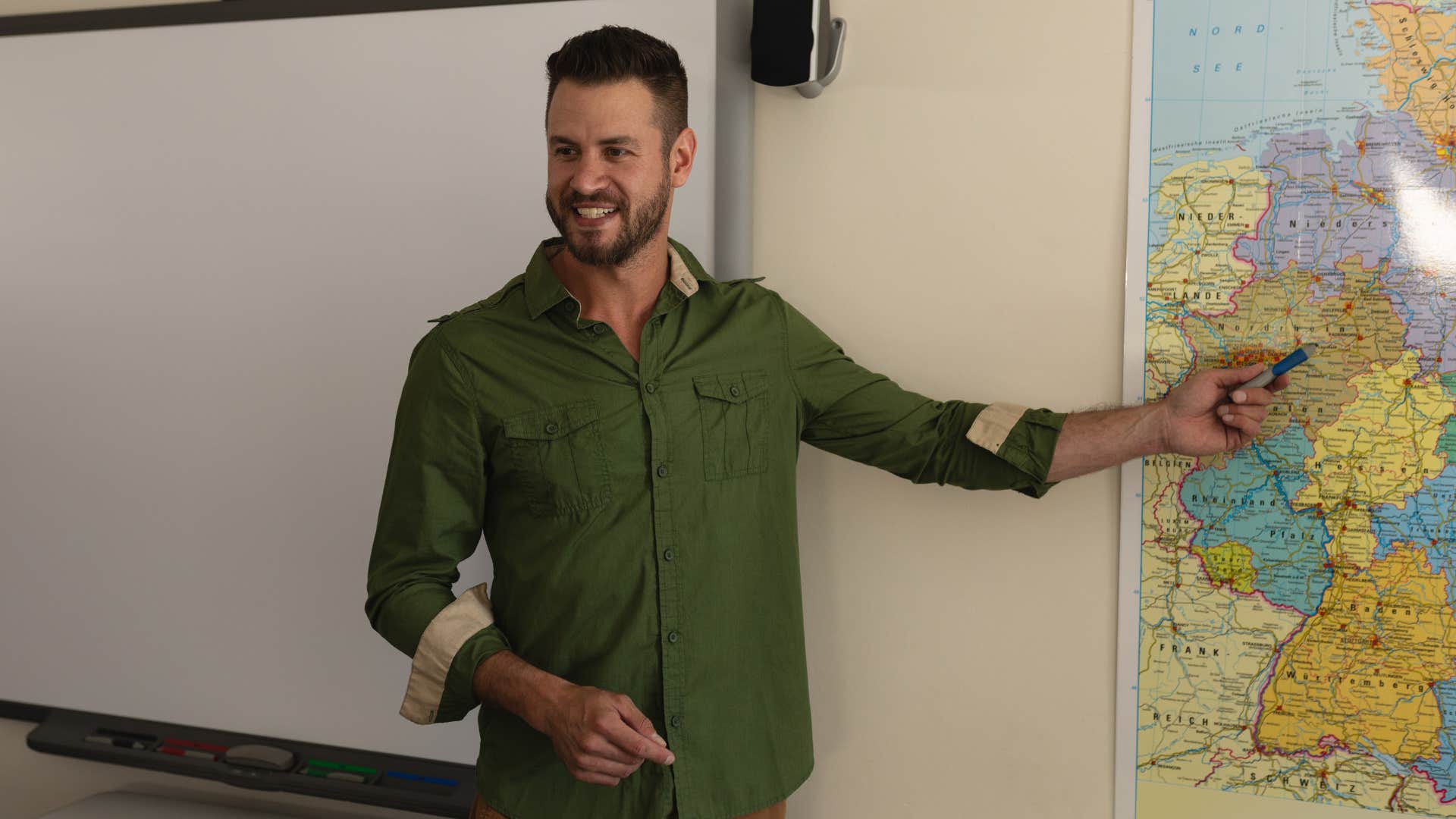
So many Gen X and Millennial parents remember the fun of a teacher pulling down a map from the roll above the chalkboard. The teacher would then pick up the long pointing stick and demonstrate the names of various spaces or explain the passage of ships or troops.
Certainly, the multi-media and dynamic tools do a fantastic job illustrating these things, but they lose all that charming nostalgia from the past.
7. Manual pencil sharpeners
 Asada Nami | Shutterstock.com
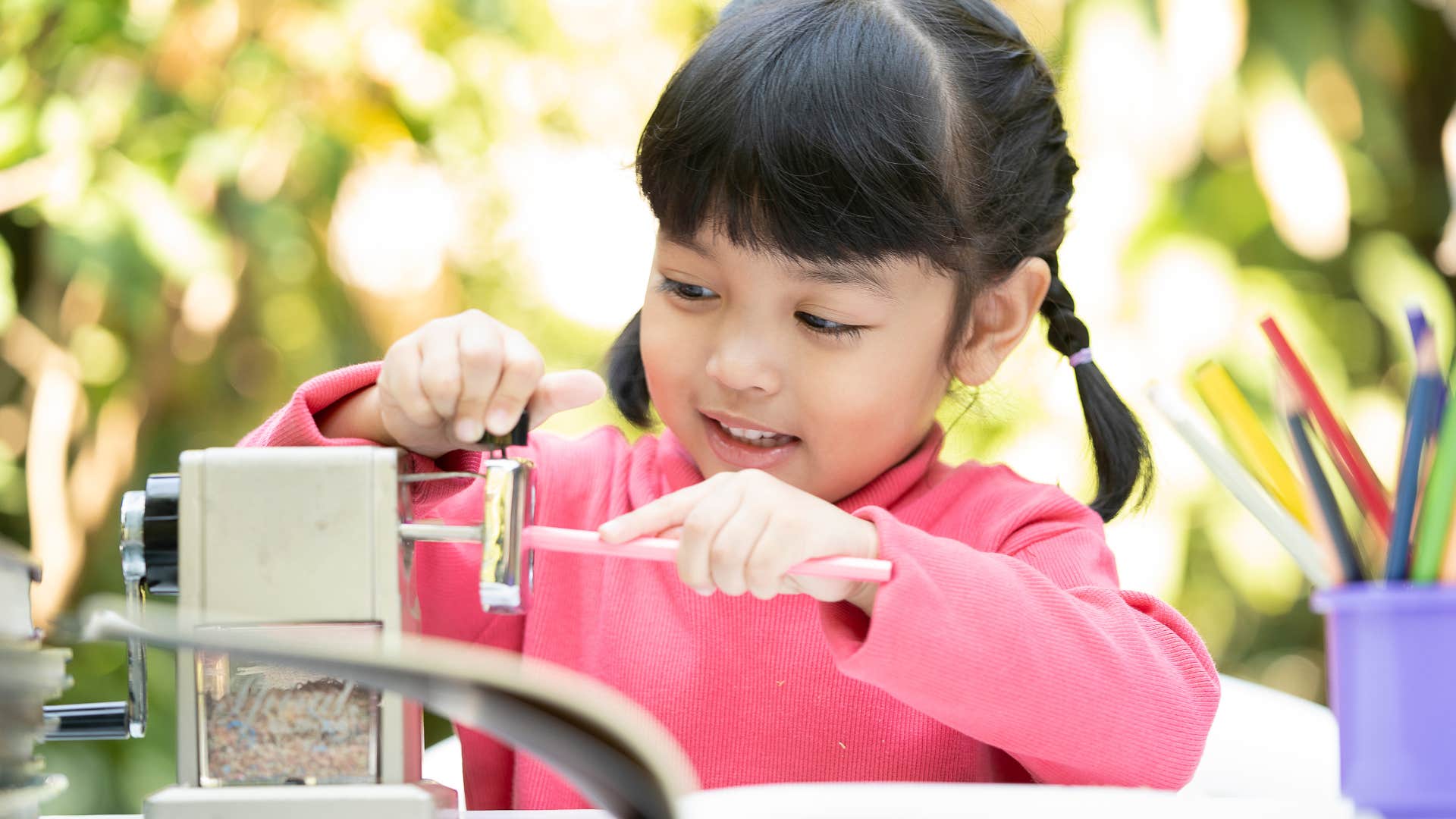
Many modern day schools today have started using electric pencil sharpeners to both save time and encourage efficiency in their busy classrooms. While manual sharpeners haven’t gone away completely, they are cost effective, compared to automatic ones, they are less common. What has disappeared are the wall-mounted crank-run pencil sharpeners from the childhoods of Gen X and Millennials.
In an epidemic of behavioral and focus qualms in classrooms, it’s not entirely surprising that teachers are hoping to save time and rid their classrooms of more distractions to compensate. But electric pencil sharpeners are loud and distracting, too. In addition, they are often jammed by colored pencils and cause non-stop drama when they jam. In that way, teachers today would probably be excited to put that wall-mounted crank sharpener back on the wall.
8. Library check-out cards
 GaudiLab | Shutterstock
While older students might’ve been forced to keep track of and maintain a library card when they borrowed books from their school libraries or teachers, many modern day classrooms have digital ways to do the same job. They don't even have to write their names in the little list on the front page, anymore, one of the most nostalgic aspects of borrowing a library book.
If it’s not an entirely digital system for the librarian to maintain, it’s an e-book or digital note that ensures students are held accountable for their reading materials. This probably makes more books accessible for kids, but encourages more screen time, something many experts insist kids already get too much of.
9. Traditional student desks
 Fast-stock | Shutterstock
While millennials might’ve been forced into a rigid wooden desk in their classrooms, modern day students are more fortunate to have options, especially in school districts with better funding and staffing to support flexibility. Research from the Building and Environment journal reveals that when students are comfortable, even in their physical space, with the right desk and chair, they’re more productive and efficient in classrooms.
So, Gen Z and Gen Alpha students are reaping the benefits with comfortable chairs, balance stools for wiggly youngsters, yoga balls, and sometimes even a space on the floor, to get their work done without back pain at the end of the day.
10. Analog clocks
 stockfour | Shutterstock
According to a report from the London Telegraph, many schools are ditching analog clocks because students are struggling to read them, likely perpetuating a lack of ability. With modern day technology that doesn’t require a second thought for reading the time, newer Gen Z and Gen Alpha students aren’t forced to both learn and perfect the skill.
While it might be shocking to older generations of students, this trend partially explains a larger unsettling realization in modern classrooms: many students can’t read well. Leaps behind in terms of reading comprehension and linguistic skill, the rise of technology and shifting classroom norms, even with things that have disappeared from classrooms since millennials were in school, are coming at a detriment to many young students today.
On the positive side, analog clocks can be challenging for some kids with learning differences, whereas digital displays tend to be clear for most mainstream learners.
11. Paper cutters
 Krakenimages.com | Shutterstock.com
Despite their tendency to be hanging around in staff lounges and art classrooms a few decades ago, traditional paper cutters are largely being discarded in modern day classrooms today over safety concerns.
While they were just as unsafe for millennial students using them unsupervised in their own K-12 classrooms, administrators today are more safety-oriented than ever before, at least according to research from the Berkeley Political Review that reports shifts towards over-protective parenting, largely sparked by technological access, urge school districts to prioritize student safety. While nobody wants a kid to lose a finger, kids need practice making safe choices, and age-appropriate tools are good for this purpose.
Zayda Slabbekoorn is a staff writer with a bachelor’s degree in social relations & policy and gender studies who focuses on psychology, relationships, self-help, and human interest stories.
