
11 Cheat Codes Brilliant People Use To Gain An Unfair Advantage In Life
 Andrew Poplavsky | Canva Pro
 Have you ever wondered if there were specific cheat codes people had access to you that helped them improve their lives? Right before I graduated, I felt lost and uncertain about my future. Other people looked confident, bold, and happy. They had their lives figured out, and I didn’t. I realized that there were people out there who had already figured out the answers to the questions I was struggling with. If I could find them and learn from them, it would save me a lot of time and effort.
I reached out to people who had achieved the things I wanted for myself. I read everything I could get my hands on, from self-help books, business concepts, personal development blogs, you name it, I devoured it all. Not only did it help me achieve my goals faster, but it also helped me become a better, more successful person. That’s how I learned that the best way to expedite personal growth is not to reinvent the wheel, but to steal concepts and strategies from people smarter than me. I’m sure that if you can take at least one thing and use them, it will improve your life in some way, shape, or form.
Here are 11 brilliant cheat codes that can give you an unfair advantage in life, according to psychology:
1. Don't take your relationships for granted, even beyond your spouse and kids
 Kampus Production | Pexels
I was sitting in a doctor’s office waiting room and struck up a conversation with an old man reading The Wall Street Journal. I asked him the usual questions: How are you? What brings you here today?
He told me he was getting a regular check-up because he’d just turned 70. He seemed healthy enough, so I asked him the question that always comes to mind when I meet someone close to my grandparents’ age: What are you grateful for?
He thought for a moment and said, “You know what I miss? Relationships.” I must have looked surprised because he explained, “I’m not talking about my wife or my kids. I have a great relationship with them. But all the other relationships are over with friends, colleagues, work partners, neighbors, etc.”
It hit me like a ton of bricks. I realized that I was taking my relationships for granted. I know a lot of people, but I wasn’t investing in them the way I should have been. The man in the waiting room taught me an important lesson: Don’t take your relationships for granted. Invest in them while you still can. And it’s also a reminder that things/gadgets can never truly be your relationships. Only people can be your friends.
2. Nobody cares. Work harder.
 Vlada Karpovich | Pexels
When Dre Baldwin, an international Social Media expert, author, entrepreneur and business coach, was a young basketball player, he’d watch the top players in the world and feel discouraged. He wasn’t as good as they were.
One day, a more experienced player told him: “Nobody cares, work harder.” The words struck a chord with Baldwin. He realized that the only person who cared about his success or failure was him. And if he wanted to achieve his dreams, he’d have to outwork everyone else.
Ever since I heard this story, I’ve been using it as my mantra. Whenever I start to doubt myself or feel like I’m not good enough, I remind myself: “Nobody cares, work harder.” And I do.
3. Think before you think
 Chinmay Singh | Pexels
I heard this line from one of Sister Shivani’s videos on YouTube. It opened a new spectrum of consciousness for me. We’re constantly thinking without being aware of it. And those thoughts subtly create our reality. Since we’re not careful about our thinking, we question the reality — “Why me?”
Whereas the circumstance, situation, and event are only the result of our past thoughts. When we’ve been thinking wrong about somebody/something or we’re stimulated by an insult or negative comment, the same thought transforms into a verbal outburst or a slip of the tongue.
Since this “thought-to-action” process is so fast, we feel, “I didn’t mean it. It wasn’t my intention, etc.” But the same thought had been running through our minds earlier, unaware. And it created a groove that was bound to result in action someday.
If you take a step back and think about your thoughts, you can choose which ones to believe and which ones to discard. You can create the reality (situations, relationships, etc.) you want by carefully selecting the thoughts you allow to take root in your mind.
Today most of us are focused on changing actions, feelings, and emotions. But the root cause of all of them is thought. The key is awareness. Catch yourself when you’re thinking waste and change them. Yes, it’s easy to think of the same negative thoughts repeatedly. But with a little effort, you can create new thought patterns.
4. Competition is for "losers"
 Barbara Olsen | Pexels
This is what Peter Thiel, the billionaire co-founder of PayPal, told a group of Stanford students. He was talking about business, but it applies to life in general.
The idea is that if you focus on being the best at what you do, you will naturally succeed. But if you focus on beating other people, you will always look over your shoulder and compare yourself to others.
You will never feel good enough, and you will never be satisfied. The only person you should try to be better than is the person you were yesterday.
5. The obstacle is the way
 Андрей | Pexels
Ryan Holiday popularized this Stoic concept in his 2014 book of the same name. The basic idea is that when you encounter problems and roadblocks, you should see them as opportunities to learn and grow.
The more difficult the situation, the greater the opportunity for you to develop your character and become a better person. This way of thinking has helped me immensely in my own life, and it’s something I try to remember whenever I’m facing a difficult situation.
Here’s how I’ve used it in my own life:
- When I was jobless, I saw it as an opportunity to pursue my dream of becoming an entrepreneur.
- When my first business idea failed, I saw it as an opportunity to learn from my mistakes and start anew.
- When my WordPress website failed, I saw it as an opportunity to use other writing platforms.
In each of these situations, I wallowed in self-pity for a while. But, since it didn’t change anything, I was forced to see the obstacles in my life as opportunities. Negative experiences truly change you as a person. They make you stronger and more resilient.
Positive psychology research suggests that challenge is one of the most important ingredients for a healthy, fulfilling life. It’s deeply connected to how people learn, stay motivated, handle stress, and even grow after difficult experiences.
6. Love is best spelled T-I-M-E
 Sofia Shultz | Pexels
On Diwali, I felt particularly guilty about not taking time for my loved ones and asked my grandparents how they’d managed to stay married for over 50 years. My grandpa looked at me and said, “Love is best spelled T-I-M-E.”
He meant that the key to a lasting relationship is simply spending time with each other. It’s not about grand gestures or expensive gifts. It’s about the small, everyday moments that you share. And he’s right.
Gifts were meant as a token of care and appreciation. But somewhere down the line, we attributed them as the “only” way to express love. The best way to show your loved ones you care is to be there for them. Don’t just say it, show it.
7. No one can make you feel inferior without your consent
 Ketut Subiyanto | Pexels
Eleanor Roosevelt said this line, which changed my life when I first heard it. It permitted me not to take anything personally from people who try to put me down. It made me understand that their opinion was just an opinion. And it didn’t have to become my truth.
An insult can be a state of mind. An insult can be ego. An insult can be a perception. An insult can be a return of Karma. An insult can be unsolicited advice. But an insult can never be the truth. This is a powerful weapon against bullies and jerks. It also makes it easier not to be your own worst critic. You don’t have to believe everything you’re made to think.
8. You are and become what you see, listen to, and read
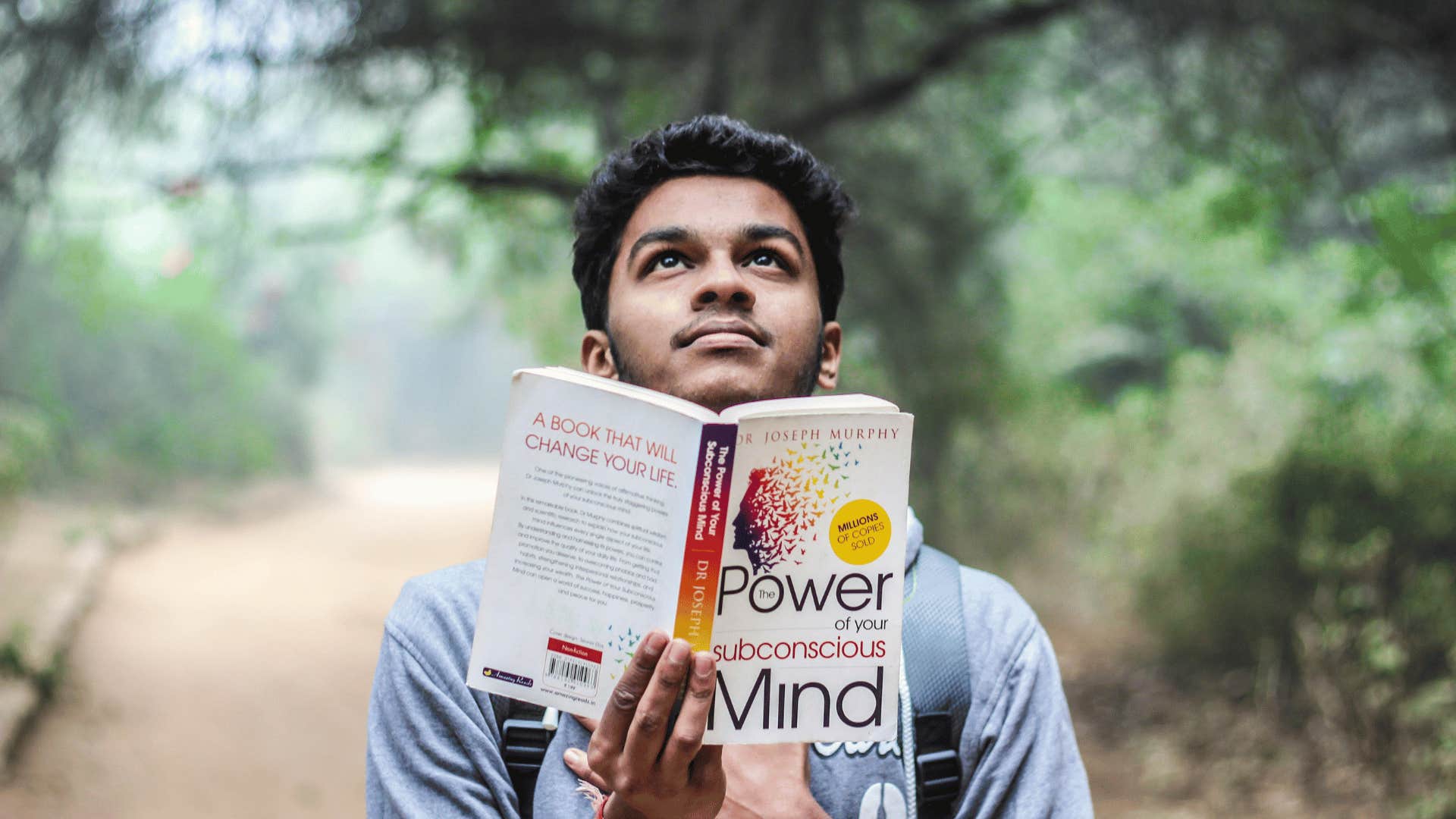 Yogendra Singh | Pexels
This one is by Sister Shivani and it’s one of the most basic laws of human psychology. The thoughts you think create the feelings you feel, and those feelings dictate your actions. That’s why you constantly absorb information from your environment that confirms your beliefs. Scientists call this psychological phenomenon confirmation bias.
And the information you soak in indirectly influences your thoughts, feelings, and actions. You can do a simple experiment to realize this fact. Watch any dark movie like a crime, thriller, action, suspense, horror and see what you think. Then some other day, watch a light-hearted movie like a comedy or romance and note your thoughts.
You’ll see a drastic difference. A crime thriller will most likely create thoughts of hatred for the antagonist. And slowly, that will translate into your life in the form of irritation, anger, and annoyance.
If you’re not careful, you can easily become a product of your environment. But if you’re mindful of what you’re taking in, you can choose to fill your minds with positive, uplifting, and inspiring information.
You can surround yourself with people who make you feel good about yourself. And you can read books that teach you new things and expand your horizons.
Researchers reported that more than half of the health information available on the web has yet to be verified by experts. The credibility of online content has become a serious social issue. If people believe misinformation, they cannot distinguish correct and incorrect facts anymore. People can believe what they want, even if it's incorrect or low-quality, just due. to their own “confirmation bias.” And the negativity just hurts their lives.
9. Remember, everyone you meet is afraid of something, loves something, and has lost something
 Yura Forrat | Pexels
H. Jackson Brown Jr. wrote this phrase in Life’s Little Instruction Book, which I bought at a train station. It’s one of the wisest things I’ve ever read.
We’re all just walking around with these big emotional backstories, and if we could remember that, I think we would treat each other with much more compassion.
10. The less expensive stuff you have, the less there is to worry about
 cottonbro studio | Pexels
I read this quote in a book called The Simple Living Guide, and it deeply resonated with me. We’re constantly bombarded with messages telling us we need to consume more. And for a long time, I believed those messages. I thought the more expensive, nicer things I had, the happier I would be.
But it turns out that’s not true. Actually, according to resarch, the opposite is often true. The more stuff you have, the more you have to worry about keeping it clean, repairing it when it breaks, finding a place to store it, and so on.
For example, you don’t just buy a high-end phone. You then spend on the accessories, warranties, etc. When I downsized my possessions a few years ago, it was liberating. I no longer had to worry about taking care of all that stuff, and it felt great to live with less.
If you’re feeling overwhelmed by your possessions, I highly recommend getting rid of some of them. You might be surprised at how good it feels.
11. You can be anything or anyone you want, just act like it
 Los Muertos Crew | Pexels
I read this in a book called The Power of Habit, and it’s one of the most useful pieces of advice I’ve ever come across. It’s based on the concept of self-fulfilling prophecies. If you believe you can do something, you’re more likely to do it.
For example, if you believe you can be a successful writer, you’re more likely to sit down and write every day. On the other hand, if you believe you’re not a good writer, you’re less likely to try. I’ve found that this principle applies to just about everything in life.
If you act like the person you want to be, you’re more likely to become that person. So if you want to be confident, act confident. If you want to be successful, act like a success. And watch your life rise to meet you there.
Darshak Rana is a writer, poet, and the founder of Spiritual Secrets and Candid Conversations.
