
Men Who Hide Their Stress Behind Silence Usually Have These 11 Distinct Traits That Make It Obvious
 PeopleImages | Shutterstock
 Many men who cope with discomfort, stress, and complex emotions through avoidance often struggle with building long-term relationships and intimacy in their lives, according to neuroscientist Berit Brogaard. They suppress their emotions, hide their complex feelings, and run from stress instead of facing it head-on. Oftentimes, men who hide their stress behind silence usually have certain distinct traits that make it obvious.
From distracting themselves in the face of stressful situations to avoiding hard conversations in their relationships, these men tend to amplify the discomfort and stress they’re feeling by trying to completely ignore them, as a study from Consulting and Clinical Psychology suggests. It might offer them a sense of fleeting comfort or control, but in the long run, they’re putting themselves at risk.
Men who hide their stress behind silence usually have these 11 distinct traits that make it obvious
1. They rely on distractions for comfort
 Elnur | Shutterstock
From mindless entertainment at home to working late into the night, men who hide their stress with silence tend to ignore complex feelings by distracting themselves.
While research, like a study from Frontiers in Psychology, sometimes argues that distractions for disengaging with stress can be healthy in small doses, if someone’s running from addressing the root cause of the issue, it’s never going away.
Usually, because they don’t have the emotional regulation skills or communication habits to verbalize what they’re going through, they find it easier in the moment to run from and distract themselves from acknowledging that stress is even there.
2. They cling to traditionally ‘masculine’ norms
 Prostock-studio | Shutterstock
Many men are socialized from a young age to suppress their emotions and cling to an invulnerable demeanor to protect their “masculinity.” Their need for control and lack of emotional intelligence feed into their misguided perception of “strength,” even if it comes at the expense of healthy relationships and inner peace.
According to a study from SSM Mental Health, men are often less likely to share their mental distress with others because of these social norms. They believe emotional openness makes them “weak,” even if vulnerability is the strength they need to feel and connect with others better.
3. They’re restless
 New Africa | Shutterstock
Whether it’s a mental kind of restlessness that encourages them to be “busy” all the time or physical restlessness that manifests itself in behaviors like fidgeting, waking up during the night, or being unable to sit still, many men who “cope” with stress through silence and avoidance often carry the weight of that tension with them.
Especially if their stress isn’t being emotionally acknowledged or coped with, it can take root in the body and mind, encouraging people to live life in more tense, angry, irritable, and restless ways. Not only does this put their physical well-being at risk, but it also makes them feel more emotionally unsteady and reactive.
4. They’re withdrawn
 DimaBerlin | Shutterstock
Masculinity and rigid social and gender norms encourage men to run from their uncomfortable emotions. However, the strength and “control” that men are seeking actually comes from being present in their bodies, open to expressing how they feel, and confident about seeking help and support from others. It’s these things that truly make people strong and secure.
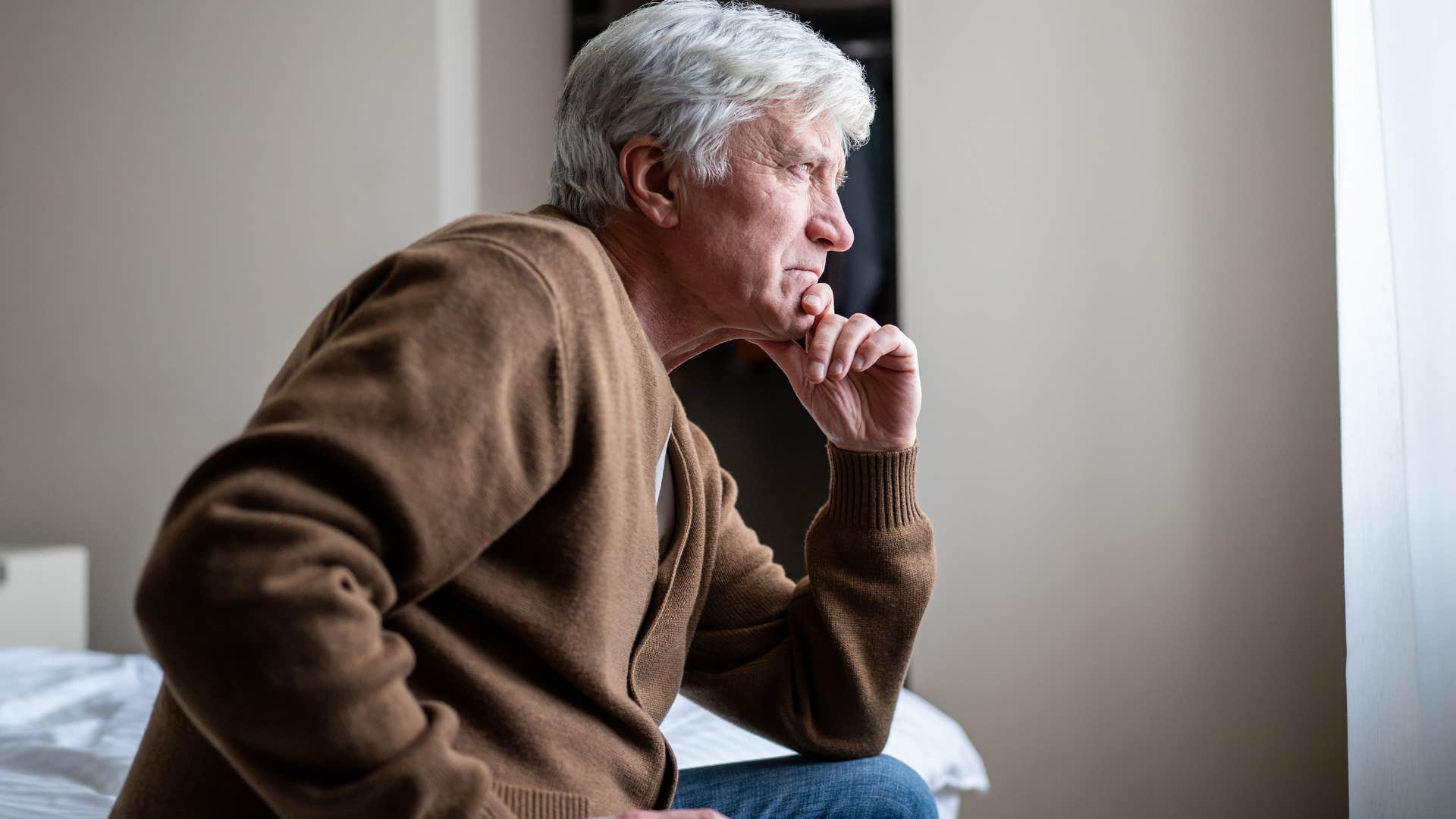
Men who hide their stress behind silence usually have traits like becoming withdrawn that make it obvious. They don’t want other people to see them struggle, because they think it makes them weak, but it’s our human nature to deal with discomfort. If you refuse to share that with your loved ones, you’re only amplifying the isolation and loneliness you already feel.
5. They’re overly sarcastic
 Nenad Cavoski | Shutterstock
When a man doesn’t have the language or security to speak about his emotions earnestly, using sarcasm or humor to hide stress and concerns may feel natural. Not only does it offer a route to avoid hard conversations, but it also protects him from needing to express accountability if he says the “wrong” thing.
As psychology professor Susan Krauss Whitbourne explains, sarcasm has the potential to seriously harm these men’s relationships and personal well-being. It’s perceived as passive-aggressive and creates conflict, while simultaneously doing nothing to relieve the stress and tension these men are carrying.
6. They get defensive easily
 Dragana Gordic | Shutterstock
Even if they can quickly and subtly hide their complex emotions and stress while navigating everyday life, men who are constantly suppressing stress, anxiety, or complex feelings of shame may be overly defensive in conflicts or arguments. Even when they’re faced with constructive feedback from partners and peers, these men are immediately on guard.
Their defensiveness is a protective strategy. To avoid the discomfort of personal change or admitting a mistake they perceive as a “flaw,” they get defensive and double down on misbehavior to cling to their control over the narrative.
7. They’re workaholics
 Lazy_Bear | Shutterstock
Whether it’s a need for the distraction of long, draining hours in the office or a tendency to physically release stress through labor and movement, rather than verbalizing and coping with it out loud, men who hide their stress behind silence usually have workaholic traits that make it obvious.
While it might make the struggle of the present moment easier to manage, in the long run, overworking themselves consistently only encourages these men to amplify the stress and psychological distress they’re already carrying.
8. They hyper-focus on logic and planning
 Tirachard Kumtanom | Shutterstock
If men dealing with a lot of tension and emotional distress don’t have the emotional tools to regulate their emotions, cope with situations, and verbalize their feelings, chances are that relying on tangible things like planning and logic offers them a fleeting sense of control.
Whether it’s sticking to an overly rigid routine and schedule or using “logic” as a defense mechanism in vulnerable conversations, men who hide their stress behind silence usually have these distinct traits that make it obvious. Ignoring their mental turmoil doesn’t make it go away, but encourages it to seep out in more harmful, charged ways.
9. They’re physically tense most of the time
 f.t. Photographer | Shutterstock
According to experts from Harvard Health, people experiencing high levels of emotional and tangible stress in their routines may experience a number of physical changes and consequences if they’re not intentional about coping mechanisms. From holding literal tension in the body to feeling restless at all hours of the day, and even managing chronic headaches, people with high stress levels often deal with a number of bodily changes.
Men who hide their stress behind silence, refusing to acknowledge or address it in their lives and relationships, usually have these distinct traits that make it obvious.
10. They isolate themselves
 Trzykropy | Shutterstock
On top of avoiding hard conversations and becoming emotionally distant with loved ones, men who hide their stress behind silence may also isolate themselves physically. Whether it’s clinging to the comfort of their home and avoiding the relaxing presence of nature, or staying up later and changing their routine to avoid quality time with partners when they’re struggling, these are some of the distinct traits of emotionally struggling, uncertain men.
They aren’t sure how to handle their stress, so they push it down and suppress it until it’s impossible to do any longer. When it starts to bubble up, isolation is their only means of protecting the misguided, “masculine” identity they cling to.
11. They zone out often
 TetianaKtv | Shutterstock
According to an MIT study, “zoning out” is often the brain’s attempt to reset and rinse. Whether it’s processing information, acknowledging pent-up stress, or trying to make sense of a complex situation, the brain takes over in these moments and causes us to disconnect from the things, people, and environments around us.
If a man is “coping” with stress in silence and keeping his emotions pent up, chances are he’ll experience this emotional disconnect from reality often. His brain is trying to keep up with all the added tension and anxiety he’s carrying, even if that comes at the expense of being present in his life.
Zayda Slabbekoorn is a senior editorial strategist with a bachelor’s degree in social relations & policy and gender studies who focuses on psychology, relationships, self-help, and human interest stories.
