
People Who Do These 11 Things At Night Are More Exhausted Than They Admit To Themselves
 TheVisualsYouNeed | Shutterstock
 While chronic fatigue can often be tied to deeper health issues and struggles, a 2021 study argues that the majority of people battling exhaustion are dealing with burnout, chronic stress, depression, or sleep-related issues. They’re either not getting the right amount or quality of sleep at night, or they’re nurturing routines in their life that are seriously draining their energy and emotional stability.
While the signs of exhaustion — the kind of burnout that can only be addressed with true rest — are often subtle and unsuspecting, people who do these specific things at night are more exhausted than they admit to themselves. Unfortunately, their choices can have monumental effects on their well-being.
People who do these 11 things at night are more exhausted than they admit to themselves
1. They obsessively worry about their to-do list
 PeopleImages | Shutterstock
While burnout can often manifest itself in physical symptoms like chronic headaches, fatigue, and weight fluctuations, according to a study from the Journal of International Medical Research, it’s typically caused by emotional exhaustion and chronic mental stress. If you’re not taking care of your mental health, distracting yourself from overwhelm with misguided coping mechanisms, and dismissing your own needs, you’re more likely to feel exhausted in every sense of the word.
People who have a lot on their plates and obsessively worry about their to-do list when they’re alone may be more exhausted than they admit to themselves. Rather than appreciating the mindfulness of solitude or the relaxation of a stable nighttime routine, they spend their pre-bed moments overthinking the next day’s obligations and worrying about everything they have to get done.
2. They wake up almost every hour in bed
 Pormezz | Shutterstock
According to a study from Sleep Health, people who regularly wake up in the middle of the night experience worse sleep quality, regardless of the duration they actually spend asleep. So, whether they’re getting up to an alarm in the morning or sleeping in until the early afternoon, if they’re not falling and staying asleep, they’re going to end up tired and fatigued the next day.
While things like eating choices, bedroom comfort, and environmental factors can play a role in someone’s ability to stay asleep, according to experts from the Mayo Clinic, this sleeping behavior often erupts during periods of stress in a person’s life. People who do these things at night are more exhausted than they admit to themselves, usually because they’re justifying and excusing the things causing stress in their daily lives.
3. They eat big meals before bed
 Stock-Asso | Shutterstock
People who eat big meals before bed are more exhausted than they admit to themselves, largely because of the effects of their physical bodies in digesting food from bed. According to a study from the British Journal of Nutrition, people, especially women, who eat before bed are more likely to experience worsened sleep quality and duration.
Many people also overeat to cope with physical and emotional stress, so being left alone at night — uncovering their suppressed emotions and dealing with the stress they’ve been pushing away — is a prime time for these misguided coping mechanisms, at the expense of good rest.
4. They push off their bedtime
 Cat Box | Shutterstock
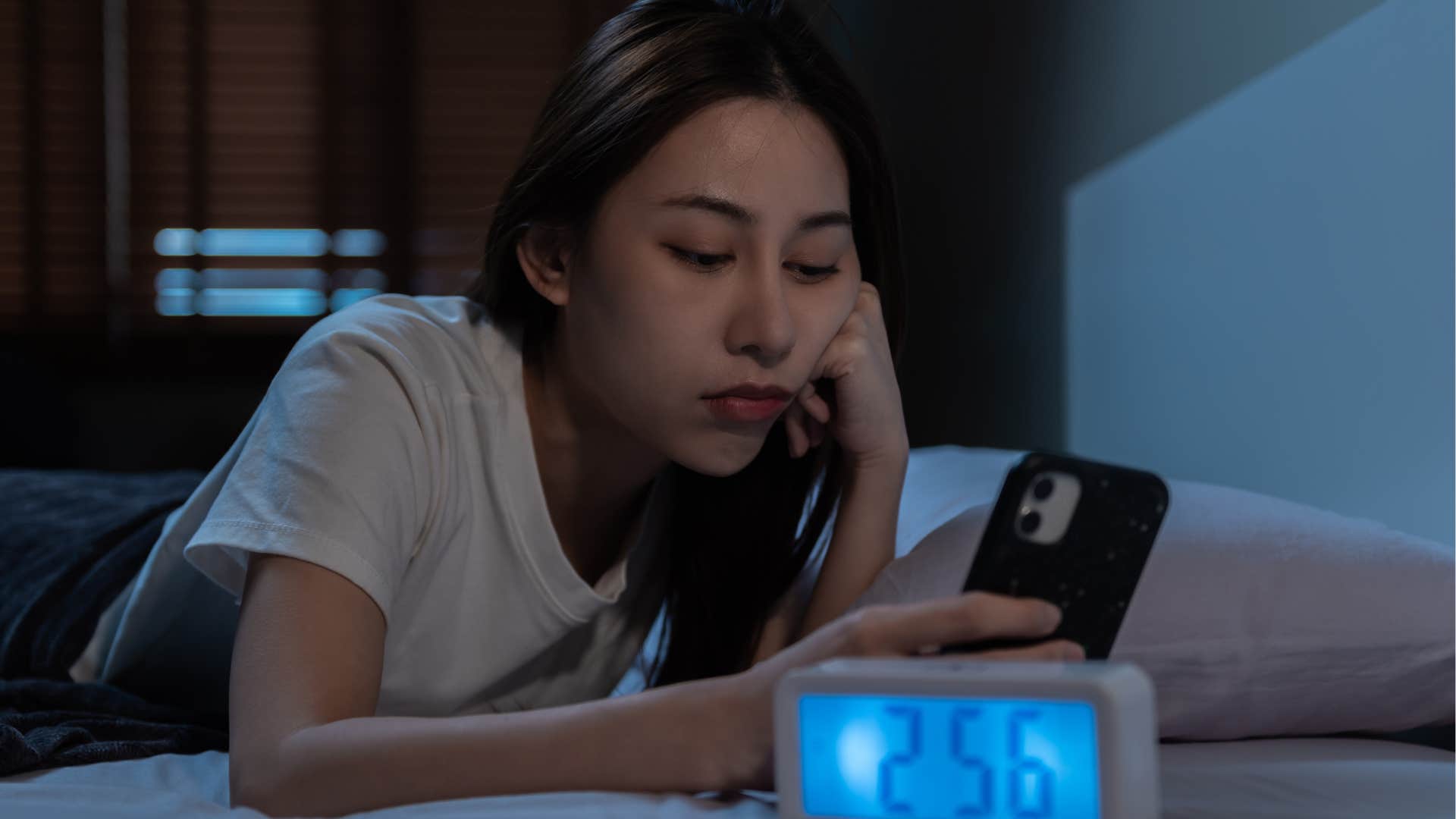
Whether it’s filling time with mindless entertainment on TV or doomscrolling on their phones from bed, people who “delay” their bedtime to feel a sense of control over their free time are likely more exhausted than they admit to themselves.
Of course, these screen-related hobbies and “night owl” tendencies can easily sabotage sleep quality and duration, but if someone’s also lacking leisure time and rest during their day — swamped with work obligations and a million responsibilities — chances are that also drained their energy and prompts fatigue.
5. They struggle with alone time
 Ground Picture | Shutterstock
Chronically tired people often busy themselves with mindless entertainment and over-schedule themselves with superficial social interactions to avoid solitude. If they struggle to regulate their emotions or make space to deal with the things stressing them out, avoidance and distractions can protect their misguided sense of comfort and give them a sense of control.
So, it’s no surprise that these people are exhausted, not just on an emotional level from suppressing their emotions and running from vulnerability, but also by overstimulating themselves with a million distractions that prevent their brains from truly being able to relax and naturally rest.
They’d prefer to be “busy,” even if it comes at the expense of rest, than be left alone in the quiet, before bed or at home after work, to deal with their racing thoughts and suppressed emotions.
6. They avoid silence
 Adriaticfoto | Shutterstock
Whether it’s in their bed at the end of the day or in the office when they finally have a chance to take a break, people who avoid silence are more exhausted than they admit to themselves. When they’re stuck in burnout and yearning for a chance to rest their bodies and minds, silence can still feel scary, bringing up all the overthinking tendencies and chronic stress they’re using an overwhelming schedule to avoid.
While it might offer a fleeting sense of comfort and control to avoid silence and address stress, a study from the Journal of Consulting and Clinical Psychology argues that this kind of avoidance only amplifies long-term stress and worry in the long run.
7. They procrastinate personal tasks
 Bits And Splits | Shutterstock
Especially for people dealing with mental health struggles and stress, procrastination behaviors often give them a sense of control that they’re lacking in their daily lives. When they push off a task in favor of immediate comfort, it gives them a feeling of security, even if it adds to their emotional burden and fatigue in the long run.
People who do these things at night, from pushing off their bedtime to avoiding tasks they have to get done before bed, are more exhausted than they admit to themselves.
8. They lie awake at night
 Lysenko Andrii | Shutterstock
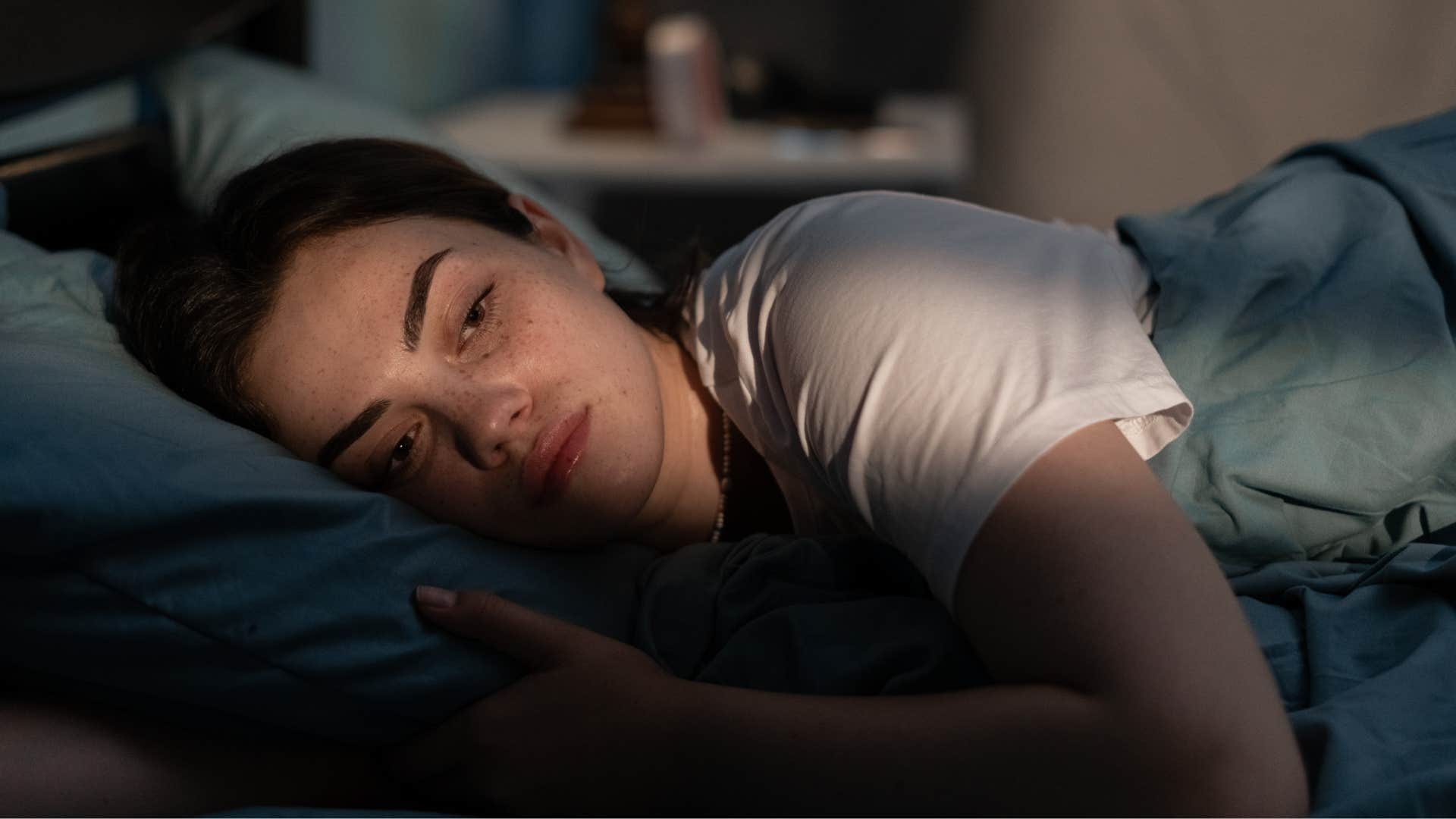
According to a study from the Journal of Sleep Research, people dealing with a lot of stress often struggle to fall and stay asleep at night. Their brains are constantly stuck in “fight or flight” mode, trying to process and manage all the information lingering without a place to land, making rest and relaxation feel impossible.
People who lie awake at night are more exhausted than they admit to themselves. They may find other things to blame for their insomnia, call themselves a “night owl,” or justify their busy schedules, but it only pushes them closer to burnout.
9. They sit in the dark
 KinoMasterskaya | Shutterstock
Many people who are holding onto a lot of fatigue and chronic stress are easily overstimulated by tons of sensory input or information. Whether it’s a new project popping up out of nowhere at work or sitting at home surrounded by tons of noise and bright lights, people who opt for sitting in quiet, dark spaces at night may be more exhausted than they admit to themselves.
Even if it encourages negative thought spirals or loneliness, their nervous system is yearning for a sense of rest and quietness.
10. They get irritable with loved ones
 Miljan Zivkovic | Shutterstock
While irritability is often a natural response to daily stressors and frustrations, when it’s a constant state of being around loved ones and in social interactions, it can also be a symptom of deeper mental health concerns and burnout.
With a million suppressed feelings and chronic stress floating around inside, people who refuse to admit that they’re entirely exhausted may be prone to snapping at partners or feeling more irritable around kids at home.
11. They struggle to transition into rest
 Evgeniia Primavera | Shutterstock
Especially for people who bring their work home or have a million personal responsibilities to attend to after coming home, transitioning from activity to rest can feel impossible if they’re exhausted and stressed out. They struggle to switch off their hyperactive minds and accept quietness and rest, leading to things like insomnia and poor work-life balance.
Likely feeling less present and more distracted at home, these people end up sabotaging their relationships and seeping stress and anxious thoughts into their personal routines.
Zayda Slabbekoorn is a senior editorial strategist with a bachelor’s degree in social relations & policy and gender studies who focuses on psychology, relationships, self-help, and human interest stories.
