
People Who Truly Care About Others Use These 11 Phrases On A Regular Basis
 Feyza Tuğba from Pexels | Rachata Teyparsit from Shutterstock
 One of the best ways to know if someone is a truly caring person is to listen to the phrases they say often. While it’s pretty easy to identify whether the people closest to you truly care about others, it can be more difficult to ascertain the extent to which others, like neighbors, first dates, casual friends and extended family members truly care about the well-being of other people.
Learning who is truly good to others isn't a meaningless task. Caring might come naturally to some, but according to a report from Harvard’s Making Caring Common Project, many Americans struggle to feel "substantial concern for people who are different from them in background and character," and also "struggle to extend compassion when others disappoint them or make mistakes and fail to treat as fully human those with whom they disagree." So, if you want to know which people truly care about others, listen close for these phrases they may say on a regular basis.
People who truly care about others use these 11 phrases on a regular basis
1. 'It’s OK to feel this way'
 Halfpoint | Shutterstock.com
Compassion matters more than most people realize. When we have empathetic leaders, a community, peers with shared experiences, and compassion, we’re affirmed in our identity, self-esteem which creates security and and a sense of belonging.
Children are more likely to navigate adulthood with healthy coping mechanisms, supportive relationships, and an impactful sense of self-awareness when they've been led by empathetic adults.
Important and impactful research, like a a study published in School Psychology Review on the experiences of Black boys in the classroom, argues that “safe spaces” are incredibly profound, especially early in life, in shaping our vulnerability, behavioral tendencies, and emotional intelligence in adulthood.
This isn't just a childhood thing. People who truly care about others show compassion and kindness toward adults, too. They let you know it's OK to feel the way you feel understand that without emotional support or validation. Without that, people tend to struggle to find acceptance and may slip into harmful isolation.
2. 'I can imagine how that would be frustrating.'
 Andrii Zastrozhnov | Shutterstock.com
Empathy is one of the greatest human traits. While there are a few different types of empathy, empathy is what allows you to imagine someone else's experience, even if it's different from your own. While it seems like something every human should be born with, it's actually a skill that is taught to children by caring parents who model empathetic behavior and help their kids practice.
One sign that someone truly cares about others is using phrases like "I can imagine how that would be frustrating" that show their commitment to using empathy, which is a powerful relational skill. When we pour out our hearts to someone and are met with our feelings being reflected back, it means someone cares enough to get into the emotional trenches.
Shared experiences can be powerfully validating in our relationships, and that starts with genuine understanding — or at the very least, being committed to trying to understand.
3. 'I’m here for you.'
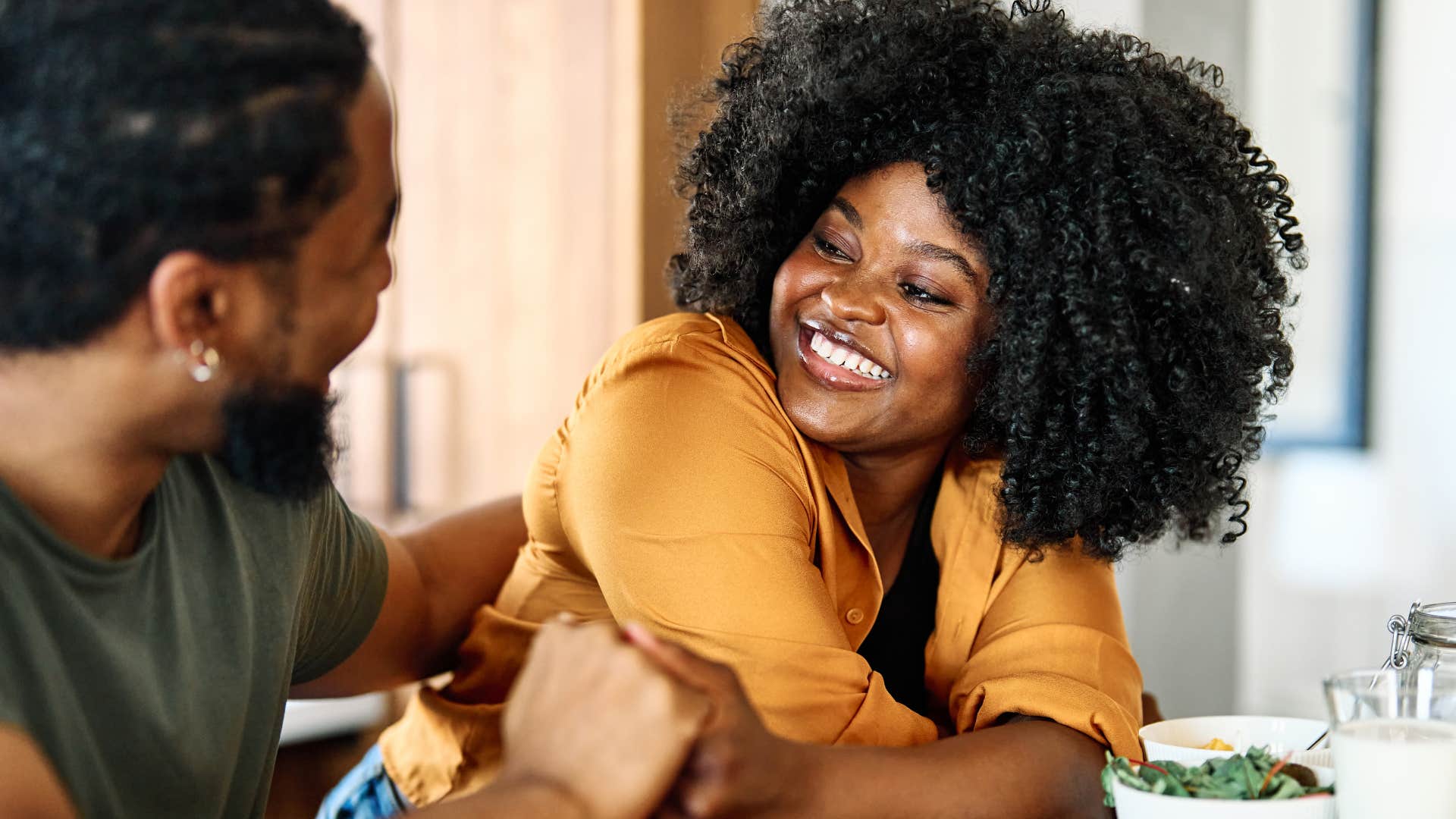 Pics Five | Shutterstock.com
Holding space for other people emotionally, whether that’s through active support and listening or by cultivating a non-judgmental atmosphere, can help to establish a healthy connection and reduce the stress and anxiety of others. This is a key relational skill that not only shows someone truly cares, but that they're able to be a good friend, family member or partner.
A phrase as simple as, “I’m here for you” can be profound, especially when used by a truly caring person who’s willing to sacrifice some of their time and energy to help others. It also lets that person know that they aren't a bother, which is so important when someone is struggling.
Of course, a delicate balance of listening and emotional validation is necessary in all shared connections — one person can’t bear the burden of support 100% of the time — but many people who truly care find ways to make that flow natural in their relationships.
4. 'What can I do to help you?'
 astarot | Shutterstock.com
One of the most unfortunate habits many of us are stuck in is assuming everyone knows how we feel about them. In reality, people often assume their loved ones care less than they typically do. That's why people who truly care about others often ask, "What can I do to help?" or offer to do specific things to show support.
A research review published in Current Opinion in Psychology argues that emotional and social support can not only be impactful for harnessing powerful healthy relationships and connections, but in promoting physical health. Those who truly care may not grasp how impactful their support is, but it’s phrases like this that help lessen the burden of intense emotions and concern.
By sharing emotional burdens, providing support when needed, and acknowledging other people’s struggles and pain, they’re removing the isolating nature of complex internal turmoil, and that’s profoundly influential.
5. 'Do you want to be hugged, helped or heard?'
 Motortion Films | Shutterstock.com
People who truly care know that they don't always have the right answers, and that sometimes giving answers and advice isn't the best way to support someone. It can be easy to forgo genuine listening and empathy and skip right to solution-oriented conversations, after all. That's where this now-iconic question comes into play.
When someone shares a relationship qualm or a struggle in their daily life, we often immediately share advice, even if they other person isn't looking for it. It may come from a place of genuine concern and care, but more often than not, we’re cutting off the space for others to share their genuine emotions without judgment, or without the inherent need for something to be changed or fixed.
This is one of the most impactful phrases truly caring people say, because it gives people the autonomy of choice: are they looking for concern, advice, and solutions, or are they looking to be heard?
6. 'Thank you for sharing this with me.'
 JhonHurtado | Shutterstock.com
It can be easy to assume nobody wants to hear your problems, your fears or your feelings when you're going through a tough time. That's why people who truly care about others say, "thank you" when someone opens up.
We’re all human, and it’s human nature to seek a sense of connection with others, even if it’s in the middle of an interaction or while sharing vulnerable emotions. We find peace in empathy, pride in compassion, and trust and reassurance in understanding from truly caring people in our lives.
Research published in a psychology journal found that the phrases truly caring people say, like this one that expressis gratitude, are impactful in cultivating healthy social interactions, not only because they promote positive emotions, but also because they help to solve concerns of sustainability in connections and relationships.
They also found that there's an added benefit to expressing how someone's actions met a need. For example, a caring person could say, "Thank you for sharing this with me, I really appreciate when you give me opportunities to support and listen."
7. 'I'm proud of you.'
 NDAB Creativity | Shutterstock.com
Whether these words are directed toward you by a friend, a parent, or a boss, the positive emotions associated with pride are powerful and profound, often sparking a cycle of empathy and care. That's why people who truly care about others say they're proud on a regular basis.
Expressing pride in a loved one is yet another thing we don't say enough in our society. Often, we reserve saying "I'm proud of you" for big moments, like graduations or promotions at work. In reality, the people we care about do many things that make us proud.
Truly caring people make a point to notice the things people do that make them proud, and that is fundamental to showing this next-level of caring.
For example, if a caring person notices that their child cleaned up their toys without having to be asked, they might say, "I'm proud of you for noticing the toys and taking the initiative on your own to clean them up!" With a partner, someone who cares might say, "I'm so proud to be with you, especially at family events where I see how kind you are to others."
These specific notes about a person's choices and skills, and not just an accomplishment, actually foster connection as well as help the person feel as though their hard work and goodness is truly being seen, and that is fundamental to developing a growth mindset in a child or even a couple. And truly caring people want that for others!
8. 'You don’t have to justify how you feel'
 SynthEx | Shutterstock.com
Too often, people feel deeply judged for how they feel. They worry that their fears or heartbreak will appear silly to others, so they often hold things in, which isn't healthy for anyone.
People who truly care want to make clear that they aren't going to judge others based on how they feel. After all, feelings are often going to be wild and irrational and what matters most is what we do with our feelings. So truly kind people will often allow themselves to be a safe space for a trusted loved one to pour out their heart without having to justify why they feel that way.
As Zoe Weil writes for The Institute of Humane Education, "judging people is not an effective way to bring change." That means that even if a caring person thinks someone made a mistake, they know better than to be judgmental, so they do their best to practice being non-judgmental in order to a better source of support for others.
Weil insists that by doing this, they're more likely to be able to help someone make healthier and better choices. And that's what people who truly care about others want: for people to have great lives.
9. 'I can imagine that I'd feel the same way in this situation'
 Krakenimages.com | Shutterstock.com
Many people underestimate the power of shared experiences, community, and connection, even in seemingly minuscule ways during a conversation or a passing interaction. By acknowledging another person’s feelings and bonding over a shared experience, relatability, or emotion, the burden of intense emotions can be shared.
As Crystal Yarborough, LCSW shares in a Smith College Social Work publication, people bond over shared experiences that may be otherwise isolating on their own. From discrimination to bullying to navigating uncomfortable relationships, these experiences can feel “othering” or disconnecting when they’re not acknowledged by someone who truly cares.
That's why people who truly care use empathy to let someone know that they either can imagine being in a similar situation or have been in that situation themselves. After all, when we're struggling, we often fear people will judge us, and this phrase can help us feel less weird or "wrong".
10. 'I can see something is wrong.'
 Cast Of Thousands | Shutterstock.com
People who truly care about others often know when someone needs to have their experience or feeling named and acknowledged. Too often, when we are having a tough time or experiencing a flood of emotions, we feel like we need to hide it effectively. We also likely assume nobody cares enough to inquire about it.
A truly caring person might use this phrase when someone is on the verge of crying or struggling to verbalize what they’re feeling. Instead of looking away out of discomfort, they actually dive in deeper.
Saying, "I can see something is wrong" or "I can see something is going on" is a simple acknowledgment of reality. This seems like a little thing, but can be a very big thing when someone needs to feel seen.
These phrases can also be used to acknowledge that someone is safe, supported, and loved enough to express their pain, frustration, or anger in whatever way they need to. As researchers report, solidarity helps people to feel empowered in expressing their most vulnerable emotions and experiences.
11. 'I'm sorry'
 ShotPrime Studio | Shutterstock
People who truly care about others say "I'm sorry" any time they need to take accountability for something they've done. The ability to apologize and say they're sorry is one of the most powerful ways caring people show that they are, truly, kind. Being able to say "I'm sorry" is also proof that these people are strong. This goes double if the caring person is a man!
After all, society often discourages people from being vulnerable and admitting mistakes. Men, especially, are taught that showing any weakness means someone will take advantage of that and harm them right back, and that keeps men and boys lonely and at risk of severe emotional side-effects. In reality, regardless of gender, saying "I'm sorry" doesn't show weakness at all, it shows strength.
Truly caring people want the best for others. They want them to feel loved, supported and appreciated, and if they fail in any way to do that, they'll apologize. Simple as that.
Caring people may also say, "I'm sorry" when listening with empathy to someone else's experience, even when they aren't the cause of the pain. "I'm so sorry this happened" or "I'm so sorry you had to go through that" are great ways to express that you see that something hurt or was hard. While it may seem silly to some, that type of validation is so important when someone is struggling.
Zayda Slabbekoorn is a News & Entertainment Writer at YourTango who focuses on health and wellness, social policy, and human interest stories
