
Women Who Actually Want To Be Faithful Almost Always Stay Away From These 11 Things
 oneinchpunch | Shutterstock
 Commitment, alongside general trust, communication, and affection, is one of the most influential pillars of a healthy marriage. Without commitment, both in the form of small things like keeping promises and larger ones like staying faithful, the entire relationship crumbles.
Women who actually want to be faithful almost always stay away from certain things. Whether it’s certain types of people out and about or a friend who always urges her to sacrifice the well-being of her relationship for a good story, she’s intentional about who and where she invests her energy, always thinking of her long-term commitment in the back of her mind.
Women who actually want to be faithful almost always stay away from these 11 things
1. Oversharing
 Gorgev | Shutterstock
When it comes to conflict and issues in her marriage, a wife who truly loves her husband and wants to be faithful will always open conversations with him before venting to other people. She’s not oversharing about personal details in their relationship or secrets her husbands shared in confidence with friends, even if it's tempting in certain social situations.
While it may be a “survival instinct” for people who regularly feel uncertain and nervous around other people, it’s not the key to building strong connections, especially if it also comes at the expense of a healthy intimate relationship or partner.
2. Seeking validation
 Andrii Nekrasov | Shutterstock
Even if it means taking alone time and building up their own sense of individuality in a marriage, women who are committed to being faithful focus on building internal gratification systems. They don’t rely on other people, social media, or even their partners to feel secure, but instead lean on their own coping skills, confidence, and well-being for support.
Validation isn’t an inherently bad thing in general and within relationships, but when it’s intrinsically tied to self-worth, it can spark behaviors that inform isolation and personal insecurity.
3. Comparisons
 La Famiglia | Shutterstock
Even if their faithfulness is also defined by avoiding other intimate connections and infidelity, being true to their partner’s authenticity and general well-being on an everyday basis is just as influential. They don’t compare their partners to other people or expect them to uphold unrealistic expectations. They accept them for who they are and continue to show up and love them for it.
Of course, feeling, knowing, and accepting yourself plays such a strong, important role in personal wellness, as a study from Europe’s Journal of Psychology explains, but it’s just as important in relationships. We want to feel important, validated, and like we belong, even if that comes from passing, casual conversations and affection from a partner.
Women who actually want to be faithful almost always stay away from comparisons because they care more about showing up for and appreciating the version of her partner that’s already here and present.
4. Feigning ignorance
 Nicoleta Ionescu | Shutterstock
Pretending like they’re not self-aware about themselves and their relationship is something truly faithful women avoid at all costs. They’re not flirting with people and then invalidating their partner's discomfort. They’re not doing things that put their partner’s well-being at risk and then making them feel like the “bad guy.”
Even if it seems like such a simple thing, it’s something that many women fall into a cycle of doing subconsciously. They take their relationships for granted, assuming they’ll always be there, and fall into unhealthy habits that put everyone’s well-being at risk.
5. Toxic friendships
 PeopleImages | Shutterstock
Even if we’re not particularly conscious of it, our friendships play an important role in our health and well-being, especially in adulthood, for the better and for the worse. If we have a toxic friend who doesn’t have our best interests at heart, even small conversations and interactions can sabotage our sense of security and stability.
Women who actually want to be faithful almost always stay away from these kinds of friends, who urge them to speak poorly about their partners, weaponize our insecurities, and spread our secrets at the expense of trust in our relationships.
6. Keeping secrets
 Josep Suria | Shutterstock
Commitment isn’t just about physical connections and intimacy — it’s also about emotional connections and boundaries. If a partner is keeping secrets from their partner on a regular basis, they’re not upholding the trust that lives at the foundation of their relationship.
According to a study from Personality and Social Psychology Bulletin, more secrecy in a romantic relationship is associated with worse commitment. So, women who actually want to be faithful almost always stay away from these things, even if it requires higher levels of self-regulation and an appreciation for hard conversations.
7. Back-up plans
 PeopleImages | Shutterstock
Whether it’s nurturing connections with “old flings” or holding back on vulnerable conversations just in case things “don’t work out,” women who are fully faithful in their relationships completely avoid keeping back-up plans in their long-term relationships.
When they’re with someone, they don’t necessarily think about the future where they’re not together, especially if they’re married. If concerns come up, they talk about them. If there are boundaries to set, they set and respect them. They’re not trying to protect their individual well-being by putting up emotional walls.
8. Disrespecting their own values
 PeopleImages | Shutterstock
Personal values play an important role in structuring relationship well-being, sometimes in uncomfortable and disengaging ways, according to a study from Personality and Social Psychology Bulletin. Especially when there are value differences and misunderstandings between partners, it can spark more conflict and disagreement that’s hard to work through.
However, if partners are hiding and lying about their own values and beliefs, that can cause resentment on an entirely new level. That’s why women who actually want to be faithful avoid disrespecting their own values. They put them out there and communicate them, instead of trying to compromise on things that are arguably one of the most important parts of their well-being and identity.
9. Using social media for attention
 MAOIKO | Shutterstock
Many people in the modern world turn to their phones and social media for attention and security, according to a study from Psychological Reports. It’s easy to turn to the screen, where you can carefully curate an image and keep up emotional walls subtly with other users online, for validation. It feels like a safety net.
So, even if it’s easy for other wives to turn to when they’re avoiding issues in their relationships or coping with disconnection from a partner, it’s something they avoid if they’re committed to being faithful.
10. Venting to untrustworthy people
 Bricolage | Shutterstock
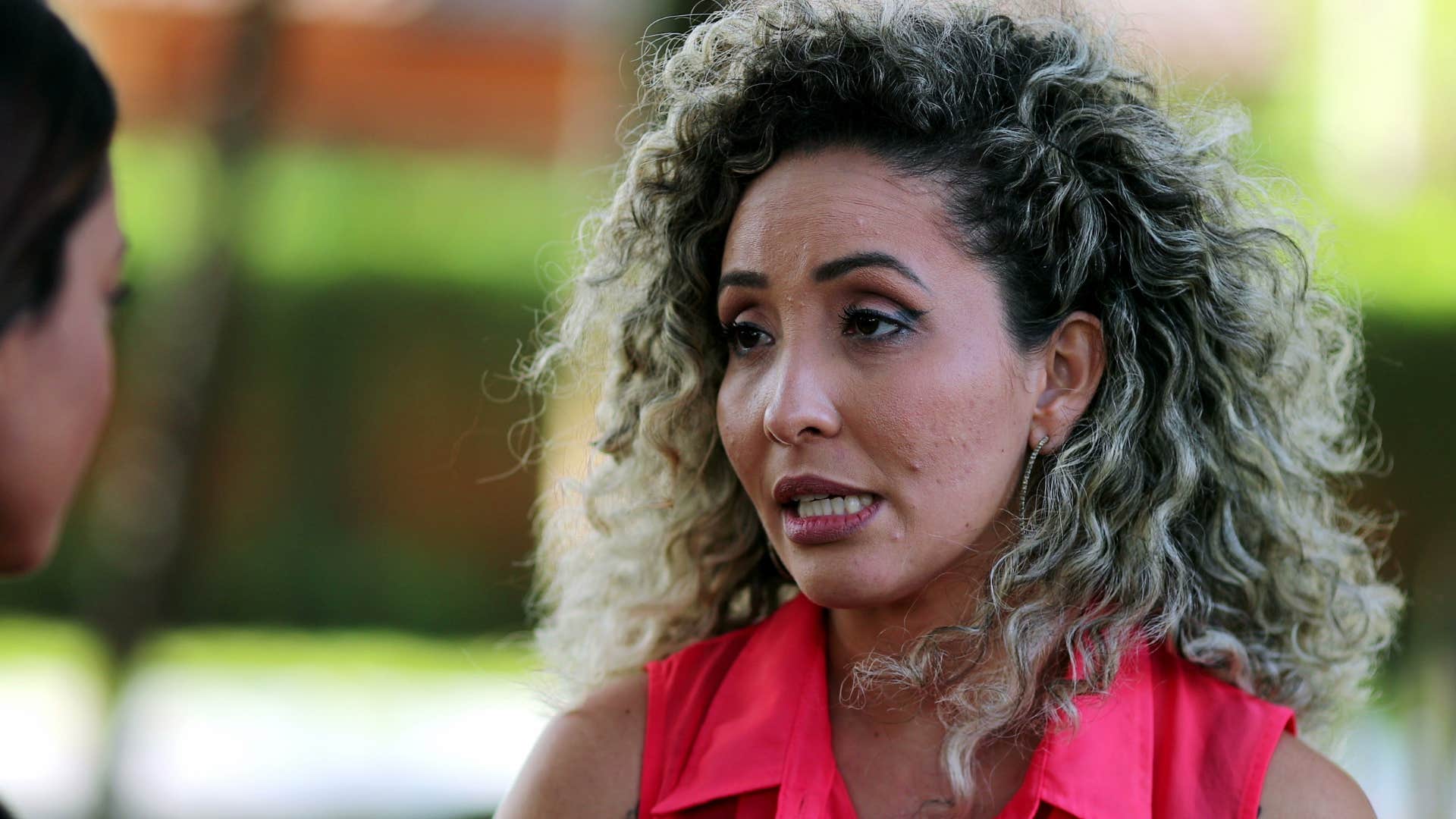
Whether it’s a personal acquaintance or a co-worker, women who actually want to be faithful almost always stay away from venting to untrustworthy people. Of course, they’re not afraid to speak about their personal struggles and relationships with friends and family, but they follow certain boundaries when it comes to “airing” out their hyper-personal and intimate details about their partner and marriage.
When it comes to issues and concerns, they bring them up and communicate them directly with their partners. If they need support from others, they’re not afraid to look for it, but are careful about adding drama and secrets to a relationship that only needs vulnerability and attention.
11. Misguided humor
 PeopleImages | Shutterstock
While humor can occasionally help to relieve conflict and add value to relationships, according to a study from Behavioral Science, there’s no denying that passive-aggressiveness can linger behind sarcastic comments and phrases like “it’s just a joke.”
That’s why women who actually want to be faithful put a lot of effort into cultivating their own emotional intelligence skills and communication strategies. When they’re upset, they don’t play mind games and disguise their hurt — they make it known and lean into the discomfort of honesty with their partners.
Zayda Slabbekoorn is a senior editorial strategist with a bachelor’s degree in social relations & policy and gender studies who focuses on psychology, relationships, self-help, and human interest stories.
