
Men Who Weren't Raised Around Healthy Love Often Say 11 Emotionally Revealing Phrases To Their Wives
 Master of Stocks | Shutterstock
 Men who weren't raised in a healthy environment of love often struggle to express their emotions and communicate with their wives. Even when they love their partners, they have a hard time knowing what to say or how to respond during difficult conversations. While it's not always easy to know why a husband struggles to open up, the way he was raised can play a major role in how he approaches emotional intimacy in his marriage.
Some men grew up watching their parents avoid difficult conversations, while others rarely saw healthy expressions of love or affection at home. As adults, they may repeat those same communication patterns without realizing how much their words affect their wives. Understanding where these habits come from can help explain why certain emotionally revealing phrases come up so often.
Men who grew up without healthy examples of love end up saying these 11 things to their wives:
1. 'I don't know what you want me to say'
 DimaBerlin | Shutterstock
There's no greater frustration for a husband than hearing his wife argue with him repeatedly about the same topic. He doesn't understand where she's coming from, and he doesn't know what to say to make the situation any better.
Growing up, his parents might have remained silent, simply ignoring one another. Despite their arguments, his parents were no longer in love with each other and actively avoided one another as much as possible. Now that he's in a loving marriage, he doesn't know what to say since his family rarely ever talked much during conflict.
According to a 2024 study, negative communication impacts a person's satisfaction in the relationship. But just because he isn't the best at it now, that doesn't mean he can't actively improve in the future. With patience, self-awareness, and a willingness to communicate more openly, husbands who struggle during conflict can learn healthier ways to respond to their wives.
2. 'I didn't think it would bother you'
 simona pilolla 2 | Shutterstock
When a man is raised in an environment where unconditional love between parents is never obvious, and then gets married, he will likely utter one of the phrases a husband says when he wasn't raised around real love. Husbands who weren't raised around real love likely had parents who rarely catered to one another.
Growing up, he may have rarely seen his parents express affection or acknowledge important moments in their relationship. Whether it was Valentine's Day, an anniversary, or simply an act of appreciation for one another, those gestures may have been missing in his home. In the end, this didn't teach him much, as he's now a husband who has difficulty being compassionate or understanding towards his wife.
According to Steven Stosny, PhD, founder of CompassionPower, "Compassion is necessary for the formation of emotional bonds. We fall in love only with people who seem to care how we feel." But just because they grew up this way, it doesn't mean they can't change. If a husband isn't sure, it's always better to ask than risk setting off their partner.
3. 'I'm just not the affectionate type'
 NDAB Creativity | Shutterstock
Sure, not everybody wants affection all the time, but there's a difference between needing space and being avoidant of affection. Human beings are designed to crave connection and affection from one another. From infancy to adulthood, physical touch such as hugs can be the difference between grounding oneself and losing oneself in anxiety.
As associate psychology professor Nicole K. McNichols, PhD, explained, "The correlation between anxiety, depression, and stress and touch is large and inversely related. It has been found that touch calms our nervous system and slows down our heart rate. Human touch also lowers blood pressure and cortisol, our stress hormone. It also triggers the release of oxytocin, a hormone known for promoting emotional bonding to others."
Unfortunately, this likely isn't a lesson a man has learned when he wasn't raised around real love. Needing space or having boundaries is more than okay, but consistently avoiding emotional expression can make it difficult to build a close, loving relationship.
When someone is in love, they may naturally want to be close to their partner, whether that means holding hands, spending time together, or showing affection in other ways. But men who grew up without healthy examples of affection may struggle to express those feelings, even when they genuinely love their wives.
4. 'You're being too emotional'
 Zamrznuti tonovi | Shutterstock
If there's one rule any husband should be aware of, it's that the worst thing they can say to their wife is that she's being too emotional. Yet it becomes one of the phrases a husband says when he wasn't raised around real love, and it often backfires.
Nobody likes to feel as if their emotions don't matter. They don't want to feel dismissed, and they certainly don't want to be portrayed as "crazy" for simply expressing what's on their mind. But husbands who dismiss their wives' emotions and refuse to hear them out are effectively shutting them out.
According to research published in Frontiers in Psychology, feeling unimportant leads to loneliness. For husbands who grew up in households where emotions were rarely expressed, dealing with their wives' feelings can sometimes feel overwhelming. While their upbringing may help explain why they struggle with emotional conversations, dismissing their wives' feelings can still negatively affect their marriages.
5. 'Why do we need to talk about everything?'
 antonioodiaz | Shutterstock
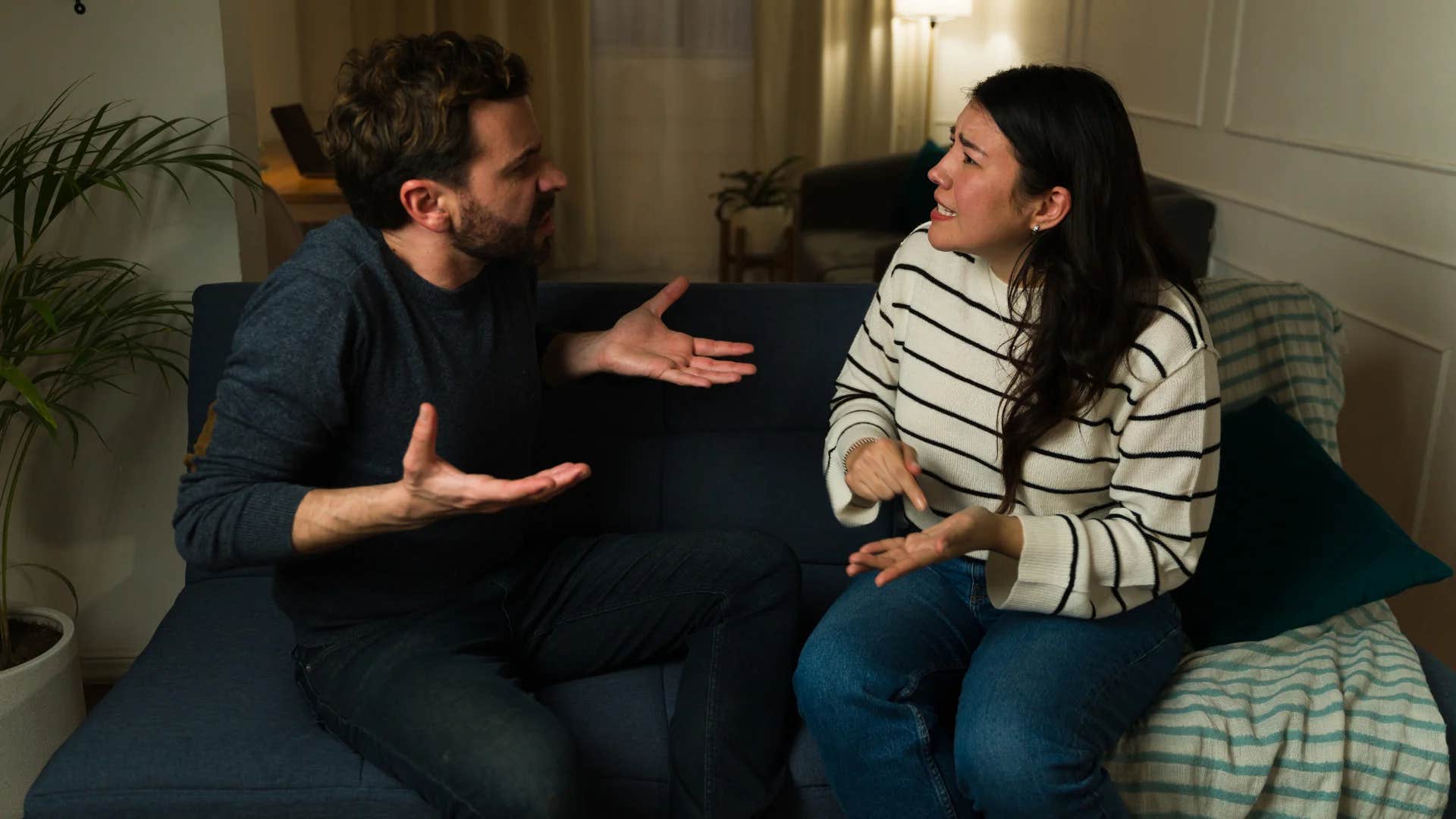
In any marriage, there will come a point when sitting down to talk things through is essential. It might be uncomfortable, but through healthy conversation, both parties can clear up any misunderstandings and reach a resolution that takes both of their needs into account.
Some husbands may verbally ask their wives why they need to talk about anything. Hearing this as a wife can be both frustrating and hurtful. All a wife wants to do is solve the issue, while a husband is bent on ignoring it.
But ignoring the problem isn't a good long-term solution. As a wife begins to feel less heard and more ignored, she might slowly become resentful. So, while a husband might not think it's necessary to discuss every little thing with his wife, without discussion, the marriage might be over before he knows it.
6. 'I'm not good with emotions'
 fizkes | Shutterstock
While a husband might not be good at talking about his emotions, there's a reason for it. Most of the time, when someone says they aren't "good with emotions," it means they weren't taught how to express and accept them. From parents who never expressed their emotions to growing up in a neglectful or toxic home environment, husbands might struggle to express themselves.
Even so, vulnerability is important for the longevity of a marriage. According to licensed couples counselor Kari Rusnak, "Being vulnerable creates emotional intimacy and connection. Opening yourself to your partner shows and builds trust and helps them understand you on a deeper level."
While he might struggle to express himself directly to his wife, writing a letter allows him to reflect and feel comfortable in his vulnerability. Not only will he better understand how he's feeling, but he can also use that as a guideline to better express his thoughts more clearly.
7. 'You're overthinking it'
 Nicoleta lonescu | Shutterstock
Husbands who grew up without healthy examples of love may struggle to understand their wives' emotional needs. Instead of trying to see things from their perspective, they may dismiss their concerns as overthinking things. And there's no worse feeling for a wife to have than pouring her heart out only to be met with this phrase.
But husbands who say this don't always say it to belittle them; rather, it's because they truly can't understand or agree with where they're coming from. Even so, couples don't have to agree to validate their partners' emotions.
According to psychologist and author Karyn Hall, PhD, "Validation is one way that we communicate acceptance of ourselves and others. Validation doesn't mean agreeing or approving... Validation is a way of communicating that the relationship is important and solid even when you disagree on issues."
Even if husbands don't agree with where their wives are coming from, they should do their best to validate those emotions and uplift them. After all, doing so will only make the relationship stronger.
8. 'It's fine'
 wavebreakmedia | Shutterstock
One of the more subtle phrases a husband says when he wasn't raised around real love is "It's fine." In the back of his mind, he might be bothered by something or feel hurt by something his partner did. But rather than argue, he actively chooses to pretend his feelings don't exist.
In the long run, suppressing emotions can make it harder to connect with a partner. Research published in the Journal of Personality and Social Psychology has linked emotional suppression to reduced positive emotional experiences.
Despite this, many husbands don't truly understand the weight of their words until it's far too late and they feel resentful of their relationship. To avoid this, partners should always be upfront and open. While opening up about difficult feelings might seem uncomfortable, avoiding those conversations altogether can create even more distance between partners.
9. 'Just tell me what you want me to do'
 Mladen Mitrinovic | Shutterstock
No one can read their partner's mind, but husbands who grew up without healthy examples of communication may have an especially difficult time recognizing what their wives need from them. This is especially true for men who weren't raised around real love, who tend to just ask their wives outright what they want them to do.
It might sound aggressive, but men who weren't raised around true love don't know how else to express their frustrations. They may have tried to meet their wives' needs or find a practical solution, but without understanding the emotions behind the problem, their efforts might not improve the situation any better.
With nowhere else to turn to and nothing else to say, they'll ask their partner what they want. For the other person, the solution might be simple. Maybe they just want quality time together or a little help with household chores. Men won't always know that, even if they've been married for years, and as frustrating as this is, the best thing to do is to simply tell them upfront.
10. 'Can't we just move on?'
 Pixel-Shot | Shutterstock
After an intense argument, couples tend to take some time to decompress before returning to the conversation. But men who weren't raised in an environment where real love was shown may avoid the topic altogether and ask their wife to just move on. But what he fails to realize is that this isn't so easy. When the other person is hurt, it can feel dismissive to let bygones be bygones, so to speak.
A woman might agree if she feels that nothing she says is getting through to him, but that doesn't mean it's truly over. During future arguments, a wife who hasn't found closure might bring up things from the past, prompting him again to ask the same question again: "Can't we just move on?"
This vicious cycle almost always ends in disaster, as wives get tired of feeling dismissed. This is why husbands need to do the inner work to heal. Even if they don't have any good examples of real love, that doesn't mean they lack resources. If they're open to it, couples counseling can be a useful tool that can help both parties better understand one another.
11. 'Don't worry about me. I'll handle it'
 Prostock-studio | Shutterstock
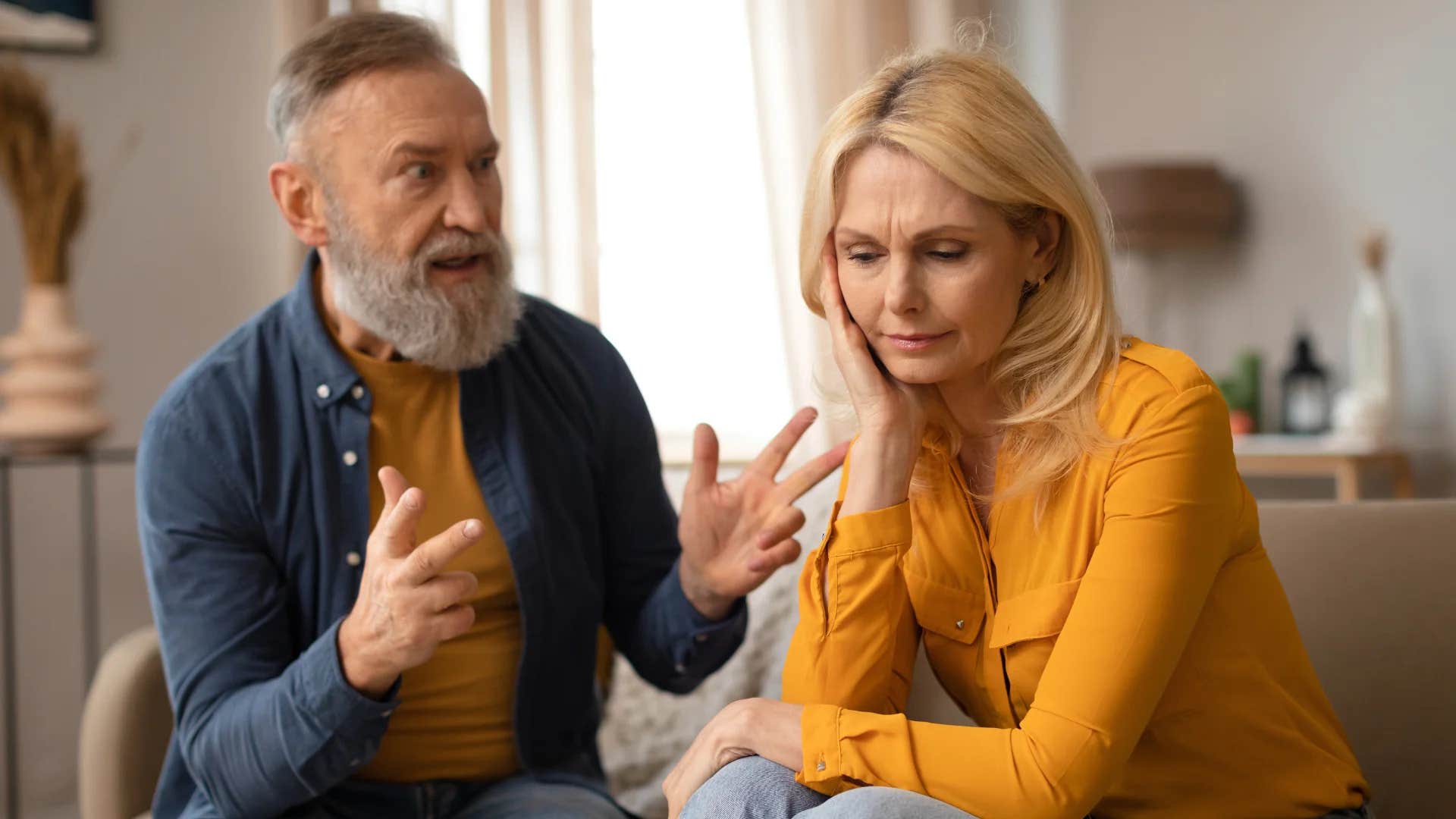
A husband who wasn't raised around real love might tell his wife not to worry and that he will handle it, but this doesn't stop his wife from worrying. Women want to know what's going on in their husbands' minds so they can help them. However, it's hard to do this when they feel shut out.
When their husbands refuse to open up, some wives may repeatedly try to start conversations or find other ways to understand what's bothering them. Over time, feeling shut out can become frustrating and emotionally exhausting.
Understandably, these husbands don't really know any better. After all, they were raised around their parents, who never sought out one another or asked for help. But if men want a better marriage built on mutual love and support, opening up, communicating, and being vulnerable are all essential.
Marielisa Reyes is a writer with a bachelor's degree in psychology who covers self-help, relationships, career, family, and astrology topics.
