
People Who Were Seriously Spoiled As Kids Almost Always Have These 11 Frustrating Traits As Adults
 Jupiterimages | Canva
 From time to time, every parent has worried their child is spoiled and every adult was likely told they were spoiled as kids. Generally, that's an exaggeration, but it does happen sometimes. According to a 1989 article published in the journal "Pediatrics," spoiled child syndrome is associated with the display of "excessive" immature and self-centered behavior, and occurs when parents don't enforce consistent and age-appropriate boundaries. It's no surprise, then, that people who were seriously spoiled as kids have a few frustrating traits.
If you were often spoiled as a child, you were likely characterized as being selfish and emotionally volatile. Spoiled children expect to be given anything they want, and they throw tantrums when they don't get their own way. Because of their demanding attitude and inconsistent behavior, spoiled children often struggle to have healthy relationships. But being spoiled doesn't only affect people when they're young — it can also have a major impact on the kind of adult they grow up to be.
People who were seriously spoiled as kids almost always have these 11 frustrating traits as adults
1. They expect instant gratification
 HBRH |Shutterstock
People who were seriously spoiled as kids often grew accustomed to getting what they wanted, whether it was a toy they saw in the store window or the undivided attention of their parents when they were busy with another task.
If your need for instant gratification went unchecked, it's highly likely that you will become an adult who thinks you should get exactly what you want, and fast. Now, your expectations go beyond new toys. You might expect to get good grades without putting effort into your classes, then blame your teachers for failing you. You might think you should be hired for your dream job, even though you're not qualified. You might believe you deserve the attention you crave from the person you're with, whenever you wish for it.
According to a study published in the Journal of Personality and Social Psychology, having the ability to delay gratification in childhood correlates with academic and professional success later in life. The study determined that children who could wait longer at ages 4 and 5 were more academically and socially competent as adolescents, as they exhibited high verbal fluency along with being more attentive and able to deal well with frustration and stress.
Just because someone didn't learn how to delay gratification as a child doesn't mean they can't cultivate that skill now. Practicing mindfulness can be helpful in learning how to stay present and developing patience.
2. They have poor coping skills
 Gorodenkoff | Shutterstock
Another sign that someone was often spoiled as a child is that they struggle to cope with disappointment, stress, and setbacks as an adult.
Having poor coping skills is connected to expecting instant gratification. Children often become spoiled because their parents don't set appropriate limits. They tend to have a low frustration tolerance, so they become easily agitated when they're faced with challenges and have a hard time staying emotionally regulated.
As a spoiled child, your parents might have smoothed the way for you, removing obstacles and making sure you were successful in your achievements. Because you experienced very few disappointments, you probably didn't learn how to react when things don't go your way.
You might struggle to stay calm when you're faced with stressful or high-pressure situations. You might get defensive if someone criticizes you, instead of acknowledging that you could have done something differently. You see making mistakes as a sign that you've failed, instead of an indication that you have more to learn.
3. They feel entitled
 maxbelchenko | Shutterstock
Having a strong sense of entitlement is a frustrating sign someone was spoiled as a child. If their parents bent to their every whim, it's highly likely that they still think other people should meet all their needs, without having to extend themselves in return.
Being entitled means you think you deserve special treatment or that you're owed the trappings of success without having to work for it. Entitlement also manifests as believing certain rules don't apply to you, whether that means you cut the line at the DMV because your time is more precious than anyone else's, or that you think you shouldn't face consequences for cheating on a test or taking credit for someone else's work.
Being entitled makes it hard to maintain long-term relationships. Friendships and romances are based on mutual respect and balanced care. If someone always centers themselves and never gives back, they eventually lose the people they care about.
4. They feel helpless
 fizkes | Shutterstock
In a helpful short video, psychiatrist Dr. Marcia Sirota explains that being spoiled as a child doesn't only lead to feeling over-entitled, it also creates a sense of learned helplessness, along with lowered self-confidence and a decreased capacity for empathy.
Parents who do too much for their children essentially teach them that they can't do anything on their own. These kids become adults who expect other people to go out of their way to care for them, in part because they never learned to trust in their own abilities.
If your parents did everything for you, they denied you the opportunity to build up your inner strength and cultivate a sense of self-efficacy. As an adult, you probably avoid taking on challenges, as you don't believe that you're capable of doing hard things. You might struggle to hold down a job because you give up when you're faced with difficult tasks.
The first step to overcoming this feeling of helplessness is for a formerly spoiled child to recognize that they can learn how to handle difficult situations, even if they weren't taught how to do so when you were young.
5. They struggle with compromise
 fizkes | Shutterstock
As someone who was spoiled as a kid, an adult might have a hard time compromising, even with people they care about deeply. This can negatively affect their personal and professional relationships.
Imagine this example: When you were a kid, you were probably used to getting your own way because your parents didn't set limits or say "no." You were allowed to eat dessert first, you had unlimited screen time, and you skipped out on doing chores. Now that you're an adult, you still expect the world to move in your favor and you don't handle yourself well when it doesn't.
You might have a hard time being part of a team because you think you're always right. You struggle with collaboration in a professional setting, as you're not particularly adept at sharing control. Knowing how to compromise is a key part of having healthy adult relationships. In a partnership, conflict resolution is often based on meeting in the middle and finding a solution that works for both people in a couple.
6. They have low emotional resilience
 Mahir KART | Shutterstock
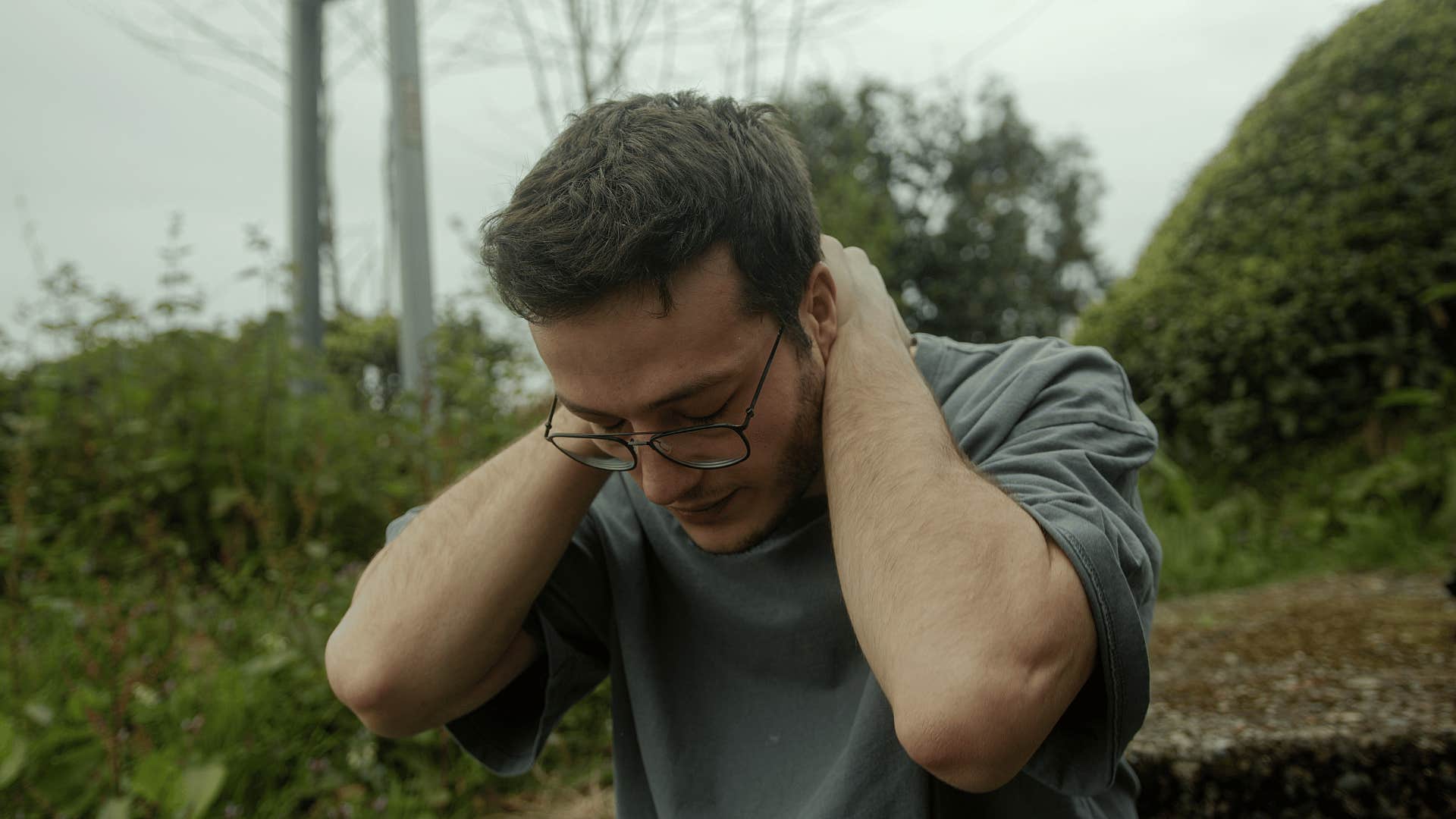
Low emotional resilience is one of the most frustrating traits of people who were seriously spoiled as kids. Licensed clinical social worker Cheryl Gerson notes that sometimes, a parent's efforts to raise their kids with confidence and high self-esteem can backfire if they go too far in protecting them from feeling any discomfort.
She explains that shielding kids from feeling frustrated, anxious, or worried often undermines their emotional resilience. "Kids need to realize getting what you want doesn't always come easily. That's the best way to raise an emotionally resilient child," Gerson revealed.
When parents don't let their kids experience anything uncomfortable, their kids become adults who overreact to any small shift in their emotional landscape.
If you're someone who never learned how to navigate emotional discomfort, you probably have a hard time sitting with your less enjoyable feelings. Yet knowing how to let your feelings exist without judging them or judging yourself for having them is a key aspect of having emotional strength.
7. Their sense of worth depends on external validation
 Inside Creative House | Shutterstock
People who were spoiled as kids often had parents who showered them with praise for completing even the smallest task. They practically threw a party every time their kid brushed their teeth or cleared a plate. This feels very positive and sweet, but it trains people to become obsessed with outside validation, even for things that don't really matter.
This means the child's sense of self is likely built around what other people think, making that person fairly unstable and easy to manipulate. After all, they are desperate for those kind words and affirmation, and may ignore their own instincts and judgment to get it.
Psychologist Nick Wignall notes that seeking constant validation from others is an indication of emotional fragility.
"Emotionally fragile people often get stuck in the habit of asking for reassurance anytime they feel scared, sad, or upset," he explained. "If you want to become more emotionally resilient and confident, you must be willing to tolerate the temporary discomfort of dealing with your difficult feelings."
8. They hate being told 'no'
 fizkes | Shutterstock
Parents who refuse to set clear boundaries or say "no" do their children a disservice in the long-run, by raising them to believe they have the right to do whatever they want while ignoring other people's feelings. People who were spoiled as kids often become adults who don't respect boundaries. They bulldoze past the limits people set and try to force them into saying "yes."
People who weren't told "no" as kids may knowingly or unknowingly manipulate others into saying "yes" to what you want. They might weaponize their own emotions to make people feel bad enough to bend to their will or outright ignore them.
Learning how to gracefully accept being told "no" is crucial to keeping your personal and professional relationships intact. It's work that people who were seriously spoiled need to do in order to have healthy relationships as an adult.
9. They lack gratitude
 Lewis Tse | Shutterstock
A lack of gratitude is a big sign that someone was seriously spoiled as a kid. This is logical, because, if you're completely used to getting exactly what you want, you probably don't consider the effort other people extend in order to meet your needs.
Being grateful goes beyond just saying "thank you." It requires people to have empathy and manifest a compassionate mindset. Having gratitude forces you to look outside of your own experience and shift your perspective to include other people's ways of life.
Career and life coach Heather Moulder explains, "A regular gratitude practice helps to train your mind to look for the things to be grateful for... This simple practice will increase your mental resilience and emotional intelligence and help you cultivate [a] growth mindset."
In many ways, being grateful is the opposite of being spoiled, because one of the roots of gratitude is accepting that the universe doesn't revolve around you and you alone.
10. They lack self-awareness
 Yuri Maslack / Shutterstock
Pretty much everyone believes they're self-aware. They think they're in touch with what's happening inside themselves, but when someone confronts them or they make a mistake, they lack the ability to stop and examine why and how this happened.
People who were seriously spoiled as kids are rarely tasked with noticing their internal landscape. After all, why would you look inside to find out what motivates your thoughts and reactions if all of your thoughts and reactions are considered just fine, or even endlessly great?
Self-awareness needs to be learned and practiced, and parents who set limits and have deeper conversations set their kids up to be thoughtful and self-aware. This is essential for healthy relationships later in life and gives them an advantage over kids who were spoiled, because they need to go back and learn these skills later in life.
As researchers discovered and were able to quantify, "self-connection is important to obtaining greater well-being". This can be accomplished, they report, with practices like mindfulness and journaling that are aimed to help connect people to themselves.
11. They fear change
 Zamrznuti tonovi | Shutterstock
People who were seriously spoiled as children were often always given the option to avoid struggle. They were likely cushioned from consequences or anything uncomfortable.
It's easy to imagine how this happens. After all, what parent wants their kids to experience pain and suffering? But real life is full of hard times, struggles and unanticipated (and often unwanted) change.
If you were shielded from this when you were little, you weren't given the opportunity to learn how to handle it while still being supported by the emotional scaffolding that great parents provide. That sort of structured struggle is what builds people's inner fortitude.
Change is hard for everyone, but it's also necessary in order to grow and become the brilliant, dynamic, deep adults we want to be. Fortunately, someone who was spoiled as a kid can still learn to handle change better. In a helpful guide offered by the NHS in the United Kingdom, experts suggest focusing on the short term, recognizing what's working, focusing on your achievements and more in order to make up for that lost emotional education. It may be hard work, but it's well worth it.
Alexandra Blogier is a writer on YourTango's news and entertainment team. She covers social issues, pop culture analysis and all things to do with the entertainment industry.
