
Kids Raised By Parents Who Never Admitted Fault Usually Carry 8 Habits Into Adulthood
 Photo Anna | Shutterstock
 Kids need their parents to apologize when they are at fault. It makes them feel respected and that their feelings matter. Sadly, it doesn't always happen.
Parents who never take responsibility for their mistakes raise kids who develop habits they can’t shake, even into adulthood. Constant over-apologizing or shutting down during arguments is common. This can be exhausting and can damage their relationships because they have trust issues. When you couldn't rely on your parents to treat you with respect, turning to people during tough moments may feel impossible.
Habits kids raised by parents who have never admitted when they are wrong carry with them as they grow up:
1. They’re extremely self-conscious
 AlexandrMusuc | Shutterstock
Parents can damage their child’s self-esteem without realizing it. When they make them feel guilty for their feelings, it leaves them second-guessing everything about themselves. Suddenly, they’re wondering if they are the problem, not the parent who caused them emotional pain. Some parents may make their child apologize, even if the child was the victim. This causes a cycle that is hard to break.
When they approach conversations in adulthood, they may not feel able to stand up for themselves. Their role models blamed and put them down, so why wouldn’t a stranger? They’ll watch their every word, second-guessing how they handle everything that comes their way.
2. They apologize even when they did nothing wrong
 Valery Zotev | Shutterstock
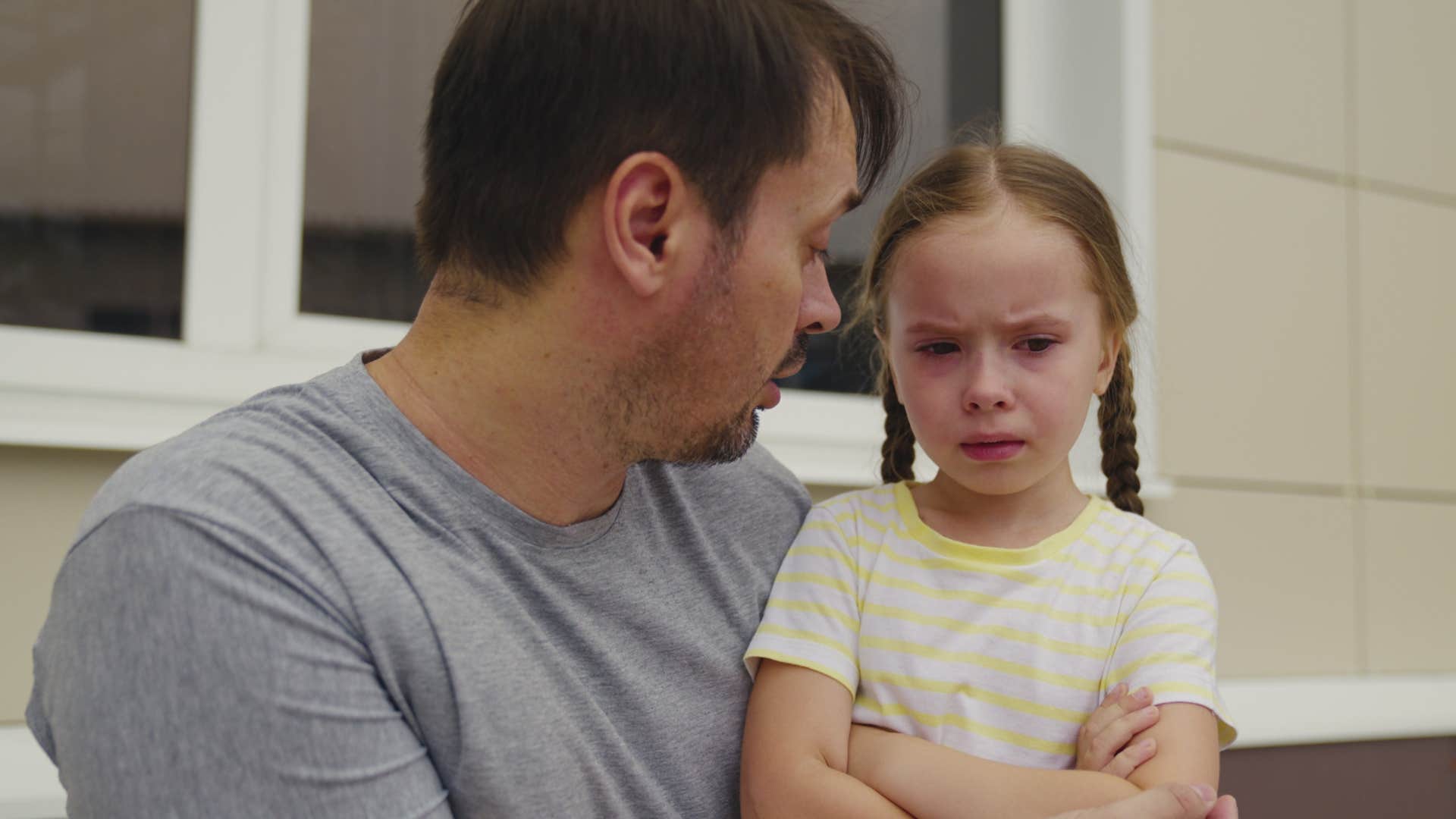
Having parents who take their frustrations out on you and refuse to apologize can leave you feeling like you are the problem. This makes for a tense household where everyone is on edge, unsure when the next big fight will unfold. Instead of advocating for themselves in this moment, some children take all the blame to keep the peace.
This routine sticks with people into adulthood. When voices are raised or conversations turn sour, they might go into defense mode. Instead of speaking up for themselves, they’ll apologize to bring peace to the situation, even if they are the ones who felt slighted.
3. They can’t handle criticism
 Mish.El | Shutterstock
Kids have a difficult time managing their emotions, and it doesn’t help when their parents are unpredictable. This up-and-down relationship makes them feel constantly criticized. Nothing they do is ever right, and even when they're upset about something, it's their fault.
Frequent criticism during childhood can make it hard for people to trust themselves. When someone, say, their boss or partner, brings up something, it can feel like a direct attack. Even if the criticism is constructive, adults whose parents never admitted fault might be transported back to those years at home, when their parents always had something negative to say.
4. They always take the blame
 Photoroyalty | Shutterstock
Growing up, this type of person was constantly blamed for things, even if they didn’t do anything wrong. From how they spoke to their parents to how they played that day, they always felt like a bother. If their parents snapped at them or made them feel upset, they couldn’t speak up without the blame being cast right back on them. As a result, this child may grow up to be an overly agreeable adult who will do anything they can to prevent an argument.
Being blamed at a young age damages our self-esteem. Of course, our parents need to hold us accountable when we act out. However, some parents take it too far, leaving their child feeling like they are a bad kid. As adults, they lack confidence and will take the blame even when they did nothing wrong. It’s a defense mechanism to avoid conflict.
5. They never own up to their own mistakes
 Prostock-studio | Shutterstock
How many times have you needed an apology from someone, but it never came? Resentment grows, and relationships can become permanently damaged. When apologies were rare in childhood, giving them to other people can feel awkward and uncomfortable. The simple truth is kids learn what they see.
Parents who never admitted when they were wrong didn’t model appropriate behavior to their children. This can continue the vicious cycle of refusing to admit your own faults and blaming everyone else instead.
6. They have a hard time trusting others
 SeventyFour | Shutterstock
Parents need to be role models for their children to learn healthy relationships and trust. Trust comes down to vulnerability on both sides. Parents need to own up to their faults, especially if they expect their children to do the same. When children trust their parents, they’ll trust more easily as adults.
If someone’s parents never took responsibility for their actions, how could their kids trust them or anyone else? Often, this type of parent makes excuses for their behavior and breaks their child’s trust without noticing. Children are more observant than we give them credit for, and distrust in childhood only gets worse in adulthood.
7. They struggle to be vulnerable
 PeopleImages | Shutterstock
To create healthy relationships, we have to let our guard down and let people in. Often, the first people you are ever vulnerable with are your parents. Sadly, they may not return the favor by not modeling healthy behavior.
Letting your guard down helps build confidence and improves quality of life. By refusing to open up to others, you’re missing out on genuine connection. This may be intentional for people who grew up in an emotionally volatile home. They never felt comfortable being open with their parents and continue that pattern into their adult relationships.
8. They are overly independent
 Madhourse | Shutterstock
Most of us grew up with parents who were always there for us. We could depend on them, which allowed us to let others in as we got older. If someone’s parents never owned up to their faults and provided less support, those kids might become hyper-independent in adulthood, convinced that the only person they can rely on is themselves.
Hyper-independence is a trauma response. If someone’s parents were emotionally abusive and never owned up to their bad behavior, they may have been afraid to go to them with their problems. Instead, they relied only on themselves and may do so as adults. They may feel like they never truly get close to other people because they’re not willing to rely on them and form that special trust.
Haley Van Horn is a freelance writer with a master’s degree in Humanities living in Los Angeles. Her focus includes entertainment and lifestyle stories.
