
Boomers Believe 11 'Benefits' Of Today's Soft Parenting Are Actually Major Problems
 Estrada Anton | Shutterstock
 There's a big misunderstanding right now between baby boomers and their children's generation about what it means to be a soft parent or practice gentle parenting. As a result, many boomers believe that Gen X and millennial parents are overly permissive, leading to problems for their kids over time.
Despite what boomers may believe, soft parenting isn't the same as permissive parenting, which has been shown to be damaging to kids' well-being. The UC Davis Children’s Hospital describes these "softer" forms of parenting as positive parenting, noting that positive parenting sends “the powerful message: You are loved, you are good, you matter.” Still, boomers and younger generations disagree about how children should be raised in a few key areas.
Boomers believe 11 'benefits' of today's soft parenting are actually major problems
1. Soft parenting teaches kids to recognize their emotions
 Elina Efimova | Shutterstock
Teaching kids to recognize their emotions is a benefit of soft parenting that Boomers think is a major problem. Boomer parents were known for telling their kids to “suck it up” or “just get over it” whenever they expressed big feelings.
Their mentality taught their kids to equate being vulnerable with weakness, and they thought that was helpful. After all, you can't let your emotions rule your entire life. Unfortunately, this type of stoicism often harmed them in the long run. Especially their sons, who have been struggling with mental health worse than ever before.
In contrast, gentle parenting and its derivations teach kids to put words to how they feel, which leads them to be self-aware and emotionally connected adults. Licensed marriage and family therapist April Eldemire references research conducted by psychologist Dr. John Gottman, noting that “emotional awareness and the ability to manage feelings will determine how successful and happy our children are throughout life.”
“Use your child’s negative emotions as an opportunity to connect, heal, and grow,” Eldemire advises. “Communicate empathy and understanding so that your child can begin to understand and piece together their heightened emotional state.”
She touches on the importance of teaching kids to name how they feel, revealing that “once children can appropriately recognize and label their emotions, they’re more apt to regulate themselves without feeling overwhelmed.”
This may be a comfort to boomers, knowing that naming emotions doesn't mean fully indulting them whenever they pop up.
2. It inspires imagination
 Urbanscape | Shutterstock
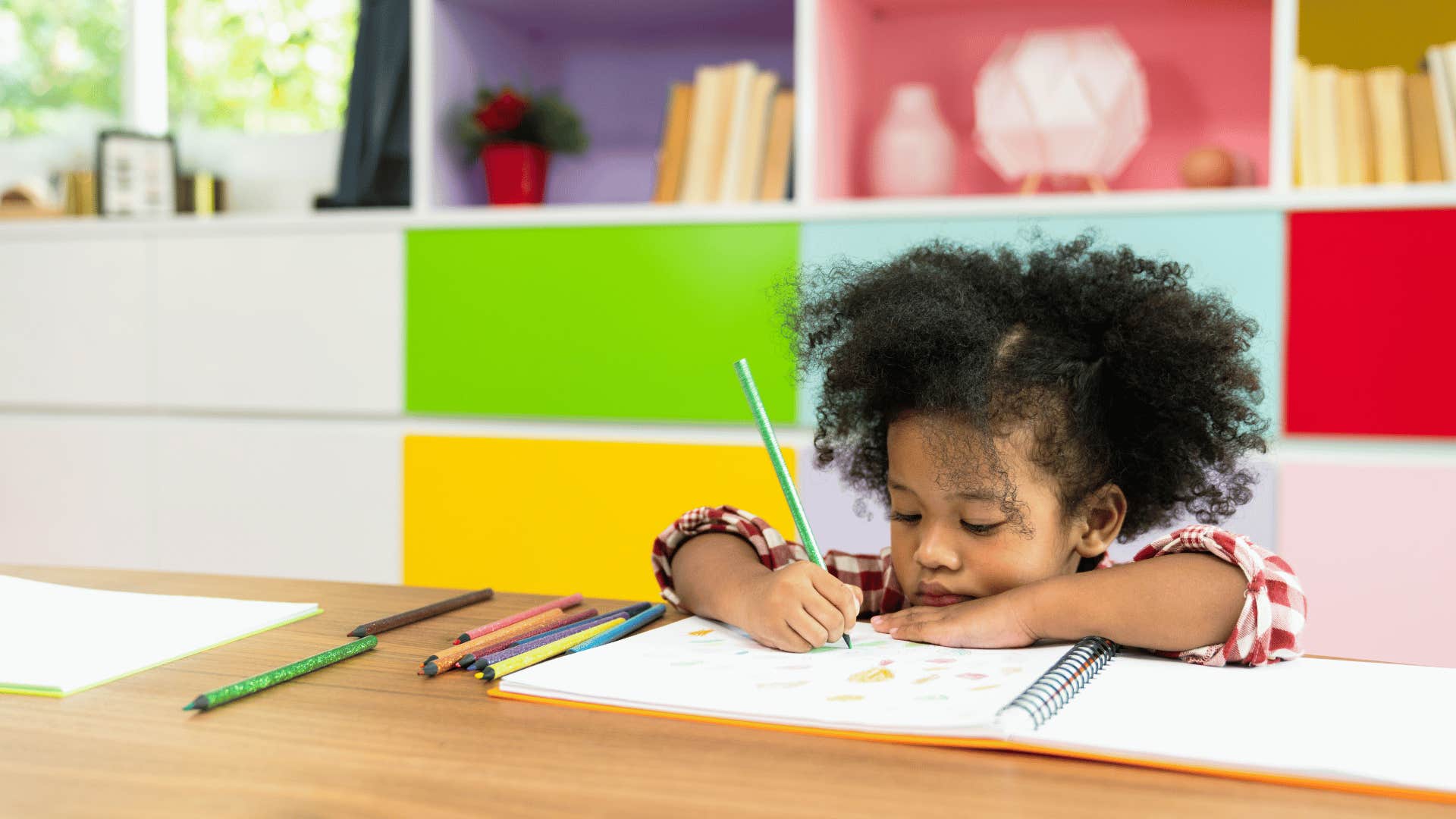
Another benefit of soft parenting that boomers totally disagree with is the way it inspires kids’ imaginations. A major misconception about gentle parenting is that it allows children to do whatever they want, without consequences, which is more indicative of permissive parenting (which is not advised).
Gentle parents set clear expectations with their kids and explain what their boundaries are. They lay set age-appropriate boundaries, offering choices within limits that give kids space to be creative. They listen to their kids’ emotions and concerns, yet ultimately, they’re the ones making the final decisions.
Soft parenting provides the sense of security kids need to explore the world around them. Being raised in a warm, nurturing environment allows kids to cultivate their imaginations without fear of repercussions or judgment.
While boomers may appreciate this result, they often feel the freewheeling nature of this aspect is more detrimental than helpful. After all, the world is constrained and sometimes harsh, and they say kids should be prepared for that.
3. Soft parenting allows kids to feel safe to make mistakes
 Ground Picture | Shutterstock
Soft parenting allows kids to make mistakes, a benefit that boomers often totally disagree with. They insist that kids should be actively discouraged from making mistakes and that embracing kids after they've made a bad choice is too encouraging.
Offering consistent encouragement rather than harsh criticism elevates kids’ confidence, which allows them to thrive, not only survive. Soft parenting creates a stable foundation for kids to become successful adults by letting them test and learn.
The style guides kids with praise and education, standing firmly opposed to the Boomer parent mantra, “Because I said so,” a declaration that echoed across the '70s and '80s.
Feeling safe enough to make mistakes gives kids room to grow into their authentic selves. It boosts their sense of self-confidence and their understanding of their own abilities. Having the confidence to admit they made a mistake gives kids an opportunity to learn what to do differently next time.
Licensed clinical social worker Cheryl Gerson points out that growth mindset is good for everyone. “The difference between a fixed and growth mindset," Gerson explains, "is your tolerance for frustration, mistakes, and surprises.”
“A person with a ‘fixed’ mindset believes ‘I am who I am, and there’s no way I can be different,’” she explains. “A person with a ‘growth’ mindset believes, ‘If I want to (with effort), I can get better at this.’”
Boomers may feel this is all too much coddling, but Gerson disagrees. “After all the hard work, frustration, and dedication, your children will feel joyous to realize they can produce successful results all on their own.”
And what could be better motivation than that?
4. It teaches kids to have compassion
 Chay_Tee | Shutterstock
Boomers don’t necessarily understand that empathy and compassion are much more than soft skills, they’re the basis for healthy emotional development. Empathy helps kids relate better with others, including at work, and helps them thrive in relationships and professionally.
On the other hand, Boomers think too much empathy is a problem. They often cite fabricated "safe spaces" as being a result of Gen Z's delicate nature due to being taught endless lessons on empathy. They believe this simply isn't realistic preparation for adulthood.
However, when parents are attuned to their kids’ emotional landscapes, they demonstrate just how valuable feelings are. And good parents who use soft parenting also teach their kids how to regulate their emotions at the same time.
Author and thought leader Jan L. Bowen shared key lessons that parents and kids can learn together, including how to have compassion.
“Telling your kids to toughen up is heartbreaking, and it doesn't actually make them tough in ways that enhance their lives or keep them safe,” she explains.
She counters the boomer argument about the harshenss of real life by explaining the following:
“We send our children into a complex society we, as adults, haven’t completely mastered navigating.” Bowen continues. “After all, we can’t raise successful, accountable children until we're successful and responsible ourselves, right?”
“We must embrace learning these skills while teaching them,” she reveals. “Help [kids] see how compassion for others is a part of contributing to the community you live in. Make random acts of kindness part of your family culture by weaving random compassionate actions into your daily [routine] whenever possible.”
5. Soft parenting promotes balanced mental health
 Ground Picture | Shutterstock
Another clear benefit of soft parenting that boomers often think causes major problems is the focus on mental health. Many boomers fear all of this focus on mental health encourages kids to think way too much about what's going wrong with them rather than toughening up and getting on with life.
Growing up with boomer parents often meant that mental health got swept under the rug. There was less awareness and advocacy around mental health in the '70s, '80s and '90s, which resulted in the distinctly Gen X and millennial mindset that asking for extra support made you seem weak.
Again, this goes double for Gen X and millennial men, who were not only under this pressure, but also pushed harder to be emotionless as a result of repressive masculinity. The American Institute of Boys and Men reports that boys and men are increasingly lonely, and at higher risk of “deaths of despair”, which are generally preventable. In order to do that, we need to be more aware of mental health risk factors and destigmatize asking for support from professionals.
Boomers might believe that gentle parenting makes kids “soft” and “too sensitive,” but in reality, it gives them the tools they need to be well-adjusted, successful adults.
6. It gives kids a foundation for healthy adult relationships
 Roman Samborskyi | Shutterstock
As much as boomer parents may have been trying to set their kids up for the most success, the boomer tendency to be dismissive of emotions created a dynamic that often damaged their kids’ ability to enter healthy relationships later in life. They likely believed that denying feelings helped them be strong, but it often backfired.
Boomers were often unwilling or unable to handle the emotional wounds their kids brought to them, which can lead to an insecure attachment style in adulthood. In contrast, soft parenting provides the basis kids need for nourishing friendships and romantic partnerships.
Therapist and attachment expert Eli Harwood says that when “growing up in a secure home, you have a suitcase full of security, worthiness, confidence. If you grow up in an insecure home, that suitcase isn’t filled, so you now go out into the world and instead of being able to be like, ‘Where’s my adventure,’ you’re looking for the things you need to go on the adventure.”
“Our attachment relationships pack our suitcases,” she explains further. “Secure attachment relationships give us a solid sense of our worthiness for connection, a clear idea of what secure relating looks and feels like, and an alliance with our bodies and emotions.”
“Insecure attachment experiences leave our relational backpack without all the things we need to feel secure in ourselves and our adult relationships,” Harwood reveals.
She emphasizes that people who were raised without emotionally connected parents can still learn how to have a secure attachment style later in life, as long as they put in the work toward healing and reframing how they operate in relationships.
7. Soft parenting cuts down on tantrums
 fizkes | Shutterstock
Many Boomers believe that today’s parents are so gentle, they foster ongoing behavioral problems. They believe stopping to hear the feelings of a child who is about to meltdown just indulges the behavior, and they're likely not totally wrong!
In reality, soft parenting holds space for kids to move through the full range of their feelings in a safe environment. Do some parents take this too far? Absolutely. When gentle parenting turns into permissive parenting, kids feel insecure due to a lack of boundaries. They test out bad behavior and tantrums, subconsciously, to see if they can gain control of the situation and/or their parents.
Emily Oster, author and CEO of “ParentData,” describes gentle parenting as “a collection of behaviors or approaches that focus on being responsive, taking children’s feelings seriously, setting and holding boundaries, and trying to deal with difficult behaviors with discussion rather than punishment.”
She points out that whatever parenting approach a person takes, the key is showing “consistency around rewards and consequences.” Often, the problems boomers see with soft parenting styles comes from abandoning the structure Oster references.
“Children react well to knowing what to expect,” Oster explains. “Whatever system for behavior modification/discipline you are going to adopt, it should be one that you (and everyone else in the caregiving sphere) can follow through on.”
8. It teaches kids to make independent decisions
 polinaloves | Shutterstock
Within the realm of soft parenting, kids are guided toward making decisions that make the most sense to them, rather than being forced to obey their parents “just because.” When done right, gentle parenting functions as a happy medium between authoritarian parenting and permissive parenting, with parents explaining the options their children have while still preventing them from making choices that will harm others or have other serious consequences.
Somatic therapist Yolanda Renteria shares different ways to help kids develop empathy and patience, which are traits that support making independent decisions. She advises people to “learn parenting tools and strategies,” noting that “the first options for discipline that are likely to come up are the ones we know.”
“Many times our frustration with kids stems from not knowing what to do, other than the things we were exposed to growing up,” Renteria explains. “Work on understanding authoritative parenting and challenge this narrative.”
In contrast, boomers tend to believe it's important for kids to follow parental instructions, and let parents make most of the decisions, so that they don't get overwhelmed by too much control before it's developmentally appropriate. This argument makes sense, which is why experts like Harwood, Oster and Renteria are so clear about not letting gentle parenting slip into permissive style.
9. It helps them learn to be effective communicators
 fast-stock | Shutterstock
Teaching kids to be in touch with their emotions is a key part to soft parenting, paving the way for emotional self-regulation, as is learning how to communicate them. By learning healthy coping mechanisms, kids figure out how to engage in balanced dialogue even in the midst of heightened tension. Instead of shouting or shutting down, they stay open-minded and vulnerable.
Psychologist Dr. Barbara Becker Holstein advises that there are ways parents can build conversational trust with their kids to help them open up and share their feelings and experiences. She touches on practical aspects of communication, recommending that parents take time alone to ask their kids important questions, instead of asking them to spill on sensitive subjects out of thin air.
Dr. Becker Holstein says parents can get their kids to open up by sharing information about themselves first. “Share your deepest feelings, fears and even secrets from growing up during appropriate moments in the conversation as you're asking questions,” she suggests. “Your kids need to know that you are human and you also made mistakes during your adolescence. We want our kids to see us as perfect vessels, but the truth is that you were a kid once and you've had your share of failures and successes.”
“Keeping it real with your kids will make you more relatable and attainable, helping them feel not loved, but heard and understood as well,” Dr. Becker Holstein concludes.
10. Soft parenting helps kids build emotional resilience
 Yuganov Konstantin | Shutterstock
Boomer parents and grandparents generally had a laissez-faire attitude toward emotional intelligence when their kids were young. “You turned out fine” is a common refrain from Boomer parents, as if that means they it all right. Still, their adult kids are adopting a more mindful approach to childrearing, in direct contrast to how they were brought up.
Annie Pezalla, a psychology professor from Macalester College, and professor Alice Davidson from Rollins College, collected data from more than 100 American parents with at least one child between the ages of 2 and 7 years old, putting together the first systemic investigation of what it means to be a gentle parent.
According to “self-identifying gentle parents,” the style “focuses on three main things: parents regulating their own emotions, like staying calm at all times; helping their kids identify and manage their emotions; and a strong emphasis on both physical and emotional affection.”
Pezalla describes gentle parenting as “a backlash against older, traditional hierarchical parenting that was more discipline-heavy… The gentle parenting movement is a 180-degree pivot away from that, with parents wanting a more democratic style — one that puts the parent on an even keel with the child. That’s a huge shift.”
“Parents have said, ‘I don’t want to do that [how I was raised] anymore—I want to be better,’” she explains.
Boomer parents weren't wrong about one thing: kids do need to learn emotional regulation, and that skill is key when it comes to resilience. Their kids simply disagree on how to teach this.
11. Soft parenting fosters a harmonious family life
 fizkes | Shutterstock
Soft parenting is based on respect, trust, and mutual understanding, all of which create a strong connection between parents and kids. Having close bonds can reduce familial stress, which allows for a calmer, happier household.
Boomers might counter this by saying that real life is not always calm and happy, and kids need to learn that life can be harsh. They want to make sure their kids know they have the authority, even if that means some yelling and fights at times.
When done correctly, soft parenting isn’t all rainbows and butterflies, as Pezalla points out. She touches on the internal pressures soft parenting can bring, saying, “These are A+ parents doing so much earnest work to try to do right by their kids, but we’re concerned they are burning themselves out.”
“Gentle parenting is an exorbitant amount of work, at least according to what they’re telling us,” she continues.
Pezalla had wise words for people trying out gentle parenting, noting that “parents often underestimate their kids’ resilience.”
“Go easy on yourself,” she says, advice that absolutely extends to all parents, no matter what their style may be.
Alexandra Blogier, MFA, is a staff writer who covers psychology, social issues, relationships, self-help topics, and human interest stories.
