
5 Things People Who Don’t Need Constant Company To Feel Okay Do Without Realizing It
 LOGAN WEAVER | Unsplash
 Do you get overwhelmed by the fear of being alone? A lot of people are perfectly capable of spending time by themselves, and those who don't need constant company to feel okay usually do a few specific things without realizing it.
If you struggle with a fear of being alone, you can't even imagine spending time by yourself without a pending panic attack. If the idea of being alone doesn't just make you uncomfortable but fills you with deep-seated terror, you may have a condition called "monophobia." There is no single cause, but genetics may play a factor, as anxiety tends to run in families. A traumatic experience during childhood, like being left alone when something scary happened, can also plant the seeds. And growing up with relatives who manage anxiety in fearful ways can teach children to feel unsafe and handle their own worries similarly.
People with monophobia feel they need others around in order to feel safe, and their response goes beyond simple discomfort. In order to qualify as a phobia, the anxiety needs to be excessive, unreasonable, and intense, with symptoms like shaking, sweating, heart palpitations, dizziness, and nausea. The anxious response is immediate, and the person may have an overwhelming desire to run away.
But the solution isn't to run from solitude. Realistically, there will be times in your life when you face being alone. Marriage isn't a guarantee of constant companionship, either. According to the APA, 40 to 50 percent of marriages end in divorce, with the rate even higher for subsequent marriages. And worry about being alone is realistic for aging women, as the average American man will live to age 76, while the average American woman will live to age 81.
Here are 5 things people who don’t need constant company to feel okay do without realizing it:
1. They reframe what being alone means to them
 Vlada Karpovich | Pexels
Don’t assume that being alone is the same as loneliness. Individuals can spend time alone and feel quite content. Embracing solitude is like finding refuge from a noisy storm. Moments of quiet engage your parasympathetic nervous system, which has a calming influence. Ask your introverted friends!
Even the words you use to describe your time alone can shift how you feel about it. For example, terms like "me-time" lead to more positive solo experiences than words like "isolation." A University of Michigan study found that people who learned to view solitude as beneficial felt calmer and more content when alone.
2. They recognize what brings them joy
Think back to times in your childhood when you engaged in simple pleasures. Maybe that's shooting basketball hoops or kicking a soccer ball, baking cupcakes with a beloved family member, or going to a movie theater to catch the latest rom-com. Recreate these same memories by going on a date with yourself, bringing out your playful side.
You may learn that your best company is yourself. Life coach Lisa Petsinis explains, even “little things such as watching the sunrise in the morning or feeling sunlight on your face can bring great joy,” which is why time alone often helps them rediscover what truly makes them happy.
3. They provide kindness to someone in need
 Sanaa Ali | Pexels
Perhaps an older neighbor would welcome you picking up a few grocery items for them, or shoveling their walkway. A close friend may feel delighted in receiving a text or call in which you let them know how much you miss them. Children whose families can’t afford a computer or tablet could experience a boost in their education if you donate money or a used computer to a local school or charity.
The goodwill you generate can forge new relationships and help you feel more connected to others and less alone in life. Lead researcher at Brigham Young University, Dr. Julianne Holt-Lunstad confirmed that doing just one act of kindness a week helped reduce loneliness and social isolation.
4. They find an activity that invites them to go within
It's not as scary as you think! For example, yoga can teach you how to tolerate being alone, as it involves engaging in poses that require you to be in the present moment, not preoccupied with some dreaded scenario. You can feel a sense of pride in learning what your body can do, while calming your busy "monkey mind." At the end of yoga practice, students are invited to relax in savasana, where you can befriend the self deep within you.
Activities like yoga are designed to build this skill by redirecting your attention inward toward breath and physical sensation instead of outward toward your environment. Psychiatrist Dr. Bessel van der Kolk wrote in The Body Keeps the Score, "As I often tell my students, the two most important phrases in therapy, as in yoga, are 'Notice that' and 'What happens next?' Once you start approaching your body with curiosity rather than with fear, everything shifts."
5. They channel anxious thoughts through creative activities
 Vesnaandjic | Getty Images Signature
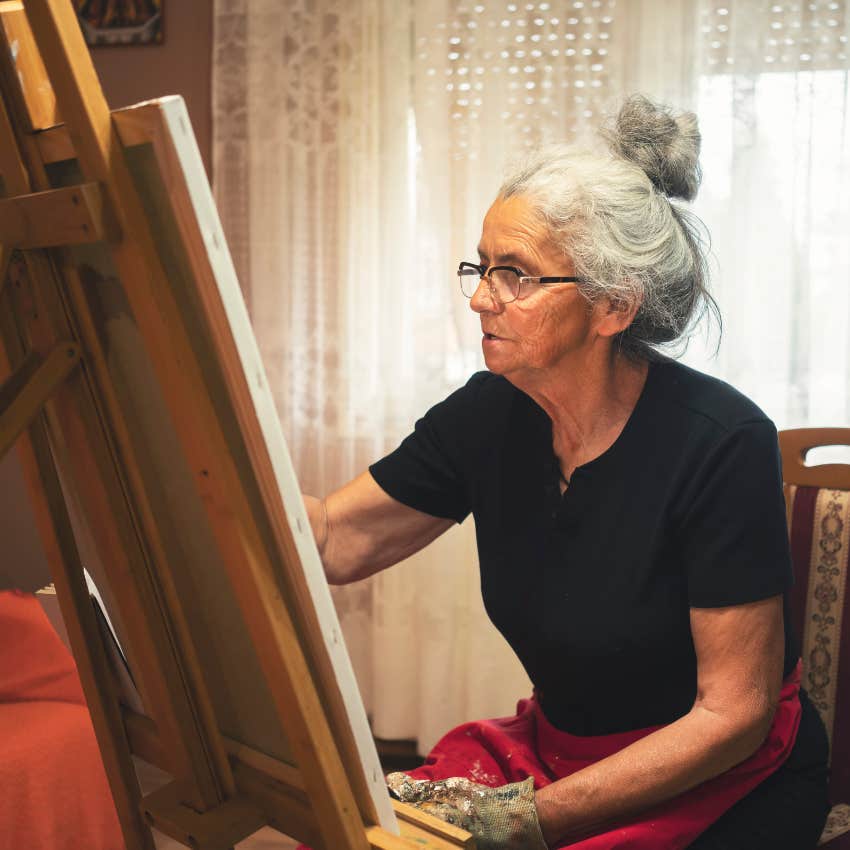
Draw, paint, or journal. Each of these artistic acts shifts the mind from fear to focus. Natalie Goldberg, author of Writing Down the Bones, encourages individuals to put pen to paper and write down whatever comes up, without editing or judgment.
Write out your worries and the outcomes that scare you, noting ways you might cope. Leave your feelings on paper. Then read whatever you wrote aloud to yourself, which can give you a new perspective. This writing exercise may have an unburdening effect and create space for you to feel centered and encouraged.
Seek professional help for monophobia. Individuals whose lives are severely limited by monophobia would benefit from a consultation with a counselor who specializes in cognitive behavioral counseling (CBT). Using CBT, fears are addressed and a specific plan for changing thinking and behaviors is developed. Often, cognitive behavior therapists use exposure therapy, where you face your anxiety of being alone in small steps.
Joining a support group dealing with monophobia can also be helpful. Being alone without companionship can result in feeling sad, afraid, and perhaps lonely. You don’t have to be imprisoned in this feeling state and limit the precious life you’ve been given. Instead, you can view being alone as an opportunity to befriend yourself and learn to embrace periods of solitude.
Dr. Beth O’Brien is a licensed psychologist who specializes in couples counseling and has helped countless couples create healthy, secure marriages.
