
8 Psychological Tricks That Can Instantly Improve Your Memory, According To A 4-Time ‘Jeopardy!’ Contestant
 Zsolt Nyulaszi | Canva
 Getting older changes our bodies, and our sense of self. Aging can also affect our brain function, especially how our memories work. We might find it harder to recall certain details or remember exactly where we put our keys. Luckily, humans are malleable creatures, and we can teach ourselves techniques to make our minds stronger.
Monica Thieu is a four-time "Jeopardy!" contestant who won the game’s 2012 college championship, so you know her mind is sharp, and her recall is fierce. She’s also a postdoctoral fellow at Emory University, researching how we process and conceptualize different types of emotional experiences. "With practice, absolutely everyone can make their memory stronger," Thieu said.
Here are eight psychological tricks that can instantly improve your memory, according to Jeopardy contestant:
Psychological trick #1: Use contextual clues to guide your thinking
 Clay Banks / Unsplash+
Focus on specific details, like the color of the houses nearby or which stores your car is close to. Adding contextual information to your memory will help you keep track of details you might otherwise forget. Thieu explains that paying attention is “the first necessary ingredient in creating a memory.”
One practice that helps enhance memory is paying close attention to the things you want to remember. Neuroscientist Lisa Genova agrees, telling NPR, what we often think of as memory problems are actually attention problems.
"We need that input. Otherwise, that memory doesn’t get made, even if your eyes see it,” she explained. In order to remember important details, like what street you parked on, Genova suggests taking it slow and noticing what’s around you.
Dr. Majid Fotuhi, a memory and aging expert at Johns Hopkins University with over three decades of clinical research experience, says your brain is like a muscle, and the more you use it with intention, the stronger it gets. Giving something your full, deliberate attention is the first step to actually forming a memory that sticks.
Psychological trick #2: Give everything a home
 Samsung Memory / Unsplash
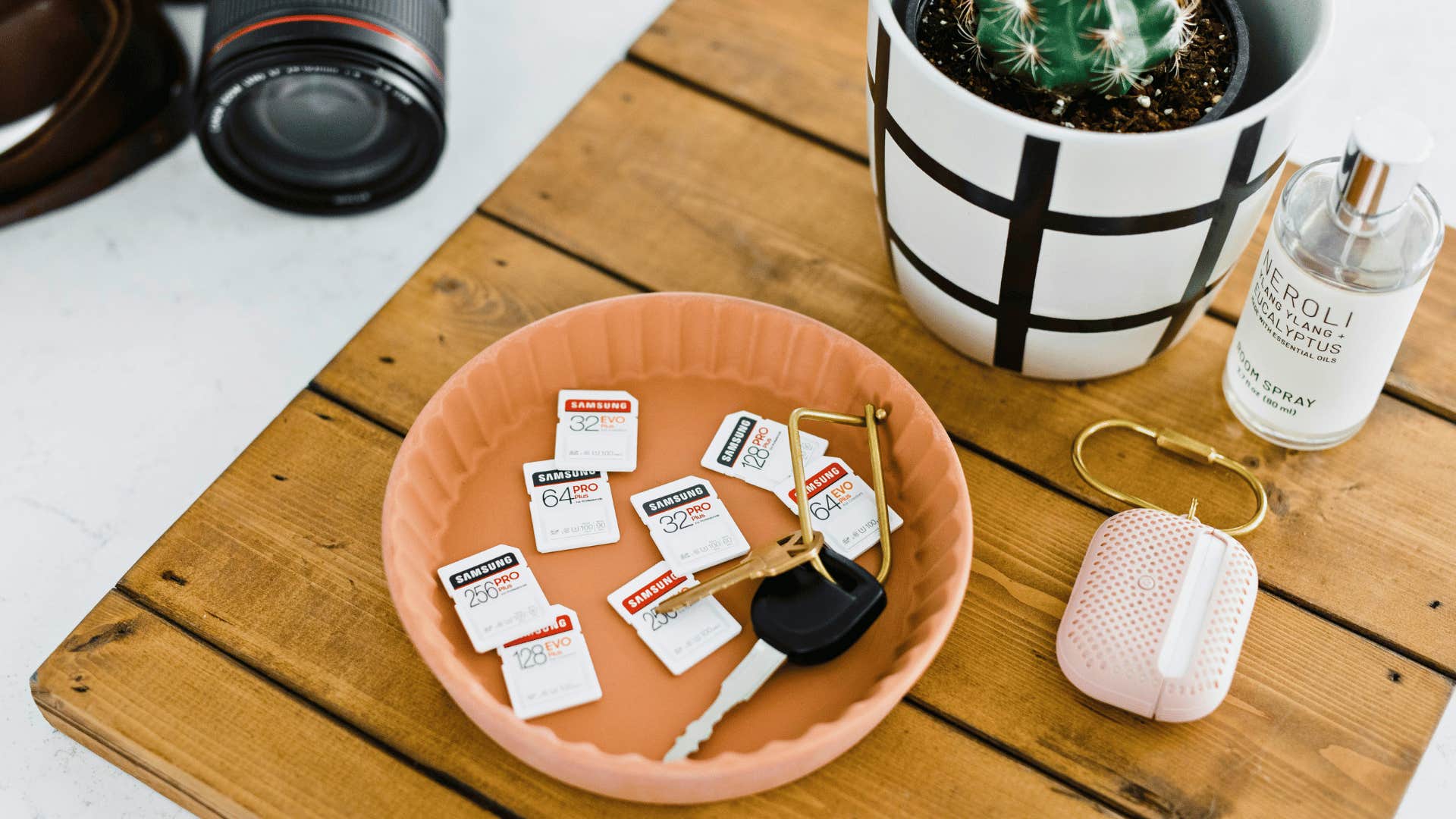
If you’re someone who can never find your keys, your wallet, your reading glasses, or really anything small yet essential, there’s a simple solution to keeping track of your things. Pick a designated place for each item you lose track of and keep it there when you’re not using it.
By repeatedly putting your keys in a bowl next to your front door, you’re making it a rule that that’s where your keys live, and you can expend less energy tearing your house apart looking for them, because you know you left them in their special spot.
When you repeat a behavior enough times, the brain automates it, freeing up cognitive energy for things that actually require focus. Harvard Medical School's brain health resources specifically point to routines and habit-building as one of the simplest ways to reduce mental load and protect memory as you age.
Psychological trick #3: Build a world full of details
 Elijah Crouch / Unsplash
Thieu shared one of her tried-and-true tricks for remembering complex information: Making the memory as rich and interesting as possible. To remember difficult topics or subjects you don’t naturally connect to, Thieu advises creating an immersive experience to help you hold onto the memory.
Let’s say you’re diving deep into the Roman Empire, but it’s not really your thing. You can make learning a more exciting and textured experience by listening to music and watching shows about that era.
You can focus on the aspects of the subject that do interest you: If you’re an avid chef, research what kind of food people ate in ancient Rome, delving into something you’re passionate about. Genova explained why this technique works so well: Our brains remember information that’s "meaningful, emotional, surprising, or new.”
Dr. Rachel Barr, a neuroscientist, dove deeper into what makes us remember certain things over others. “For your brain to consider an event or piece of information important enough to shuffle up the chain and consolidate it as a memory, it would have to cover one or more of these four bases,” Dr. Barr said.
“Unusual or unfamiliar things tend to make the cut,” she said, noting that this makes evolutionary sense because “We would have had to pay attention to new sources of food or unfamiliar predators.”
She explained that emotionality plays a big role in what we remember, like our first kiss, saying, “The brain is designed to store emotionally loaded information because it’s usually important for our survival.”
Repetition is another way our brains hold onto information, as is association, which Dr. Barr described as “having kind of tent hooks in your brain that you can attach new information to.” By tailoring memories to your specific interests, you won’t forget them anytime soon.
The brain is wired to hold onto experiences that feel emotionally meaningful or personally relevant, and weaker on facts that feel abstract or disconnected from your life. 2023 research confirmed that memory encoding is stronger when information is tied to emotionally loaded or personally significant context.
Psychological trick #4: Use all five of your senses
 Giulia Squillace / Unsplash+
Our brains remember more than just what we see in front of us. We remember how a room smelled, how a meal tasted, what songs we listened to driving home for the holidays, and how a certain fabric felt. Genova explained that when brains create memories, they tie together every sense-based aspect of that memory, a process that psychologists call “context-dependent memory.”
Dr. Fotuhi has emphasized that the brain stores memories across multiple neural systems simultaneously, which is why engaging more than just your vision during an experience makes that memory far more durable. "The more you use your brain," he says, "the stronger it gets," and sensory richness is one of the most natural ways to put that principle into practice.
Psychological trick #5: Chunk your information
 Jakob Żerdzicki / Unsplash
If you’re trying to remember something like a code, a password, or a phone number, break up the sequence into smaller chunks, which helps your brain recall the numbers faster.
Chunking is a way to organize longer pieces of information in a way that makes them easier to remember. The brain can only hold a limited number of individual items in working memory at once, and grouping pieces into meaningful units effectively tricks the system into handling more. Psychologist George Miller's foundational memory research, and the decades of studies that followed, consistently confirmed that breaking sequences into smaller chunks significantly improves recall.
Psychological trick #6: Create a mind palace
 Getty Images / Unsplash+
Making a mind palace is a way to remember new information by mapping it into other memories you already hold. A 2025 study in the British Journal of Psychology found that the method of loci — a spatial mnemonic device that boosts memory by anchoring information to familiar locations — showed a positive effect on immediate serial recall, with benefits appearing even in people who had never used the technique before.
Training your brain to map information onto familiar physical spaces taps directly into the brain's spatial memory systems, which are among its most powerful. It’s essentially creating a landscape or a story based on aspects of your life that hold meaning, and inserting whatever you’re trying to teach yourself into that space.
Psychological trick #7: Use flashcards
 UX Indonesia / Unsplash
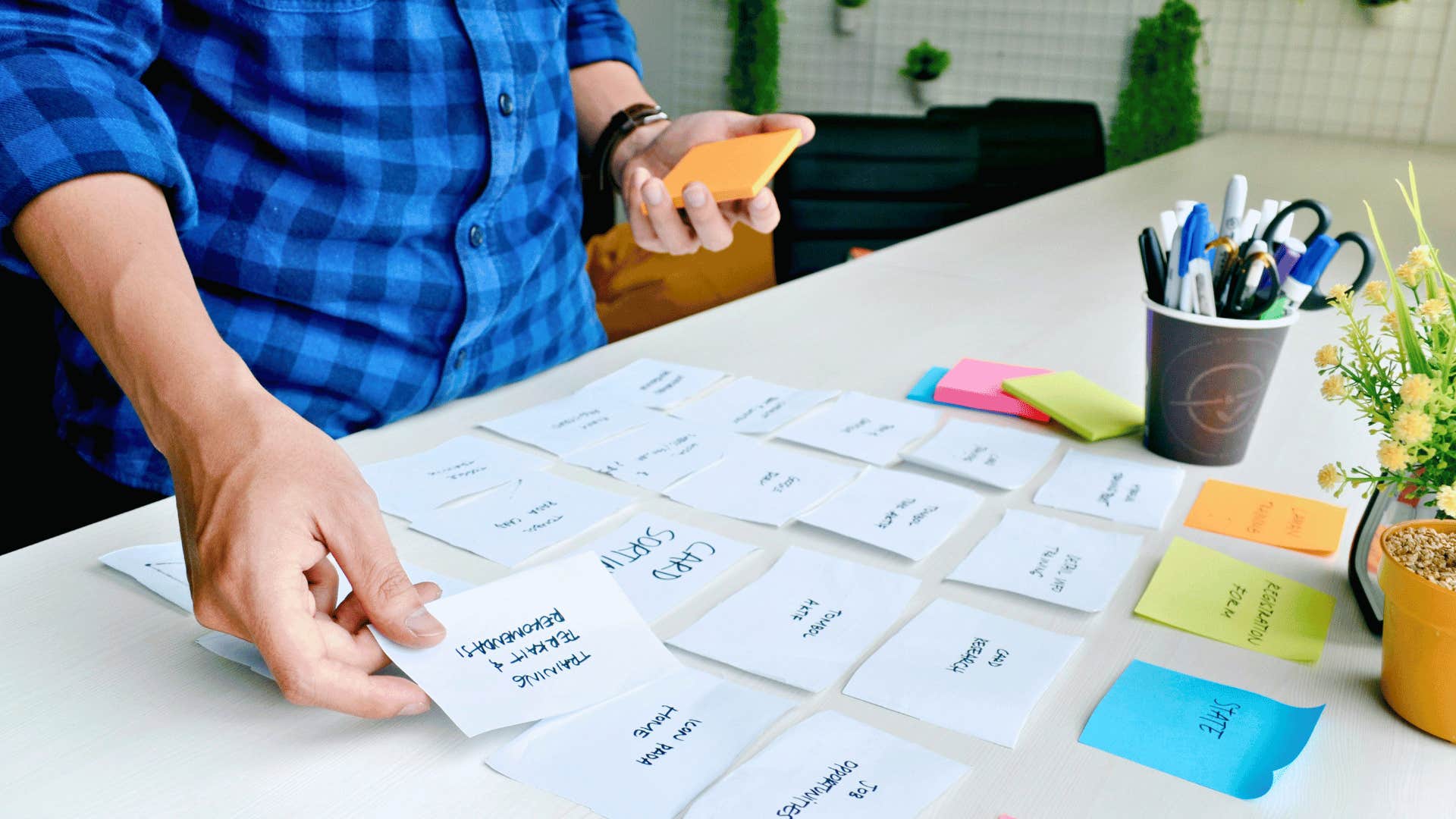
A tried and true method of remembering a lot of information at once is using flashcards. While this technique might seem like reverting to elementary school, Thieu noted that the process really works. “Some of the best trivia experts I know do a lot of flash-carding," she said. The act of writing down facts and looking at them over and over helps solidify the information in your brain.
A concept called retrieval practice also shows that actively recalling information instead of passively re-reading it strengthens how well it sticks. Every time you work through a flashcard and pull an answer from memory, you are reinforcing the neural pathway that stores it, which is something repeated exposure alone simply can't do.
Psychological trick #8: Shift away from perfection-driven thinking
 Adam Winger / Unsplash
No one has a perfect memory all the time, especially in a world where we move at such a fast pace. Chronic stress has a measurable negative effect on the brain, including the hippocampus, the region most closely tied to memory formation, which literally shrinks under sustained cortisol exposure.
Neuroscience research on stress and cognition makes clear that going easier on yourself when your memory slips is good for your brain. So, go easy on yourself when you forget where you put your keys for the third time in one day, and remember that imperfection can be a gift, allowing us to accept ourselves for who we are.
Alexandra Blogier is a writer on YourTango's news and entertainment team. She covers social issues, pop culture, and all things to do with the entertainment industry.
