
People Who Are Mentally & Emotionally Detached Usually Say 9 Phrases In Casual Conversation
 CarlosBarquero | Shutterstock
 Emotional detachment is a common symptom of narcissism in people who truly lack empathy for others. They have a somewhat intentional lack of care and consideration, which makes it easy to disconnect from emotional experiences with others in order to justify their misbehavior.
But there are also plenty of people who are mentally and emotionally detached because they're dealing with mental illness or trauma. They feel disconnected, but it's not by choice, and it tends to come through in the phrases they use in conversations with others.
When people are mentally and emotionally detached, they say these phrases in conversation
1. 'I don't really care'
 wavebreakmedia | Shutterstock
People-pleasers tend to suppress their own needs in favor of what everyone else wants. But for someone who's truly detached from their own minds and feelings, they may say something like "I don't really care" because they don't even know what they want.
It's much easier for them to give everyone else a chance to lead the pack because tapping into their feelings is too difficult, for one reason or another.
2. 'It is what it is'
 Krakenimages.com | Shutterstock
Someone who takes control of the direction of their own life rarely uses passive phrases like "it is what it is." Unfortunately, someone who's truly disconnected from who they are and what they want finds it easier to assume that life is happening to them, instead of through them.
Whether it's a ploy to get out of taking accountability or a way to disengage from emotions that stem from having to own up to their behavior, this kind of casual phrase is actually a coping mechanism.
3. 'Whatever happens, happens'
 Bits And Splits | Shutterstock
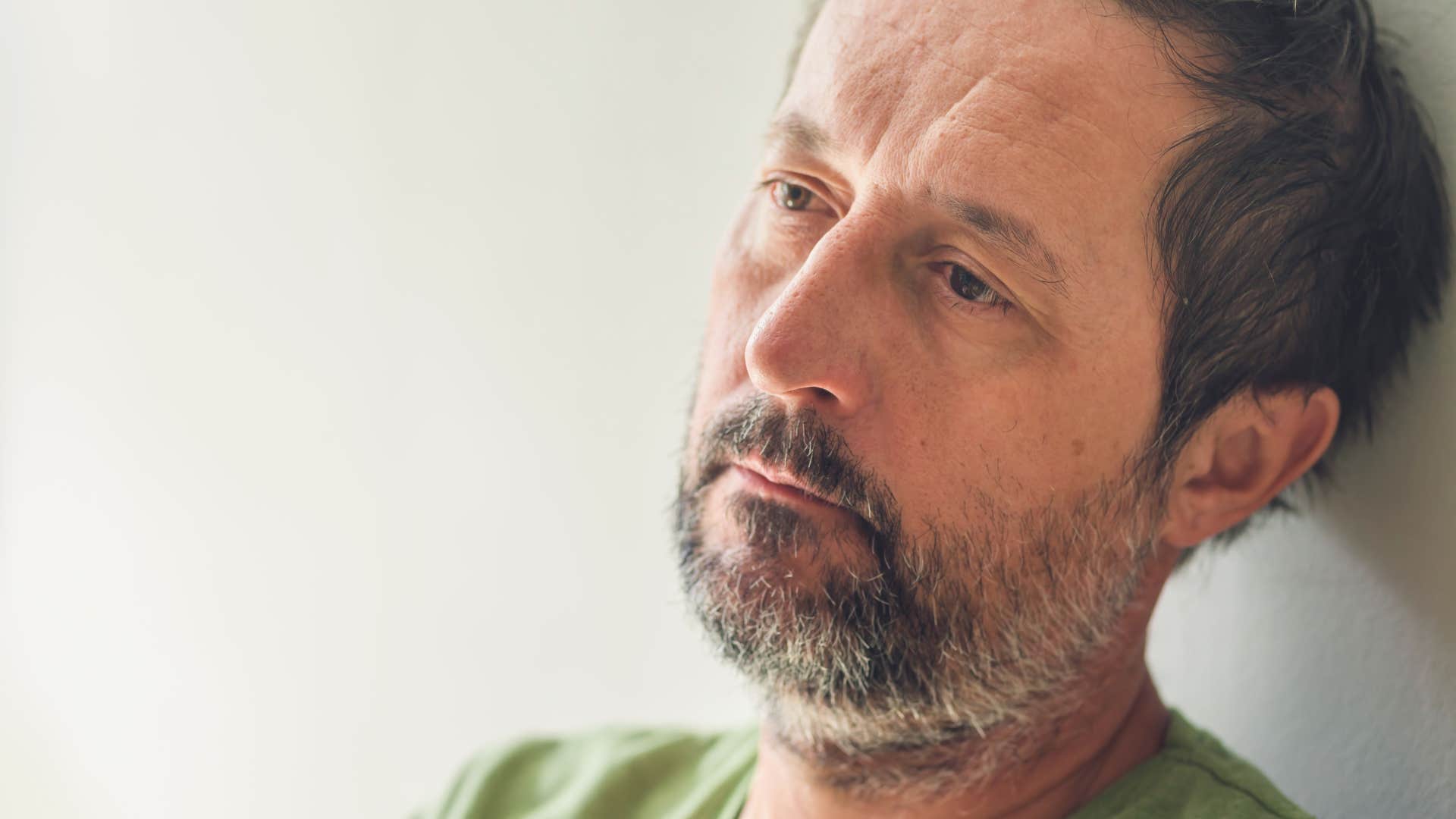
Another passive approach to life, "whatever happens, happens" is how disconnected and detached people navigate through their daily routine. Instead of taking control of their lives and changing how they want to live for the better, they rely on other people to take control. They're completely driven by everyone else, keeping them stuck in this cycle of passiveness.
While it might be comfortable to cope with chronic stress or mental health issues with this mentality, living passively ruins your chance of having a truly meaningful, rewarding life.
4. 'I don't expect much'
 MAYA LAB | Shutterstock
The victim mentality is comfortable for someone who's disconnected from their feelings and minds. It's easier to soak up the pity of other people than to lean into the challenge of taking control.
They cope with not living the life they want or not feeling secure in themselves by expecting nothing. But as much as they tell themselves that they're fine without dreams and boundaries, they're self-sabotaging silently over time by using phrases like "I don't expect much."
5. 'I'm used to being alone'
 Prostock-studio | Shutterstock
For mentally and emotionally detached people, alone time isn't a healthy habit. They're self-isolating, usually so they don't have to confront a lack of care or consideration around others in social situations.
They'll find any excuse to cancel plans or spend time alone at home, because it's comfortable and easy. In the long run, unfortunately, they're setting themselves up for a poor social network and chronic loneliness.
6. 'I'm just tired'
 Jose Calsina | Shutterstock
The people who truly care about their friends and family immediately notice when they seem disconnected. Whether it's their body language or never responding to texts, it's obvious when their loved ones are struggling.
Even in the face of support, detached people find an excuse. The more they can justify living passively and not caring about anything, the more they can avoid the inner turmoil and complex emotions they're suppressing inside. They're always "tired" or "had a long week," and never really let anyone in emotionally.
7. 'I don't need anybody'
 Marian Fil | Shutterstock
When you're not interested in working through your own issues or acknowledging your own emotions, it's easier to be alone. You can run from your feelings and distract yourself with all kinds of unhealthy vices, often without having to explain or justify yourself to anyone.
Even people with great friends and social networks may experience this when they're really struggling with stress or their mental health. They have people willing to help and support them, but at the end of the day, it's their responsibility to practice self-awareness and build healthy coping mechanisms that work in their favor.
8. 'I'm not an emotional person'
 Gorgev | Shutterstock
Everyone is an emotional person, for the most part. There are just some people who refuse to be vulnerable or who don't have the tools to acknowledge their feelings without completely breaking down. Detached people have turned their back on their emotions for a reason, whether it's to cope with trauma or seek comfort amid chaos.
They might tell others that they're "not emotional people" to craft a facade where they're not bothered to be vulnerable. But at their core, they're turning their backs on both their true feelings and their inner selves.
9. 'I'm just really busy'
 GaudiLab | Shutterstock
This is yet another excuse that someone who can't connect with their emotions or other people uses to justify their detachment. Their busyness might be the root cause of their struggles, but there's also a chance it's a misguided coping mechanism for avoiding their feelings.
The more work you put on your plate and things you say "yes" to, the less time you have to confront your feelings and mind in stillness.
Zayda Slabbekoorn is a senior editorial strategist with a bachelor's degree in social relations & policy and gender studies who focuses on psychology, relationships, self-help, and human interest stories.
