
The ‘Old Person Shuffle’ Isn’t Normal Aging — And Doctors Say It Could Signal A Hidden Health Risk
 RealPeopleGroup | Canva
 If you ask a young person to act out their impression of an “old” person, certain stereotypes emerge. That’s exactly what AARP did in a 2016 social experiment — they asked millennials to show them what “old” looked like.
They then introduced them to real “old” people to show how aging is not a decline, but another period of growth. Ageism aside, when asked to imitate how an old person might walk, the millennials hunched over, some mimicking the use of a cane as they shuffled across the floor.
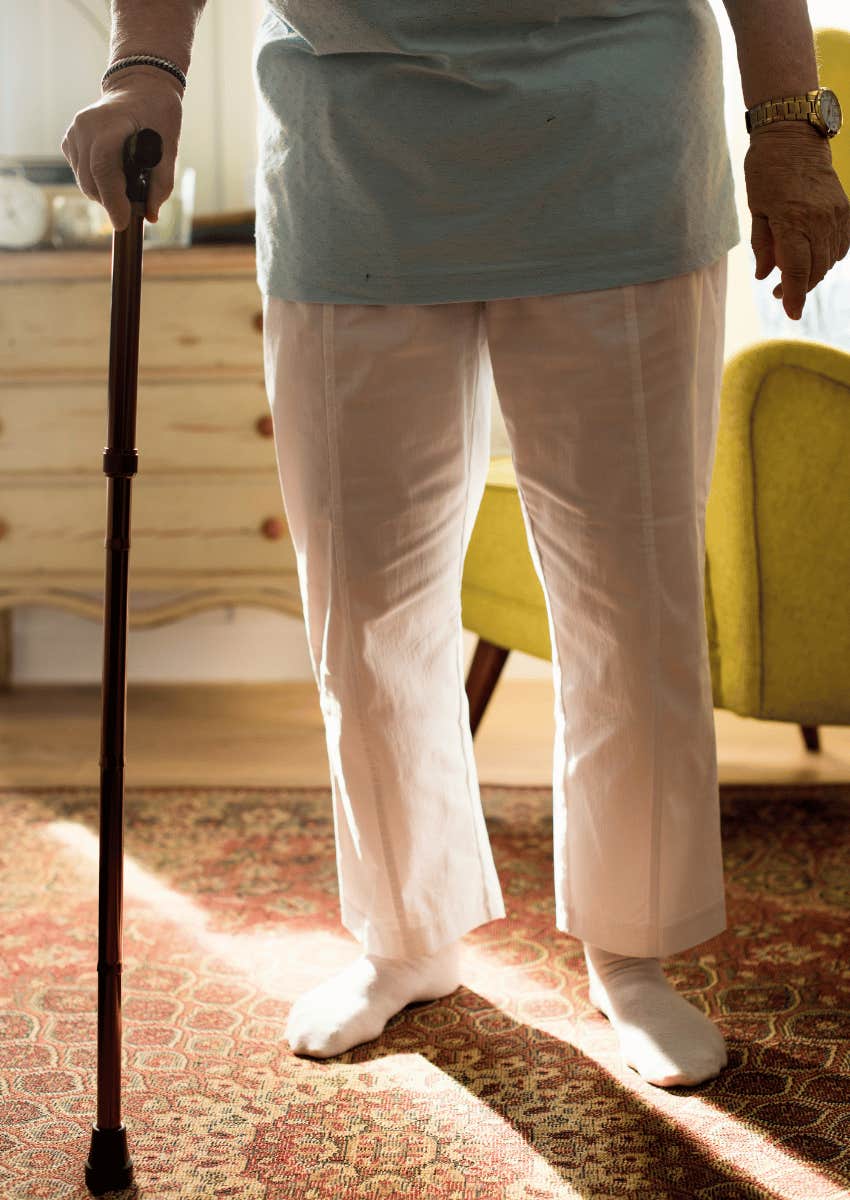
A shuffling gait is defined as walking without lifting the feet fully off the ground and using shorter steps. But it’s not a personality trait or quirk that simply happens as a natural and harmless part of aging.
The old person shuffle isn't normal and can be a sign of an underlying physical, neurological, or environmental issue
 Curated Lifestyle / Unsplash+
Research shows that one of the most consistent gait changes with age is reduced stride length. Walking speed declines, steps become shorter, and they may also widen to increase stability.
In general, the body tries to reduce the risk of losing balance and falling with these changes. The problem? Shorter steps and less foot clearance turn into a shuffle.
The bigger problem? This shuffling step can lead to falls and even fatal injuries. According to the CDC, one in four adults 65 and older reports falling each year. In 2023, over 41,000 people died as a result of preventable falls, and over 3.5 million were treated in emergency departments due to fall-related injuries. Hip fractures and traumatic brain injuries from falls are common.
Area rugs, door thresholds, or even slightly uneven surfaces can catch the tip of a shoe and cause a fall. And a person shuffling across a floor is more unbalanced than someone with an average walking stance, which increases the risk. We have several area rugs in our house, and more than once I’ve tripped on an uplifted corner (we’ve since tacked it down). So it’s easy to do even when walking normally, let alone dragging your feet.
Why does the shuffle start?
A shuffling walk is a symptom, not a sign of aging. Here are the main culprits behind it:
- Muscle loss (sarcopenia): As we age, our bodies naturally lose muscle mass. When the hip flexors, quadriceps, and calf muscles weaken, each step takes more effort. This results in a dragging or sliding motion instead of a normal heel-to-toe gait.
- Painful or stiff joints may also alter how someone walks. Arthritis not only causes pain but also reduces the range of motion, which makes it physically difficult to walk normally. As someone with knee arthritis, when it flares up, I tend to limp, which changes my gait.
- Poor posture and forward leaning in a hunch shift the center of gravity, which increases fall risk by impairing balance. Neurological conditions such as stroke, Parkinson’s disease, and Alzheimer’s disease can affect coordination and muscle control, which alters gait patterns.
- Medications such as blood pressure drugs, sleep aids, pain relievers, and even some antidepressants can contribute to gait changes as well.
- And, of course, unsupportive shoes or loose slippers can cause an unnatural stride and lead to a fall.
A friend of mine once fell down his basement stairs while carrying a laundry basket because his flip-flops got caught on the step and broke his leg. Unbelievably, not long after he healed, he did the same thing and broke his other leg. He wasn’t yet 50, so age isn’t always the issue.
High heels or wedges, flip-flops or backless sandals, floppy slippers, and shoes with slick or worn-out soles are most likely to send you on a trip you didn’t plan. Go for a solid walking shoe or other closed-in shoe for solid support.
Exercises to squash the shuffle
 A. C. / Unsplash+
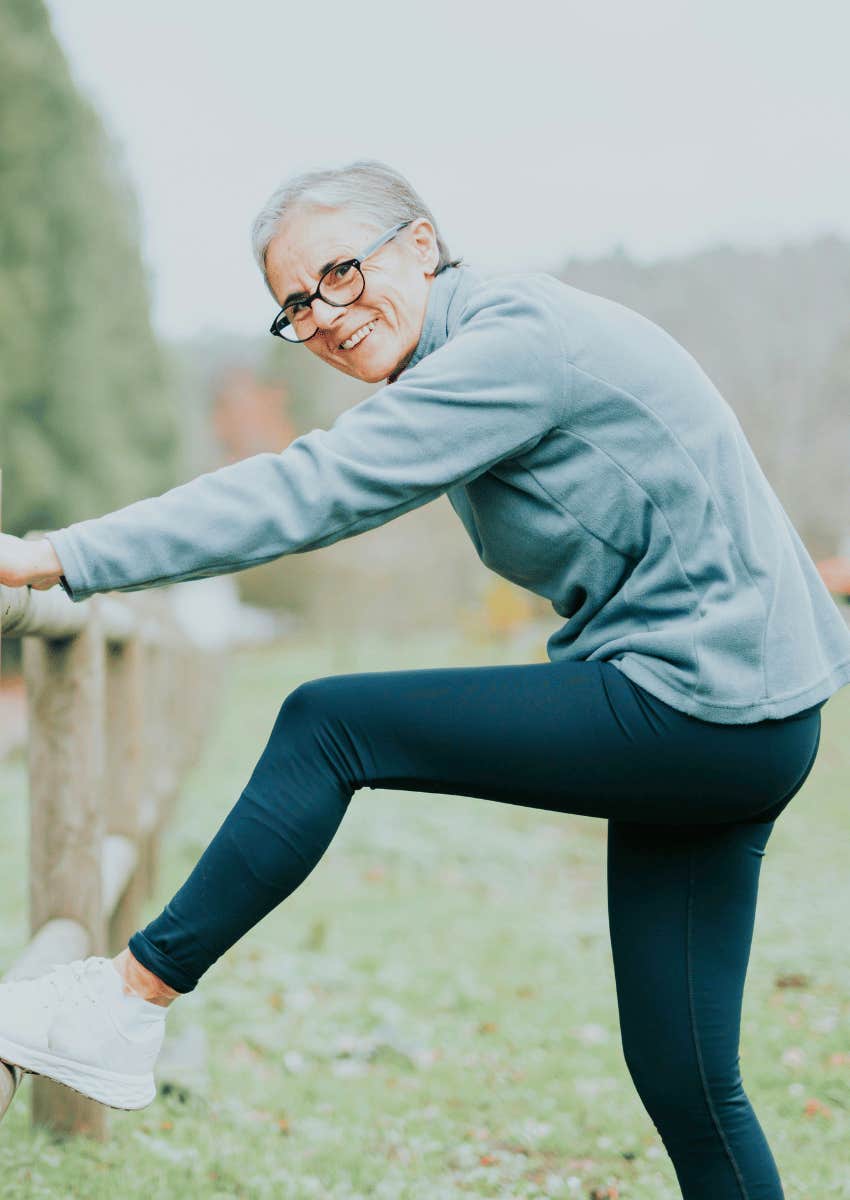
The good news: simple exercises you can do at home can help prevent the shuffle. I’ve mentioned these in other stories because they support everyday function as well as keep leg muscles strong enough to avoid a dragging gait. These include:
- Seated marching: While sitting in a sturdy chair, lift one knee toward your chest, then place your foot down. This builds hip flexor and core strength.
- High knee marching (standing): High knee marching involves lifting the knees toward the chest with each step. This improves hip flexor strength and mobility, which are important for achieving a proper gait and lifting the feet effectively during walking.
- Heel-toe walking: Walk next to a wall for support. Put your right foot down, then place the left in front of it so the heel of the left foot lines up with the toes of the right. This improves balance and coordination.
- Step-overs: Place a small, safe obstacle (like a rolled-up towel) on the floor. Practice stepping over it slowly and deliberately, lifting your knee high. This builds hip and knee flexion.
- Single-leg stands: Stand and hold on to a table or chair for support. Lift one foot off the ground and hold it for a few seconds while balancing on the other leg. Try 10 times on each leg. This improves balance.
- Hip abductions: Stand tall, holding the back of a chair with one hand. Slowly lift one leg out to the side, keeping toes pointing forward, then lower it back down without letting your foot touch the ground. Complete 10 reps per side. This targets the gluteus medius, a key stabilizer during walking.
- Calf raises: Slowly rise onto your toes, lifting your heels as high as comfortable. Hold for 1–2 seconds, then lower with control. Perform near a countertop or wall for safety.
- Ankle mobility: Sit with your legs extended. Practice pointing your toes away from you and then flexing them back toward your shin. This improves ankle flexibility and strength.
Mix and match these exercises, aiming to do at least two to three every day. Many can be done while watching TV or sitting at your desk.
Aside from strengthening your muscles to avoid shuffling your feet, check your shoes for fall potential. And look for ways to modify your environment by ensuring your walkways are well-lit and by removing area rugs that may pose a danger.
Also check with your doctor to see if any of your medications — or combinations of them- may contribute to gait changes. You may also want to consider seeing a physical therapist who can do a formal gait analysis and create a personalized plan for you.
The millennials weren’t wrong about the shuffle — they just didn’t know it was preventable.
Linda Melone is a writer specializing in health, fitness, and aging after 50. A former personal trainer, her work has appeared in TIME, AARP, Shape, Self, MSN Health, The Huffington Post, and other national publications.
