
If You Want To Age Backwards, Research Shows This One Habit Is Just As Powerful As Having Good Genes
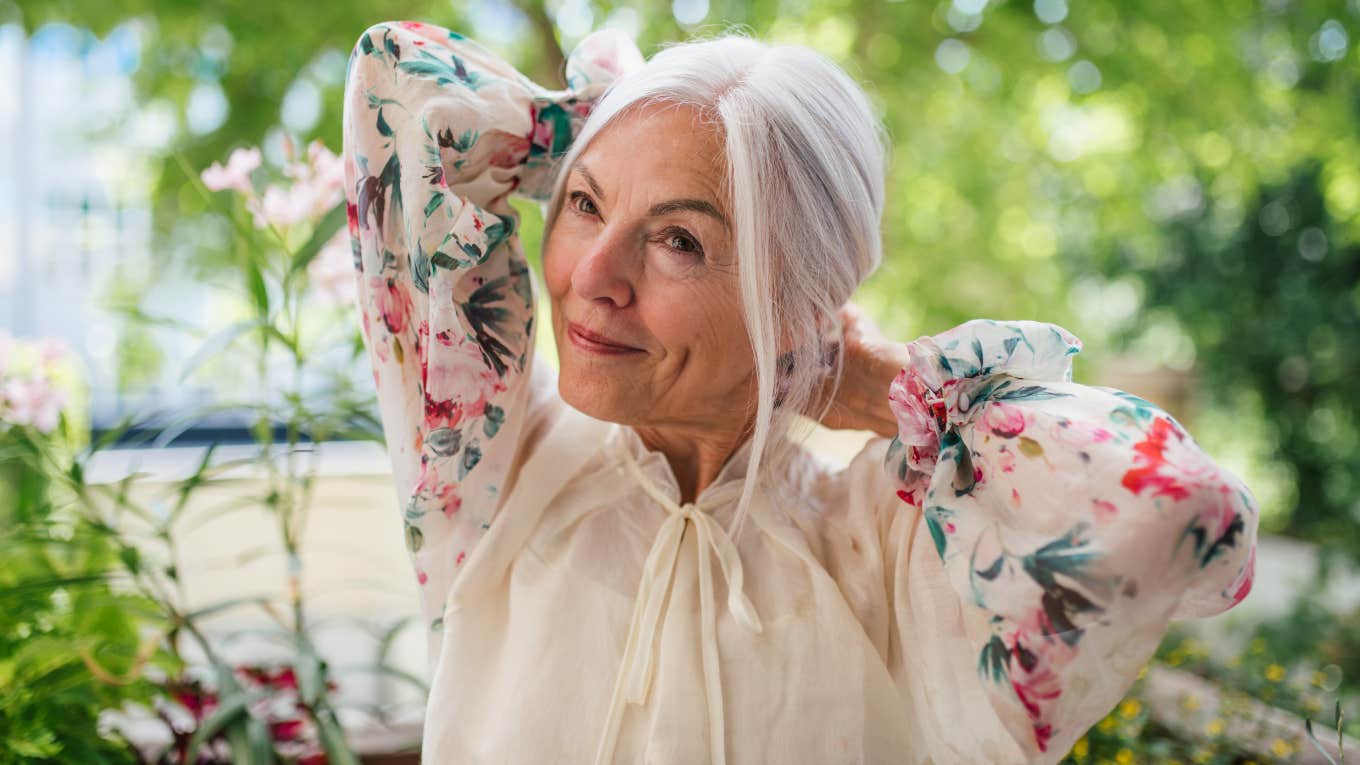 Halfpoint | Shutterstock
 We're all secretly looking for the fountain of youth, and while waters that can turn back the hands of time might be fictional, the ability to age backwards actually isn't. A new study from Yale found that people who approach getting older with a positive outlook end up aging backwards.
Aging is one of those things that most people think about, but not everyone is actually fully prepared for. We're constantly being told that while taking care of our body and mind plays the biggest role in aging, so does having good genetics. Those things are undoubtedly important, but researchers found that a simple mindset shift could have more anti-aging benefits than genetics.
If you want to age backwards, approaching the process with a positive outlook is just as powerful as having good genes.
A study from Yale, published in the journal Geriatrics, found that aging isn't as simple as some people aging faster or slower than others due to lifestyle and genetic factors. In fact, they found that major markers of aging can actually reverse and improve later in life. One of the most startling and simplest reverse-aging hacks is simply having a positive attitude about getting older.
 Rido | Shutterstock
The lead author of the study, Becca Levy, had discovered the power of this mindset shift in previous research. In fact, she wrote a book about her findings that indicated people who engaged with positive aging lived 7.5 years longer than those who hated the idea of getting older.
Participants in the study with a more positive attitude toward aging were more likely to age in reverse.
Researchers noted in their paper that the age reversal tied to a positive mindset was more beneficial than having healthy blood pressure and cholesterol (both add an additional four years on average) and even from not smoking (an additional one to three years).
People aging in reverse, thanks to positive thinking about aging, benefited regardless of chronic disease or other lifestyle factors. Basically, the benefit is foolproof.
This is obviously good news because your mindset is completely under your control. Realizing that can hopefully make people feel better about the years ahead, and that a positive framework will make you more likely to age well.
Most adults are not scared of aging at all.
Overall, 53% of U.S. adults don’t worry much about aging, according to a survey of 2,000 Americans conducted by OnePoll. But, results also showed that fear of aging itself declines across older generations. In total, 56% of young adults ages 18-24 were afraid of getting old, but this number plunges to 21% for seniors 77 and over.
But when it involved getting into the nitty-gritty over why some adults might actually fear aging, the responses varied. According to a Pew Research Center survey, money usually plays a huge role in people's fear of aging. About 61% of older adults in the highest-income group said they are aging very well, compared with 51% in the middle-income group and 39% among those with lower incomes.
 New Africa | Shutterstock
Some other concerns included future health problems and becoming a burden to their family. As much as we may all carry hints of fear toward aging, it's inevitable.
You can't outrun getting older, and you also can't predict what your life circumstances will be as you age. The only thing we can do is look at it through the lens of joy. Life is a gift, and getting older is the best gift of all.
Nia Tipton is a staff writer with a bachelor’s degree in creative writing and journalism who covers news and lifestyle topics that focus on psychology, relationships, and the human experience.
