
13 Not-So-Subtle Signs Someone Doesn't Want To Be Your Friend
 Andreshkova Nastya | Shutterstock
 Whether it's someone new you hoped to build a friendship with or someone who's been part of your circle for years, it can be surprisingly hard to recognize the signs that someone doesn't want to be your friend. Most people don't come right out and say it. Instead, the shift shows up quietly through missed messages, lack of effort, and emotional distance that slowly becomes impossible to ignore.
True friendships offer support, fun, and a sense of mutual care. They feel balanced, even during busy or stressful seasons. When that balance disappears, it can leave you questioning whether you're overthinking things or finally seeing the truth. These not-so-subtle signs someone doesn't want to be your friend help you spot when a connection has faded, even if no one has officially said goodbye.
Here are 13 not-so-subtle signs someone doesn't want to be your friend
1. They rarely respond to your messages
 LightField Studios | Shutterstock
You probably have sent many texts asking what your friend is doing and seeing if they want to hang out. Or maybe just sending them a text about something weird that happened to you earlier, just something to start a conversation with.
But there never is a response from their end, or if there is, there isn’t much emotion behind the emojis they send (and research shows that emotional cues like emojis make messages feel more responsive and connected to the other person’s life). And bringing it up with them in person, they just brush it off, saying that they were tired and couldn’t respond.
2. They cancel plans without trying to reschedule
 Motortion Films | Shutterstock
Finally, you and your friends are going to hang out later this week, and you couldn’t be more excited. But the day before the big hangout, some of them canceled out, which isn’t a surprise.
Plans in the past have been rescheduled, but they never leave that stage. They always seem to come up with excuses that start to become recycled.
3. You're always the one reaching out first
 Miljan Zivkovic | Shutterstock
When things happen in your friend’s life, you always show your support and offer to lend a hand. But when it comes to things in your life where friends are important for support, they conveniently are M.I.A.
Or maybe when plans aren’t going to be canceled, you are the one who’s reaching out and making sure they know the latest information. And when they are in charge, you still are the one reaching out first to ask about updates.
4. Conversations feel flat and rushed
 Gorgev | Shutterstock
Conversations seem not to go on forever when you’re with your friend. When you talk, they are sometimes looking off in the distance, and when it’s time for them to engage in the conversation, they just respond with two-word sentences or sentences that don’t keep the conversation going (and research shows that these kinds of disengaged responses can make the other person feel less supported and heard).
It's as if someone was upset and didn’t want to bother giving the person a reason to stick around longer than they needed to. Or like making sure you don’t want to bother starting up a conversation again.
5. They're always too busy for you
 Magic Lens | Shutterstock
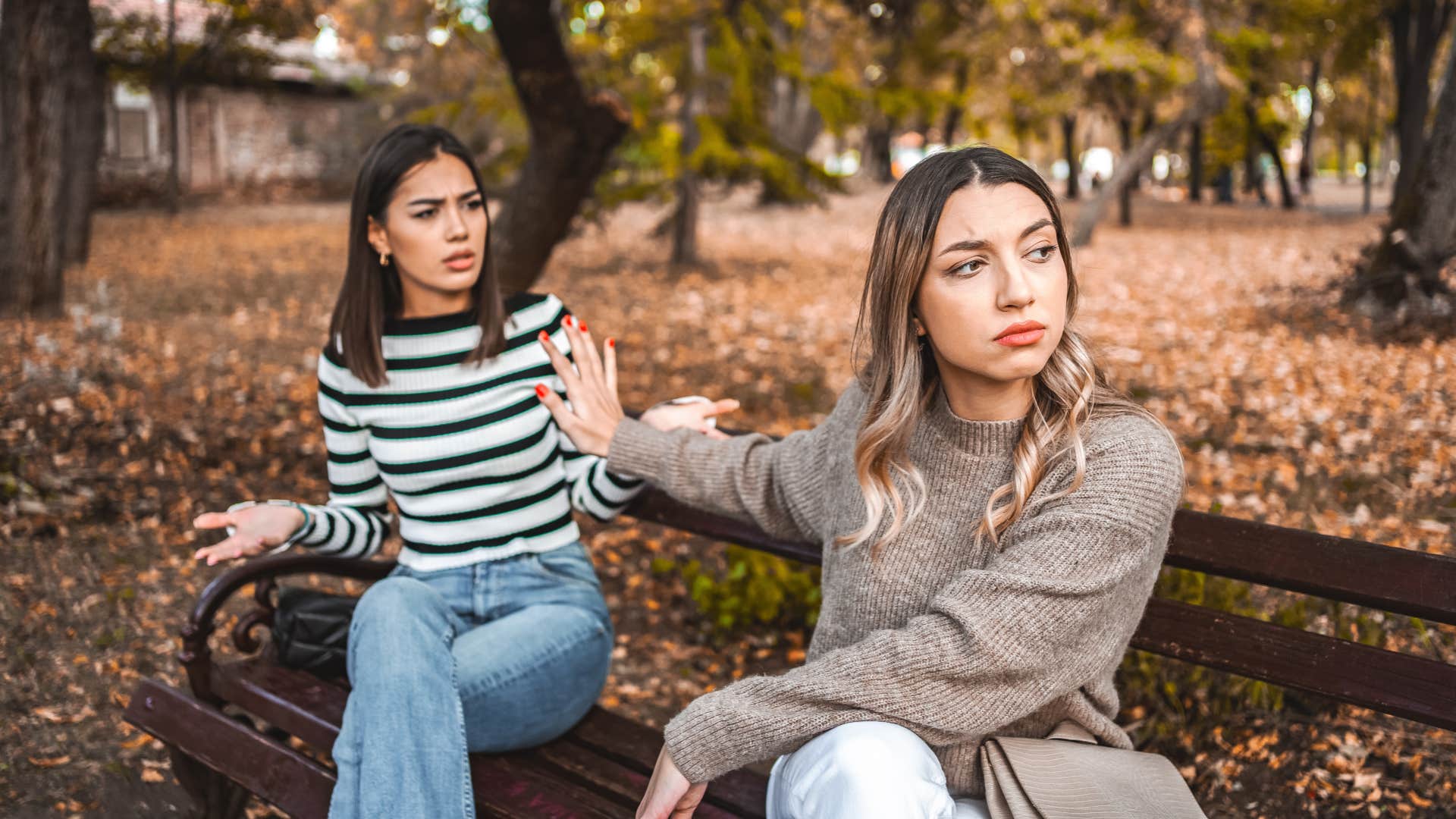
You always drop everything for your friend when they need help, and they appreciate it. But they are always tied up when it’s your turn.
Being busy is part of human life, and making someone stop what they’re doing when it’s something that didn’t need attention right away is cruel. Yet they never return the favor and come up with excuses that make you think you’re not as important to them as they are to you.
6. You put in far more effort than they do
 Gorgev | Shutterstock
Has there been a time when you were the only one bringing the energy? And your friend is not reciprocating that energy you’re giving off, and totally brings down the mood?
Research shows that only about half of friendships are truly mutual, so it’s common to be putting in more effort than the other person realizes or returns. You have to get away before your energy drains completely. Because why should the friendship rest only on your shoulders?
7. Their stories don't quite add up
 Gorgev | Shutterstock
Continuing with canceling plans, their excuses seem a little off. For example, they say they have to spend time with their family, but you see on someone else’s Instagram story that they’re spending time at the club.
Or maybe they said they were sick, but then you see them at the local coffee shop with a different group laughing away. At this point, you should call yourself Sherlock Holmes for putting the pieces together and finding the truth secretly.
8. They keep you at arm's length socially
 Gorgev | Shutterstock
Social media, in all its forms, is always going to come up in conversations. Because it’s hard not to talk about that video of the cat meowing for its treats or the crazy post made by that one celebrity.
Research shows that on social media, people are more likely to actively interact with those they feel close to, while low engagement usually reflects lower relational closeness. Yet your friend has not followed you on any of your accounts. You obviously follow them and send posts to their DMs. Sure, they sometimes reply, but the notification of a new follower never includes their username.
9. They don't really listen when you talk
 Magic Lens | Shutterstock
What’s worse, getting one-word answers or not getting any talk at all? No matter what the conversation topic is, they never show any sign of listening, and research shows that people who don’t use things like nods, “uh-huhs,” and other listening cues are seen as less engaged and make the speaker feel less connected.
No grunts of agreement, no nodding, and no moving of the mouth, especially. Sorry to say, but they won’t be listening to anything you say.
10. Their advice feels condescending or unwanted
 PintoArt | Shutterstock
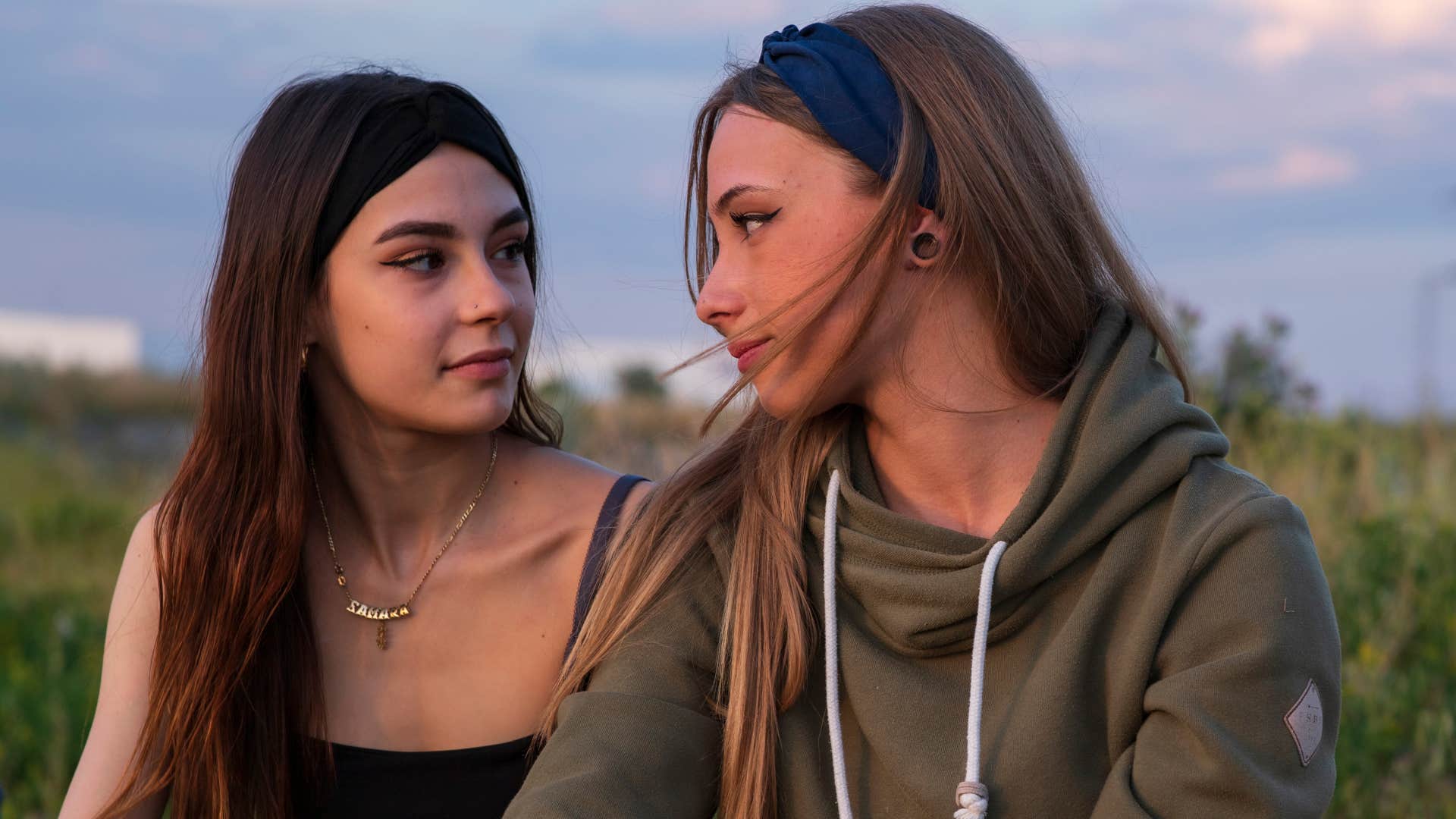
The complete opposite of not engaging in conversation, they tend to overstep and make sure their advice is the only thing on your mind when you ask for advice. Or sometimes you didn’t ask for advice, and they give it anyway.
And when they give the advice, it feels like a parent scolding their child, which you very much are not. They want to show off that they know more than you, but do they really?
11. Their friendliness feels polite, not warm
 Gorgev | Shutterstock
After reading all the signs, you probably are thinking to yourself, “But they aren’t being rude about it, they are super nice to me all the time?”
But think about this, do they let you talk and will keep the conversation, but once there is a sign of leaving, they take it? Or when they make plans, it seems like you’re the last to be invited, and when you’re hanging out with them, they only come to see you with a fake smile?
12. The friendship revolves around them
 Vershinin89 | Shutterstock
One thing that gets people to become friends is the things they have in common. Because what better way to talk about your many interests than with your friends?
One study found that similarity in how people respond to the same videos (a proxy for how similarly they see the world) predicted who would become friends later, not just who was already friends. It's a modern, science-y way of saying shared interests and reactions matter. However, when you bring up these things, they are never on the same level of excitement as you are. And you know they love these things as much as you do.
13. They only want to talk about themselves
 Gorgev | Shutterstock
The other side of the coin, maybe each conversation is led only by your friend, and they never give you a chance to share your stories. Or when you do get a chance to share, they somehow make it about them, and you start to wonder if you even said something. They clearly want all the attention on them, so buckle up for the back seat.
If any of these sound familiar, it’s time to leave your friend behind. And although it may be hard and you don’t want there to be bad blood between you, it’s something that needs to be done.
Isabell Tenorio is the Opinions Editor at The Pine Log. She has a passion for writing anything, covering topics ranging from difficult current events to fun takes on pop culture.
