
Many Unhappy People Have These 8 Evening Habits
 Siarhei Nester | Canva
 Oh, the power of a good night's sleep. A whole gamut of positive benefits can be seen from getting enough rest, but for many of us, hitting the sack can be challenging. Getting enough rest doesn't just affect you, it can affect your relationship, too.
There's plenty of advice out there about what to do to get to sleep, but what about what not to do? See some of the pre-bedtime activities that could be hurting you and your partner's chance at getting a good night's sleep and ultimately your happiness.
Many unhappy people all seem to have these eight evening habits:
1. Exercise a few hours before
 PeopleImages / Shutterstock
No, you don't get to ditch your yoga mat or running shoes altogether. Exercise is a vital activity for your health, and can actually contribute to getting better-quality sleep. The problem, though, is that exercising within three hours of bedtime can raise your body temperature and make dozing off more difficult. Breaking a sweat, then, is best left for earlier in the day.
Research found that exercising within four hours of bedtime was linked to falling asleep later and getting less quality sleep. The study tracked nearly 15,000 people over a year and showed that working out too close to bedtime disrupts both how well you sleep and your nighttime heart activity.
2. Watch TV/doomscroll
 Pixel-Shot / Shutterstock
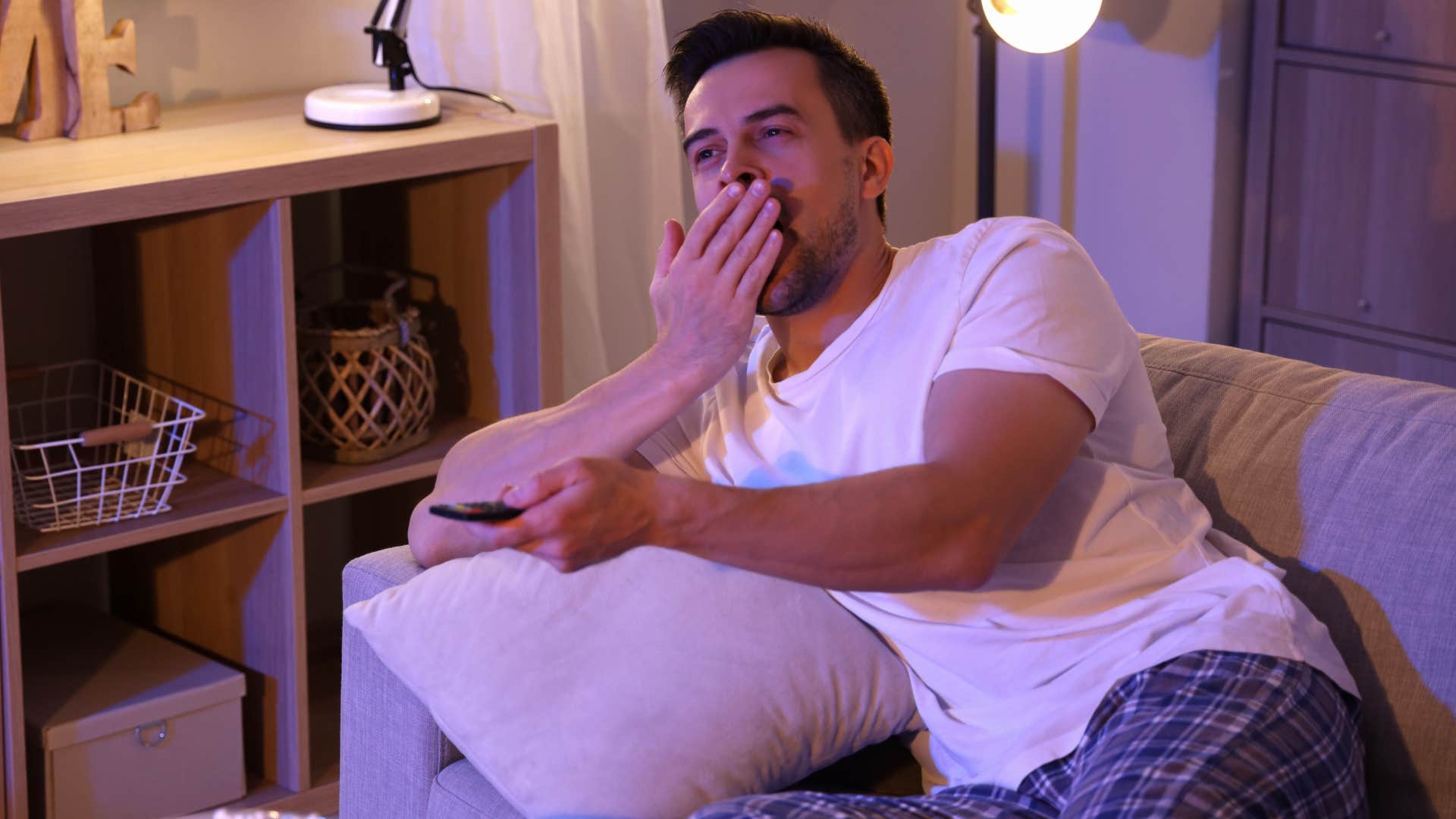
Studies have shown that pre-slumber screen time can impede your body's ability to fall asleep. The likely culprit? Well, the bright lights of these screens can hinder the development of melatonin, the hormone that promotes sleep. So you and your partner should close those laptops and turn off that TV about an hour before bed.
Beyond the light itself, what you're watching or reading matters too. Scrolling through stressful news, getting caught up in a heated social media debate, or binge-watching an intense drama keeps your mind actively engaged when it should be winding down. Your brain needs time to shift gears from the stimulation of screens to the calm state necessary for sleep.
3. Take a hot shower/bath
 sergey kolesnikov / Shutterstock
Like exercise, hot showers and baths can actually help you fall asleep. The problem, however, comes from taking one too close to the time you plan on hitting the sack. Being overheated or sweating can make it difficult to sleep. Let your body cool down before heading off to bed.
The best time for a warm bath or shower is about 90 minutes before bedtime, research from the University of Texas concluded. Taking one too close to bedtime doesn't give your body enough time to cool down, which your body needs to trigger that natural temperature drop that helps you fall asleep.
4. Drink too many fluids
 Antonio Guillem / Shutterstock
Caffeine, of course, and alcohol both make it difficult to get a good night's rest. But drinking a lot of any liquid within the last hour or two before you go to bed will lead to those dreaded late-night bathroom breaks and further disrupt your slumber. You shouldn't go to bed thirsty, however, as you'll likely wake up in the middle of the night to get a drink of water. Balance is key here.
Experts recommend stopping fluid intake about one to two hours before bedtime to avoid nighttime bathroom trips. Research shows that drinking too much too close to bedtime increases how often you wake up to pee, which disrupts your sleep and leaves you dragging the next morning.
5. Work
 Ground Picture / Shutterstock
Whatever work or school issue it is, it can certainly wait until morning. Getting work done stimulates your brain and can cause you and your partner unneeded stress —pretty much the opposite of what you want to feel if you and your significant other are trying to fall asleep!
Research found that doing stressful tasks or work right before bed keeps your brain in an alert state that makes it much harder to fall asleep. Studies show this kind of mental activity before bed significantly delays how long it takes you to drift off because your mind is still racing.
6. Read engrossing stories
 paikong / Shutterstock
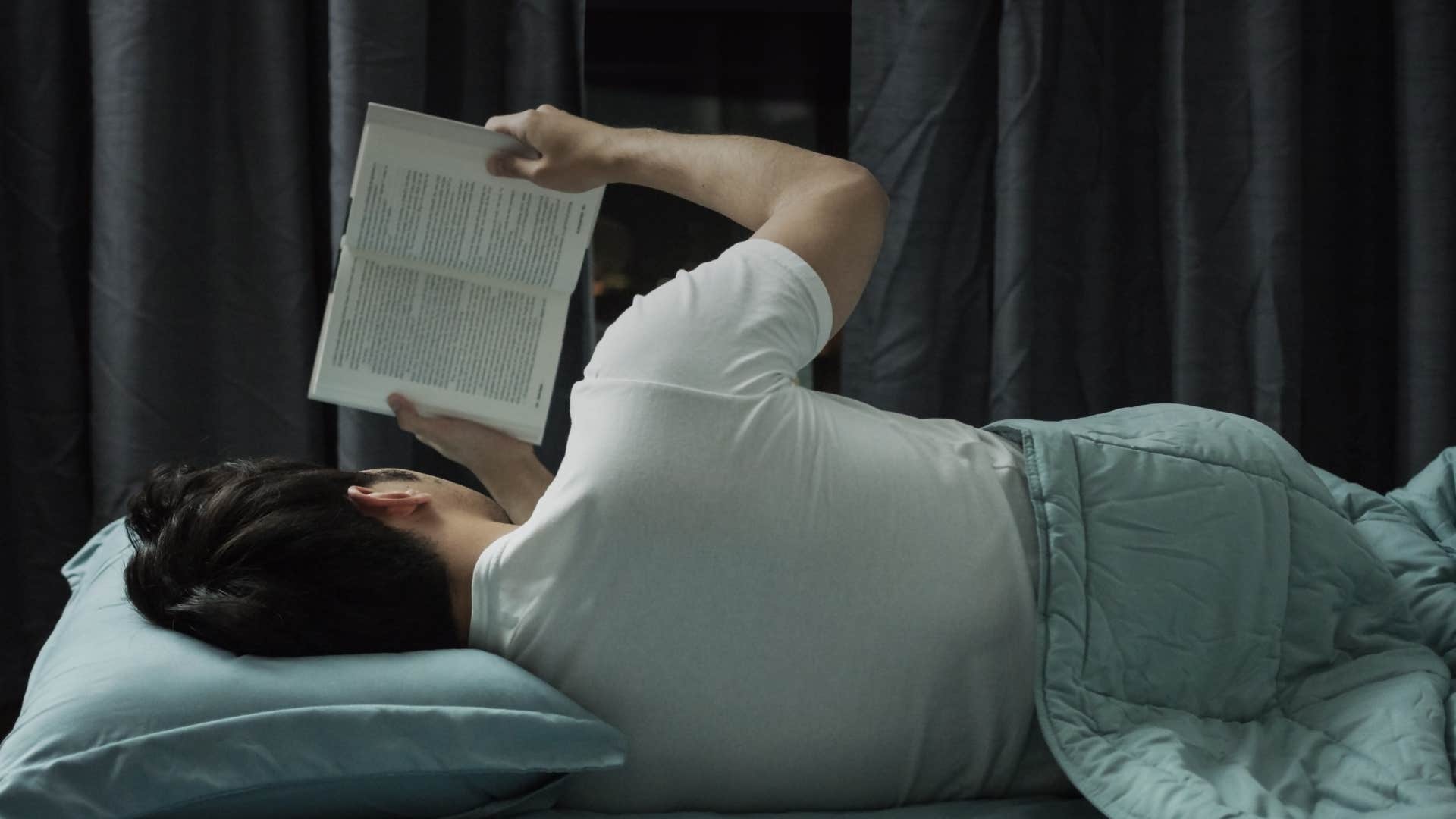
Many of us have done this: you're reading a really interesting novel, and you tell yourself, "Oh, just one more page!" Suddenly, it's 2 AM, and you have to be awake in four hours. Yep, reading a really interesting book, essay, or novel before bed will make it difficult to get to sleep. Perhaps you can remedy it by finding the most boring thing imaginable to read?
Sleep psychologists warn that reading highly stimulating books like thrillers or page-turners before bed can get your heart racing and your mind too engaged. The problem isn't reading itself but getting so hooked on an exciting story that you end up staying awake way past your bedtime.
7. Cuddle with their pets
 IAKIMCHUK IAROSLAV / Shutterstock
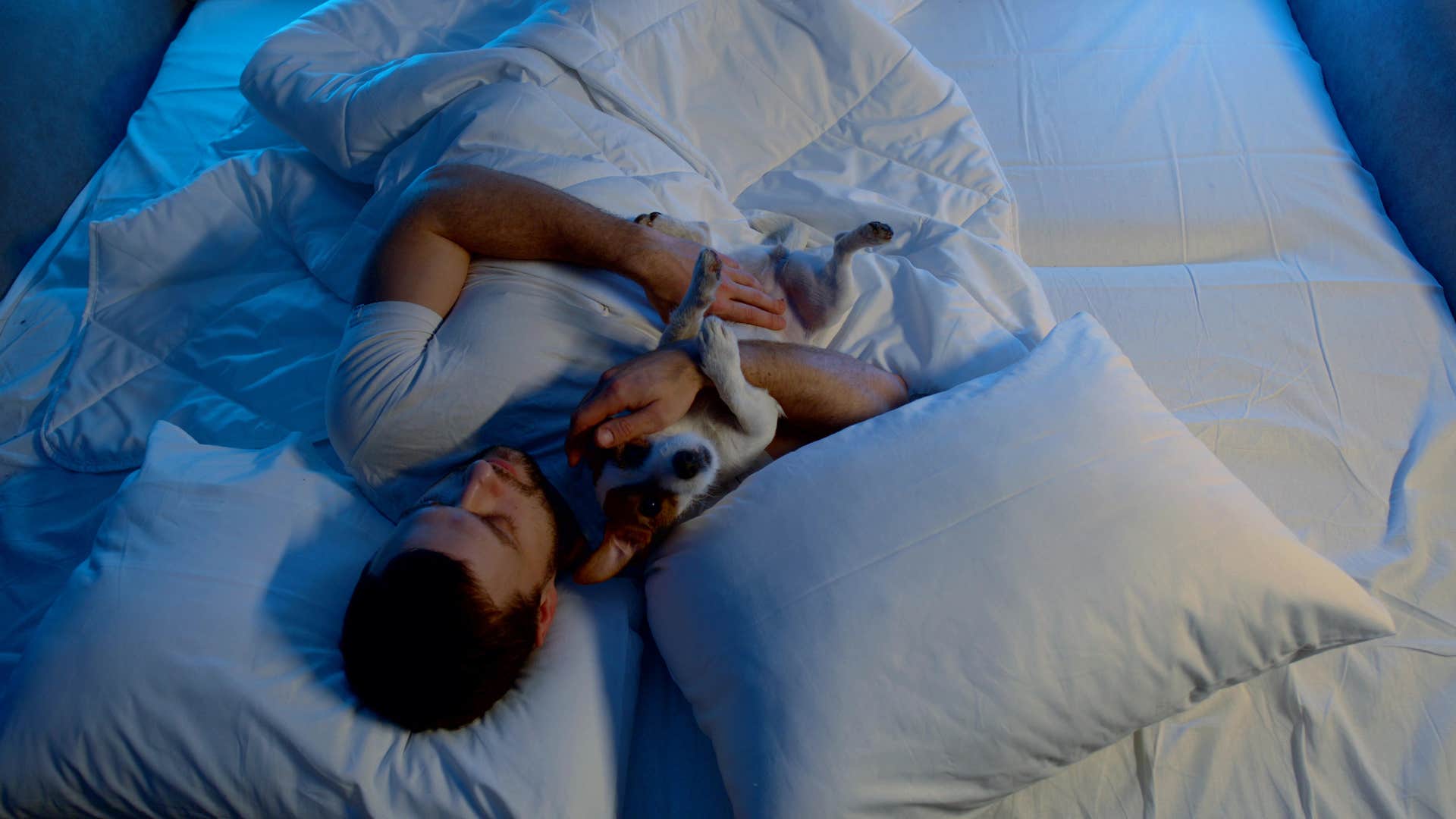
As a child, I always wanted to have my beloved pet chihuahua sleep in my (twin) bed. And then came the reality: it's amazing how much space a 6-pound creature can take up, and how grumpy chihuahuas can be when you disturb their slumber. The point is, sleeping with a pet in your bed can seriously disturb your sleep.
An Australian study of over 10,000 adults found that people who sleep with their pets took longer to fall asleep and were more likely to wake up tired. Research suggests that pets move around during the night, and all that activity is associated with more sleep disruptions and worse sleep quality for their humans.
8. Have serious conversations
 New Africa / Shutterstock
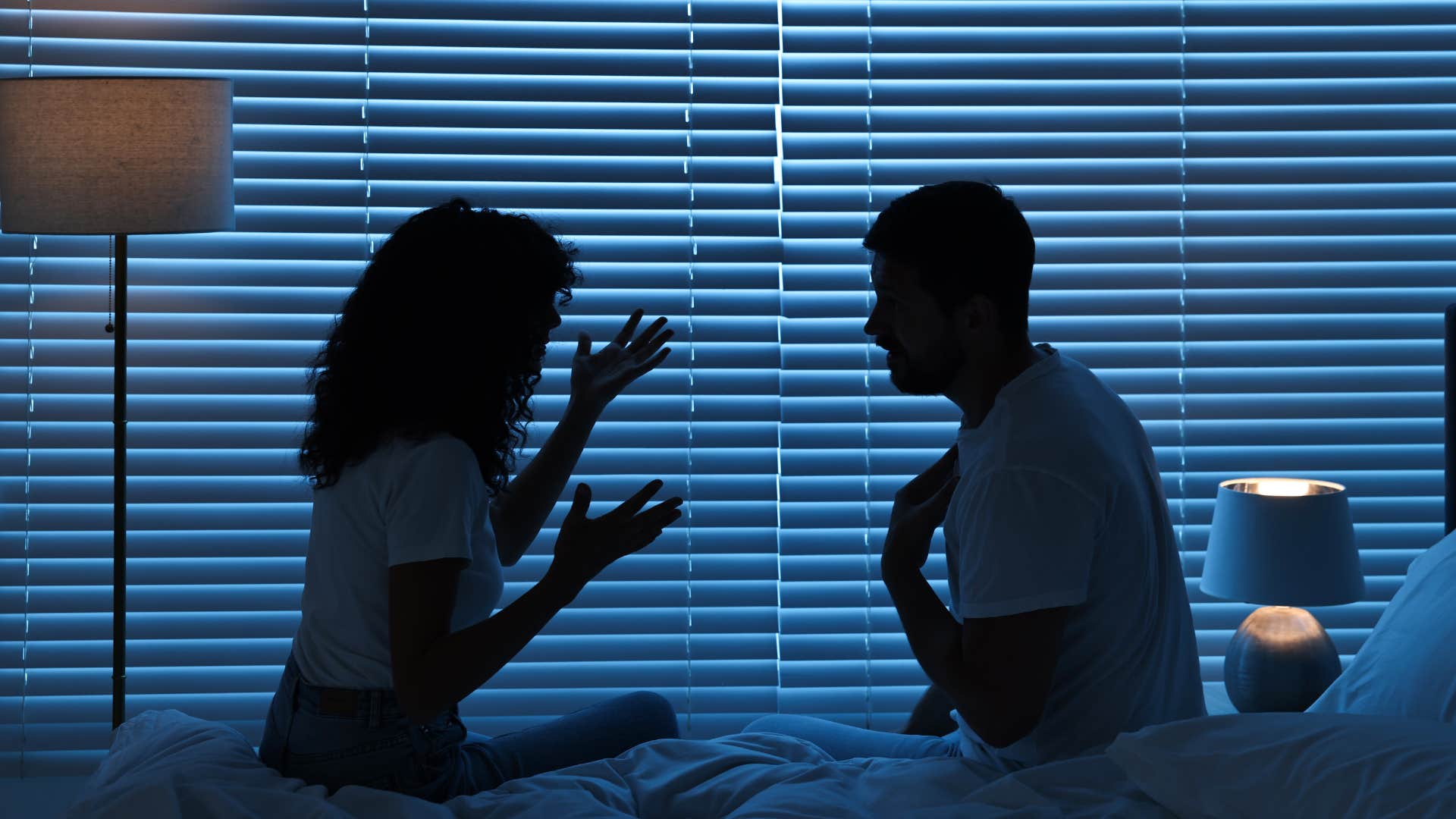
You've probably heard the phrase, "Don't go to bed angry." And, as it turns out, it's totally accurate! Research has shown that sleeping directly after a fight or traumatic experience will effectively preserve your emotions until you awake.
The human body is adverse to falling asleep in dangerous situations — it's a defense mechanism. Thus, you'll have a much harder time falling asleep after a big blowout. It's best to resolve conflicts before you hit the sack.
Katie Waldeck is a freelance writer and was previously an Editorial Assistant of Healthy Living at Care2.
