
7 Life Skills People With Anxiety Often Master That The Rest Of Us Can Learn From
 Mert Coşkun | Pexels
 Dealing with anxiety can make life difficult. I sometimes feel as if my anxiety takes over the control center in my brain and puts me in the backseat, just as 40 million other anxious Americans like me can probably relate to.
I may not even realize it, but anxiety can fuel a response, reaction, or behavior. It's not until a few seconds, minutes, or hours later that I realize: anxiety got me, again.
I view my anxiety with a sense of humor at times, which helps me face this beast with a great attitude. Besides, people with anxiety have a load of talents, and we're especially good at teaching you the same life skills.
Here are the seven life skills people with anxiety often master that the rest of us can learn from:
1. Anxious people know how to control their breathing
 PeopleImages.com - Yuri A via Shutterstock
Your yoga instructor is so serene, but even she doesn't know how to deep breathe when in the throes of a mental breakdown, like your friend with anxiety.
We've been practicing deep breaths since we popped out of our mom's womb. We haven't reached nirvana yet and probably won't, but we know how to breathe in and out like a woman in labor, like an absolute pro.
"Diaphragmatic breathing was how you were born breathing," explained life coach Audrey Tait. "So you can learn to do it again. Try standing in front of a mirror to see how you draw your breath. Placing your hands around your belly button helps you feel the breath movement. Can you feel the calming effect? It is helpful to practice this daily so your body gets used to doing it on its own."
2. They can count sheep in other languages
When you're anxious, you don't sleep very well. When you don't sleep very well, you count sheep. Except you've counted every possible sheep on the planet since you were seven. And at this point, you can now count sheep in about five languages. Impressive.
Psychotherapist Linda Yael Schiller advised, "Good sleep hygiene means creating an environment conducive to sleep and peaceful dreams. Good dream hygiene means optimizing what you do have some control over at night, even though you can’t control your unconscious thoughts."
3. People with anxiety can tell the difference between obsessively worrying and panicking
There's a huge difference between panicking and obsessively worrying over something. A study helped show how panic occurs when your body goes into overdrive right away. Literally, your body's evolutionary response is to think it's getting attacked by a large, scary creature, so your heart rate elevates and your palms sweat.
Obsessively worrying is when you cannot stop thinking about one very important, urgent issue that consumes your mind, every single second of your 24-hour days, seven days a week. We, sufferers of anxiety, can tell you which "healthy" habit to adapt when facing a potential crisis.
For example, finding out your mother-in-law is visiting for two weeks and staying with you? Panic mode. Seeing your friend's husband out with some random female? Obsessively worrying. See what we can teach you?
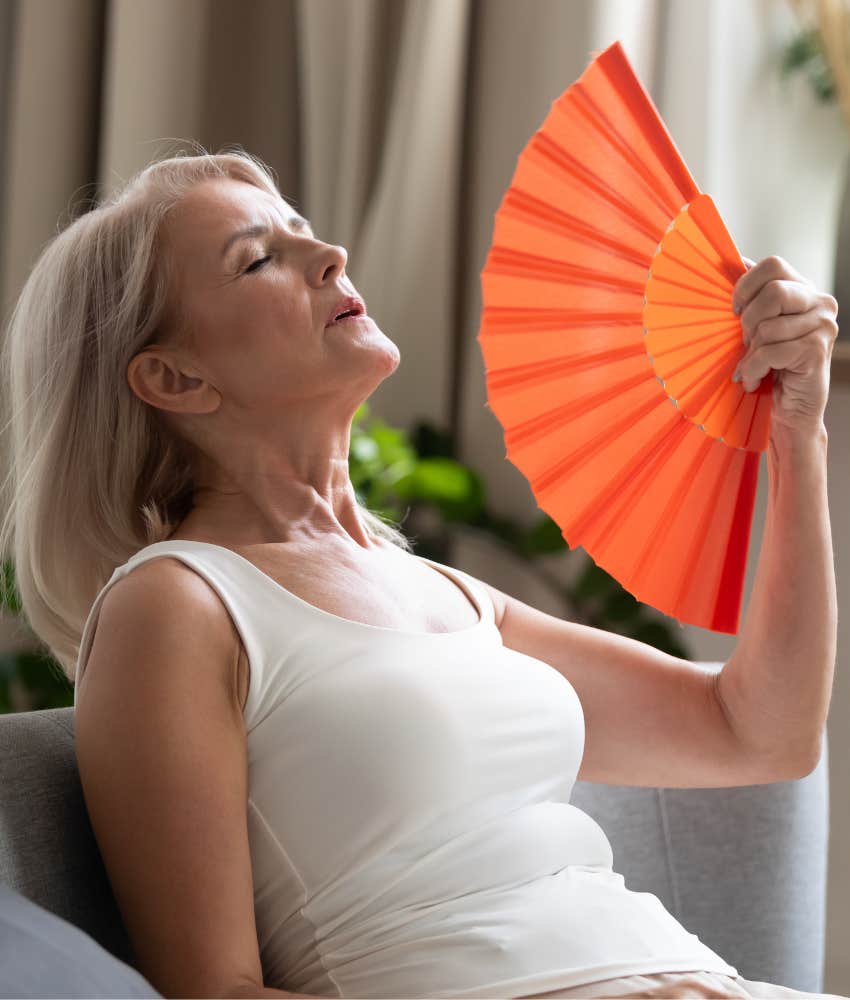
4. Anxious people prepare for sudden sweats
 fizkes via Shutterstock
Do you sometimes get incredibly sweaty or want to know how to handle exiting the gym before getting home to shower, without looking like a drip?
Do what anxious people do: carry deodorant in every possible bag you own, plus a change of clothes, plus tissues and blotting papers to get any extra sweat. You never know when a loud noise might trigger a panic attack.
Research has found that sweating, hot flushes, and blushing are symptoms frequently reported by individuals with anxiety disorders, who showed increased daily sweating as well as increased sweating in response to non-phobic and phobic stimuli."
5. They can usually cure any form of discomfort
Do you have agita, nausea, diarrhea, constipation, or something else? No one knows how to battle the tummy blues like your anxious friends. We've got (on hand) Tums, stool softeners, fiber pills, Milk of Magnesia, and the two "Z's" — Zofran and Zantac.
We know how to treat and heal your tummy troubles, as well as the best place to find information on that exotic stomach bug you must have, according to our calculations. We also have a great therapist on speed dial if the discomfort is more mental than physical. In all seriousness, though, we're your stomach's best friend and will nurse you back to health. Just don't make us worry about you, OK?
6. Anxious people know how to back out of a date without looking rude
 Andrii Iemelianenko via Shutterstock
Did you decide there's no way you can go out with that guy from Hinge? Let's help you Google some rare disease you've "suddenly" come down with, or perhaps pose as your aunt via phone. Suddenly, Auntie Lee is going into labor and needs your help.
We have the best excuses crafted to a science that we've used to avoid dates and everyone else on the planet. In the end, the date you snubbed will feel so bad that he might just donate to your "disease" organization or send your aunt a baby gift.
Psychologist Dr. Alicia H. Clark explained, "Intelligent people recognize that anxiety doesn't have to mean something is wrong — in fact, it's common even in great relationships. Especially if you are prone to worrying or are with a partner who doesn’t communicate clearly, anxiety will be a part of your relationship, and that doesn’t necessarily make it a bad thing."
7. People who deal with anxiety can properly organize a closet
Did you just move, or are you sick of your filthy closet? We are. Ask us for help in getting your closet in ship-shape. We'll have your clothes hung by color, sleeve length, and style. Your shoes will be organized by season, color, and heel height. Actually, this job gives us great joy. Do you mind if we live here? Forever?
Life coach Mitzi Bockmann explained, "One of the reasons it's hard to think straight when you feel overwhelmed is that you don't understand what specifically is overwhelming you. A cluttered environment can overload the brain, diverting cognitive resources and making it harder to concentrate on tasks at hand."
Laura Lifshitz is a former MTV personality and Columbia University graduate currently writing about divorce, mental health, parenting, and marriage. Her work has been featured in the New York Times, Women’s Health, Working Mother, PopSugar, and more.
