
If Someone Drives Their Car Until It Dies, They Value These 11 Rare Old-School Things
 Jacob Lund / Shutterstock
 Some people always want the newest, flashiest things. They don’t stick with what they have just because it still gets the job done. They like to show off a little bit, but that’s okay. Others are the exact opposite. They can’t imagine buying something new just to have something new when what they already have works just fine. One of the purchases (or lack of purchases) where this is most obvious is cars.
There are two groups of people in the world: those who always want the newest car in their garage, and those who stick to whatever’s been reliable for them. According to Ramsey Solutions, it’s typically time to replace your car if it would cost more to repair it than it would to purchase a new one. Of course, there are exceptions to this, but it’s a good rule of thumb. A lot of people completely ignore that, though. At the most minor inconvenience, they replace their car. And then you have the people who remain loyal to their old, reliable ride no matter what. They share some pretty neat values.
If someone drives their car until it dies, they value these 11 rare old-school things
1. Saving for a rainy day
 Andrii Iemelianenko | Shutterstock
Probably the most obvious reason for driving a car until it dies is saving money. It might not seem like a big deal to splurge on a new car, or a new-to-you car, if you have the money to do so. However, that’s money that you don’t have to put into buying a new car that could be used for something else. Maybe there’s something else you need that you can’t do without as easily, or maybe you just want to save up for the future.
According to former Bankrate contributor René Bennett, there are several reasons we should all work towards saving money. The biggest is that we need to build up our emergency funds. If you never set any money aside, you don’t have any for your emergency fund, which you can use when that car actually does die. It also helps you reach goals, like retirement, sooner, and it gives you a little more flexibility.
It might seem like it would be nice to trade in your old car for a newer, sleeker model, but that money can go towards saving for when you actually need it. Chances are, you don’t really need a new car right now, but another need could easily come up. People who drive their car until it dies know that they’re putting money towards their future needs that they don’t even know about yet.
2. Not needing all of the newest things
 Katcha_Natsarin | Shutterstock
Someone who drives their car until it dies doesn’t need all the newest things in their life. Whether it’s a car, a house, clothing, or a vacation destination, they don’t have to have the best of everything and automatically replace things when a new version becomes available. Chances are, they still have an older-generation phone and have stuck with the same laptop for as long as they can, too. Buying something just to have something new doesn’t really register for them.
Writing for The Guardian, Ashlee Piper shared that she tried a “no new things” challenge of her own, where she didn’t buy anything new for a month. Things went so well that she kept it going for almost two years and she saved a total of $36,000. She said, “What I didn’t anticipate was how much time I reclaimed, how much my stress level dropped, and how much more creativity and focus I had. Life was genuinely better once I got off the consumerist hamster wheel.”
Participating in a challenge like the one Piper created isn’t necessary to prove this to yourself, though. By holding off on buying some of those brand-new things that everyone just has to have, including that new ride, you’ll not only save money, but also show yourself that having the newest of everything doesn’t mean you also have the best of everything. Driving a car until it dies is perfectly acceptable.
3. Fixing things instead of automatically replacing them
 Jacob Lund | Shutterstock
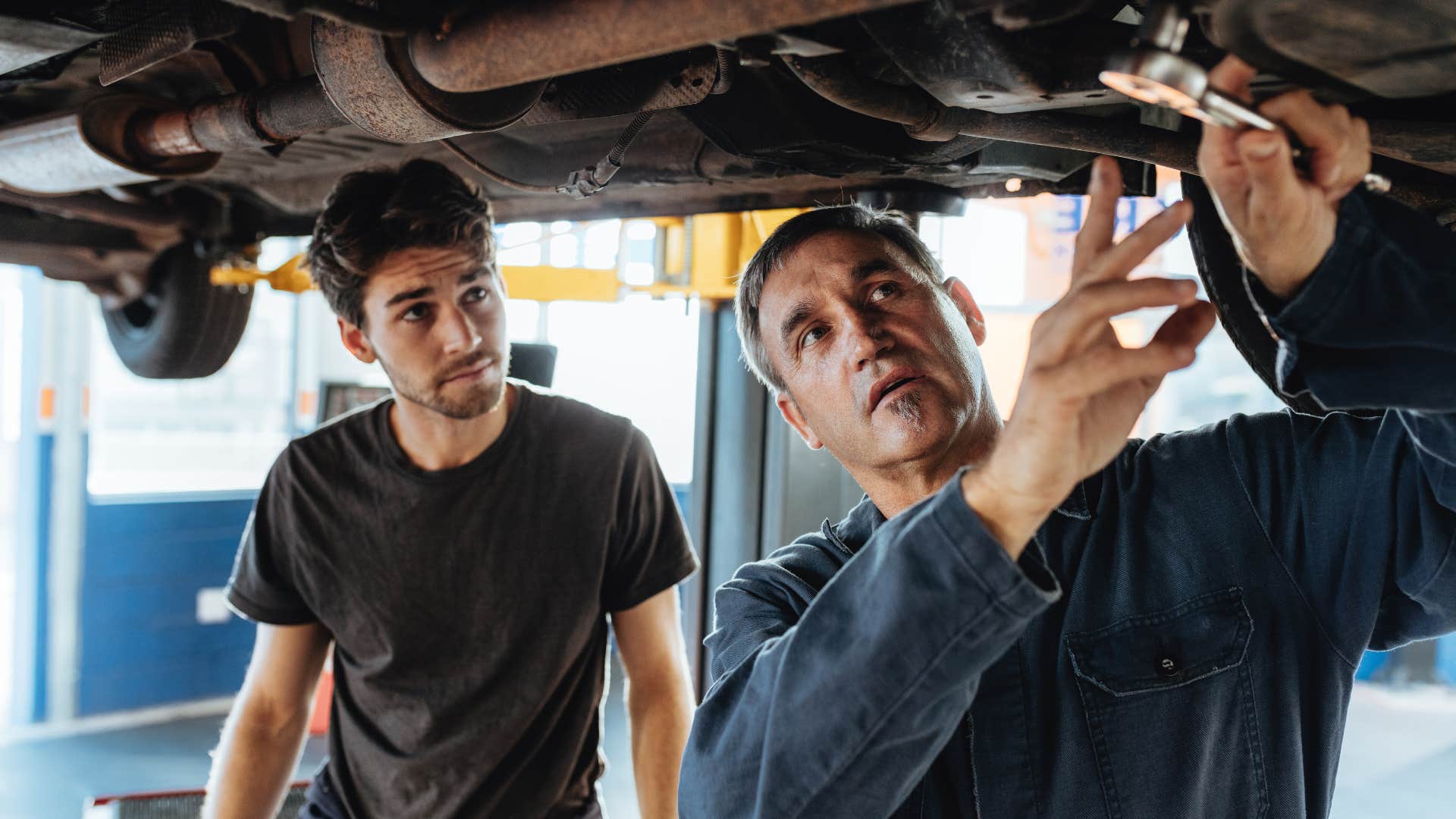
For some people, the slightest thing going wrong means it’s time to replace something. Whether it’s your phone, your fridge, or, yes, your car, if something breaks, it means you go all out and buy a new one of whatever it was. The thing about cars (and a lot of other things) is that they can actually be repaired pretty easily, and it usually costs less to do that than it does to buy a new one.
Interestingly, although many people often get a bad reputation for always replacing things, fewer people are doing so in the complicated economy we live in. Lemi Shine commissioned a survey from Talker Research, which asked 2,000 Americans how they felt about repairing things instead of replacing them. 80% said making repairs “helps them feel more in control when their finances feel unpredictable.”
This is good news because always replacing things when they could probably just be fixed can be wasteful. The last thing people who drive their car until it dies want to do is be wasteful. They see no reason to replace their car when it could be repaired, either by a professional or someone who’s just a natural tinkerer. Repairs often aren’t easy on the wallet, but they typically cost less than a full replacement would.
4. Not wanting to get rid of something that still works
 KANGWANS | Shutterstock
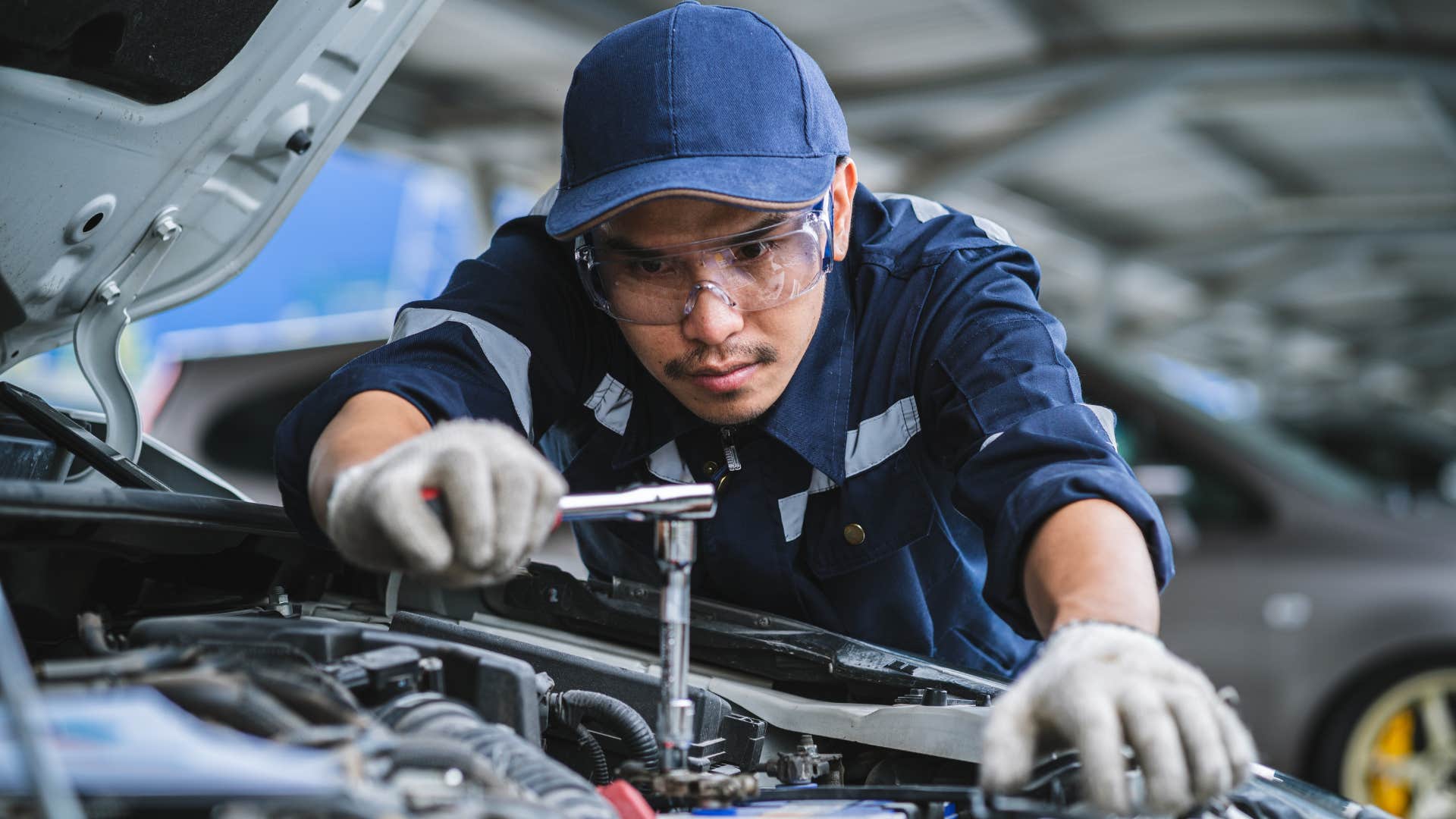
Another thing that someone who drives their car until it dies probably values is not getting rid of things that still work. This goes back to not wanting to be wasteful. If you’re passing your car onto a family member, or donating it to charity when buying a new one, that’s one thing. But, if you’re simply giving it up, it’s almost like you’re throwing away something that’s still functioning.
The Environmental Protection Agency had some advice for small businesses that can just as easily apply to individuals. “Whatever the type or volume of waste your company generates, it is all the same in one respect — it is costing you money!” they said. “In fact, you’re paying for it twice — once when you buy it and the second time when you throw it away. The bottom line is that preventing waste will save you money.”
For someone who drives their car until it dies, there’s just no point in getting rid of something that works. They know the value of not wasting and getting the most out of what they own. If a car is still running, it has more to give, and they’re not about to get in the way of that. It’s all about value, and letting something go until it won’t work anymore is the ultimate measure of value.
5. Loving what they have
 F8 studio | Shutterstock
This might sound crazy to anyone who always wants to buy the newest stuff, but people who tend to keep things until they don’t work anymore, like cars, genuinely love what they have. And why would you replace something if you love it? Maybe someone special gave the car to them, or maybe it was with them during a difficult time, like driving back and forth to the hospital when their grandpa was sick. Whatever the reason is, they just love that car, and they don’t want to get rid of it.
Loving something this much means you have gratitude for it. Tiffany Sauber Millacci, PhD, said, “Gratitude has been found to be beneficially associated with social wellbeing, emotional wellbeing, and psychological wellbeing … Gratitude appears to have a domino effect. If a person experiences gratitude, they are more likely to recognize the help and then later reciprocate that help.”
There are clear benefits to gratitude. It may sound strange to some to say you’re grateful for a car, but why wouldn’t you be? So many people can’t afford cars and don’t have access to the transportation they need. There’s nothing wrong with loving something you have, including a car. Anything can hold a special place in your heart.
6. Respect for reliability
 KieferPix | Shutterstock
People who drive their car until it dies know the value of reliability better than most. Chances are that car has been with them for years, and it’s still running. Maybe it needs some repairs from time to time, but the way that it’s worked for so long shows them that it’s reliable. In a world that is full of consumerism, a lot of things aren’t very reliable anymore and just don’t work as well. A car that lasts is a big deal.
Although some people do like to go after the shiniest, newest thing, reliability is still prized by many. CarGurus conducted a reliability survey of 500 car shoppers and found that 36% considered reliability to be one of the top-three most important factors when it comes to choosing a vehicle. However, just 51% of shoppers think it’s easy to determine how reliable a car is.
It can be hard when shopping for a new car to tell if it’s reliable or not. All you really have to go on are online reviews and stories from family and friends. But determining whether an older car is reliable is pretty easy. You can go off of how long it’s been working and how many repairs it’s needed. Some people just aren’t willing to trade reliability for something new.
7. Avoiding unnecessary expenses
 Prostock-studio | Shutterstock
The thing about a new car is, unless your current ride is totally shot, you don’t really need it. Meanwhile, there are other things that you do need, whether it’s basic essentials like groceries or something bigger. Someone who continues driving their old car until it dies is avoiding adding any unnecessary expenses to the mix. Everyone only has so much money, and it’s important to spend it wisely. Buying something that you don’t actually need may not be the wisest decision.
The best way to avoid unnecessary expenses is to keep track of your spending through a budget. Brian Ford, the Head of Financial Wellness at Truist, said, “I strongly recommend that you track every dollar you spend for a minimum of two months to see how accurate your estimates really are. By keeping careful track of what you’re actually spending on, you may discover a feeling of financial control and awareness that surprises you.”
If someone keeps track of their money with a budget, it’s easier to see where they might be overspending and where they can cut back. Some people might find they’re actually spending more than they thought on their car, and it is time for a new one. For others, it may reinforce the fact that there’s no need to go purchase a new vehicle when the one they have is still working.
8. Not needing to keep up with the Joneses
 fizkes | Shutterstock
Some people live for comparison. They’re always pitting themselves against the people they know, or maybe even the people they don’t, and ensuring they come out on top. Social media has just made this comparison even more pervasive. Being able to easily take a look at others’ highlight reels makes it much simpler to determine if you’re measuring up or not. And, for some, having the best car is a big deal. They live for the compliments they get when they’re out with a group of friends, and everyone realizes their car is the newest.
For others, though, that’s not a concern. The whole idea of comparing themselves to others and keeping up with the Joneses doesn’t matter. It’s like the idea that they should potentially be comparing what they have to what others have never even crossed their mind. Anyone who drives their car until it dies falls into this category. They’re worried about function, not comparison.
Therapist Hannah Rose, LCPC, stated, “Comparing ourselves, belittling our worth, or minimizing our strengths can validate our core irrational beliefs that ultimately we are not good enough, we are unworthy, or we are not reaching our peak potential.” Comparison does nothing good for anyone, so it’s better to just avoid it, like the people who drive their cars until they die.
9. Having patience
 sandsun | Shutterstock
It’s not one of the most obvious traits of someone who drives their car until it dies, but these people likely have a lot of patience. Even the most reliable cars are going to need maintenance and repairs. Having a strong sense of patience means you’re ready to face those things when they come. Sometimes, older cars just need a little more love, and patient people are ready to give them that.
Jim Taylor, PhD, a professor at the University of San Francisco, shared, “Patience may be the most important attribute you need to possess to make meaningful changes in your life because change is hard and slow. Without patience, you won’t devote the time and energy necessary to allow those changes to emerge.”
That doesn’t mean that change has to be a new car, of course. Instead, the change may be coming to accept the car that you do have, or making it through the repairs it may need. Someone who drives their car until it dies has a lot of patience because they put up with aging machinery, and they do so happily.
10. Being self-reliant
 Prostock-studio | Shutterstock
Similarly, people who drive their car until it dies are self-reliant. Older cars need work, as we’ve established, and they aren’t afraid to put that work in. Maybe they have to find a good mechanic they can count on, or maybe they make the repairs themselves. Either way, being self-reliant is important. You never know when an older car is going to malfunction and leave you stranded somewhere, so you have to be prepared to take care of things yourself.
According to science writer Christopher Bergland, the idea of self-reliance was popularized by Ralph Waldo Emerson in an 1841 essay. Bergland believes that self-reliance is “how … we as a nation keep our individual and collective morale high in such desperate times.” Instead of relying on others and trusting that someone or something will come through when we need it, self-reliance invites us to become independent and be able to solve problems ourselves.
This doesn’t mean that someone who drives their car until it dies is automatically also a master mechanic. Instead, it means that the person is prepared for whatever may come their way and ready to roll with the punches. If their car has a problem, they can get it fixed. They aren’t constantly worried about their car because they know they can handle it.
11. Concerns about modern technology
 antoniodiaz | Shutterstock
One of the rarer and more interesting reasons someone might drive their car until it dies is that they worry about the safety of modern cars because of the technology that’s included. Nowadays, cars come with all the bells and whistles — touchscreens, Bluetooth, rear-view cameras, and more. It’s very much like having a computer in the car with you. Some people think that’s great, but others may not be too excited.
Writing for AARP, Wendy Helfenbaum addressed the potential dangers this new technology can cause. “Drivers may no longer turn their heads to check blind spots, thinking that a beep or a flashing light will provide an alert instead,” she said. “Motorists might not bother to turn around and look out the back window while in reverse, assuming the rear-view camera shows the entire picture. They may even zone out while driving, thinking the GPS will provide enough time to cross three lanes of traffic for an exit.”
A lot of people think technology advancements are great and needed, and in many ways, they are. But some people who are more traditional may take issue with new technology in cars and worry about how it could distract a driver or dull their senses. For this reason, they’d rather stick with their current, older car as long as they possibly can.
Mary-Faith Martinez is a writer with a bachelor’s degree in English and Journalism who covers news, psychology, lifestyle, and human interest topics.
