
90s Kids Who Played 'Super Mario Bros.' Developed 11 High IQ Thinking Patterns Kids Today Don't Have
 Gorodenkoff | Shutterstock
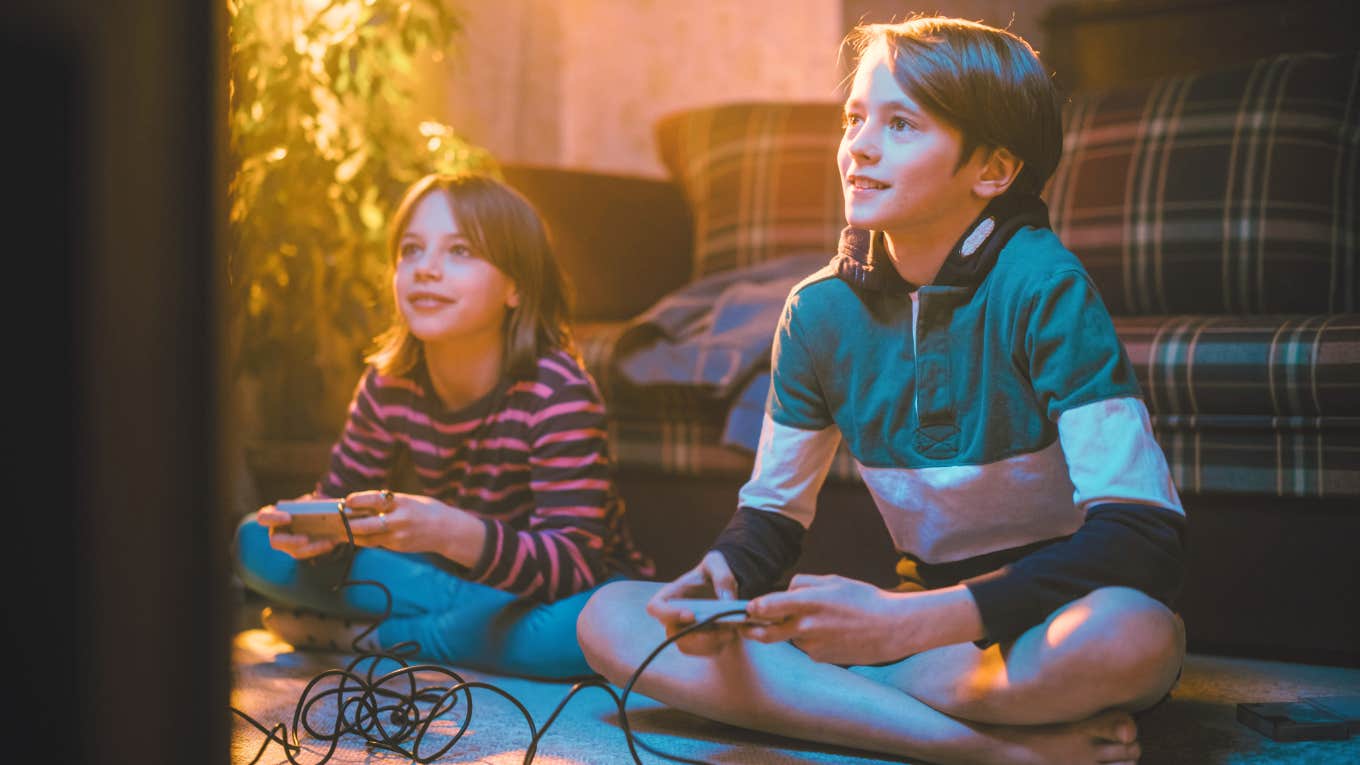
 People born in the 1990s often look back fondly on their childhoods, whether it's the music, fashion trends, or the toys that defined the decade. Perhaps the most memorable part of growing up was the video games. While parents and politicians back then often blamed video games for violence and aggression, despite there being no connection, these games may have actually helped kids develop their intelligence.
And 90s kids who played "Super Mario Bros." developed certain high-IQ thinking patterns kids today don't have, whether it's recognizing patterns, having spatial awareness, or the ability to make quick-thinking decisions. Games like these created generations of kids who are now very intelligent adults.
Nineties kids who played Super Mario Bros developed 11 high-IQ thinking patterns kids today don't have
1. Trial and error persistence
 Prostock-studio | Shutterstock
If there's one thing games like Super Mario Bros taught us, it was how to be persistent. No matter how difficult the levels were or how many times they failed, kids tried again. With no auto-saving features and levels becoming increasingly harder, it was a test of patience and persistence.
Needing to remain calm and consistent, kids had no choice but to continue on, no matter how angry they were. And it taught them a valuable lesson. As developmental neuropsychologist Sam Goldstein explained, when we take care to solve an issue, it's a much better solution than a quick fix. Even if it was hard, that persistence helped them eventually reach their goals.
2. Pattern recognition
 voronaman | Shutterstock
From the character design to the iconic catchphrases, this game was an instant smash hit. According to Shigeru Miyamoto, creator of the Mario Bros. franchise, the reason for the rising popularity had something to do with relatability.
Miyamoto told NPR in a 2015 interview, "Everyone is afraid of falling from a great height. If there is a gap that you have to cross, everyone is going to try to run to jump across the gap. These are things that are uniquely human and are a shared experience across, really, all people. And I think because of the simplicity of these experiences as well as the interactive nature of controlling the character and seeing the response on the game screen — that's what really resonated with people and made Mario such a popular character."
This game taught many 90s kids to have better pattern recognition. From watching characters move back and forth to timing their jumps perfectly, they learned to increase their observation skills, which caused them to pick up on patterns a lot easier.
3. Spatial awareness
 Tirachard Kurntanom | Shutterstock
Nothing in this world was more frustrating than jumping, only to miss the moving block by an inch. Angry and frustrated, a 90's kid's mind couldn't fathom what went wrong. But way too stubborn to quit, they pushed forward until they eventually developed spatial awareness.
Without realizing it, their timing and ability to measure distances properly improved. Of course, they may not think much of it now, but as they grew older, they may find that certain games are easier to play due to this knowledge.
4. Delayed gratification
 Krakenimages.com | Shutterstock
Games like Super Mario Bros weren't so easy. With no auto-saves and challenging levels, kids had to rely on persistence (and a little bit of prayer) to push through. It took time, but along the way, kids developed contentment with delaying gratification just a bit.
People nowadays are incredibly impatient. Wanting things to be less complex or given to them immediately, they want to rush everything. From situations to relationships, they don't know how to enjoy the journey. But for 90s kids who grew up playing this game, they've learned that waiting for results makes the win even sweeter.
5. Memorization through repetition
 PeopleImages | Shutterstock
Growing up, most people are taught that memorization comes through repetition. From studying vocabulary words on flash cards to learning how to cook by making specific meals over and over again, true success often lies in consistency. As mental health practitioner Ankita Guchait explained, when we repeat things, we form habits, rather than making rapid changes that have no consistency.
Unfortunately, persistence is a trait that is slowly becoming irrelevant. Whether it's DoorDash or ChatGPT, everyone is looking for the easy way out. But 90s kids who played Super Mario Bros developed high-IQ thinking patterns like this. Unfortunately, kids today won't seem to have the same skills.
6. Implicit learning
 siro46 | Shutterstock
Nowadays, when people play a game, it's common to encounter lengthy instructions. But 90s kids who played video games let the levels guide them, and there was no need to sit down and read paragraphs of text.
While it might seem like a bizarre concept now, implicit learning isn't as horrible as it sounds on paper. According to acclaimed science writer Annie Murphy Paul, "The physical skills used in playing sports, for example, are often learned implicitly, with the result that the harder you think about your golf swing, the worse you'll do." While it might seem ineffective, kids who played Super Mario Bros understand that instructions aren't always needed to understand how a game works.
7. Fast decision-making under pressure
 PeopleImages | Shutterstock
It was easy to play in the beginning levels, breezing through them like a professional, but it wasn't until the levels got harder that kids truly felt stressed. Needing to make decisions on the fly, they altered their minds by becoming great at making decisions under pressure.
Of course, it's not always fun to hear your friends yell at you while you're already panicking, but it helped them take more risks in life. From their job to their relationship, they learned that anxiety shouldn't stop them from being confident in themselves and their decisions.
8. Incremental mastery
 Maria Markevich | Shutterstock
It's easy to get frustrated with yourself for not catching up in a game fast enough. Whether it's struggling with the mechanics or a particular final boss fight, gaining mastery is a slow and steady process. Thankfully, this is something that's taught heavily in Super Mario Bros.
Unlike some games, they don't just throw you to the wolves. Rather than watching you struggle from the get-go, the game gives players time to process, learn, and develop their skills. And having that patience makes it much more enjoyable for kids in the end.
9. Habit formation
 pixelheadphoto digitalskillet | Shutterstock
For 90s kids, their thinking didn't just change when it came to their learning style. Playing Super Mario Bros growing up, they also learned the value of habit formation. Perhaps they hated waking up early or doing their homework at a specific time, but the more they tried, the more they reaped the benefits of forming those habits.
Habit formation has a way of improving a person's overall life for the better. From their mental health to physical well-being, staying consistent is beneficial. As neuroscientist Aditi Subramaniam said, "Your environment influences your habits more than willpower does."
10. Frustration tolerance
 220 Selfmade studio | Shutterstock
If there's one thing Super Mario Bros taught everyone, it was to have more patience. Whether it was trying and failing the same level multiple times, or trying to one-up friends, irritation was sure to follow. So, it's no wonder 90s kids developed a better tolerance for frustration.
Of course, that doesn't mean these kids weren't annoyed at first, but after a while, they built up a tolerance to that feeling. Knowing they'd eventually get over that bridge, they relied on their consistency and perseverance to see things through.
11. Risk versus reward evaluation
 DimaBerlin | Shutterstock
It may sound crazy, but not enough people think things through. When it comes to major decisions, they'd rather rely on the power of the universe to get them through a tough situation. And while having confidence in yourself and your decisions is important, evaluating and assessing what is and isn't worth it is equally essential.
As clinical psychologist Carla Shuman revealed, "Critical thinking... requires an investigative process before making a decision, which may include gathering information from various sources, speaking with experts or reading their informed perspectives, and considering multiple viewpoints. Practicing critical thinking before making a judgment or decision increases intellectual curiosity, personal growth, and emotional intelligence."
For 90s kids who grew up playing Super Mario Bros, it made them much more intelligent, and allowed them to weigh their options. And it's a skill they continue to carry throughout adulthood.
Marielisa Reyes is a writer with a bachelor's degree in psychology who covers self-help, relationships, career, family, and astrology topics.
