
11 School Rules From The 1990s That Would Never Make Sense To Kids Today
 dotshock | Shutterstock
 While most of the differences between 90s school classrooms and modern ones revolve around changes in technology — from cell phones on every student to personal laptops to use in class — there are many school rules from the 1990s that would never make sense to kids today. From doing nothing in detention to passing handwritten notes, sometimes the most unsuspecting changes to school rules, usually rooted in ease and convenience, are actually the most productive.
So, while school might be easier to navigate for kids today, simply from an accessibility and convenience standpoint, they're missing out on the intentionality of habits their 90s counterparts did every single day.
Here are 11 school rules from the 1990s that would never make sense to kids today
1. Notes must be handwritten
 MAYA LAB | Shutterstock
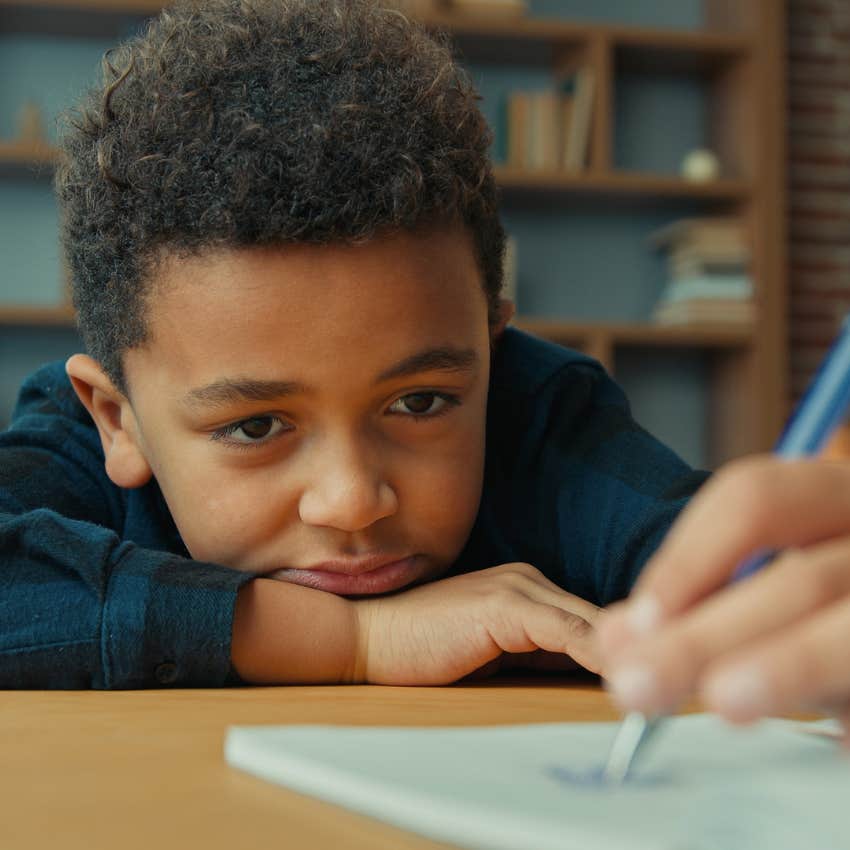
Evidence, like a study from the journal Life, suggests that handwritten notes, especially for younger children, are more efficient in boosting attention, memory, and concentration over digital alternatives.
So, while most kids in the 90s didn't have personal computers to take their notes on in class, and were forced to write them by hand, it's still an expectation that would truly benefit modern students, even if it didn't make sense.
2. No phones
While it's obvious that "no phones" was a rule in the 90s, because they didn't have them, it's a rule that most kids today couldn't even fathom. Even though countless studies have shown that a phone-free education environment often serves kids best — socially, emotionally, and academically — many districts struggle to find the right way to enforce these expectations.
Kids are suffering at the hands of their screen time, but are stuck in a spiral of overusing it for comfort and to assist them in making school more convenient.
3. Boring detention
While it might seem counterintuitive, and there certainly are benefits to making kids do homework during detention, boredom is actually more powerful than we realize. Many kids who struggle behaviorally in school don't have a chance to practice mindfulness in any aspect of their lives.
Whether it's chaos at home or a desire to "perform" for their class, making detention "boring" could give them a chance to practice self-regulation and reflect on their behavior. It's just one example of an unwritten school rule from the 1990s that may never make sense to kids today, but would serve them a lot of good in our world of constant discretion and stimulation.
4. Erasing chalkboards after class
Usually, a form of detention offered to kids who misbehaved during class, erasing chalkboards after class is one of the school rules from the 1990s that would never make sense to kids today. There were no power buttons for "smart boards" or projectors to put away with a single draw string — everything was handwritten, with chalk, and needed to be washed by someone.
As research around handwritten notes suggests, chalkboards and the practice of writing instructions, answers, or questions are something that modern students could be missing out on.
5. Taking attendance out loud
 PeopleImages | Shutterstock
While many kids are used to logging attendance online or tracking it themselves from their computers in today's world, having a teacher take five minutes to do it out loud is a school rule from the 90s that would never make sense to them now.
Of course, it may not be as time-efficient or "convenient" to do this practice out loud, but it can offer space for genuine interaction between students and their teachers. Not only is it holding them accountable, but it's making them feel special and seen, even if it's just for a few fleeting moments.
6. Being trusted to walk home alone
Compared to the "fend-for-yourself" attitude of many 90s parents, kids today are highly supervised almost all of the time, whether it's at school or in their personal lives. They don't have the same kind of "play" to figure out as kids a few decades did, so walking home from school is one of those expectations from the 1990s that would never make sense to kids today.
Especially if they didn't have a phone to rely on for directions, kids today would be lost trying to figure out how to navigate the world — and probably, also more unsafe in doing so.
7. Learning cursive
Considering cursive was cut from Common Core standards in many schools, it's not surprising that learning it is one of the school rules from the 1990s that would never make sense to kids today. Not only do they miss out on reading and writing it, but they also miss out on the accessibility of old letters, books, and documents that primarily use cursive to convey their message.
While keyboards and digital options are more prevalent than handwriting today, that doesn't mean there's not still some value in learning to, at least, read cursive in the modern world.
8. Using encyclopedias to research class projects
Being expected to pull out encyclopedias to research for projects and learn things is one of the school rules from the 1990s that would never make sense to kids today. They have the entire internet, Google and, oftentimes, AI at their disposal for whatever question they might have.
Why flip through an entire book? However, while these convenient alternatives might save time, they're sabotaging critical thinking for many kids.
9. Needing to carry a hall pass around
 Hryshchyshen Serhii | Shutterstock
While kids today can often slip out of class or use a technological alternative, carrying around a physical hall pass — usually a random object from the teacher — is one of the school rules from the 1990s that you couldn't get out of. If you were caught in the hallway without one, it was another hour of boring detention or chalkboard cleaning to sit through.
Of course, these small rules and expectations are lost on kids today, largely because of shifting norms and regulations for school districts and their classrooms.
10. Needing exact change for school lunch
Without technology and lunch cards for students, it's not surprising that "exact change" was the norm. So, when modern kids watch movies where bullying is about "stealing lunch money," that's what they mean — not a prepaid lunch card or digital debt system.
Of course, the discussion of school lunch in modern schools is nuanced in its own ways. Yes, kids can get lunches without needing to bring physical cash, but the reality that they'll be able to afford it or pay off that debt is becoming more challenging as schools lose funding and households struggle to afford basic necessities.
11. Sharing physical textbooks
Many kids in the 90s were forced to share a classroom collection of physical textbooks with their classmates, instead of being expected to buy their own or use a computer to access a digital copy. Of course, today, it's almost inevitable that kids will access everything — from textbooks to homework and even grades — from their computers.
Even as adults, appreciating physical books for reading over digital alternatives can have a lot of benefits for general well-being. So, it may seem like a silly rule from the 1990s that kids today wouldn't understand in the face of digital accessibility, but it certainly had its benefits.
Zayda Slabbekoorn is a senior editorial strategist with a bachelor's degree in social relations & policy and gender studies who focuses on psychology, relationships, self-help, and human interest stories.
