
People Raised With Both Morals & Confidence Often Say 10 Casually Brilliant Phrases
 Pics Five | Shutterstock
 It's rare to find people who are both confident and deeply ethical. Too often these days, confidence is gained by putting other people down so you can rise to the top. But confidence and morals can exist together, especially when someone is raised with a strong ethical foundation.
In fact, people who have both tend to be some of the most compelling, charismatic leaders on the planet. Sure, they're harder to come across, but when you hear them say things like this, you're probably in the presence of one of these unicorns.
People raised with both morals and confidence often say casually brilliant things like this:
1. 'I can admit when I'm wrong'
 Antonio Guillem | Shutterstock
Most people don't want to admit when they're wrong and they run away when faced with their own mistakes. But moral and confident people don't have the same issue. Unlike others, they can say, "I can admit when I'm wrong," and mean it.
Often, this is because of how they were raised. Their parents likely allowed them to make mistakes without shaming them, instead expecting accountability. Their parents also likely modeled this sort of accountability themselves, apologizing when they've made a mistake or hurt someone else.
Is it kinda embarrassing to admit you're wrong? Absolutely, but acknowledging your mistakes isn't a sentence. It can build credibility and respect. That's why moral people never shy away from accountability. They know that taking accountability is what makes us grow every day.
2. 'I'd rather be upfront'
 Anatoliy Karlyuk | Shutterstock
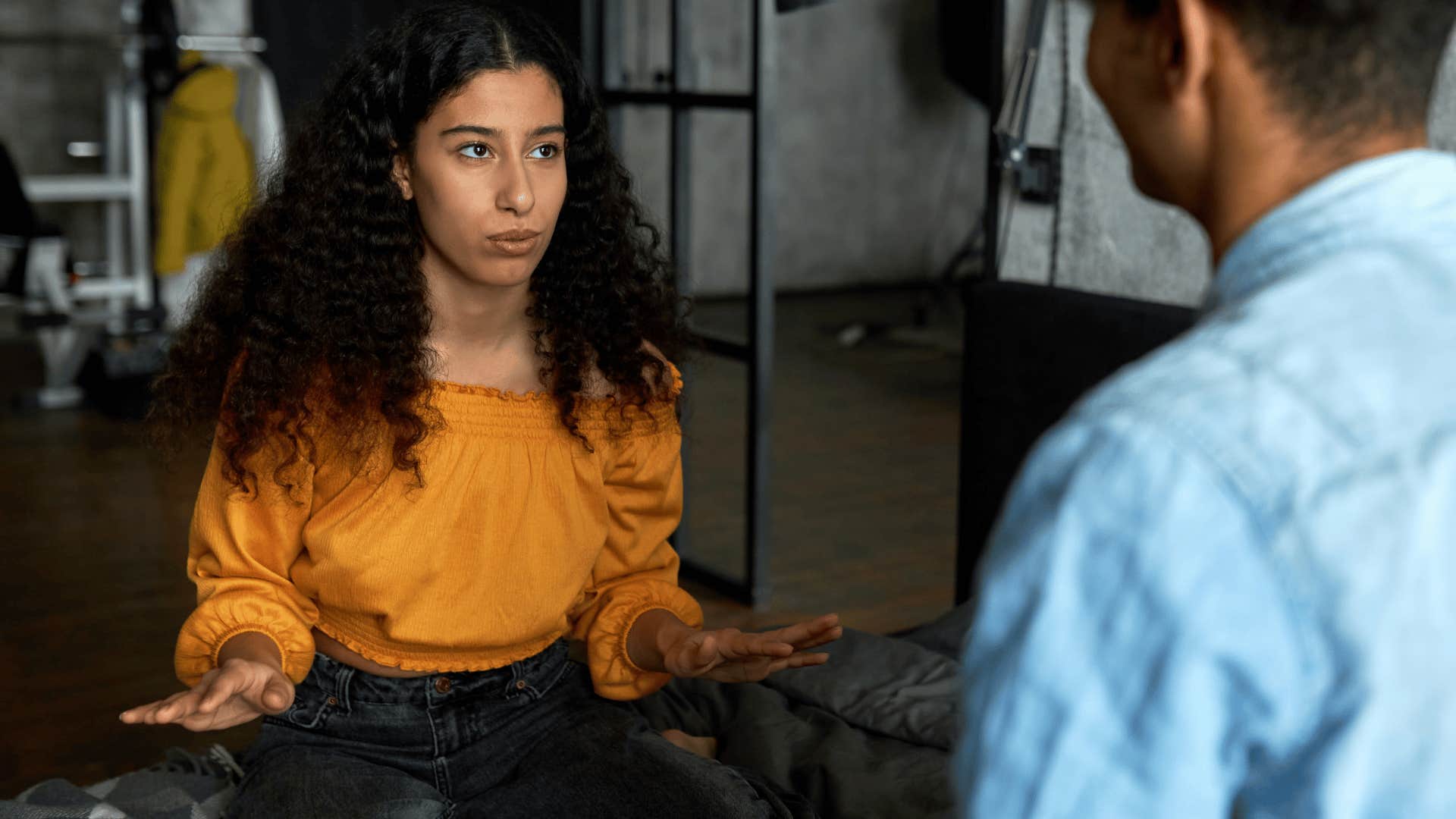
Is it easy to be honest? Absolutely not. We try, but honesty can quickly turn chaotic once someone's feelings are hurt. That's why so many of us try to sugarcoat what we say in order to avoid drama (or so we think!). It isn't the most moral thing to do, but it often feels harmless.
Yet while this excuse sounds good, dishonesty breaks relationships. It causes us to distrust others and doubt their intentions. Moral people know this, which is why so many people who are both confident and moral will tell you the truth as kindly as possible, but they'll always be direct.
This happens when parents allow their kids to be honest, and were honest in return. This creates an innate confidence and a moral compass that is pointed at truth over manipulation.
3. 'I don't need everyone to agree with me'
 we.bond.creations | Shutterstock
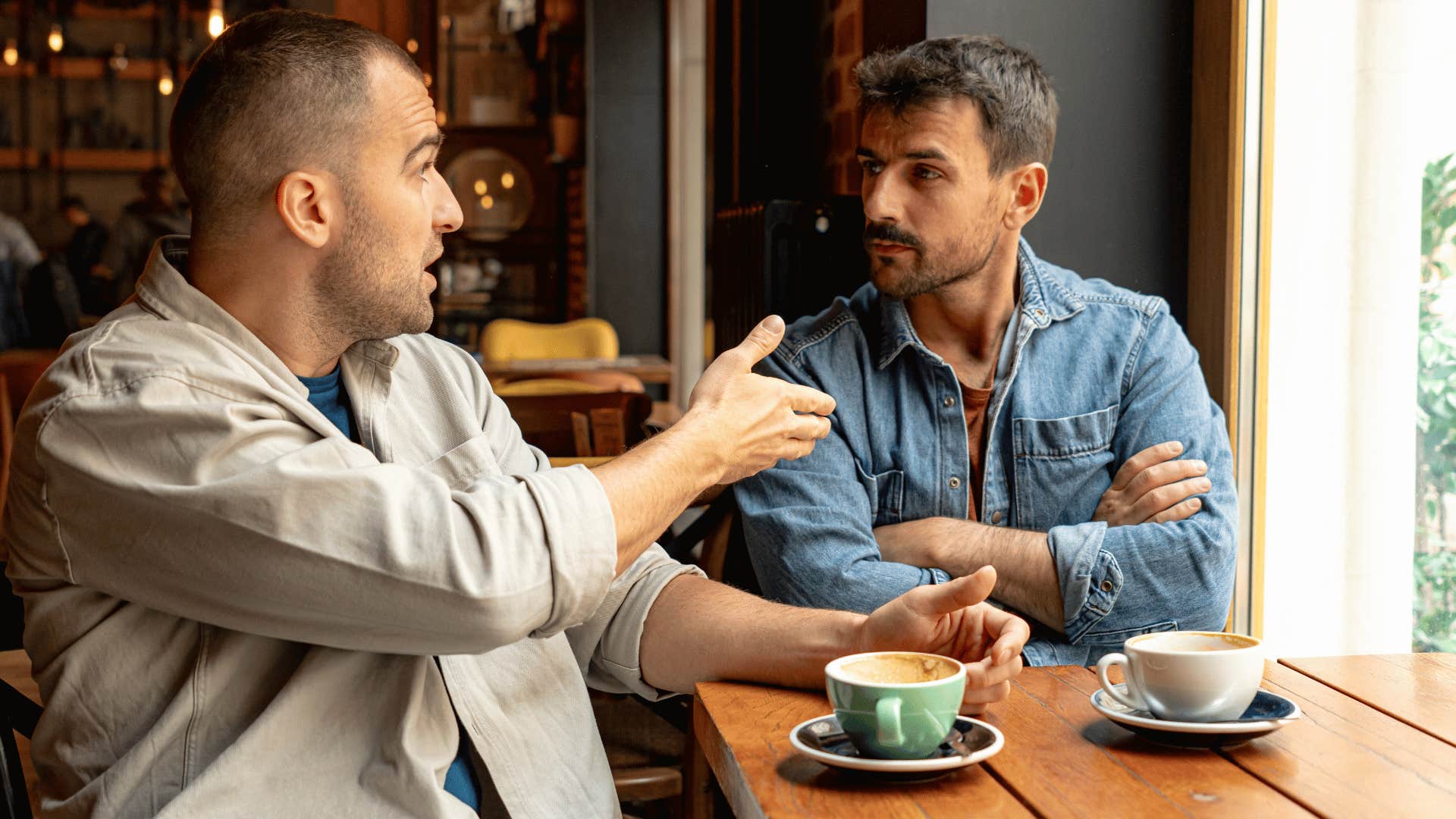
Morally confident people don't need validation from every person they meet. Because they were raised to be highly independent, they mean it when they say, "I don't need everyone to agree with me." These folks are highly self-sufficient. They're resilient and, unlike others, don't allow others' commentary to keep them up at night.
While they appreciate your opinion, confident people don't use it as a marker for how they should think or live their lives. They also don't need to browbeat anyone into agreeing because they're OK with their own opinions.
This often comes from being parented by people who made their home a safe place to respectfully disagree. People were heard out, their opinions were valued, but they weren't coddled into thinking everyone agreed and that creates confidence.
4. 'I take full responsibility for that'
 Branislav Nenin | Shutterstock
Most people are low-key terrified to say, "I take full responsibility for that." As marriage and family therapist Marisa T. Cohen, PhD, LMFT, explained, "Being vulnerable is not easy and takes time, as it requires us to let our walls down and let someone see our true selves."
That's probably why only moral and confident people take full accountability. Unlike others, they don't have an ego. They can see it from another perspective, which is why they're so great at reflecting and apologizing.
Their parents probably apologized to them, even when they were kids, when an apology was warranted. This taught these people that taking responsibility isn't weak, it's actually a sign of great strength.
5. 'That doesn't feel right to me'
 Fit Ztudio | Shutterstock
Now more than ever, we need people who are willing to stand up for what's right, even when it's unpopular.
Too many of us today say we'd speak up when we saw something bad happen, but when it comes to doing the right thing, too many people people buckle under pressure. Thankfully, morally confident people are the complete opposite. They don't allow others to change their heart. If something doesn't feel right, they'll happily say, "That doesn't feel right to me."
It isn't easy, but at least they have a clear conscience. Whatever they do, they do with their full chest. Even if it causes a little drama, these folks don't care. If sticking up for what's right ruffles feathers, well, it sounds like a personal problem.
How does a parent raise a child who can do this? While there isn't just one way to raise an ethical child, it helps when parents stand up for what's right themselves, even when it makes them unpopular. This happens at home and in public. On top of that, parents should be willing to hear their children out when they say "Mom/Dad, this doesn't feel right to me" and stand by their kid or at least respect how their child feels.
6. 'I'm not going to hold that against you'
 fizkes | Shutterstock
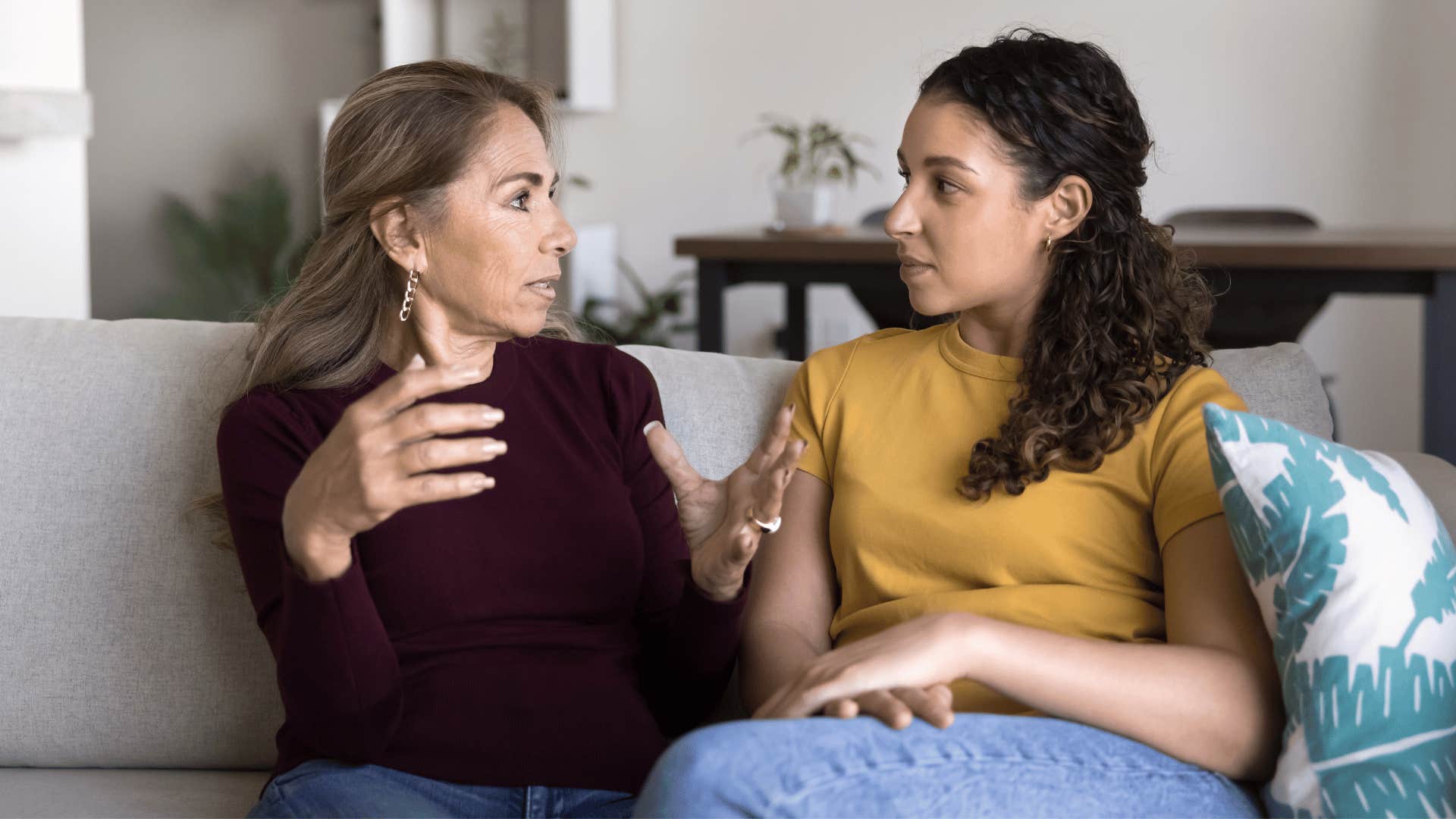
Many people are a little vengeful. They know that it isn't good for them and that forgiveness is linked to well-being. But once someone commits to revenge, they'll hold just about anything against the other person. Thankfully, morally confident people know better, which is why they say, "I'm not going to hold that against you."
Is it tempting to blame the other person? Yes, but these moral and confident people see the human in you. The same way they'd want grace given to them, they give grace to others. That's why they never hold a grudge. It isn't just unhealthy, but it's unhelpful too.
This often happens when parents model this at home and out in the world. When they can honestly say to their child that they forgive them and then move on, the child learns how to let go of grudges, too.
7. 'I don't need to win every argument'
 Pixel-Shot | Shutterstock
Not everyone is determined to win an argument. While it feels good to be right, the main goal in any conversation isn't to win, but to understand one another better. That's why morally confident people push their ego aside and say, "I don't need to win every argument."
It isn't about being the smartest person in the room. If they're already confident, they don't need to impress. In reality, they want to connect with the other person. They want the other person to let their guard down and understand that it's a safe space. That's why they subtly remind people of their main objective. It's extra, but it goes a long way.
When parents want to raise a confident child who grows into a moral adult, they establish that disagreements aren't about winning, they're about resolving problems and understanding one another better. That means modeling that to their kids by showing up to conversations with compassion and compromise, just as they hope their kids will do in the future.
8. 'I see where you're coming from'
 PeopleImages | Shutterstock
Human beings are designed to connect. It doesn't matter how much you claim to be an introvert. It's in our nature to secretly seek out some form of relationship in ways that make sense in your nature. Morally confident people know this, which is why they do their best to say, "I see where you're coming from."
Do they always fully understand your perspective or agree? No, but that isn't the main point. If they want to fill gaps, they gotta stay open-minded. Even if it's uncomfortable, a brief moment of discomfort is worth it if it saves their relationship.
The parents who raise kids into adults who can empathize and who make an effort to understand have modeled this for their kids. Instead of forcing their kids to agree with them or follow every single rule and standard to the nth degree, they allow their kids to have their own opinions and to express themselves uniquely.
9. 'I don't know, but I'll figure it out'
 EF Stock | Shutterstock
Nobody has all the answers, though we all know someone who thinks they do!
In life, nothing is ever 100% certain. But just because uncertainty exists doesn't mean people need to fall into despair. Like morally confident people, you've got to be self-assured enough to say, "I don't know, but I'll figure it out."
The most resilient people out there became this way by stumbling in life. They never had all the answers, but they weren't quitters. Every time they fell, they picked themselves up and became even wiser. That's probably why they're so confident. If they've gone through the worst, they know everything else will work out somehow, someway.
This happens (yes, you guessed it!) by watching their parents admit to not knowing everything. These same parents help their kids find solutions and solve problems, so that they develop a type of grit that feeds into an organic, morally sound form of confidence.
10. 'I don't want to judge them too harshly'
 fizkes | Shutterstock
Everyone's so quick to judge others. It doesn't matter what the other person did or didn't do. In the name of feeling superior, 90% of people cast judgment without giving grace. Morally confident people dislike this, which is why they say, "I don't want to judge them too harshly."
It's easy to cast stones, but most people who do it aren't clean themselves. Like others, they've made the same mistake once or twice. That's why they extend grace. That way, other people don't just learn from their mistakes, but become the best version of themselves, too.
Parents who raise these moral and confident adults asked their kids to think a little more deeply after they made a judgment. For example, if the kid says, "Mom/Dad, I hate that kid, he always talks during class and annoys me!" the parent might say, "That sounds annoying, but I wonder why that kid does that? Do you think he's trying to annoy you or could it be something else? What are some ways his classmates could respond that isn't just mean?"
This is a conversation, not a lecture. It helps the child develop empathy, even for people who are different from them. It asks them to pause before saying something unkind, and helps them practice these skills so they can carry them forward into life.
Without these skills, kids will often struggle to display these behaviors that read as both confident and moral. By practicing them with parents as kids, they grow the "muscle of integrity, and that is something more valuable than almost any lesson a parent can teach.
Marielisa Reyes is a writer with a bachelor's degree in psychology who covers self-help, relationships, career, family, and astrology topics.
