
9 Habits You Picked Up From Watching Your Parents Fall Out Of Love When You Were A Kid
 BearFotos | Shutterstock
 Experiencing divorce as a kid has lifelong consequences.
While many adults can heal from their childhood trauma and learn to love without constant fear, there are certainly habits you picked up from watching your parents fall out of love when you were a kid. Whether they're coping strategies you leaned on as a child or defense mechanisms in the face of relationship struggles today, being a child of a loveless relationship or marriage can have lifelong repercussions.
Here are 9 habits you picked up from watching your parents fall out of love when you were a kid
1. Blaming yourself for everything
 Prostock-studio | Shutterstock
Magical thinking is often what leads to self-blame for children, such a child believing a passing thought like "I don't want to hear my parents fighting" is the reason they broke up. They become used to blaming themselves for not being able to save their parents' marriage or love.
Even in adulthood, when they realize it wasn't actually their fault, that tendency to self-blame sticks around. Whether that manifests itself as people-pleasing or predicts their depressive symptoms on a daily basis, they can't help but chip away at their own self-worth with guilt and shame.
2. Avoiding commitment and labels
If you watched your parents break their own commitments and fall out of love, despite making a lifelong vow, chances are you struggle in adulthood with trusting the security of a relationship. Whether you're avoiding commitment and labels out of a fear of abandonment or self-sabotage to cope with fears of rejection, your childhood experiences are likely to blame.
You were taught, somewhat indirectly, by your parents that loving meant leaving. Of course, you're uncertain about letting people in today.
3. Searching for belonging everywhere
Many kids who watch their parents get divorced feel like they've lost "home." The security and commitment of the family unit were no longer the same, and they often felt lost and isolated. Now, as adults, they may still be coping with that isolation.
Feeling like an outsider prompts oversharing tendencies and trying to force connections, when in reality, all that does is push them away from connection even further. Dealing with divorce can prompt lifelong grief. It's never really over. It just manifests in these unsuspecting, unfortunate ways later in an adult child's life.
4. Self-sabotaging romantic connections
Many adult children of divorce can't help but self-sabotage their romantic connections and relationships. They have strong fears of abandonment and rejection because they watched it firsthand, at an incredibly vulnerable, impressionable stage of life. Now, avoidance and blame are means of testing someone's loyalty, no matter how misguided.
Whether it stems from a lack of self-worth or a sense of chronic mistrust, they rarely lean into romance with an honest, open heart. They're not bad people or incapable of love, they've just adopted these trauma responses as a form of self-preservation early on that's now hard to unlearn.
5. Overthinking everything
 MAYA LAB | Shutterstock
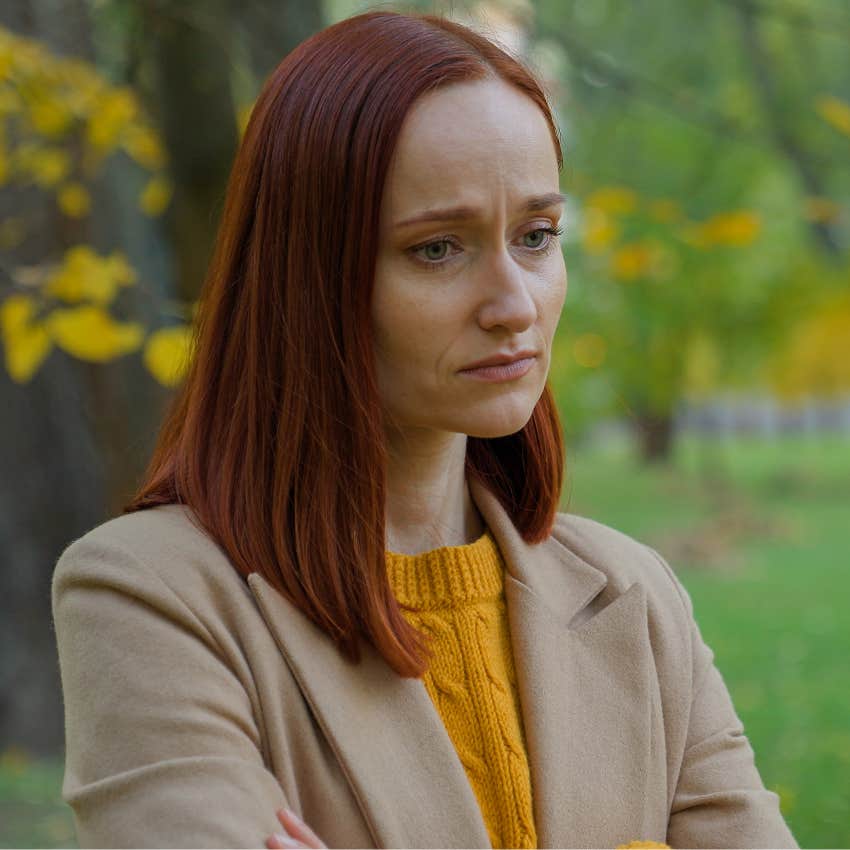
According to a study from the Journal of Affective Disorders, childhood trauma is a common risk factor for anxiety and depression in adulthood. Especially when parents fought constantly or weaponized anger, kids adopted a kind of uncertainty that followed them into adulthood. Even though they don't have to walk on eggshells anymore, they still can't help but overthink everything.
Especially in romantic relationships, they're often more insecure and anxious. They watched someone fall out of love, and now every passing excuse or canceled plan is a reason to believe they're going through the same things.
6. Overspending or worrying about money
Especially after divorce, the attitudes and behaviors parents model around money seriously shape their kids later in life. From worrying openly about money to overspending for a sense of security, adult children tend to adopt similar behaviors.
For people, their reasons for overspending may look different, but most of the time, it's an emotional coping strategy. To cope with feeling out of control or insecure, they buy something for instant gratification, even if it comes with guilt later on.
Feeding into trends and spending can also be a mode of seeking belonging. For kids who felt like outsiders because of their home life and parental situation growing up, this coping mechanism can help fill that void, no matter how misguided.
7. Clinging to your independence
Hyper-independence is a coping mechanism for many people with childhood trauma that offers a sense of control. If they felt out of control in their house growing up or incapable of changing the fate of their parents' marriage, clinging to their independence as an adult is their way of coping.
They likely had to provide their own assurance and support for themselves as kids, and now they hold onto that self-reliance as proof that they don't need to let anyone else in. In many cases, they also actively self-sabotage and push people away, further isolating themselves to avoid the risk of being seen and loved.
8. Protecting other people's comfort
Many kids develop beliefs and ideas about self-esteem as early as five years old. While all kinds of things affect a kid's emotional and self-esteem development, watching parents fall out of love or divorce can be a strong influence. While low self-esteem can manifest in all kinds of ways later in life, many adult children end up people-pleasing to protect the peace.
To avoid the worry and anxiety they faced daily at home growing up, they now protect everyone's comfort, even at their own expense. They tolerate misbehavior and consistently say "yes" to things, just because their internal comfort is externally fed.
9. Needing to be around a partner all the time
 simona pilolla 2 | Shutterstock
If you did end up in a romantic relationship or partnership, it's not uncommon for lingering feelings of fear and anxiety to spark dependence. Especially if you bore witness to emotional disconnection or one parent's poor choices leading up to a separation, there's a chance that clinging to your own partner is a form of defense.
Even if it seems silly on the surface, subconsciously you're trying to protect yourself from missing signs that they don't love you anymore. You're dependent on their mood and commitment to feel secure, even if trying to be around them all the time, surveying their behavior, is actually pushing the two of you apart.
Zayda Slabbekoorn is a senior editorial strategist with a bachelor's degree in social relations & policy and gender studies who focuses on psychology, relationships, self-help, and human interest stories.
