
People Who Can’t Sleep Well When The Heater Is On Usually Have These 11 Distinct Personality Traits
 fizkes / Shutterstock
 Turning on the heater at night can make some people feel cozy and comfortable. But for others, it’s an instant sleep disruptor, leading to restless tossing and turning, shallow breathing, or a sense that something just feels off. While it’s easy to chalk this up to a temperature preference, sleep researchers have found that sensitivity to heat at night is often linked to deeper patterns in how a person’s brain and body function.
People who can't sleep well when the heater is on often share surprisingly specific personality traits tied to awareness, self-regulation, and sensory sensitivity. They tend to notice subtle changes others overlook, feel thrown off by small disruptions, and place a high value on physical and mental equilibrium. These traits can influence everything from how they manage stress to how they think, work, and connect with others.
People who can't sleep well when the heater is on usually have these 11 distinct personality traits
1. They are highly sensitive
 Wasana Kunpol | Shutterstock
People who can't sleep well when the heater is on are usually highly sensitive. It doesn't matter how little the room temperature changes. Even if it's only slightly warmer, these individuals can feel this. As clinical and research psychologist Elaine N. Aron, Ph.D., pointed out, "Sensitive individuals process their environment so deeply that they are inevitably more affected by both the good and the bad within it."
This is why they can't sleep well when the heater is on. It may seem random, but if they grew up sleeping in colder environments, they are likely to process environmental changes much more deeply than the average person.
2. They tend to be perfectionists
 Ground Picture | Shutterstock
From the outside, perfectionists may appear to have their lives together. That said, having perfectionist tendencies isn't always as admirable as people might think. Perfectionism often stems from anxiety. Wanting to heavily control their environment due to their anxiety, it's no surprise that people who can't sleep well when the heater is on usually have the distinct personality trait of being perfectionists.
Perfectionists like everything to go according to plan. From their bed being made a specific way to the temperature always remaining consistent, a perfectionist will not be able to sleep well if things aren't arranged the way they like them.
3. They tend to over-think
 Tonuka Stock | Shutterstock
Chronically overthinking is bound to be exhausting for one's mental health. This is one of the many reasons why good sleep is crucial. For those who can't shut off their minds during the day, nighttime can be the perfect opportunity for a break.
As the authors of a study published in the Journal of Clinical Sleep Medicine explained, "Healthy sleep is important for cognitive functioning, mood, mental health, and cardiovascular, cerebrovascular, and metabolic health."
People who can't sleep well with the heater are often overthinkers. When the room is hot, it can cause them to toss and turn in their sleep. The more they stay awake in their discomfort, the worse their overthinking becomes. This is why keeping the room cool is so important. Otherwise, they might worry themselves so much that they struggle to get true rest.
4. They are health-conscious
 Art_Photo | Shutterstock
Not everyone cares about how much sleep they should get. Sure, professionals may recommend the average eight hours. However, staying up late and sleeping only a few hours has become all too common. While this might be normalized for some, those who care deeply about their physical well-being are a bit more careful, and people who can't sleep well when the heater is on are usually too health-conscious to deny themselves a proper sleep environment.
According to board-certified internal medicine physician Austin Perlmutter, M.D., "A cooler bedroom supports deep sleep by aligning with the body’s natural temperature drop." This is why health-conscious people often prefer colder rooms. As Perlmutter said, this is not only because "overheating at night can reduce deep sleep and increase wakefulness," but because they know the ideal natural temperature at which our bodies prefer to sleep.
5. They love routine
 Andrii lemelianenko | Shutterstock
Let's face it. Not everyone wants to wake up early and follow a strict routine. As much as influencers might try to convince us of the importance of an established routine, not everyone has the self-discipline to remain consistent.
That being said, people who can't sleep well when the heater is on usually love a good routine. From wearing a face mask every night to keeping the room cool while they sleep, these individuals thrive on consistency and do everything in their power to stay organized. While it may seem like a lot of work, according to licensed mental health counselor Steve Alexander, Jr., M.A., Ed.M., ARM, LMHC, "Routines contribute to better mental health."
6. They are light sleepers
 New Africa | Shutterstock
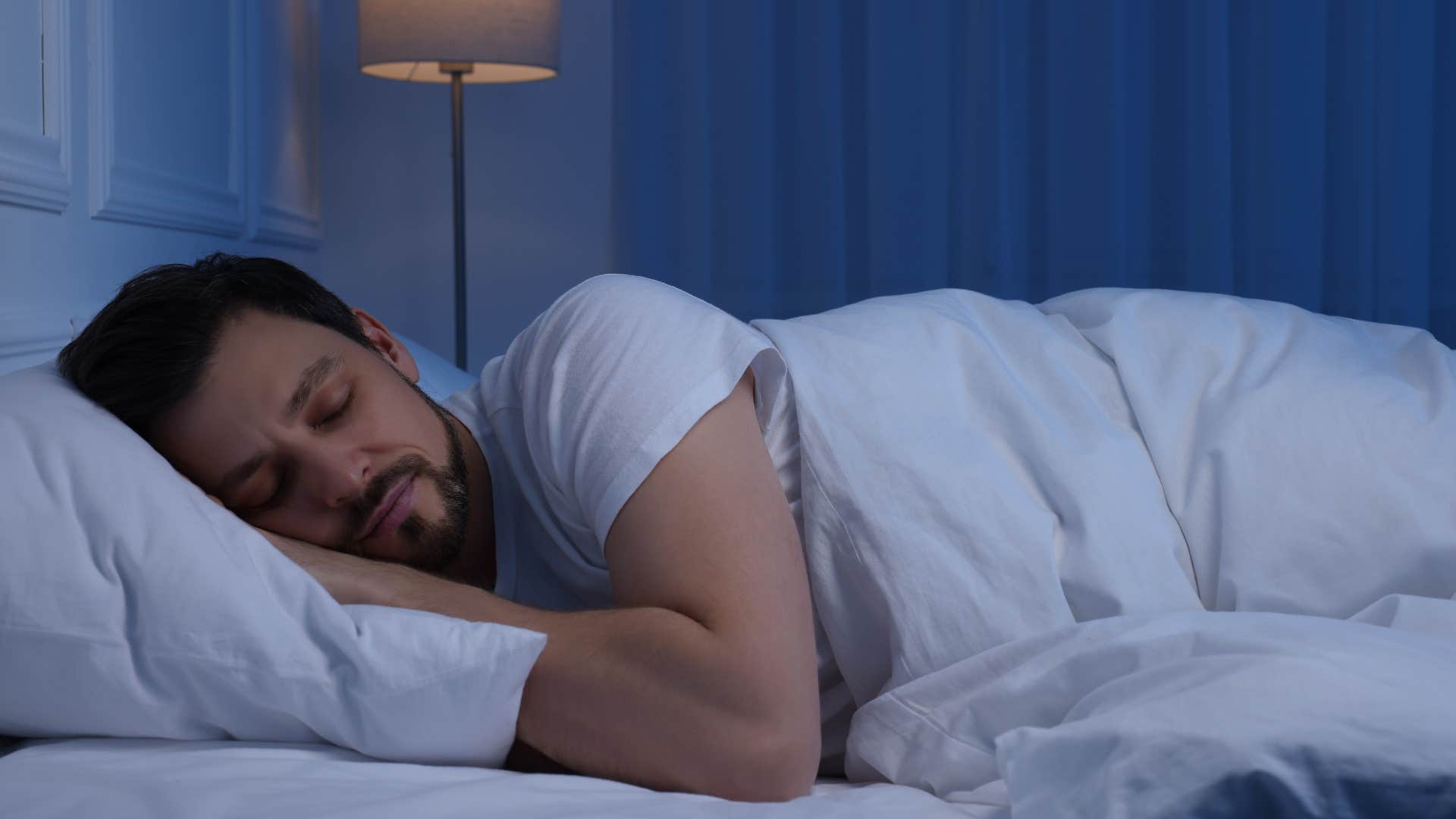
While some people can sleep through a storm, others jump wide awake at the slightest sound. People who can't sleep well when the heater is on are usually light sleepers who are highly prone to waking at the slightest disruption.
Given the noise of a heater automatically turning on or off, expect these individuals to find themselves wide awake at some point in the night. It doesn't matter how small the disturbance is. If someone messes with their environment, expect them to wake up fairly easily.
7. They may be introverted
 dodotone | Shutterstock
There are three types of people in this world when it comes to how we expend our energy: introverts, extroverts, and ambiverts. While many people claim to be introverted, only a select few are actually classified as such. Many who fit into this category may find themselves having more trouble sleeping than others.
Introverts are fairly anxious by nature. According to a study published in 2019, introverts are more likely to experience social anxiety compared to extroverts. Constantly experiencing stress and being on edge, it's no wonder they are highly sensitive to their environment.
It sounds silly to some, but slight discomfort isn't just an annoyance for introverts. It's one of the many reasons introverts lose sleep. This is why they prefer to keep their rooms colder than most people.
8. They are creative thinkers
 kenchiro168 | Shutterstock
People who can't sleep well when the heater is on are often highly creative thinkers. Throughout the day, creative people are always using their brains. Whether at work or out shopping, their mind is constantly thinking up outside-the-box ideas. With little room to relax, creative people often find themselves a bit on edge, sometimes reaching the point of complete burnout.
This is why every little thing, including a hotter room, may bother them. Their heightened sensitivity causes them to feel more attuned to their surroundings than the average person.
9. They are cautious
 Ground Picture | Shutterstock
People who can’t sleep well when the heater is on are often naturally cautious individuals. They tend to be highly attuned to potential discomfort or risk, even in situations others consider harmless, such as a warm room at night. When the air feels too still or too hot, their brain has a harder time fully relaxing, because part of them stays alert, monitoring their surroundings. This cautiousness isn’t rooted in fear so much as awareness. Their nervous system prefers conditions that feel balanced, breathable, and predictable in order to fully power down.
That same cautiousness often shows up in their waking life as thoughtful decision-making and a strong preference for preparation. These people usually think things through, anticipate outcomes, and avoid unnecessary extremes. While this can make them reliable and grounded, it can also mean they struggle to relax when conditions feel even slightly off. A heated room at night can signal a lack of control or an environmental imbalance, making it difficult to rest until everything feels just right.
10. They are mindful of others
 insta_photos | Shutterstock
People who struggle to sleep with the heater on are often especially mindful of others. They tend to be aware not just of their own comfort, but of how their presence, actions, or needs affect the people around them. At night, this heightened consideration can translate into a lighter, more vigilant sleep, especially if the environment feels heavy or overstimulating. Warm, stagnant air can make it harder for their minds to fully disengage, as they’re accustomed to staying subtly on for the sake of harmony or responsibility.
In daily life, this mindfulness often shows up as anxiety, empathy, attentiveness, and an instinct to accommodate. These individuals notice emotional shifts, pick up on unspoken needs, and often put others at ease without realizing it. The downside is that they may struggle to fully prioritize their own comfort, especially in shared spaces. Sleeping well usually requires conditions that allow one to feel both physically at ease and mentally unburdened, which is something a heated room doesn’t always provide.
11. They tend to be perceptive
 New Africa | Shutterstock
People who can’t sleep well with the heater on are often highly perceptive. They tend to pick up on small environmental changes, such as shifts in temperature, airflow, sounds, or even air quality, that others might barely notice. When a room is heated, these subtle cues can feel amplified, making it harder for their mind to slip into rest. Their brains stay engaged, processing details instead of tuning them out, which can interfere with deep, restorative sleep.
That same perceptiveness is a strength during the day. These individuals are usually observant, intuitive, and quick to read situations or people accurately. They notice patterns, sense when something is off, and often anticipate issues before they arise. While this makes them insightful and emotionally intelligent, it also means their nervous systems need the right conditions to truly relax. Cooler, fresher air helps quiet the constant stream of input, allowing their awareness to finally power down for the night.
Marielisa Reyes is a writer with a bachelor's degree in psychology who covers self-help, relationships, career, family, and astrology topics.
