
You Can Tell 11 Things About A Couple's Relationship If They Sleep Facing Opposite Directions At Night
A couple's sleep positions reveal quite a lot about the state of their relationship.
 LightField Studios | Shutterstock
 While it might seem harmless, our sleeping positions at night, especially in relationships, often say a lot about our quality of rest and connection with our partners. For example, according to a study from the Journal of Social and Personal Relationships, couples who cuddle closely when falling asleep often boast more secure relationship attachment styles and less stress compared to those who don't. So, it's not surprising that you can then tell certain things about a couple's relationship when they sleep facing opposite directions at night.
Of course, it could be a matter of comfort, temperature, or sleep quality, but it could also be a red flag into how a person feels in their relationship and how they feel themselves. From dealing with stress to experiencing emotional disconnection with a partner, how we sleep and prioritize closeness in bed is more insightful than it seems.
You can tell 11 things about a couple's relationship when they sleep facing opposite directions at night
1. They need personal space to decompress
 Prostock-studio | Shutterstock
Crafting spaces for alone time and physical space is often a healthy way for partners to regulate their emotions and feelings. Even if it's facing opposite directions at night in the same bed, it's these couples, who actively carve out space to decompress, who often come back together more connected than others.
Of course, this doesn't mean weaponizing quality time and withholding affection, but being communicative about space when you need it.
2. They have different sleeping preferences
 StockPhotoDirectors | Shutterstock
Just because a couple has different sleeping preferences, like temperature, the weight of blankets, or their sleeping position, it doesn't necessarily say something about their relationship. In fact, there are plenty of healthy, happy, and connected couples who even sleep in separate beds to ensure they get the rest they need to show up as their best selves.
So, at the very least, you can tell a couple is prioritizing their own rest for the sake of personal and relationship well-being by facing opposite directions at night, especially if it's a conscious choice for comfort.
3. They're easily overstimulated
 MAYA LAB | Shutterstock
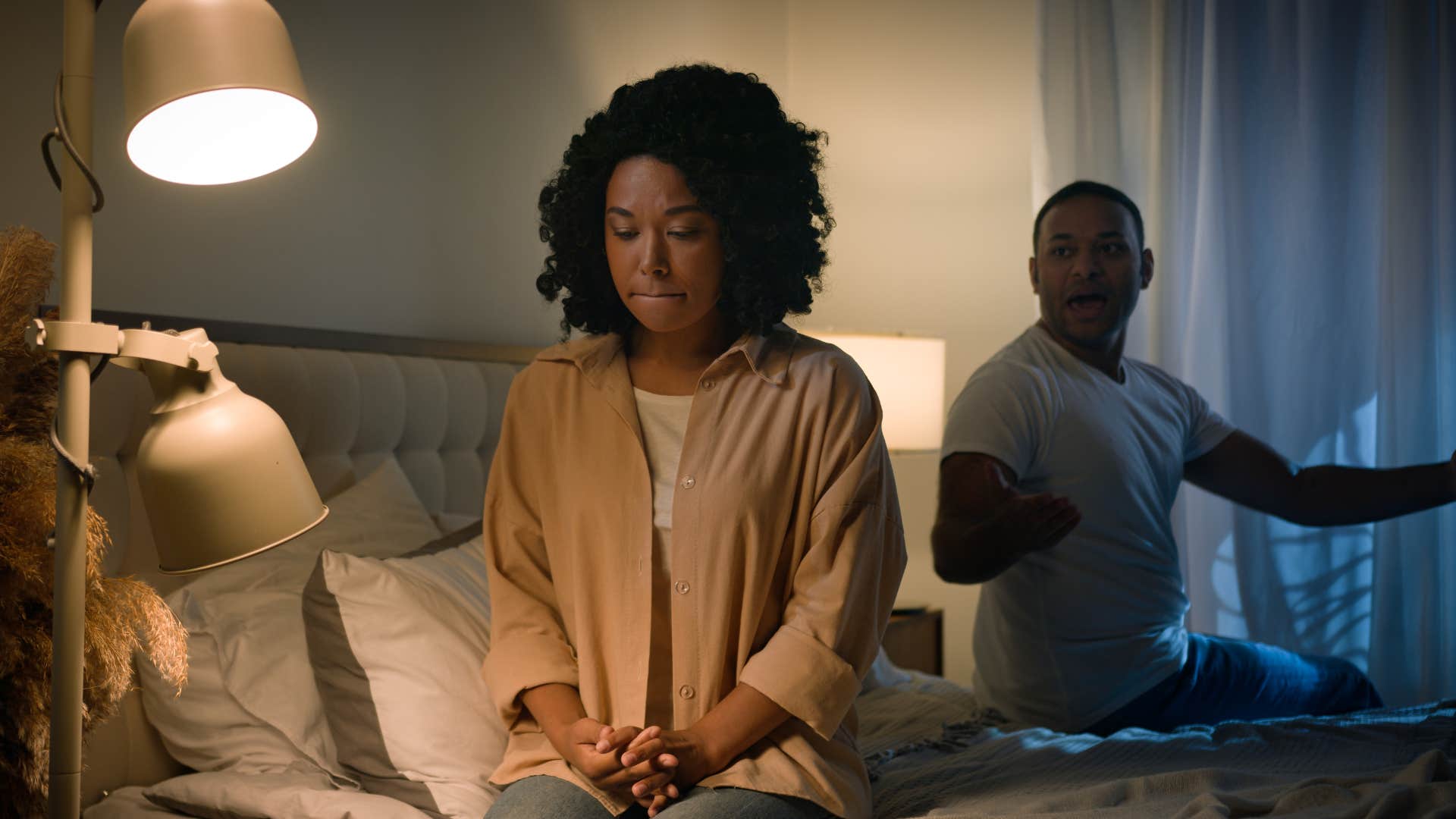
If a partner is easily overstimulated by being around others, being warm, or not having enough space to sprawl out in bed, chances are they'll likely face opposite directions when they're falling asleep. Even if it doesn't say negative things about a couple, it's likely indicative of a savvy couple that finds other small moments and environments to cultivate closeness.
Just because they're not leveraging the benefits of cuddling before bed doesn't mean that they're not still close, intimate, and connected.
4. They prioritize their own quality of sleep
 Krakenimages.com | Shutterstock
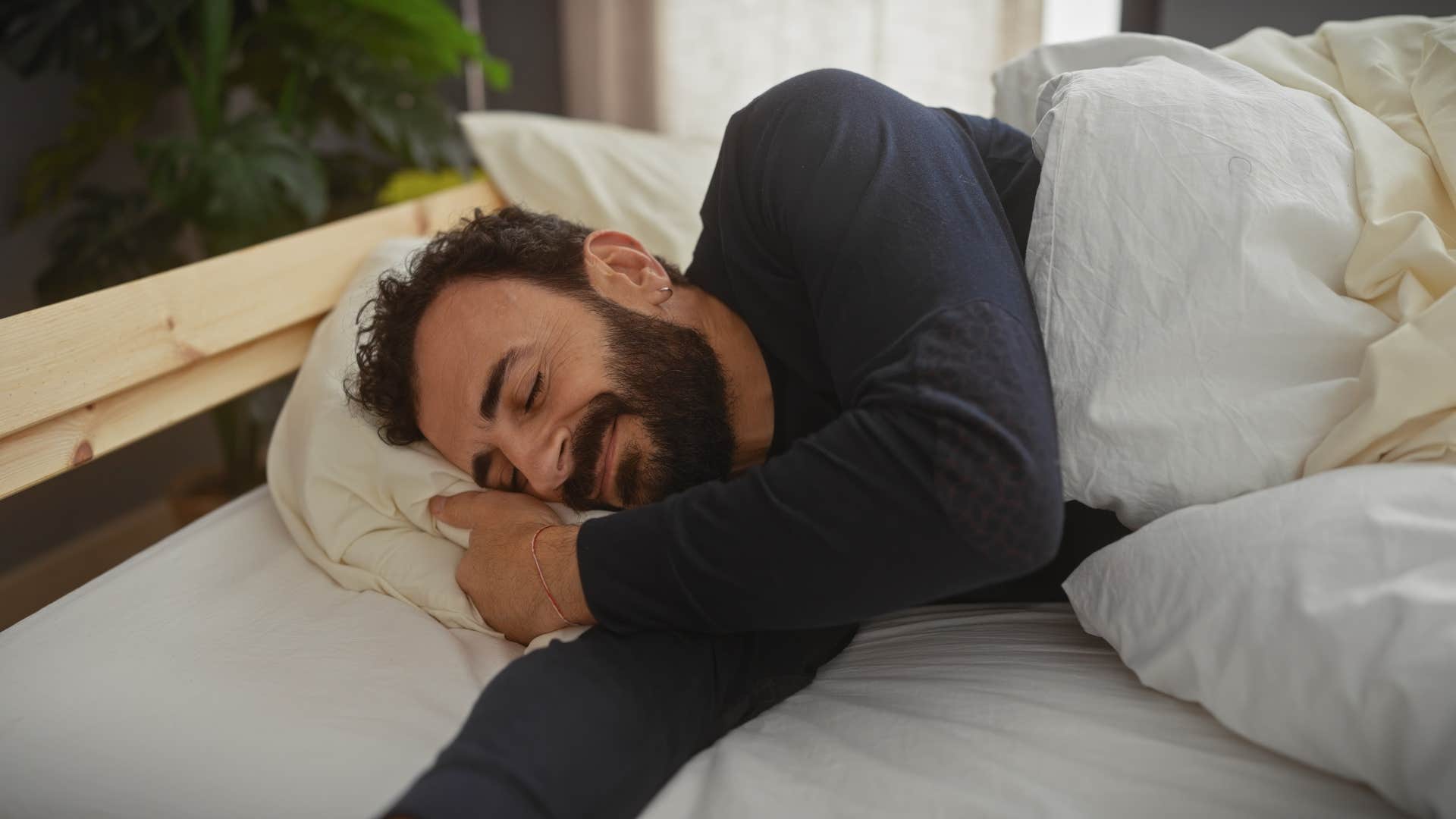
If a partner is prioritizing their own quality of sleep, chances are they're not willing to cuddle up with a partner, get really close at night, or sleep facing toward them if it's not comfortable. We all find sleeping positions and environments that work best for us, many of which don't have much to do with the quality of our relationships.
Some of us want to sleep in our own beds, while others prefer to be as close to their partner as possible. Some people like it cold, others hot. Comforter or no comforter. All of these choices play a role in how someone decides to prioritize their sleep quality, and for partners unwilling to compromise on them, it could lead to the latter.
5. They're overly stressed
 Krakenimages.com | Shutterstock
According to a study from Purdue University, partners who are constantly grappling with chronic stress don't just put their entire relationship and personal mental stability at risk, they also occasionally pass off their strain on their partners as individuals. Of course, in small ways, dealing with stress can be disengaging for couples, urging them to avoid physical intimacy, cancel plans, or lash out emotionally, all to cope with their own symptoms.
So, you can often tell these things about a couple's relationship when they sleep facing opposite directions at night. They may not be actively or consciously avoiding their partner, but are dealing with stress and internal turmoil that disconnects them anyway.
6. They're avoiding physical intimacy
 MAYA LAB | Shutterstock
If a couple is avoiding physical intimacy due to betrayal, emotional disconnect, or another reason, chances are they're going to shift how they get comfortable and fall asleep in bed. If they're still sleeping in the same room at all, there's still a clear divide between both of them — both physically and metaphorically.
While avoiding this kind of intimacy may bring a fleeting sense of comfort to a partner who's afraid of being abandoned, rejected, or hurt by vulnerability, in the end, it only separates couples subtly and brings them closer to a point of "no return" as a couple.
7. They're dealing with lingering resentment
 DimaBerlin | Shutterstock
Resentment often stems from suppressing complex emotions and avoiding conflict, because the concerns riddling a relationship aren't addressed, but pushed down into a growing pit of frustration. Of course, partners don't get rid of their anger or frustration simply by avoiding it; in fact, it only amplifies their frustration internally.
So, if a couple is going to bed angry and avoiding conflict that allows them to resolve issues, chances are they're sleeping facing opposite directions at night to cope internally and decompress. They avoid affection to cope with their emotional turmoil, but they may also avoid conversations for fear their emotional "floodgates" will come swinging open.
8. They feel unseen or unvalued
 DimaBerlin | Shutterstock
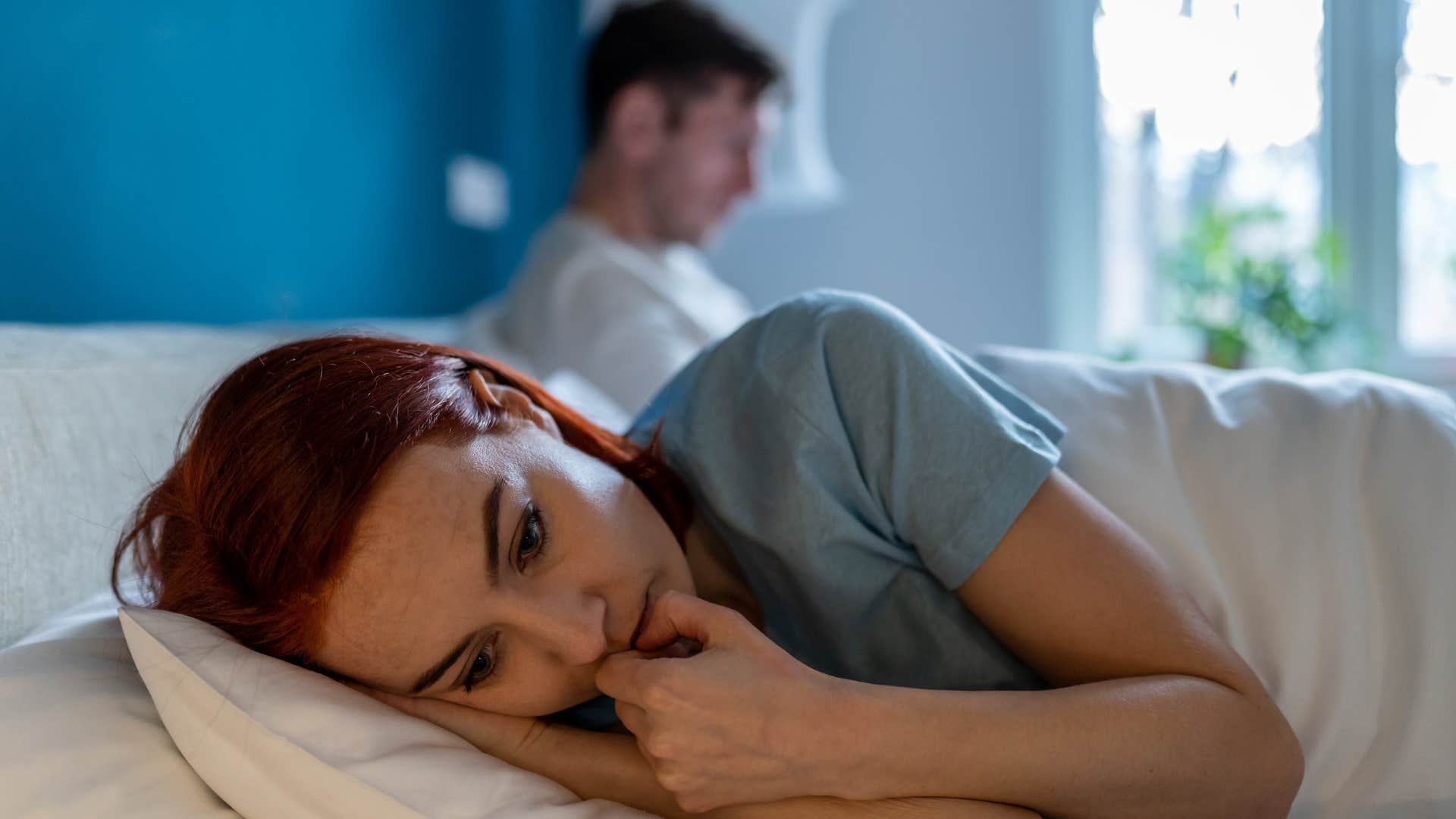
If a partner feels misunderstood emotionally in a relationship or disconnected on a deeper level than just the physical, it's not uncommon that they'll avoid intimacy in subtle ways. From going to bed later to avoid cuddling to sleeping facing opposite directions from their partner, it's people who feel most unseen and unvalued that throw themselves into the cycle of disappointment, resentment, and loneliness.
As a study from the Journal of Social and Personal Relationships explains, it's not just relationship quality that tends to suffer when a partner feels consistently misunderstood by the other, but also their general mental health, stress levels, self-esteem, and life quality. So, it's more serious than changes in sleeping positions or even the relationship itself — it's completely destabilizing.
9. They feel emotionally safe
 Prostock-studio | Shutterstock
On the other hand, a partner who feels emotionally safe in their marriage or relationship may not feel burdened with the pressure to cuddle or maintain closeness every night. They know that whether they make the time to cuddle every single night or not, their relationship will be healthily upheld and stable no matter what.
Of course, as a study from Scientific Reports found, physical affection and these small moments of intimacy do often play a strong role in relationship satisfaction. But for a couple that cultivates closeness in other ways, it's less likely that they'll put their sleep quality at risk for false closeness in bed at night.
10. They're more emotionally distant than they realize
 PeopleImages | Shutterstock
Considering physical affection and emotional closeness are often more connected than partners realize, it's not surprising that the loss of cuddling before bed or falling asleep facing away from each other is often associated with emotional distance. Even if the couple doesn't realize it, it's these small moments that shift first when couples start to drift apart.
You can tell these things about a couple's relationship when they sleep facing opposite directions at night, but there are a million more subtle shifts that happen in everyday life. From picking at petty arguments to disregarding commitments, the "red flags" that a couple needs space to reconnect compound easily into resentment over time.
11. They're perfectly fine
 Drazen Zigic | Shutterstock
While many experts and researchers have spent time investigating the link between sleeping position and relationship satisfaction, the truth is that not every couple falls in line with these observations. Some couples cuddle before bed and feel emotionally disconnected from the second they wake up. Others face away from each other all night and boast a healthy, secure, communicative bond.
So, sometimes, as much as we try to make that link apparent, a couple's relationship could be completely fine if they're sleeping in opposite directions, or even in separate beds, at night.
Zayda Slabbekoorn is a senior editorial strategist with a bachelor's degree in social relations & policy and gender studies who focuses on psychology, relationships, self-help, and human interest stories.
