
11 Seemingly Positive Phrases Parents Say That Are Actually Painful For Their Kids
Parents may try to say the right things with the best of intentions but sadly end up pushing their kids further away.
 Alexey Kompaniychenko / Shutterstock
 It’s common for parents to say things with the best intentions, hoping to motivate their children into being the best version of themselves, and in the process do more harm than good. As well-meaning as some of these statements are, they can have unintended effects on a child’s state of mind.
Parental words carry a lot of weight, and painful comments can damage the relationship between them and their children. More than anything, it’s the context in which a parent says these phrases that can make their children feel misunderstood, inadequate, or even pressured.
Here are 11 seemingly positive phrases parents say that are actually painful for their kids
1. ‘We love you, but…’
 fizkes | Shutterstock
When a ‘but’ is added to the end of a statement, it implies some form of critique or criticism towards the child. While the intention behind the ‘I love you’ is to reassure the child that the love for them is unconditional when it is followed up with a ‘but’ it shows the complete opposite. This could end up confusing the child in the long run and cause insecurities.
We often use unconditional love as a rewards system that, according to Jim Taylor Ph.D., hinders the growth of our relationships with our children. You wouldn’t reward a child with positivity for their negative behaviors. Children are learning about how the world actually works, not the world we curate for them.
Children will be conflicted consistently worrying whether their parents' love for them is genuine or if it’s just a manipulation tactic used to change their behavior.
2. ‘Why can’t you be more like your sibling?’
 Kmpzzz | Shutterstock
Being compared to your siblings throughout your childhood can damage your self-esteem. People who go through this feel that no matter what they do, they will never be good enough. These feelings of inadequacy can result in unhealthy competitiveness and jealousy.
According to Nando Pelusi Ph.D., parents do this because they were not designed to give endless attention and resources to their children because, evolutionarily, they had limits. There are even some parents who invest more into one of their children rather than all of them.
Unhealthy comparisons will make children feel the need to compete for their parents' affections. Instead of a family that is in cooperation with each other, children are in competition which will cause strain on their relationships with their siblings when they are older.
3. ‘You never listen to a word I say’
 positive-phrases-parents-say-that-are-painful-for-kids-saying-they-do-not-listen
Parents often say this phrase out of frustration when the child is not following instructions or ignoring the task that the parents had for them. Even if a parent feels unheard or disrespected, this statement can have far reaching consequences for how a child behaves in the future. They may become more rebellious as a result or combative with their parents.
Ugochukwu Uche MS., LPC, explained that absolute statements like this are a problem because they promote an all-or-nothing attitude, whereas things are almost always in a gray area. It’s not that your children don’t listen to you as a parent, it's that when you speak they are terrified of doing the wrong thing which creates more anxiety and a higher likelihood that they will ruin what you told them to do.
This can create a conflict ridden household where the parents emotional state is placed above all others in the home. It can also make the child feel like they have to walk on eggshells just to communicate with their parents.
4. ‘We thought you would do better than this’
 pikselstock | Shutterstock
Some parents require that their children be as perfect as humanly possible by saying to them that they thought they knew ‘better’ when it comes down to a situation. This kind of statement sets a high unattainable standard for children. It instills a fear of failure which can cause anxiety in minors.
Parents have different types of methods and styles that they use to raise their children. Some parents can be overbearing or overprotective when they hover over the child. Researchers in Norway found that this type of ‘helicopter parenting’ caused anxiety and depression in children. When you are constantly being monitored or being watched it can make them feel like they are prisoners within the home.
This type of mentality can lead children to have fears of disappointing their parents and others in the future. When a child feels that their efforts are in vain this can cause them to become stressed out or even frustrated.
5. ‘You are overreacting’
 Valery Zotev | Shutterstock
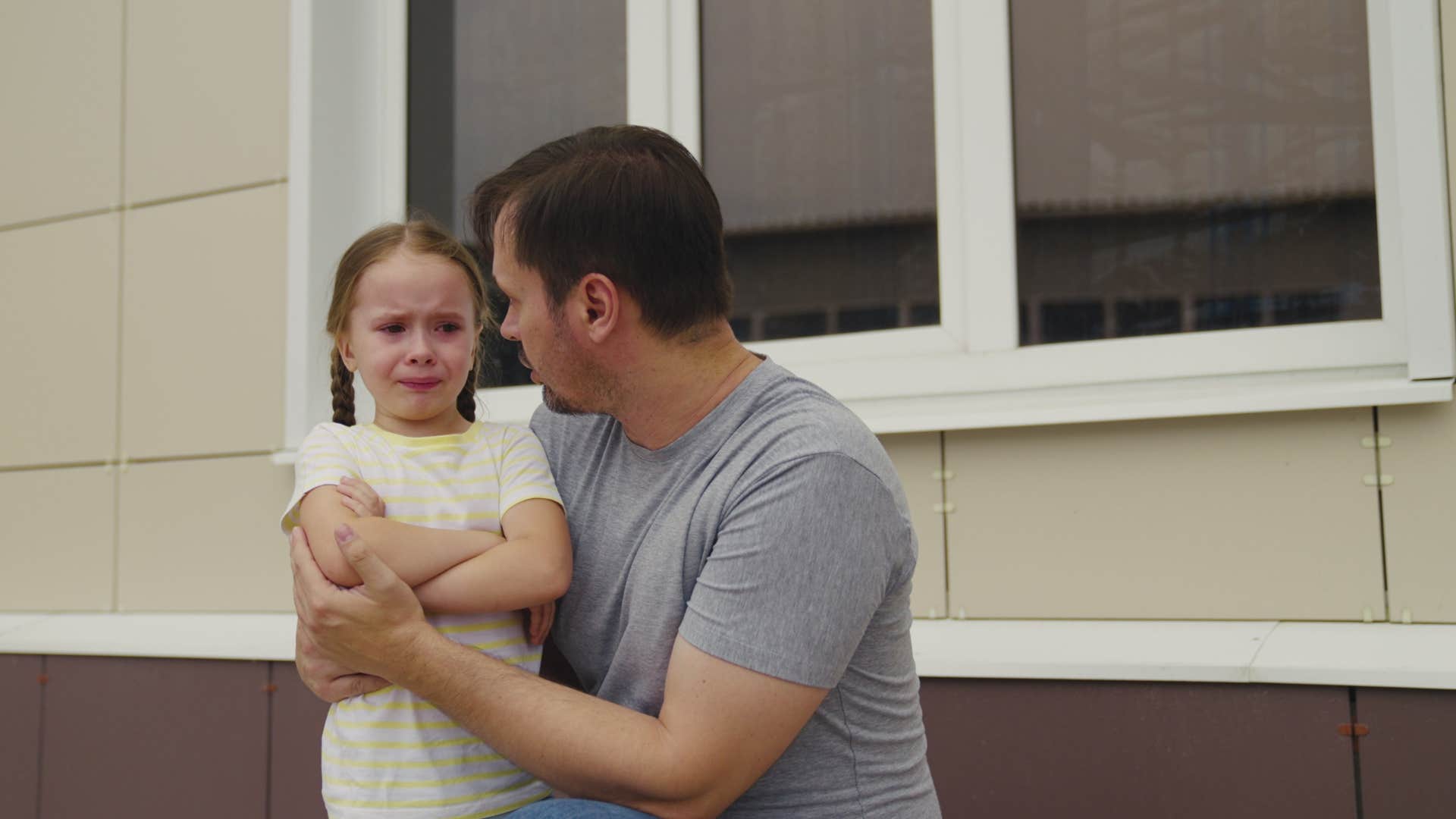
Some parents rush to see if a child is okay after something minor happens while others will tell them to stop making a fuss. Parents who give ‘tough love’ minimize their child’s emotions. Avoiding it will make them feel invalidated. Children may even shut down in the future or be ashamed of expressing their feelings.
According to Paul Thagard, Ph.D., having gut overreactions can actually be a good thing because the individual gets put into a loop between judgement and an emotional response. It’s best to not avoid these fears but to face them. For parents acknowledging the child’s pain but reminding them that it is only temporary will help better your relationship with them.
Parents who tell their children that they are overreacting or are ‘too sensitive’ unknowingly teach their children to not trust their own emotions.
6. ‘You’re just being lazy’
 PeopleImages.com - Yuri A | Shutterstock
Calling your children lazy is harmful because it labels them as unworthy of your approval. Laziness at its worst can come from low self-esteem or a lack of motivation, while at its best it can just be a sign of them relaxing.
What parents perceive may not be what is actually going on. For instance, your son or daughter might be on their electronics all day but they might have just finished their homework earlier. This doesn’t make them lazy, it actually makes them productive. In fact, some of the laziest people have been shown to be the most intelligent, according to science.
Children naturally have shorter attention spans but when they’re lazy they tend to have longer attention spans. So, when you call your child lazy it’s actually a compliment whether you know it or not.
7. ‘Why can’t you be like other kids?’
 YABOBCHUK VIACHESLAV | Shutterstock
This phrase is often used by parents to compare their children to their fellow peers by making it seem as if their child is not behaving normally. This fosters feelings of rejection and lack of acceptance from their parents. They might start to feel the need to alter who they are to gain parental approval.
Comparing your children to others in a negative way can lead them to feel like they don’t measure up to your expectations. Remember that you don’t get to choose your family but you do get to choose your friends and when you as a parent focus more on what your child lacks compared to their friend it can ruin their friendships as well.
Instead you should celebrate your child’s unique qualities and teach them that they should stop comparing themselves to others as they will be much happier when they do.
8. ‘It’s just a joke, don’t take it too seriously’
 DimaBerlin | Shutterstock
When parents use the phrase ‘it was just a joke’ it generally comes after the statement was made and the parents see the child’s reaction to it. Saying it can invalidate their feelings further as the child is acutely aware of their emotions in that moment.
Children might internalize the message that their emotions aren’t worth expressing, which can lead to frustration, confusion or even difficulty communicating their feelings in the future. Teasing and joking can sometimes cross the line for children because they are not used to it.
We can’t help how we feel and when we are told to not feel those things then we are taught to accept the poor boundaries from other people.
9. ‘Why do you have to be so loud?’
 Prostock-studio | Shutterstock
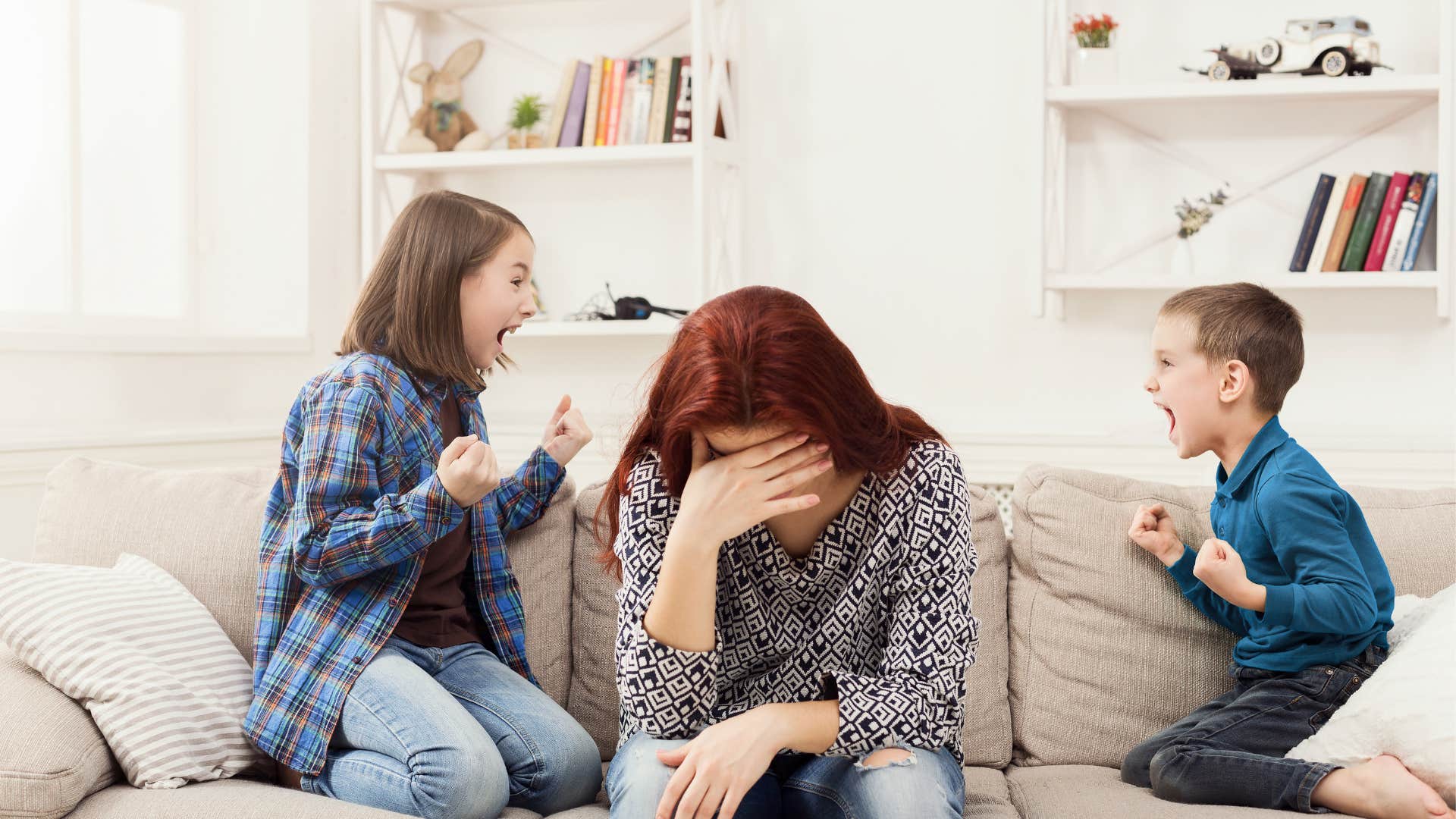
Shame is arguably the most powerful way to get someone to dim down their light. An energetic child who naturally expresses the way that they feel being told that they are ‘too loud’ can make them feel like this isn’t a normal way of being.
Over-time they will suppress themselves and fit the mold that they were told was acceptable for them. This will cause them to feel like they were never good enough as adults. This type of emotional hiding can also lead them to isolate themselves physically from their parents when they are older because of the mistreatment that they went through as children.
Self-expression is a rare trait for someone to have. Nobody is ever too big, or too loud for this world. These are all natural emotions we all have. Some of us are just better at expressing them than others.
10. ‘You need to get out more and socialize’
 fizkes | Shutterstock
This phrase can be considered as an act of encouragement to build social skills and lasting relationships but it can be harmful to children as it pressures them to be someone that they are not. Telling a child they need to get out more can increase your child's anxiety. Everyone is different when it comes to communication but a child will feel misunderstood by their parents if they make it seem as if there is something wrong with them.
Researchers from Finland found that introverted children can grow their self-esteem by socially engaging with others in clubs that interest them personally. The higher the social engagement the better motivated and confident the children were. Thus, it is possible that parents can have some form of social influence on their children if it is done positively.
A more supportive approach could be to encourage them to join clubs that pertain to their interests rather than focus on the other children they might meet within the club.
11. ‘Sometimes I regret the decisions I made in my life’
 Ground Picture | Shutterstock
Putting all of your parental regrets onto your children can be harmful. It’s understandable for parents to be vulnerable sometimes but saying this particular phrase in front of your children can have consequences.
Are they part of the regrets that you have? Children will suddenly question everything that they have ever been told to them. It makes your children feel as if they were unwanted before they even got here so what is the point in doing anything, anymore.
Parents have their own style which can benefit or ruin their children's experiences. When parents focus more on encouraging their children rather than judging them it can help the children build confidence in a healthier more expressive way.
Sylvia Ojeda is an author who has over a decade of experience writing novels and screenplays. She covers self-help, relationships, culture, and human interest topics.
