
11 Condescending Phrases Many Husbands Say To Their Wives Without Realizing How Bad They Sound
 ShotPrime Studio | Shutterstock
 Whether it’s subtle “put-downs,” passive-aggressive comments, or behaviors that clearly remind a partner that their spouse thinks they’re better than others, condescension can quickly spark resentment in a marriage. Especially considering the manipulative, insecure, cruel partner engaging in condescending behaviors doesn’t expect their spouse to push back or call them out, it can often go unchecked and be “justified” away.
Some people may not even realize they’re being condescending in the moment, which makes solving the issue even harder. There are many condescending phrases many husbands say to their wives without realizing how bad they sound — and noticing them is your first step to cultivating a more balanced, honest dynamic.
Here are 11 condescending phrases many husbands say to their wives without realizing how bad they sound
1. ‘Just relax’
 simona pilolla 2 | Shutterstock
Emotional regulation skills often predict marital satisfaction, according to a study from Emotion, largely because they ensure conflict-resolution, emotional expression, and active listening strategies aren’t clouded by intense emotions like anger and resentment.
The more emotionally regulated your partner is, the more likely they are to lean on condescension to push away someone’s emotions or invalidate their experiences. “Just relax” or “you’re reading into it too much” are common manifestations of this — an unregulated partner who’d prefer to push their spouse away than address their own discomfort and discomfort.
2. ‘You’re so dramatic’
 Hryshchyshen Serhii | Shutterstock
According to a study from American Sociological Review, people who lean on condescension and gaslighting behaviors are trying to spark self-doubt in the people around them. They’re distorting their partner’s sense of reality to make them easier to manipulate or take advantage of.
Whether that means invalidating their emotions with a phrase like “you’re so dramatic” or making them feel insecure by picking apart their appearance, they thrive when everyone else around them feels smaller and less “in control.”
3. ‘I already told you this’
 fast-stock | Shutterstock
Many people who act like they’re better than everyone else and lean on condescending behaviors to express it believe that they experience a higher level of “deservingness” than others. They think their time, effort, and attention are somehow more important and valuable, even than their own partner, cultivating a weird sense of entitlement that manifests in phrases like “I already told you this.”
They’re not only annoyed that they’re not consuming every waking thought and moment of other people, but they’re annoyed that they have to give people grace and repeat themselves, even if it’s a part of life for the average person.
4. ‘That’s literally not true’
 Krakenimages.com | Shutterstock
Many inherently condescending people are more worried about their own self-image than about showing up emotionally for other people. They think in binary terms of “right” and “wrong,” because they need to “win” conversations and justify their overconfidence with something tangible. Logic, reason, and facts are weaponized by these people, even in situations where emotions dominate.
Of course, it’s important to recognize, as physician Dr. Frank J. Ninivaggi does, that condescending language and behaviors are often compensating for envy. When someone’s jealous of you, they’re more likely to pick you apart, dismiss your emotions, and invalidate your excitement for achieving things.
5. ‘You aren’t understanding’
 PeopleImages | Shutterstock
Condescending people often explain things that other people already understand to make themselves the center of attention or assert their misguided sense of confidence. At the end of the day, every patronizing partner and condescending friend is compensating for something internally — their behavior has much less to do with you as it does with their own struggles.
If you’re on the other side of a condescending partner, it’s so important to take control of who you are and get clear about what boundaries are worth setting. Partners read into the meaning of what their spouses say, according to psychologist Lisa Firestone, so it’s important to call out behavior and set boundaries with a partner who makes you feel poorly or insecure.
6. ‘Just trust me on this’
 fizkes | Shutterstock
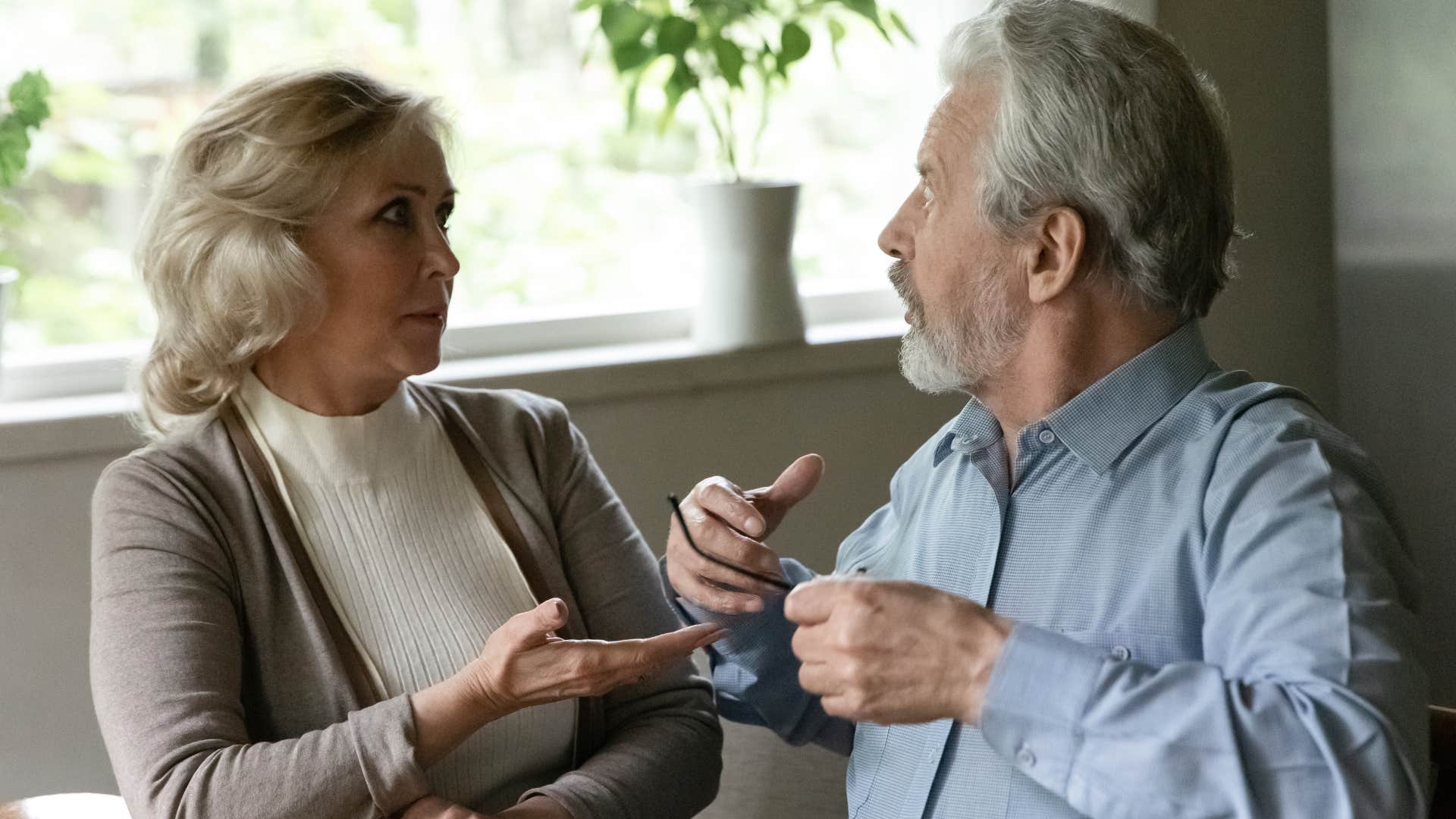
Weaponizing things like trust and affection, which should be unconditional in a marriage, are forms of emotional manipulation. Even if they seem subtle with phrases like “just trust me on this” in the face of bad decisions and ignorance, these are condescending phrases many husbands say to their wives without realizing how bad they sound.
They may simply be trying to protect their own feelings and emotions, but at the same time, they’re dismissing and invalidating their partners.
7. ‘Can we be logical about this?’
 guys_who_shoot | Shutterstock
Even if you’re working through a problem in a relationship — concerns that tend to be inherently emotional — a condescending partner will still try to invalidate how you’re feeling by leaning on “logic.” Instead of simply emotionally supporting you, even when they don’t agree, these partners focus on facts and correctness to bolster their own sense of superiority.
While it might be easy to overlook dealing with emotions on your own and needing to plead for an ounce of empathy from a partner amid the chaos of life, the truth is that it’s essential. Not only is it powerful for mental health and relationship satisfaction, but it can also predict physical health, according to a study from UCLA Health.
8. ‘That’s not what happened’
 Dragana Gordic | Shutterstock
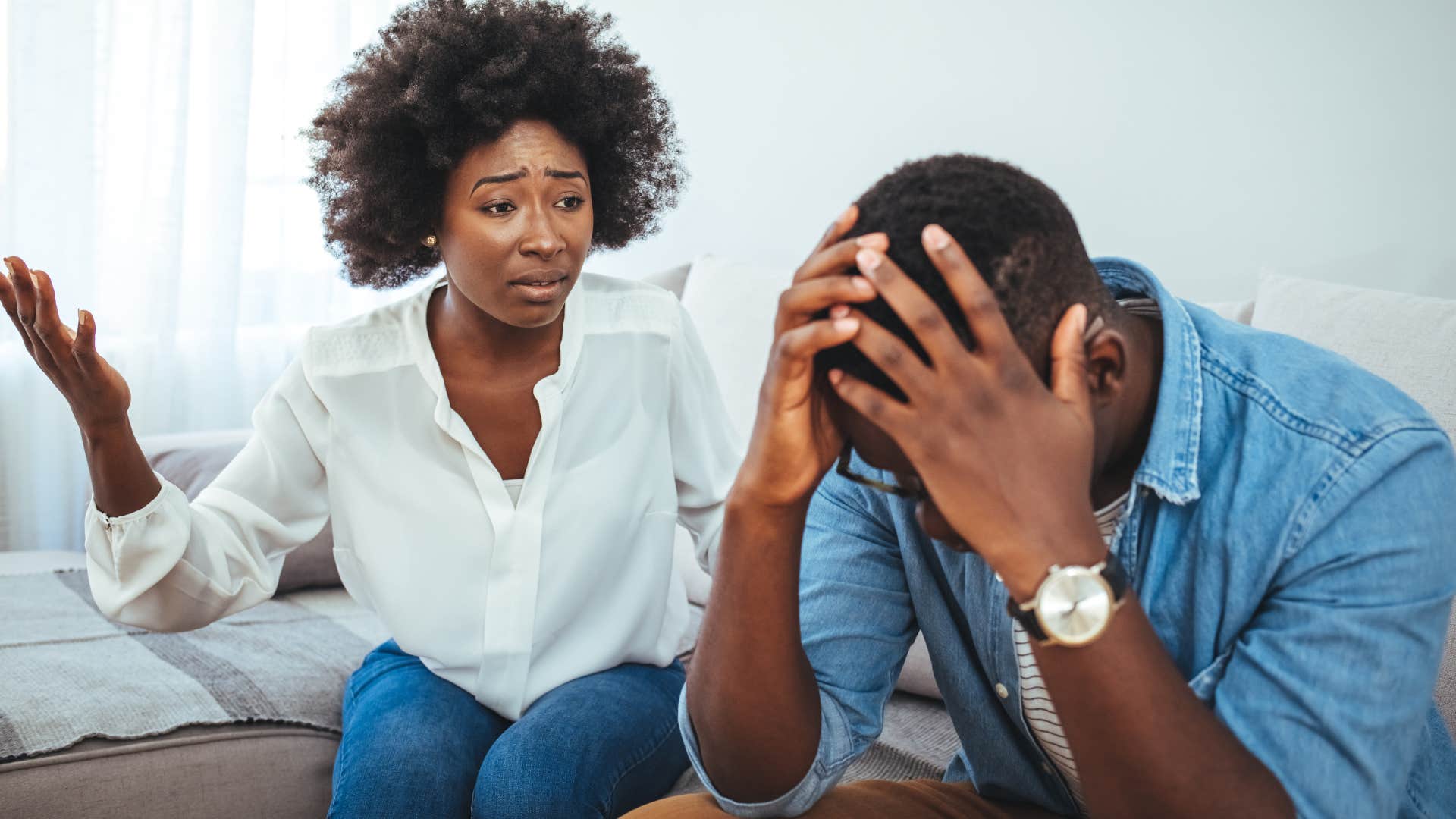
According to psychotherapist Elisabeth Crain, condescension often stems from a place of inflated ego or insecurity, but it’s also common for people to use condescending phrases when they’re simply having a bad day, and aren’t understanding how their language is coming across to others.
So, if a husband is feeling dysregulated and insecure on a specific day, chances are he may use phrases like “that’s not what happened” to protect his own comfort and sense of peace, without realizing it harms his partner.
9. ‘Well, actually...’
 BongkarnGraphic | Shutterstock
Many people who need to feel superior and “important” around other people use phrases like “well, actually...” that are intended to correct the people around them. They want to imply that someone else is wrong and they are right, to feel in control.
People who are truly intelligent avoid these phrases because they understand how invalidating and dismissive they can feel in conversations — especially with people that you’re supposed to trust and cultivate balanced connections with.
10. ‘You just need to do this’
 syedfahadghazanfar | Shutterstock
According to clinical psychologist Hal Shorey, a need for control and controlling behaviors in relationships don’t always manifest because partners are evil or manipulative. We all gain some comfort from feeling “in control,” and sometimes phrases like “you just need to do this” are well-intentioned, even if they come across as wrong.
This is one of the condescending phrases many husbands say to their wives without realizing how bad they sound. These husbands aren’t inherently “bad,” they may just be struggling with emotional regulation or confidence in ways that push them toward controlling language and behaviors that need to be addressed in their marriages.
11. ‘You should be grateful’
 Cast Of Thousands | Shutterstock
Men who use condescending phrases like “you should be grateful” or “it could be a lot worse” may be dodging accountability for mistakes and misbehavior, but it’s also possible they have good intentions and are simply choosing the wrong kinds of language.
Husbands should be present to listen to and emotionally support their wives all the time, even if in conversations where they don’t necessarily agree. However, that’s not always easy, and these kinds of phrases can slip through the cracks, especially when a partner is feeling unregulated and unsure of how to show up emotionally.
Zayda Slabbekoorn is a senior editorial strategist with a bachelor’s degree in social relations & policy and gender studies who focuses on psychology, relationships, self-help, and human interest stories.
